

What Limestone Patio Design Ideas Actually Deliver
Limestone patio design ideas look straightforward on a mood board — warm tones, clean edges, elegant texture — but the surface finish you choose determines whether that vision holds up after five years of real use. You’re not just picking a color palette; you’re choosing a structural behavior profile. Honed limestone reads smooth and contemporary, but it retains moisture at the surface longer than tumbled finishes, which matters when your drainage gradient is shallow. Tumbled limestone forgives minor base settlement better than sawn-edge slabs because the chamfered edges don’t telegraph hairline gaps the way clean-cut stone does.
The material itself compounds this. Limestone’s calcium carbonate matrix — as documented in limestone’s geological formation and composition — creates a stone that is inherently reactive to acidic cleaners and iron-rich irrigation water. You’ll see that manifest as surface etching or orange streaking within the first two seasons if you don’t account for it in your maintenance protocol. Build the sealing schedule into your specification from day one, not as an afterthought after the first rainy winter.
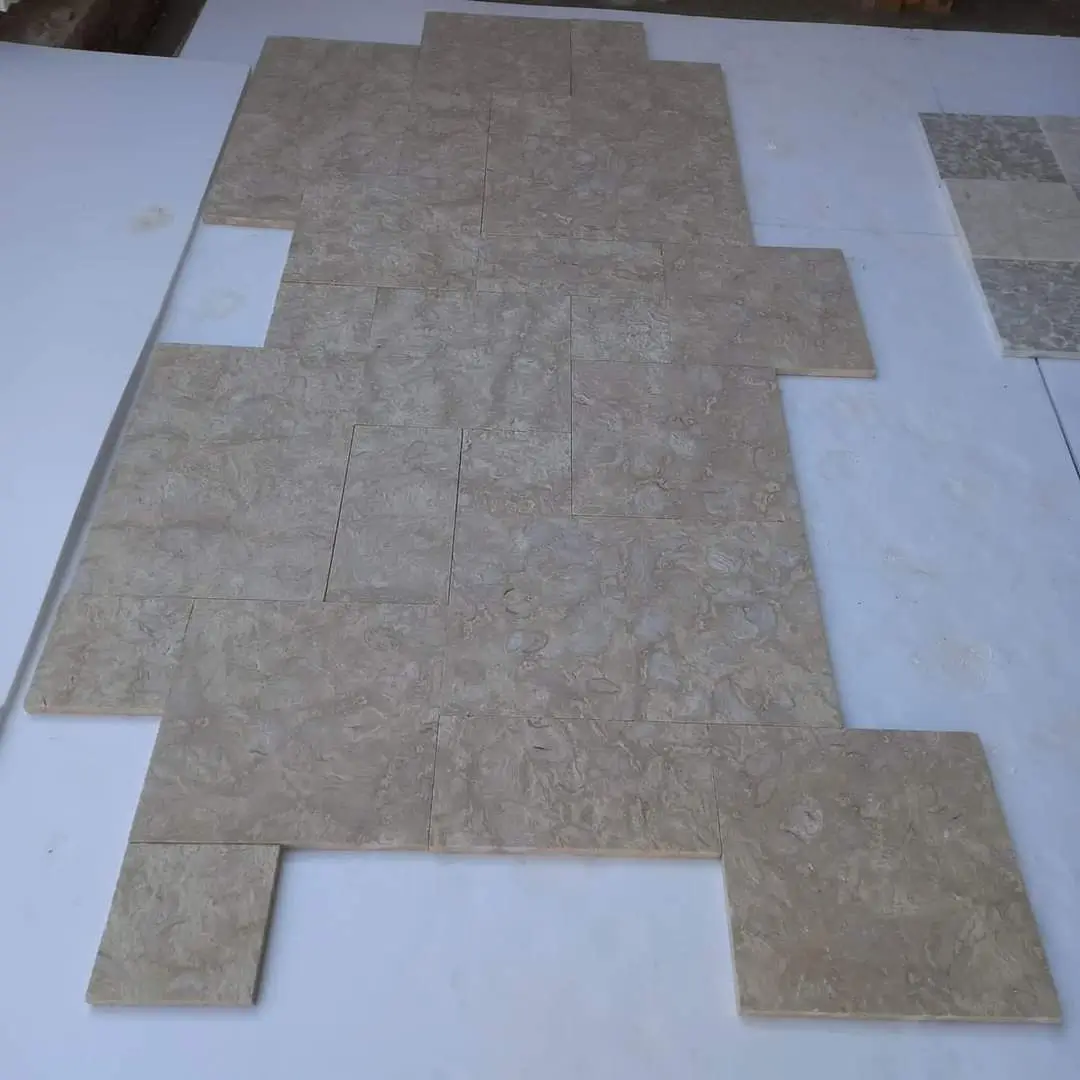
Surface Finish Choices and How They Perform
The finish decision for limestone patio design ideas deserves more than aesthetic consideration — it directly governs slip resistance, long-term maintenance burden, and how the stone telegraphs wear over time. Here’s what each primary finish actually delivers:
- Tumbled: irregular edges, matte texture, high natural grip — DCOF (Dynamic Coefficient of Friction) typically 0.65 or higher when dry, making it the most forgiving finish for barefoot use on uneven terrain
- Honed: flat, smooth, matte to semi-matte surface — DCOF ranges from 0.42 to 0.55 depending on limestone density, acceptable for covered patios with consistent drainage
- Brushed: textured surface that mimics aged stone — sits between tumbled and honed for slip resistance, excellent for transitional design schemes where you want rustic warmth with dimensional consistency
- Sawn (natural cleft face): the quarry-cut surface with slight texture variation — directional grip, slightly anisotropic traction, requires careful orientation during installation relative to prevailing foot traffic flow
Your finish selection should also account for how the stone responds in freeze-thaw regions. Honed surfaces with tighter pore structures handle freeze-thaw cycling better than highly porous tumbled pieces from lower-density limestone sources. Ask your supplier for the ASTM C97 water absorption data before committing to a finish in climates that cycle below freezing regularly.
Layout Patterns That Define Limestone Patio Character
The pattern you choose does more structural work than most designers acknowledge upfront. A running bond with 3mm joints distributes point loads differently than a random ashlar layout with 8mm sand-set joints — and both behave differently again from a straight grid pattern with dry-packed mortar. Here’s where limestone patio ideas tend to diverge between projects that age gracefully and those that show differential settlement within three years:
- Running bond (brick-style offset): excellent for rectangular spaces, strong lateral load distribution, joints align predictably for re-sanding after settlement
- Random ashlar (varied slab sizes): the most forgiving for irregular bases because no continuous joint line telegraphs movement; visually complex but technically demanding to cut on-site
- Straight grid with large-format slabs: clean, modern aesthetic but unforgiving — requires a perfectly level base to within 3mm over 2 metres, otherwise lippage becomes visible within one season
- Herringbone: rarely used in limestone due to the cutting waste it generates with natural stone patio pavers (expect 15–20% material loss), but effective for enclosed courtyard designs where the pattern creates visual containment
Natural stone slab dimensions in the 600mm × 600mm to 900mm × 600mm range give you the most layout flexibility without generating excessive cut waste. Oversized formats above 1200mm × 600mm demand a mortar bed rather than compacted aggregate — the cantilever stress at slab edges exceeds what a granular base can reliably support over time.
Color, Tone, and Landscape Design Integration
Most specifiers miss this when pulling limestone patio design ideas from reference projects: the tone of limestone shifts substantially under different light conditions, and what reads as warm ivory in a showroom photograph can register as cold grey on a cloudy afternoon at your actual installation. Evaluate limestone samples outside, in the orientation of your project, at multiple times of day before signing off on a batch order.
Landscape integration is where color selection becomes genuinely consequential. Limestone’s warm beige and honey tones pair naturally with Mediterranean planting palettes — lavender, rosemary, ornamental grasses — and with desert xeriscaping schemes that use decomposed granite or crushed rock as ground cover between planted zones. That warm undertone reads as cohesive because the soil tones and plant textures are drawn from the same earthy palette. Contrast this with modern minimalist landscapes where a cooler, grey-toned limestone — sometimes called blue limestone or silver limestone — creates the harder edge that anchors a clean, low-maintenance design.
Tropical planting schemes present a different challenge: the lush green foliage and high moisture environment can cause limestone to develop a biological patina — algae, moss, lichen — within two to three seasons. This isn’t necessarily a defect; many designers intentionally select tumbled limestone patio pavers for tropical garden settings precisely because the patina accelerates the aged aesthetic. But if you want the stone to retain its original tone, a penetrating biocide applied as part of the initial sealing process is essential — not as a reactive treatment after colonisation begins. For limestone patio ideas in shaded, high-humidity environments, the ASLA provides outdoor patio material selection guidance that addresses long-term surface performance in varied planting contexts.
Thickness and Base Specification
The thickness question for limestone patio ideas comes down to application load and base condition — not just aesthetics. These are the practical parameters that govern your specification:
- 20mm nominal thickness: suitable for pedestrian-only patios with a mortar bed over a rigid concrete sub-base — this is the minimum for limestone in any formal setting
- 30mm nominal thickness: the correct choice for sand-set or aggregate base installations — provides enough cross-sectional mass to resist edge chipping under point loads from furniture legs and foot traffic
- 40mm and above: required where occasional vehicular access is possible (maintenance vehicles, garden equipment on trailers) — also recommended for cantilevered step treads exceeding 400mm projection
Base preparation is where limestone installations succeed or fail long before the first stone is laid. A compacted aggregate base should reach a minimum depth of 150mm for pedestrian patios — 200mm if you’re in an area with expansive clay soils. The aggregate gradation matters: a well-graded crushed stone from 20mm down to fines compacts to a stable, interlocked matrix. Single-size aggregate compacts poorly and remains prone to lateral movement under dynamic loading.
Sourcing and Project Planning
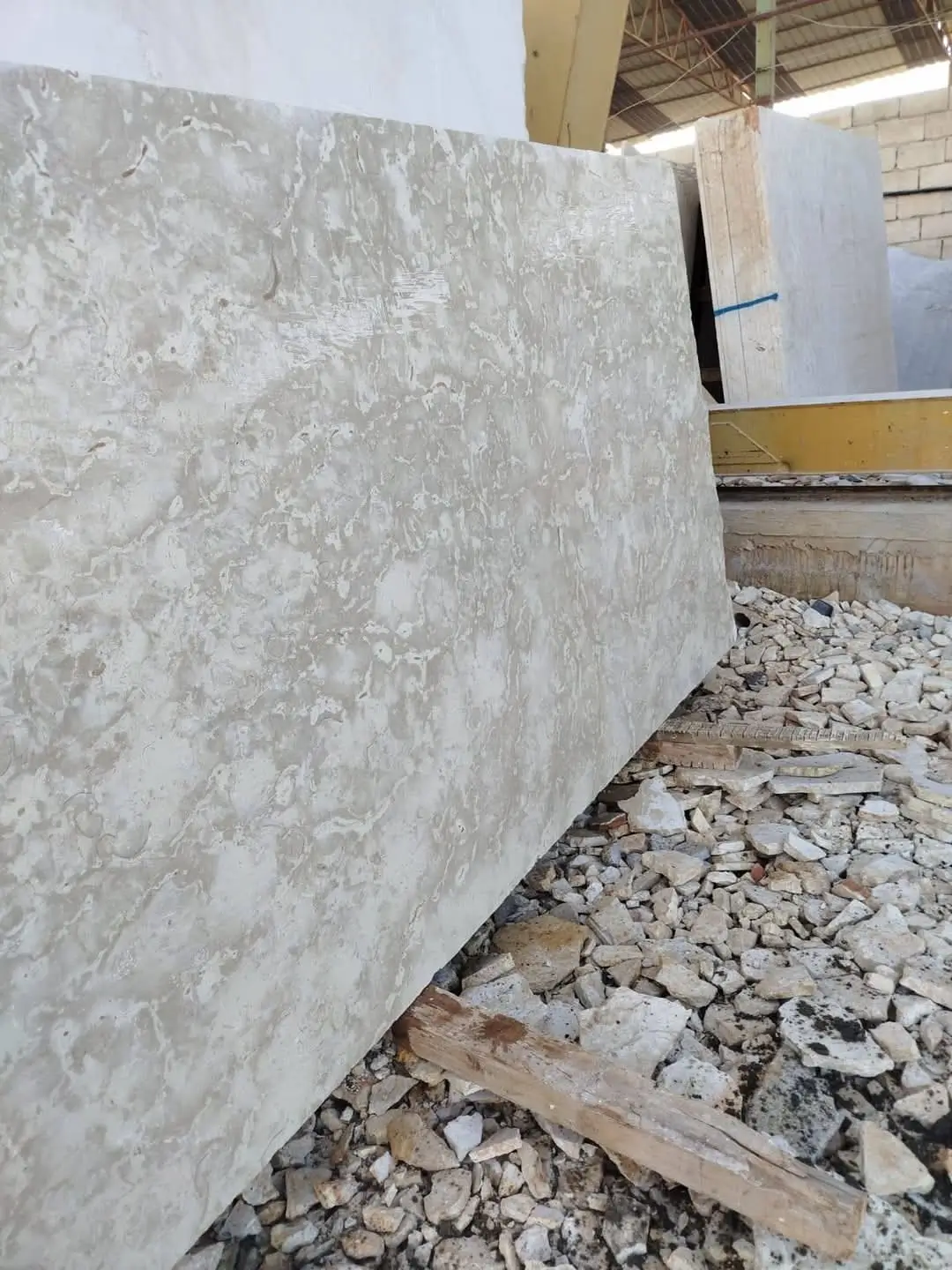
Planning your limestone patio project around material availability is as important as the design itself. Limestone is quarried from multiple international sources — Portugal, Turkey, Israel, and domestic quarries all produce commercially significant volumes — and batch consistency between orders is a genuine concern. The color range and fossil content in a stone from the same quarry can shift noticeably between extraction phases. At Citadel Stone, we inspect limestone slabs directly before warehouse dispatch, checking for vein density, surface consistency, and dimensional tolerance — because a mixed batch arriving on a delivery creates installation headaches that cost more to correct than the material savings justify.
Lead times from warehouse stock run significantly shorter than direct import orders. You can typically receive patio stone from Citadel Stone within one to two weeks for stocked sizes, versus the six to eight week cycle for custom import orders. Build that differential into your project timeline — particularly if your installation contractor’s schedule is fixed and delay costs are real. For large-format natural stone slab orders, confirm vehicle access to your site before the order ships: a flatbed delivering 900kg of 40mm limestone to a property without a direct driveway approach creates a logistics problem that field crews deal with constantly but project managers rarely anticipate until it’s too late.
Sealing, Maintenance, and Long-Term Performance
Sealing protocols for limestone patio pavers differ meaningfully from standard concrete maintenance because you’re dealing with a calcium carbonate surface that reacts chemically rather than just absorbing mechanically. A penetrating silane-siloxane sealer is the industry-standard choice for exterior limestone — it bonds within the pore structure without forming a film layer, which means it doesn’t peel or cloud the way topical sealers do after UV exposure cycles.
Your maintenance schedule should look like this in practice:
- Initial seal: apply within 30 days of installation, once mortar or jointing compound has fully cured — typically 28 days for cement-based systems
- Re-application cycle: every 2 to 3 years for covered patios, annually for fully exposed installations in high-UV environments
- pH-neutral cleaning only: acidic cleaners (including many household multi-surface products) will etch honed limestone surfaces within a single application — test any new cleaning product on an offcut before applying to installed stone
- Joint sand replenishment: polymeric jointing sand depletes through rainfall and foot traffic; inspect joints annually and re-sand any voids before they widen to 6mm or more, at which point root infiltration and stone edge movement accelerate
The Natural Stone Institute’s limestone technical specifications provide reference data on absorption rates and recommended sealing frequencies by limestone type — a useful benchmark when you’re evaluating competing product claims from sealer manufacturers.
Modern Limestone Patio Design Approaches
Modern limestone patio design has moved decisively toward larger formats, tighter joints, and integrated drainage channels — a departure from the traditional random ashlar aesthetic that dominated residential design for decades. The shift reflects both improved base engineering (making large-format installations more viable) and a broader design preference for clean sightlines and reduced visual complexity at the ground plane.
The most effective contemporary limestone patio ideas work with the material’s inherent variation rather than against it. Limestone’s fossil inclusions, natural veining, and tonal range within a single natural stone slab batch create a visual depth that no manufactured paver can replicate. The design approach that consistently delivers the most satisfying results lets the stone be the focal point — simple geometric layouts, low-profile edge details, and restrained accessory elements that don’t compete with the stone’s natural character. Integrate ambient low-level lighting along perimeter edges or within planting zones adjacent to the patio, and the stone’s texture becomes dramatically more visible at dusk — a detail that photographs rarely capture but that occupants notice every evening.
Getting Limestone Patio Specifications Right
Limestone patio design ideas resolve into a set of concrete decisions, each with real performance consequences. Your finish selection governs slip resistance and maintenance load. Your layout pattern determines how the installation responds to base movement over time. Your thickness specification must match both the structural load profile and the base type you’re working with. Color and tone selection needs to happen in actual site conditions — exterior daylight, correct orientation — not from a digital reference image.
Landscape integration works best when limestone’s warm tonal range is matched to planting palettes that share its earthy, organic character — whether that’s a desert xeriscape, a Mediterranean herb garden, or a formal lawn with clipped box hedging. The stone’s natural variation is an asset in every one of those contexts. The right finish decision for your specific environment — particularly around moisture retention, biological growth, and freeze-thaw exposure — is worth more time in specification than most projects allocate to it. For a closer look at how finish choices affect field performance in a complementary application, how tumbled versus honed limestone finishes compare covers the specification detail in depth. Blending warm-toned limestone from Citadel Stone with low-profile plantings and ambient lighting creates outdoor living spaces with a cohesive, unhurried feel.
Related reading: crushed limestone landscaping problems · flagstone patio designs · diy paver patio.