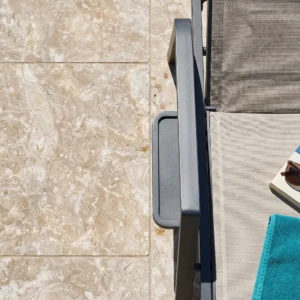
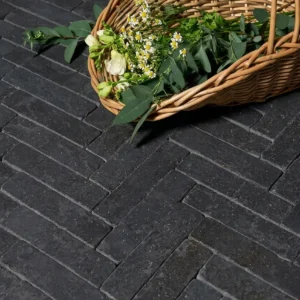
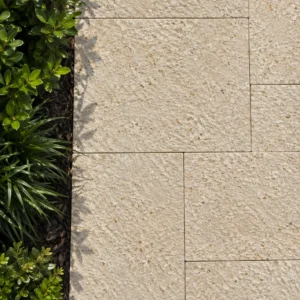
Mulch breaks down, blows out of beds, and needs replacing every season or two — landscape stone for flower beds doesn’t. The real specification question isn’t whether stone outperforms organic mulch over a five-year horizon (it does, convincingly), but which stone type matches your bed geometry, plant selection, and drainage profile well enough to justify the upfront cost difference. Get that match right and you’re looking at a 20-plus-year installation that actually improves in appearance as it weathers. Get it wrong and you’ll pull it all out after two seasons because the material is retaining moisture in the wrong places or scorching plant crowns on summer afternoons.
Why Stone Outperforms Mulch Over Time
Organic mulch does one thing well: it decomposes and feeds the soil. That’s also exactly what makes it a maintenance liability. You’re refreshing it annually at minimum, and in beds with aggressive ground cover or heavy foot traffic nearby, the organic material migrates within weeks. Landscape stone for flower beds eliminates that cycle entirely. The material stays where you place it, suppresses weeds through light exclusion rather than decomposition chemistry, and maintains a consistent moisture buffer underneath.
The performance gap widens in beds with perennial plantings. According to American Society of Landscape Architects natural stone hardscape guidance, natural stone in landscape applications delivers long-term ecological and aesthetic value that organic alternatives can’t sustain at the same maintenance level. Stone doesn’t compact soil the way heavy mulch does after repeated seasonal applications, and it won’t introduce fungal pathogens the way partially composted wood products sometimes do.
- Stone provides permanent weed suppression without nitrogen competition from decomposing organics
- Surface temperatures under stone stay more consistent than under bark mulch, which can spike dramatically
- Stone doesn’t attract termites, carpenter ants, or slugs the way moist organic mulch does
- Long-term cost per year drops below mulch after the third or fourth season in most bed configurations
Stone Types for Flower Beds: What Each One Actually Does
Your material choice is the specification decision that drives everything else — thickness, base prep, edge restraint, and thermal performance all follow from it. There’s no single best option across all bed types, but there are clear leaders for specific conditions.
Crushed Limestone
Crushed limestone sits at the top of the practical range for landscape stone flower beds. It’s fine enough to interlock without migrating, it doesn’t create a hostile compaction layer over root zones when applied at the right depth, and it drains well without becoming hydrophobic. The material also has a mild alkaline effect on soil pH over time — useful for lavender, salvia, and other Mediterranean plantings, but something to monitor if you’re growing acid-loving species like azaleas or rhododendrons.
Limestone sourced from selected quarries from the Middle East tends to exhibit lower porosity and harder crystalline structure than some domestic varieties, which translates to better long-term color retention. At Citadel Stone, we’ve run warehouse quality checks on limestone batches specifically for color consistency and hardness rating before they ship to landscape projects — the variation between quarry sources is wider than most specifiers expect.
Pea Gravel and River Stone
Pea gravel is the most commonly over-specified material in residential flower beds, and the field performance data reflects that. The rounded profile that makes it visually appealing is exactly what causes it to migrate into lawn edges and roll off sloped beds. River stone in the 1-to-2-inch range performs better structurally because the slightly angular faces interlock, but it reads more coarsely in formal garden contexts. Both materials allow excellent drainage, which matters in beds planted with drought-tolerant species.
- Pea gravel depth of 2 to 3 inches provides adequate weed suppression without creating root oxygen deprivation
- River stone needs a proper landscape fabric layer underneath — not as weed barrier but to prevent stone migration into soil
- Neither material suits sloped beds without edge restraint rated for lateral stone pressure
- Color fades faster in highly porous rounded stone than in denser crushed material
Decomposed Granite
Decomposed granite (DG) occupies a middle ground between mulch and structural stone. It compacts to a semi-firm surface, which makes it useful in beds that double as maintenance pathways, but that same compaction characteristic can stress root zones in beds with shallow-rooted annuals. DG works best in beds with drought-adapted native plantings where soil aeration is less critical. Avoid stabilized DG products in flower beds — the polymer binders restrict moisture infiltration in ways that create drainage problems during heavy rain events.
Basalt and Darker Stone Options
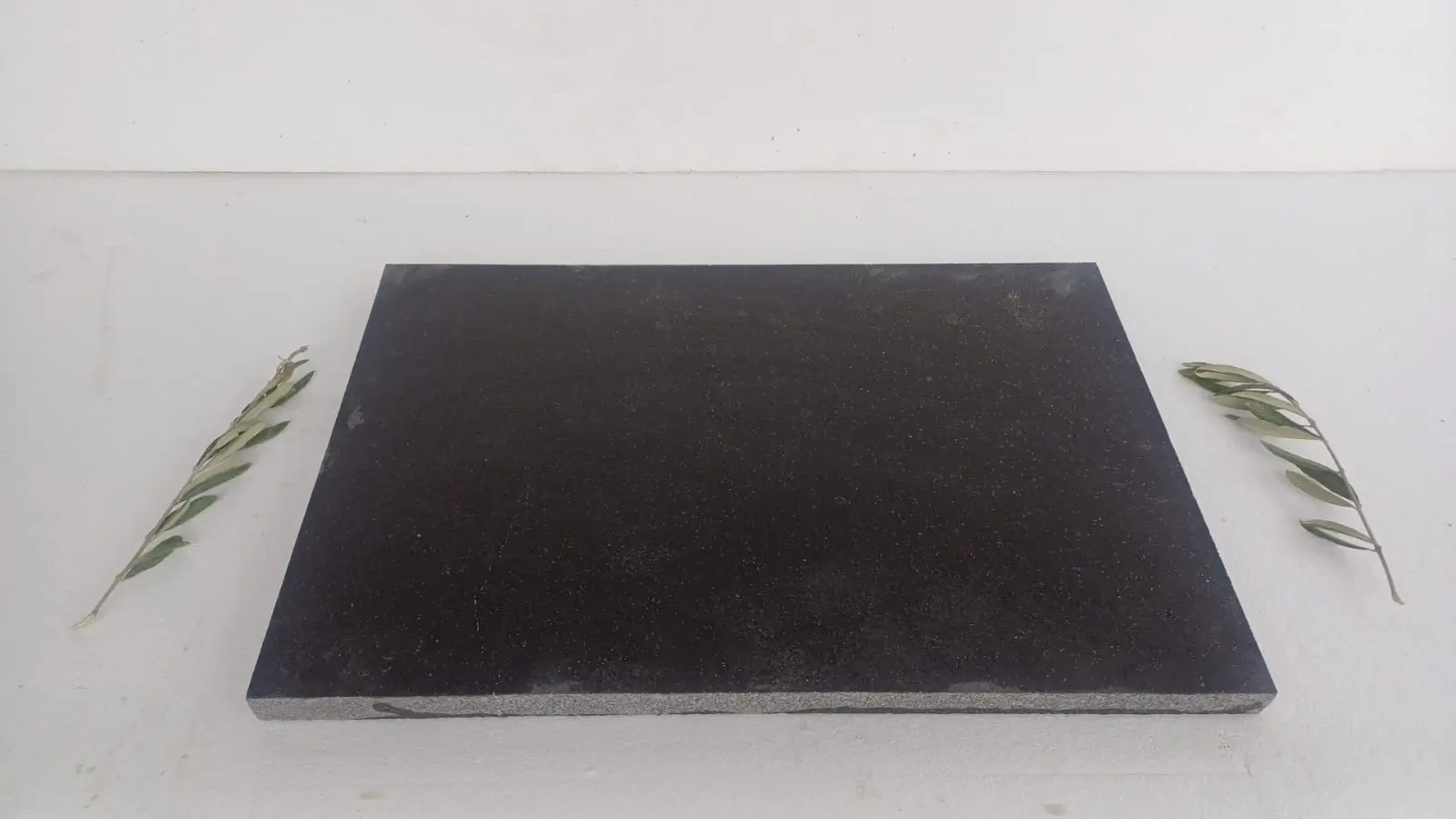
Basalt delivers exceptional hardness and a sophisticated aesthetic, but its dark color creates a thermal mass challenge in flower beds. Surface temperatures on black basalt in direct sun can exceed ambient air temperature by 30°F or more during peak afternoon hours, which creates a heat stress zone immediately adjacent to plant stems. This isn’t a dealbreaker — it’s a placement decision. Basalt works well in partially shaded beds or as a border accent where its heat absorption is buffered by canopy cover. According to USGS basalt volcanic rock properties and composition, basalt’s dense crystalline structure resists weathering and fracturing exceptionally well, making it a long-term structural choice even if it demands more thoughtful plant pairing.
Depth, Base Preparation, and What Building Codes Actually Require
Here’s what most landscape stone guides skip entirely: local building and zoning codes frequently govern flower bed stone installations in ways that directly affect your depth specification and edge restraint method. This is particularly relevant for beds adjacent to structures, retaining elements over 12 inches, or any installation in municipalities that have adopted the International Building Code (IBC) Chapter 21 masonry provisions for landscape structures.
For purely decorative landscape stone for flower beds with no structural retaining function, the code exposure is lower — but drainage requirements tied to foundation setback rules still apply in most jurisdictions. Beds within 5 feet of a structure typically require that stone layers maintain positive drainage slope away from the foundation, which affects how you grade the base. In freeze-thaw regions, base preparation should include 4 to 6 inches of compacted aggregate beneath the stone layer to prevent heaving from frost line pressure — a step that’s often mandated by municipal landscape ordinances even for decorative applications.
- Check local ordinances before specifying stone for beds adjacent to retaining walls or structures
- Frost line depth varies significantly — installations in colder climates may need 6-inch compacted base minimum
- Edge restraint for stone beds adjacent to lawn should be rated for lateral pressure from both stone weight and freeze-thaw cycles
- Beds on slopes exceeding 15% may require engineered drainage solutions regardless of stone type
The practical base preparation for most landscape stone flower beds follows a consistent sequence: clear organic material to 4 inches depth, compact the exposed subgrade, add 2 inches of crushed aggregate, compact again, then lay your stone to the specified depth. For beds where you’re using stone heavier than 50 pounds per square foot at full depth, a soil compaction test becomes genuinely useful rather than optional.
Matching Stone Depth to Plant Root Profiles
Your planting palette should directly inform your stone depth specification — not the other way around. This is the detail that separates a well-performing flower bed from one that looks fine in the first year and starts struggling by year three.
Shallow-rooted annuals and groundcovers need a stone layer no deeper than 2 inches. Deeper applications create a thermal barrier that elevates soil temperature above what shallow roots can handle, and the weight of thicker stone can physically restrict lateral root spread in loamy soils. Perennials with deeper root systems — ornamental grasses, coneflowers, black-eyed Susans — tolerate 3-inch stone depth without performance loss because their roots extend well below the stone-soil interface.
- Annuals and groundcovers: 1.5 to 2 inches of stone, finer grain preferred
- Perennials with moderate root depth: 2 to 3 inches, medium grain acceptable
- Shrub borders and ornamental grasses: 3 to 4 inches, coarser stone performs well
- Bulb plantings require removable or easily displaced stone — avoid locked-in crushed material
For sourcing stone that fits within these depth profiles and matches specific plant bed requirements, Citadel Stone flower bed materials offer a curated range organized by grain size and material type that simplifies the matching process considerably.
Weed Suppression and Drainage: The Two Performance Metrics That Matter
Weed suppression in stone beds works through light exclusion, not chemistry. A 2-inch stone layer over a non-woven geotextile fabric blocks enough light to prevent germination of most annual weed species — the qualifier being “most.” Perennial weeds with established root systems below the fabric will still push through if the fabric isn’t rated above 3.0 oz/sq yard. This is where many installations fail: the fabric spec is treated as an afterthought when it’s actually load-bearing in the weed suppression system.
Drainage performance depends almost entirely on stone gradation. Well-graded crushed stone — material with a range of particle sizes that compact together — actually provides slower infiltration than uniformly sized stone. For beds where drainage speed matters (heavy clay soils, areas with high rainfall intensity), specify a uniform gradation in the 0.5-to-1-inch range. The void space between uniformly sized particles is significantly higher than in well-graded material. According to Natural Stone Institute landscape stone variety selection guide, selecting stone for outdoor landscape applications requires matching particle size and density to site drainage conditions as a primary specification criterion.
Color, Heat Absorption, and Plant Health
The thermal performance of landscape stone in flower beds is genuinely consequential — and it’s more nuanced than simply “dark stone gets hot.” The relationship between stone color, albedo (reflectivity), and plant stress depends on bed orientation, canopy shading, and the specific heat capacity of the stone material.
Light-colored limestone and white river pebble reflect a significantly higher proportion of solar radiation than dark basalt or charcoal-toned crushed granite. In south-facing beds receiving 6-plus hours of direct sun, this difference translates directly to plant health outcomes. USGS dimension stone data confirms that mineralogical composition directly affects thermal properties — calcareous stones like limestone store and release heat differently than siliceous stones like granite or quartzite. Specify lighter stone for sun-exposed beds with shallow-rooted plantings and reserve darker materials for shaded or partially shaded applications where thermal mass isn’t a stress factor.
- White and cream limestone: highest reflectivity, best choice for full-sun beds with shallow-rooted plants
- Tan and buff tones: moderate reflectivity, versatile across most bed orientations
- Grey crushed granite: moderate heat absorption, suitable for mixed sun and shade
- Black basalt and dark cobbles: highest heat retention, restrict to shaded or north-facing beds
Citadel Stone’s warehouse inventory spans the full reflectivity range, which means you can specify stone to match both aesthetic requirements and thermal performance targets without compromising either. Truck delivery timelines are typically within 1 to 2 weeks from stock confirmation, which allows you to coordinate stone arrival with planting schedules rather than working around long lead times.
Edge Restraint: The Specification Most Beds Get Wrong
Stone without proper edge containment is a maintenance problem on a timer. Rounded stone migrates into lawn edges within one growing season. Even angular crushed material will creep under foot traffic and irrigation pressure if there’s no physical restraint at the bed perimeter. The edge restraint system needs to match the stone weight and bed geometry — and this is where landscape stone for flower beds often gets under-specified.
Steel edging in the 3-to-4-inch depth range anchored at 18-inch intervals handles most residential flower bed applications. For beds with coarser stone above 1.5 inches or beds on any slope, step up to 4-to-6-inch deep steel or aluminum edging with anchor stakes at 12-inch spacing. Natural stone mowing borders — limestone or granite curbstone set in compacted aggregate — provide the most durable perimeter solution and integrate aesthetically with the bed stone itself. These also carry a structural performance advantage: they don’t flex under freeze-thaw pressure the way polymer edging does, which becomes a meaningful durability factor in colder climates.
- Polymer edging: adequate for fine-grain pea gravel in flat, sheltered beds only
- Steel edging (3 to 4 inch): standard residential application with crushed stone up to 1-inch gradation
- Aluminum edging: lighter than steel but comparable performance for most flower bed loads
- Natural stone mowing border: premium solution with 20-plus-year serviceability and no maintenance requirement
Final Recommendations
Your landscape stone for flower beds specification comes down to four decisions made in sequence: stone type matched to plant root profile, grain size matched to drainage requirement, color matched to sun exposure and thermal tolerance of your planting palette, and edge restraint matched to stone weight and bed geometry. Skip the sequence and make these decisions independently and you’ll produce a bed that underperforms on at least one of these dimensions. Work through them in order and you have a specification that holds for two decades without significant intervention.
Beyond flower beds, natural stone performs across many landscape stone flower beds and broader decorative settings — for a wider view of how these materials translate to other applications, decorative stone for beds, borders, and landscapes covers additional application contexts worth exploring. Match your stone to your plants, respect your drainage geometry, contain the perimeter properly, and you’ve built something that outperforms any organic mulch alternative on every metric that matters after year three. Stone selected from the Citadel Stone range for bed use should be light enough in color to avoid storing excess heat around shallow-rooted perennials.
Related reading: how to calculate landscape stone · types of landscape stone · landscape stone cost breakdown.