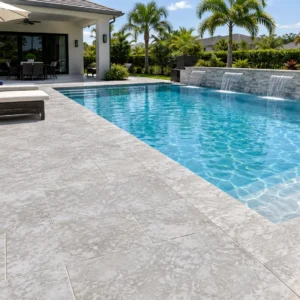
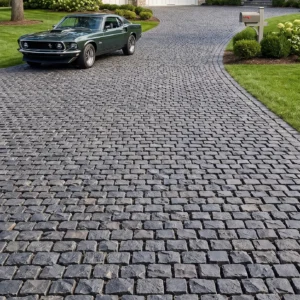
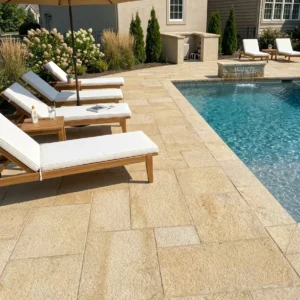
Most landscape stone cost breakdowns focus on the price tag per ton and stop there — but the projects that blow their budgets almost always do so because of variables that never appeared on the initial quote. Material pricing is only one layer of a landscape stone cost breakdown that spans delivery logistics, site preparation, terrain-specific engineering, and long-term maintenance. Understanding all those layers before you commit to a material type is what separates a well-executed project from an expensive retrofit six years down the road.
What Drives Landscape Stone Pricing
Natural stone is quarried, not manufactured, which means pricing reflects supply chain realities that synthetic alternatives don’t carry. The stone type alone can create a price spread of $80 to $400 or more per ton at the supply level — and that spread widens considerably once you factor in processing, grading, and cut. Here’s where most budgets get built incorrectly: buyers compare a processed, calibrated flagstone to a raw fieldstone by the ton and assume they’re pricing the same work. They’re not.
The core variables that determine your material cost per ton include:
- Stone type and origin — domestic versus imported material carries different freight and duty structures
- Processing level — raw split, hand-pitched, sawn, or tumbled all carry different labour costs at the source quarry
- Thickness calibration — calibrated stone requiring consistent 1.25″ or 2″ cuts costs more to produce than random-thickness material
- Grading and sorting — architectural-grade stone with consistent colour banding commands a premium over utility-grade
- Minimum order quantities — warehouse pricing typically drops per-ton when you cross the 5-ton or 10-ton threshold
According to usgs.gov/myb/vol1/2018/myb1-2018-dimension-stone.pdf”>USGS dimension stone production and use data, domestic dimension stone production varies substantially by region, which means supply chain costs for the same material type can differ by 15–30% depending on where it originates and how far it travels to reach your project.
Stone Type Cost Comparison
Your material selection is the biggest single lever in a landscape stone cost breakdown, and different stone families carry dramatically different price points. Knowing the rough cost ranges by category helps you filter options before requesting quotes — which saves time on both sides of the transaction.
Here’s a practical cost reference by stone category at the supply level:
- Crushed gravel and decomposed granite — typically $35–$80 per ton; lowest entry point, suitable for paths, drainage fill, and xeriscape beds
- River rock and landscape boulders — $60–$150 per ton depending on size, smoothness, and source quarry distance
- Limestone flagstone — $80–$180 per ton for utility-grade; architectural grades reach $220–$300 per ton
- Bluestone flagstone — $150–$280 per ton; higher cost reflects limited domestic quarry sources and strong demand
- Granite pavers and setts — $120–$250 per ton for standard grey; specialty finishes or colours push higher
- Travertine pavers — $180–$380 per ton; pricing reflects import costs and processing complexity
- Basalt pavers and cobbles — $140–$280 per ton; dense material requires more quarrying energy per usable unit
These ranges represent supply-level landscape stone costs, not installed costs. Your installed cost will include delivery, base preparation, and labour — discussed in the sections ahead.
Delivery and Logistics Costs
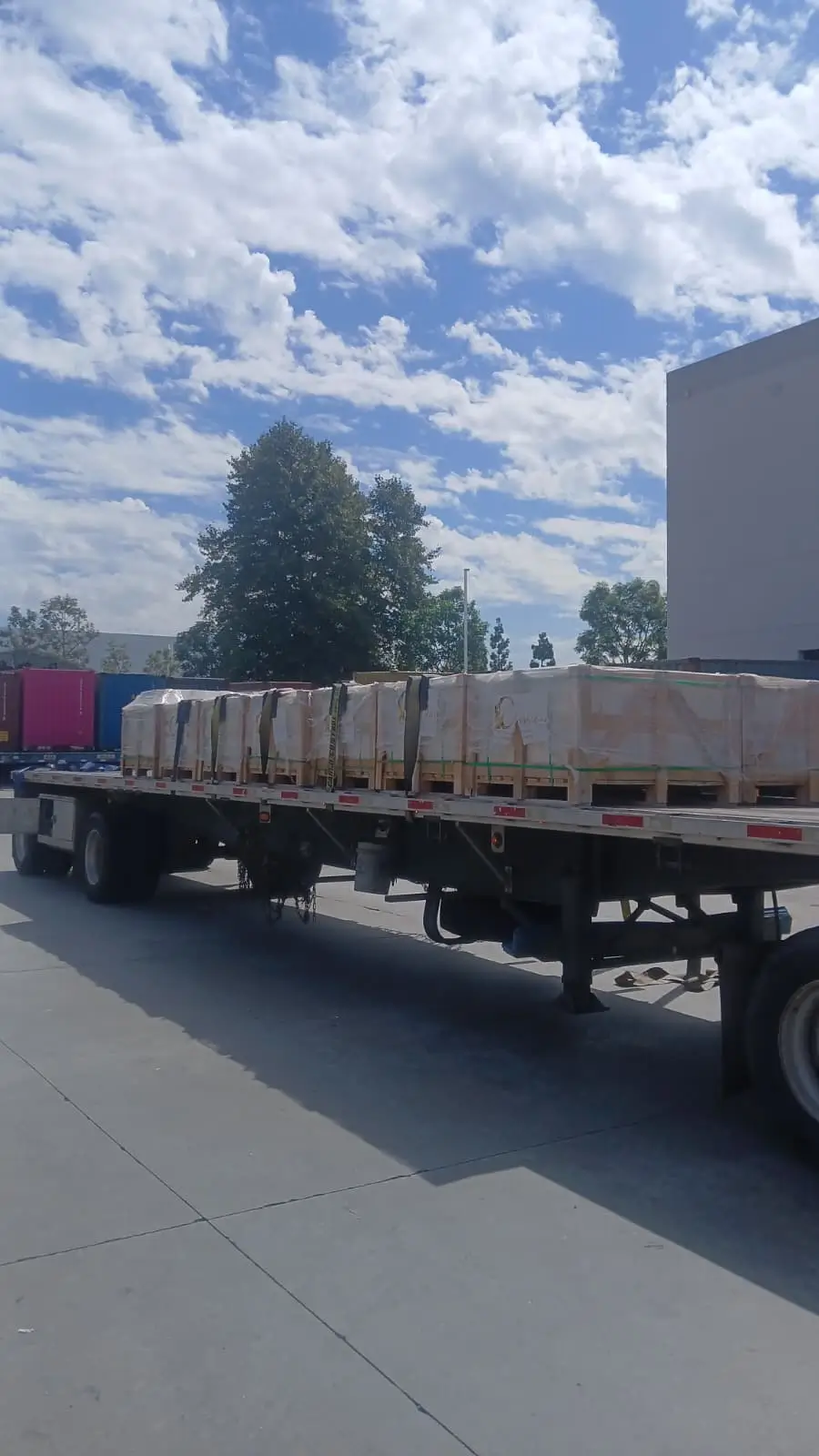
Delivery is the line item that surprises more buyers than any other in a landscape stone cost breakdown. Natural stone is heavy — a standard truck load of flagstone or pavers runs 20–22 tons — and freight pricing is distance-dependent, which means your actual delivered cost per ton depends heavily on where you are relative to the warehouse.
There are several delivery cost structures you’ll encounter when ordering bulk stone:
- Full truckload (FTL) — most cost-effective per ton; typically 18–22 tons on a flatbed; best for large projects where you can absorb a full truck delivery
- Less-than-truckload (LTL) — higher per-ton freight cost; practical for smaller orders but adds $30–$80 per ton over FTL rates
- Liftgate delivery — required when no forklift is on site; adds $150–$300 per delivery regardless of tonnage
- Inside delivery or jobsite placement — some carriers offer crane or boom placement for an additional fee; worth pricing for large boulder or slab work
Your project’s truck access matters more than most buyers anticipate. Narrow driveways, low overhead clearance, steep approach grades, or soft ground conditions can prevent a standard flatbed from reaching the drop point — which means you’ll pay for secondary handling to move material from the street. Factor truck access into your site assessment before you commit to a delivery schedule.
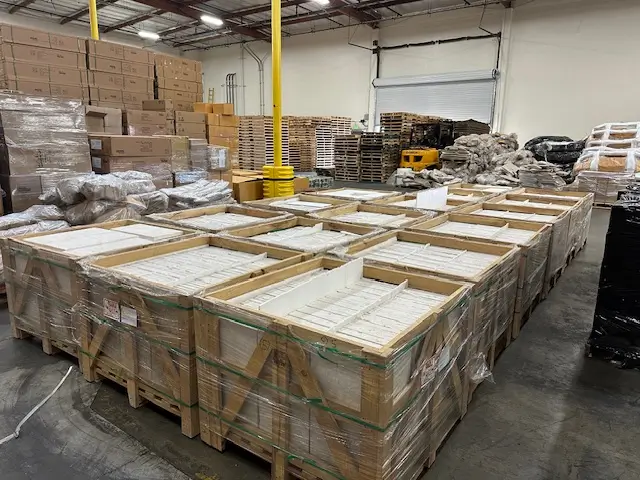
At Citadel Stone, we ship nationwide from warehouse stock, which typically means 1–2 week lead times rather than the 6–8 week import cycle that special-order stone carries. For projects with tight timelines, that warehouse availability is a real scheduling advantage worth building into your project plan.
Base Preparation Costs and Why They Vary
Base preparation is where cheap landscape stone projects earn their replacement costs. Skimping on base depth and compaction is the single most reliable predictor of premature failure — stone shifting, settling unevenly, or heaving — regardless of how good the surface material is. Your base cost will vary based on soil type, drainage requirements, and load expectations, but it’s never the place to cut budget.
Standard base preparation for landscape stone involves:
- Excavation — typically 6–10 inches total depth for a pedestrian-grade installation; deeper for vehicular-rated work
- Geotextile fabric — separates the aggregate base from native soil, preventing migration; $0.15–$0.40 per square foot installed
- Compacted crushed aggregate base — 4–6 inches minimum for pedestrian use; 8–12 inches for vehicular; crushed limestone or granite fines compact most reliably
- Setting bed — typically 1-inch screeded sand or crushed stone dust for paver work; mortar or concrete for permanent installations
- Drainage integration — perforated pipe, catch basins, or French drain channels added where natural drainage is insufficient
The Natural Stone Institute landscape stone variety selection guide reinforces that base engineering is as important as surface material selection in determining long-term performance — a recommendation that holds across every stone type and application.
Terrain and Elevation: How Site Conditions Change Your Budget
Flat, level sites are the baseline for standard base preparation estimates. The moment your site introduces meaningful elevation change — hillside paths, terraced gardens, sloped patios, or drainage-challenged low-lying areas — your cost structure shifts in ways that aren’t always obvious during initial budgeting.
Sloped terrain drives costs in several interconnected ways. Excavation on a grade requires more precise cut-and-fill work than flat excavation — you’re not just digging a consistent depth, you’re managing variable elevations across the footprint. That complexity adds time and equipment cost. More critically, sloped sites concentrate water movement. You need to engineer drainage paths deliberately rather than relying on natural sheet-flow dispersal, which means more drainage infrastructure per square foot.
Hillside installations also affect material handling. Getting stone from the truck to the installation area on a steep slope often requires additional equipment — compact track loaders, stone boats, or hand-carrying in sections — each of which adds labour cost. On severe grades, retaining walls become structural necessities rather than aesthetic choices, adding a separate material and engineering budget line.
Low-lying or poorly drained sites present the opposite challenge. Without adequate grade management and drainage infrastructure, water pools beneath the stone surface, destabilising the base and accelerating freeze-thaw damage in freeze-thaw regions. French drain systems, sump infrastructure, or elevated dry-set installations all add cost that doesn’t appear on flat-site estimates. Budget realistically for the terrain you actually have — not the idealised flat-site baseline.
Coverage Calculations and Tonnage Planning
One of the most consistent budget errors in landscape stone projects comes from inaccurate coverage estimates. Coverage per ton is not a fixed number — it varies with stone type, size gradation, installation depth, and whether you’re working with irregular fieldstone or calibrated pavers. Getting this wrong means either running short mid-project or over-ordering and absorbing unnecessary material cost.
Here are practical coverage reference points to anchor your planning:
- Crushed stone or gravel at 2-inch depth — approximately 100–110 square feet per ton
- Crushed stone at 4-inch depth — approximately 50–55 square feet per ton
- Flagstone at 1.5-inch nominal thickness — approximately 70–90 square feet per ton depending on stone density
- Flagstone at 2-inch nominal thickness — approximately 55–75 square feet per ton
- Cobblestone (4x4x4 nominal) — approximately 35–50 square feet per ton
- Boulders and accent rock — coverage is non-linear; estimate by piece count, not square footage
Always add 10–15% to your calculated quantity as a waste allowance for cuts, breakage, and pattern-matching losses. Irregular flagstone requires more waste allowance (15%) than calibrated pavers (8–10%) because you’re fitting shapes rather than setting uniform units. Ordering short and waiting for a second truck delivery disrupts project scheduling and often costs more in per-ton freight than the additional overage material would have.
Installation Labour Costs
Material costs typically represent 40–60% of total project cost for landscape stone work — which means labour is often the larger half of your budget. Labour rates vary by trade, region, and installation complexity, but understanding the labour cost drivers helps you build accurate total project estimates.
Dry-set installation (no mortar bed) is the least labour-intensive method and the most budget-friendly for informal landscape applications like garden paths, stepping stone corridors, and casual patios. You’re setting stone on compacted aggregate, adjusting level by hand, and filling joints with sand or polymeric sand — straightforward work that experienced landscape crews handle efficiently.
Wet-set or mortar-set installation runs higher in labour cost. You’re working with a curing material on a specific timeline, cuts need to be precise, and joints need to be tooled before the mortar sets. Expect 20–35% higher labour cost for wet-set work compared to dry-set, depending on the project scope.
Complex pattern work — herringbone, fan patterns, mixed-size random coursing — adds further labour cost. Pattern complexity slows installation pace and increases cut waste. For projects where pattern detail matters, budget an additional 15–25% over standard stack-bond or running-bond labour estimates.
Sealing and Maintenance Costs
The landscape stone cost breakdown doesn’t end at installation. Long-term maintenance costs — primarily sealing, joint sand replenishment, and occasional stone cleaning — are real budget items that belong in your total cost of ownership calculation, not afterthoughts.
Sealing requirements vary significantly by stone type. Dense granite and basalt have low absorption rates and may not require sealing at all in sheltered applications. Limestone, travertine, and sandstone-family flagstones are more porous and benefit from penetrating sealers applied every 2–4 years in outdoor conditions. Sealer application typically costs $0.50–$1.50 per square foot professionally applied, depending on product type and surface area.
Polymeric joint sand is a recurring cost item that’s often underestimated. Joints in dry-set installations need to be topped up periodically as sand migrates — typically every 3–5 years in normal conditions, more frequently in high-traffic areas or wherever surface wash-down is routine. Budget $0.10–$0.25 per square foot per maintenance cycle for joint sand replenishment. It’s a small number per event but compounds over the installation’s lifetime.
For projects with proper drainage design and base preparation aligned with industry best practices, long-term maintenance costs stay predictable. Projects that skip base or drainage engineering tend to accumulate remediation costs — stone resetting, drainage corrections, and efflorescence treatment — that exceed a decade of normal sealing and maintenance combined.
Cheap Landscape Stone: Trade-offs to Understand
There is a legitimate place for lower-cost stone in landscape budgets — but you need to understand what you’re actually trading when you select the least expensive option per ton. Cheap landscape stone choices often reflect compromises in processing quality, thickness consistency, or material density that have downstream effects on installation complexity and longevity.
The trade-offs most commonly encountered with budget-tier stone include:
- Thickness variation — utility-grade flagstone can vary from 0.75″ to 2.5″ within the same pallet, requiring more setting-bed adjustment and extending installation time
- Higher breakage rate — thin pieces or stress-fractured material increases cut waste and on-site replacement needs
- Inconsistent colour and surface finish — lower-grade material often includes more colour variation, which can be desirable for informal applications but problematic for formal patterned work
- Lower density material — some inexpensive sedimentary options have higher absorption rates and softer surfaces that show wear more quickly in high-traffic areas
- Limited availability — budget stone often reflects clearance inventory or off-grade material, which means restocking mid-project may not be possible from the same batch
For informal garden beds, path infill, or rural applications where some variation is aesthetically appropriate, utility-grade stone can deliver strong value. For formal terraces, entrance features, or high-traffic patios where consistency matters, the cost difference between utility and architectural grade often pays back in reduced labour cost and better long-term appearance. Understanding where cheap landscape stone fits — and where it doesn’t — is as important as knowing the price per ton.
Ordering Logistics and Project Timing
Your material ordering sequence directly affects project timeline and total cost. Stone ordered too early sits exposed on site and may require covered staging. Stone ordered too late creates scheduling gaps that idle installation crews at daily labour rates. Coordinating material delivery with installation readiness is a project management skill as important as the specification itself.
For most projects, the optimal ordering sequence is:
- Confirm base preparation completion date with your crew before placing the stone order
- Order stone 7–10 days before base prep completion to align truck delivery with installation readiness
- Verify warehouse stock on your specific stone type before finalising your timeline — some materials are warehouse-stocked for quick dispatch, others require special order with 4–8 week lead times
- Arrange a staging area on site that can accommodate a flatbed truck delivery — typically a 40-foot clear run-in with adequate ground bearing capacity
- Confirm whether your site requires a liftgate truck or crane-offload truck based on access conditions
Reviewing Citadel Stone bulk stone options early in the planning process helps you match available materials to your project budget before scheduling decisions lock in your timeline. Knowing what’s in warehouse stock versus what needs to be sourced lets you build a realistic schedule rather than discovering lead time constraints after contracts are signed.
Completing Your Landscape Stone Cost Breakdown
A complete landscape stone cost breakdown puts material, delivery, base preparation, terrain-specific engineering, labour, and long-term maintenance in a single view — not as separate line items that get compared individually, but as an integrated cost picture. The projects that stay on budget are the ones where every layer was understood before the first ton was ordered. Your terrain conditions, site access, and stone selection interact in ways that a price-per-ton quote simply doesn’t capture.
As you work through your material selection alongside your budget framework, it’s worth exploring how different stone types perform in your specific application. Understanding landscape stone varieties and their applications gives you a side-by-side reference for matching stone characteristics to project requirements — a useful complement to the cost framework covered here. Coverage per ton varies significantly by stone size and depth, and Citadel Stone’s team can walk buyers through accurate estimates before purchase.