

What Sets Lagos Blue Limestone Apart in Specification
Lagos Blue Limestone’s compressive strength typically lands between 12,000 and 15,000 PSI — a figure that puts it comfortably ahead of most sedimentary alternatives and well into the range where structural confidence is warranted for demanding outdoor applications. You’ll find this material sourced from selected quarries in the Middle East, where consistent geological conditions produce a tight, dense grain structure that directly influences how Lagos Blue Limestone performs over decades rather than years. That density isn’t just a sales point — it translates to measurably lower water absorption rates, typically below 0.5%, which is the threshold where freeze-thaw degradation starts becoming a genuine long-term concern.
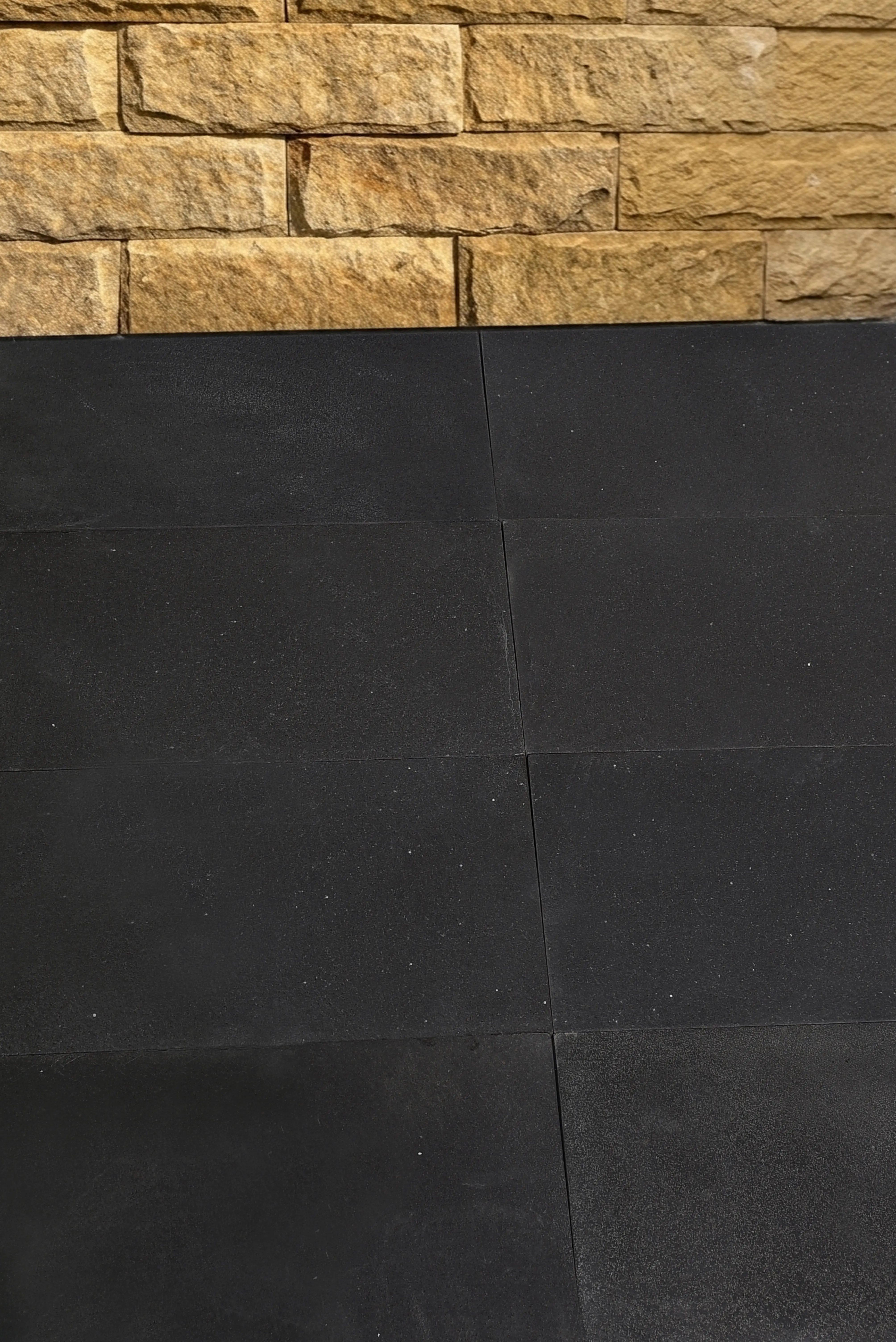
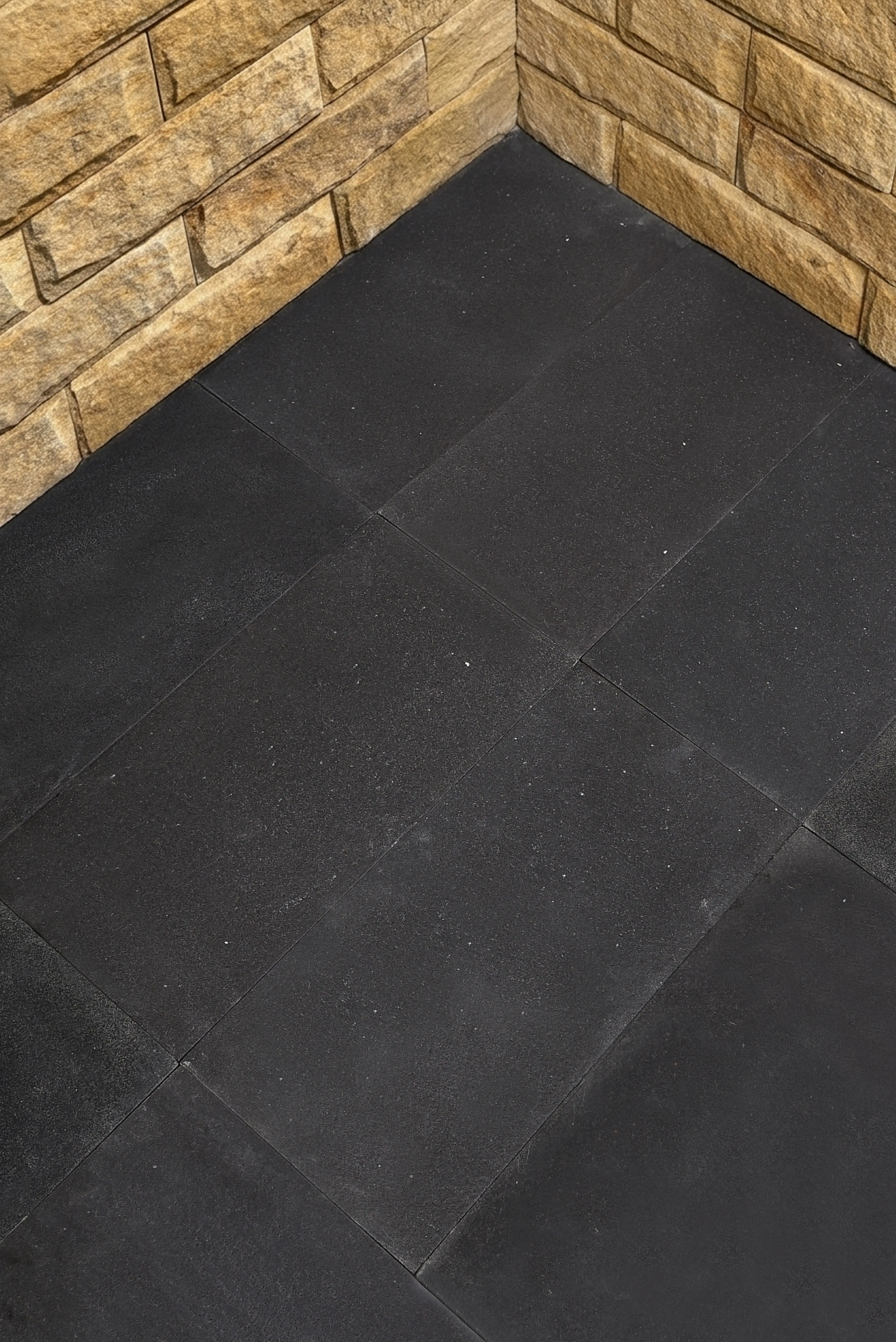
The blue-grey colouration that defines this stone isn’t a surface treatment — it runs through the full depth of the slab. That matters practically: edge cuts, saw lines, and chipped corners don’t reveal a contrasting interior, which simplifies remediation and keeps finished installations looking intentional even after years of use. Lagos Blue Limestone also exhibits a relatively uniform crystalline matrix, which means the honed finish it’s most commonly supplied in stays consistent across large format installations without the tonal variation that can complicate design intent.
Reading the Material for Your Project
Your first specification decision with Lagos Blue Limestone isn’t finish selection — it’s thickness. The standard 20mm slab works well for pedestrian patio applications with a properly prepared aggregate base, but the moment you’re specifying for driveways, vehicle access points, or areas with concentrated point loads, you need to move to 30mm minimum. The material’s density means it handles compressive loads well, but flexural stress from uneven support is where thinner flags crack — usually within the first two winters if the base wasn’t right.
Finish selection deserves more attention than it typically gets. The honed finish is the most common and the most forgiving in terms of maintenance, but it does carry a coefficient of friction that you should verify against your application. For pool surrounds or any surface that will see regular wet foot traffic, a flamed or brushed finish opens the surface texture enough to move COF readings from the borderline range into clearly safe territory. According to NSI limestone technical specifications, surface finish is one of the primary variables affecting both slip resistance and long-term maintenance requirements for dense limestone in outdoor settings.
- Honed finish: smooth, consistent tone, suitable for dry pedestrian areas and interior applications
- Brushed finish: moderate texture, retains the blue-grey character while improving wet-surface grip
- Flamed finish: aggressive texture, maximum slip resistance, slightly altered surface colour
- Sawn finish: raw cut face, typically used for wall cladding or where additional surface work will follow
Size Selection and Layout Planning
Lagos Blue Limestone in 600mm modular formats is where most large-scale patio and terrace projects start, and for good reason — the size works with standard joint spacing, minimises cut waste in rectangular layouts, and ships efficiently from the warehouse in full-pallet configurations that simplify site delivery. You can push to larger formats for a more contemporary aesthetic, but anything above 900mm in the shorter dimension starts requiring a more exacting base preparation protocol, because the larger the slab, the less tolerant it is of any base settlement variation.
Rectangular coursed layouts read as the safe choice, but consider the practical advantage of working to a module from the outset. Starting your design at the edge detail — whether that’s a pool coping line, a step nosing, or a garden border — and working inward with a 600mm module typically eliminates the awkward cut strips that end up at the least visible edge. That’s not just an aesthetic consideration: narrow cut strips under 100mm wide are structurally vulnerable regardless of the stone’s inherent strength, because there isn’t enough mass to resist edge loading without full mortar bed support underneath.
- 600mm x 600mm: most efficient warehouse-to-site logistics, minimum cut waste in square layouts
- 600mm x 900mm: rectangular module that suits elongated terraces and pool surrounds
- 600mm x 1200mm: large format requiring rigid base and full mortar bed — no spot bedding
- Mixed-module layouts: valid design approach, but require careful ordering to manage cut ratios
Base Preparation and Soil Conditions
Here’s where a significant number of Lagos Blue Limestone installations run into trouble — not from the stone itself, but from what’s underneath it. The material’s density and strength become irrelevant if your subgrade moves, and certain soil types create predictable movement patterns that you need to engineer around before the first paver goes down. Expansive clay soils are the most common culprit: they expand significantly when wet and contract when dry, creating a cyclic loading pattern under the slab that eventually works mortar joints loose and induces differential settlement across a terrace.
On clay subgrades, the standard 100mm compacted aggregate base isn’t sufficient. You’re looking at a minimum of 150mm of well-graded crushed aggregate, with geotextile separation fabric between the native soil and the aggregate layer to prevent clay fines migrating upward and contaminating the drainage capacity of your base over time. In areas where the clay content is particularly high, some specifiers opt for a cement-stabilised sub-base — essentially treating the top 150mm of native subgrade with cement to create a semi-rigid platform before laying aggregate on top. This adds cost but eliminates the settlement risk in one step. According to USGS data on limestone construction applications, proper subgrade preparation is consistently identified as the decisive factor in long-term performance of limestone paving installations.
Sandy soils present the opposite problem: they don’t expand, but they drain so freely that they can wash out from beneath the base in heavy rain events if the drainage geometry isn’t managed. Rocky or caliche subgrades are arguably the most straightforward to work with structurally — they don’t move — but they often require excavation work that drives up groundwork costs significantly. The practical approach is to get a basic soil assessment before you finalise your base specification, because the base design for Lagos Blue Limestone slabs on sandy loam looks very different from the design on expansive clay, and getting it wrong costs far more than the assessment.
- Expansive clay: minimum 150mm crushed aggregate base with geotextile separation layer
- Sandy or free-draining soils: install aggregate base with compacted borders to prevent washout at perimeter edges
- Caliche and rocky ground: verify drainage geometry before laying base — poor drainage traps water under the stone
- Mixed or variable subgrade: consider a reinforced concrete slab base to eliminate differential settlement risk
Mortar and Jointing Specification
Lagos Blue Limestone requires a full mortar bed installation — no exceptions for outdoor use. Spot bedding is a shortcut that shows up as cracked flags within two to three seasons, because the unsupported sections of a dense, heavy slab flex under foot traffic in a way that the stone cannot tolerate repeatedly. A full 40–50mm mortar bed at 1:4 to 1:5 cement-to-sharp-sand ratio gives you the rigid, continuous support the material needs to perform as specified.
Joint width is a detail that affects both aesthetics and long-term performance. A 3mm joint is achievable with Lagos Blue Limestone’s dimensional consistency, and it reads as a refined, near-seamless finish that suits contemporary design intent. However, for exterior applications in freeze-thaw regions, widening joints to 5–8mm gives thermal expansion and contraction somewhere to go without building stress at the mortar-to-stone interface. A 5mm joint with a cement-based pointing compound that includes a small percentage of polymer additive hits the right balance — enough flexibility to accommodate movement, enough rigidity to resist weed ingress and joint erosion. The geological characteristics of limestone, including its low thermal expansion coefficient relative to igneous alternatives, make it inherently more forgiving of tight joint specifications than granite or basalt in equivalent climates.
Sealing and Ongoing Maintenance
The water absorption rate of Lagos Blue Limestone — typically below 0.5% — means it’s far less porous than many limestone varieties, and that changes the sealing calculus. Sealing is not strictly required the way it would be for a more open-textured stone, but it remains worthwhile for two specific reasons: stain resistance and surface protection in high-organic-load environments like pool surrounds or tree-shaded terraces.
An impregnating penetrating sealer applied after initial curing is the right specification. Topical sealers sit on the surface and inevitably show wear patterns in trafficked areas — you’ll see this as a patchy, inconsistent sheen within the first year that requires full stripping and reapplication to correct. Penetrating sealers work below the surface and don’t alter the visual character of the stone while providing meaningful resistance to oil, wine, and organic staining. Apply the first coat six to eight weeks after installation once the mortar has fully cured, then plan on reapplication every three to five years depending on traffic intensity and exposure. At Citadel Stone, we recommend testing a small, inconspicuous area with the chosen sealer before full application — Lagos Blue Limestone’s tight grain means some penetrating sealers sit on the surface rather than absorbing fully, and you want to catch that before you’ve committed to the full terrace area.
- Initial application: penetrating impregnating sealer, 6–8 weeks post-installation
- Reapplication interval: 3–5 years for typical pedestrian use, 2–3 years for pool surrounds
- Cleaning routine: pH-neutral stone cleaner only — acidic products etch the calcium carbonate matrix
- Stain response: act quickly — even with sealing, prolonged contact with oils and tannins requires prompt removal
Ordering, Logistics, and Project Planning
Your project timeline should account for material lead time from the warehouse before you confirm installation dates with your contractor. Lagos Blue Limestone slabs in standard 600mm modular sizes are typically held in stock, which means turnaround from order to delivery can run as short as one to two weeks under normal conditions. Larger format slabs or specific finish variations may require a longer procurement window — confirm availability early, because committing a ground preparation and installation crew to a start date before stock is confirmed creates costly schedule gaps.
Truck access to the installation site is a logistics consideration that’s easy to overlook in the planning phase. Full-pallet deliveries of dense limestone are heavy — a standard pallet of 30mm Lagos Blue Limestone slabs can exceed 800kg — and the delivery truck will need either direct paved access to the drop point or a crane-offload arrangement. Sites with restricted access, low overhead clearances, or unpaved approaches should be flagged with the supplier at the point of ordering so the delivery can be coordinated with appropriate vehicle specifications. Citadel Stone’s logistics team handles nationwide project deliveries regularly and can advise on vehicle options for constrained sites before the truck is dispatched.
For projects requiring large quantities, consider phased delivery if your site has limited storage space. Lagos Blue Limestone slabs need to be stored flat on a stable, level surface with adequate separation between layers to prevent surface-to-surface abrasion during storage. Stack heights above four slabs are not recommended for 20mm material — the combined weight creates edge pressure at the contact points that can cause micro-fractures before the stone even reaches the installation stage. Browse our Lagos Blue Limestone range for current size options and stock levels before confirming your project schedule.
Comparing Lagos Blue to Related Limestone Variants
Specifiers regularly weigh Lagos Blue Limestone against similar blue-grey limestone options, and the distinctions matter more than the surface similarities suggest. The primary differentiator is density and absorption rate — Lagos Blue Limestone consistently delivers tighter grain and lower absorption than many European grey limestone alternatives, which is the technical basis for its strong outdoor performance credentials.
Gascogne Blue, for instance, shares the blue-grey tonal register but exhibits a slightly more varied crystalline structure that produces more pronounced vein movement in the surface. That variation reads as a design advantage in some contexts — particularly interior floor and wall applications where visual interest is valued — but for large exterior terraces where visual consistency matters, Lagos Blue’s more uniform matrix gives you a more predictable installed result. The compressive strength profiles are broadly comparable, but the absorption difference is meaningful for outdoor applications in wetter climates or where the stone will face regular wet-dry cycling. As you consider your blue limestone specification beyond this project, Gascogne Blue limestone options offer an informative counterpoint to Lagos Blue Limestone’s characteristics.
- Lagos Blue vs. Gascogne Blue: Lagos Blue offers tighter grain and more uniform tone; Gascogne Blue offers more visual variation
- Lagos Blue vs. grey sandstone: Lagos Blue has significantly higher compressive strength and lower absorption
- Lagos Blue vs. engineered concrete pavers: natural variation in Lagos Blue improves with age; concrete can fade and chip
- Lagos Blue vs. porcelain tile: Lagos Blue is thicker, heavier, and better suited to base irregularities than large-format porcelain
What Matters Most in a Lagos Blue Limestone Specification
Every Lagos Blue Limestone specification that goes sideways traces back to the same handful of decisions made early in the project — base depth relative to actual soil conditions, thickness matched to the load case, and finish selected for the real-world environment rather than the mood board. The stone itself is genuinely robust: its density, low absorption rate, and through-colour make it one of the more forgiving natural stone options to specify for demanding outdoor applications. But no material compensates for an undersized base on expansive clay or a 20mm slab laid on spot beds under vehicle loads.
The specification decisions that separate a Lagos Blue Limestone installation that looks excellent in year fifteen from one that shows stress fractures and joint failure in year four are mostly made before the first slab is laid. Get your subgrade assessment done, match your base depth to the soil type you’re actually working with, confirm your thickness against the real load case, and select your finish based on wet-surface COF requirements rather than visual preference alone. These aren’t complicated decisions — they’re just the ones that require attention before the groundwork starts rather than after a problem emerges. Our technical team at Citadel Stone is available to work through specification questions ahead of project commitment, which is particularly useful when subgrade conditions are variable or the installation environment is demanding. Stone for nationwide projects, our Lagos Blue Limestone is stocked in 600mm modular sizes for straightforward layout planning.
Related reading: belgian blue limestone flooring · blue limestone rock geology · blue limestone types compared.