

What Stone Grade Actually Tells You About Gascogne Blue
Gascogne blue limestone tile gets graded on three overlapping criteria that most specification sheets compress into a single letter — and that compression costs projects money. The grade reflects surface consistency (how uniform the blue-grey tonal range runs across a batch), structural density (measured as water absorption at or below 0.5% for premium commercial-grade material), and bedding plane orientation relative to the finished face. Understanding all three before you commit to a quantity locks in the visual outcome your client expects. The difference between a Select grade and a Standard grade isn’t always visible in a single sample tile — it shows up when you lay a full floor and step back.
Stone Type: What Makes Gascogne Blue Limestone Distinctive
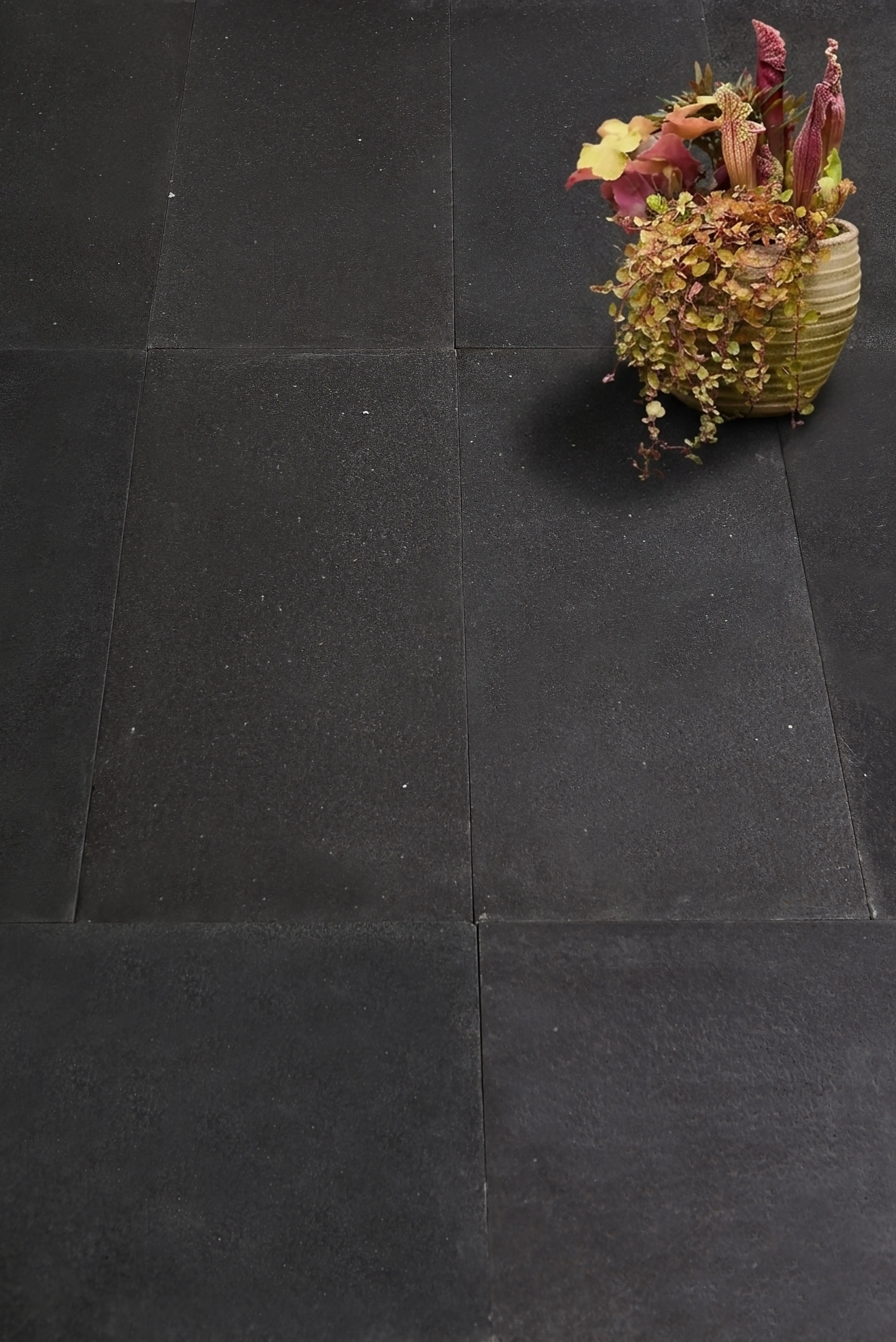
Gascogne blue limestone is a fine-grained, dense sedimentary limestone formed in shallow marine basins, and its characteristic blue-grey colouration comes from iron sulphide compounds distributed through the calcium carbonate matrix. According to Britannica’s limestone formation data, the specific mineral environment during deposition determines whether that colouration is consistent through the full depth of the stone or concentrated near the surface — a distinction that matters when you’re specifying honed finishes that remove the top layer. Gascogne blue belongs to the denser end of the limestone family, with compressive strength typically ranging from 14,000 to 18,000 PSI depending on the quarry bed and slab thickness.
The fossil content in this material deserves specific attention. You’ll find visible crinoid stems, shell fragments, and occasional gastropod sections in mid-grade material, and this character is part of what specifiers and designers pay a premium for. Select grades tend to have finer fossil distribution — not absent, but more evenly dispersed — while Standard grades can show larger, more prominent inclusions. Neither is inferior; they serve different design intentions. Where Select grade suits a contemporary minimalist floor, Standard grade’s bolder fossil detail reads better in transitional and traditional interiors.
The honed finish that defines most gascogne blue limestone tile specifications reveals the stone’s true character better than any polished surface would. Honing opens the pore structure slightly — sitting around 0.4% water absorption in good-quality material — and produces the matte blue-grey surface that photographers and designers consistently reach for. Polished finishes exist, but they shift the visual tone toward a cooler, more reflective grey that loses some of the warmth locked in the stone’s natural mineral variation.
Finish and Thickness Options Worth Specifying
Your finish selection for gascogne blue limestone tile sets the performance envelope before a single tile is laid. The three most commercially available finishes are honed, brushed, and tumbled — each with meaningfully different slip resistance profiles and maintenance requirements.
- Honed finish: smooth matte surface, coefficient of friction (COF) typically 0.5–0.6 dry, drops to 0.38–0.45 when wet — acceptable for interior floors, requires anti-slip treatment for wet zones
- Brushed finish: mechanically textured, COF 0.6–0.7 dry and wet, better barefoot traction, slightly more porous surface needs careful sealer selection
- Tumbled finish: rounded edges and aged texture, COF 0.65–0.75, grout joint width increases to 8–10mm to accommodate edge variation, ideal for period-appropriate and rustic applications
- Nominal thicknesses run 10mm, 12mm, 20mm, and 30mm — the 20mm and 30mm options are the ones to specify for exterior paving where a solid aggregate base may be interrupted by drainage features
- Large-format tiles (600×900mm and 900×900mm) require 20mm minimum thickness to prevent flex fracture over grouted spans, especially in areas with concentrated point loading
The Natural Stone Institute’s ASTM tile stone specifications provide the standard testing framework — specifically ASTM C97 for absorption and C170 for compressive strength — that any credible batch of gascogne blue limestone tile should be able to back with documentation. Always ask for test certificates tied to the specific quarry batch you’re purchasing, not generic material data sheets.
Bateig Blue Limestone: Understanding the Relationship
The terms bateig blue limestone and Gascogne blue get used interchangeably in some supplier catalogues, and that creates specification confusion worth resolving early. Bateig blue honed limestone tile originates from the Bateig quarry region in Spain and shares the blue-grey tonal family with Gascogne blue, but the two materials have different mineral matrices and different performance profiles.
Bateig blue typically presents with more pronounced grey veining and a slightly warmer base tone compared to the cooler, more neutral blue-grey of true Gascogne blue. The compressive strength of bateig blue limestone sits somewhat lower, typically 10,000–13,000 PSI, versus the 14,000–18,000 PSI range in premium Gascogne. That gap matters for high-traffic commercial flooring, driveways, and exterior terraces where point loading from furniture legs, trolley wheels, and vehicle tyres is part of the performance equation.
For interior residential flooring and feature wall applications, both materials perform well and the selection often comes down to the tonal preference your project demands. Bateig blue honed limestone tile tends toward a warmer, more varied face that suits Mediterranean and Spanish-influenced interiors. Gascogne blue limestone tile reads cooler and more consistent, which makes it the preferred choice for Scandinavian-influenced and contemporary minimalist specifications. At Citadel Stone, we stock both materials in warehouse inventory so you can physically compare batch samples before committing to a full project order — that side-by-side comparison consistently resolves what a digital swatch cannot.
Water Management and Base Preparation: The Hidden Performance Variable
Your base preparation for gascogne blue limestone tile determines whether the installation performs for 15 years or 30 — and the single most consequential variable in that preparation is drainage geometry. Limestone is a calcium carbonate material, which means prolonged hydrostatic pressure against the underside of installed tiles accelerates efflorescence, joint deterioration, and in severe cases, delamination of the tile from its bed. This matters everywhere, but it becomes critical in climates that see heavy seasonal precipitation, whether that’s a monsoon pattern, a hurricane season, or a sustained autumn rain cycle.
For exterior gascogne blue limestone tile paving, the minimum recommended cross-fall gradient is 1:80 — steeper than the 1:100 minimum applied to less porous materials because the slightly open pore structure of honed limestone allows surface water to penetrate before runoff carries it clear of the tile. Your aggregate base should provide a minimum 150mm compacted depth for pedestrian applications and 250mm for any vehicle-adjacent use. Drainage cells or a permeable bedding course between the aggregate and the tile bed are worth adding in any project where the soil beneath has clay content above 30% — clay retains water laterally, and that retained moisture migrates toward the tile joints during dry periods as the soil contracts.
- Use a mortar bed thickness of 40–50mm for honed tiles in exterior settings — thicker than standard to absorb minor subbase settlement without transmitting stress to the tile face
- Install perimeter drainage channels before tiling, not after — retrofitting edge drainage into an existing limestone installation almost always means cutting tile and disturbing the adjacent bed
- In high-rainfall zones, consider a breathable penetrating sealer rather than a film-forming sealer — breathable formulations allow vapour to escape upward through the tile face rather than trapping moisture in the mortar bed
- Grout selection matters: unsanded polymer-modified grout at 3–4mm joint widths for interior applications; sanded grout at 5–8mm for exterior use where thermal cycling requires joint flexibility
The gascogne blue limestone tile guide your project needs isn’t one that stops at material selection — it extends through the base design. Our technical team at Citadel Stone regularly works through base specifications with contractors and designers before orders are placed, because a correctly specified tile on a poorly designed base is still a failed installation.
Interior vs. Exterior Applications: Where the Spec Splits
Gascogne blue limestone tile reads differently indoors versus outdoors, and that difference isn’t just visual. Interior applications benefit from the material’s thermal mass — the stone absorbs heat slowly and releases it gradually, which moderates temperature swings in sun-facing rooms and creates an underfloor heating substrate that holds warmth longer than ceramic or porcelain alternatives.
Exterior applications demand the denser, lower-absorption grades. For exposed terraces and pool surrounds, you want material testing to confirm absorption below 0.5% and compressive strength above 14,000 PSI before you specify it. NSI limestone technical specifications outline the performance thresholds that distinguish exterior-grade limestone from interior-grade material — a distinction that suppliers don’t always make explicit in their product listings.
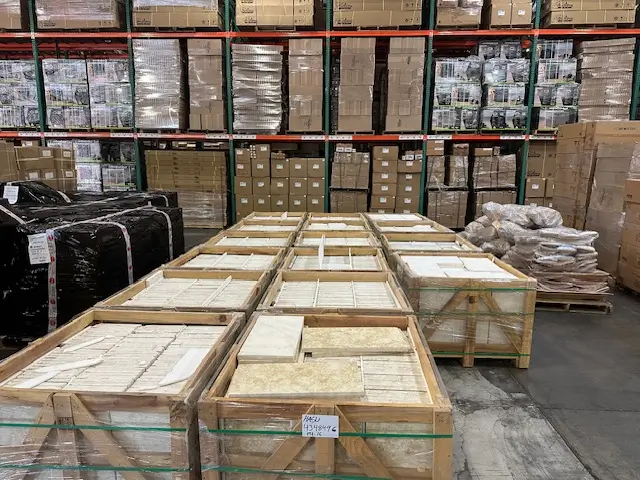
You’ll also want to check whether the tile you’re sourcing from Middle East quarries or European sources carries consistent grade documentation through the full batch. Quarry sourcing affects mineral consistency in ways that laboratory testing of sample tiles won’t catch — a batch spanning multiple quarry beds can show tonal shifts of 15–20% when laid across a large floor, even within a nominally uniform grade designation. At Citadel Stone, we pull warehouse samples from multiple positions within each incoming pallet before confirming a batch for a project specification, precisely because this variation exists at a frequency that matters for large-format floors.
Sealing and Maintenance: What the Spec Sheet Doesn’t Cover
Sealing gascogne blue limestone tile is not optional for exterior applications and not always straightforward for interior ones. The stone’s slightly open pore structure — the characteristic that gives honed gascogne blue its matte, tactile quality — is also the pathway through which oils, acidic liquids, and mineral salts enter the surface if left unsealed.
- Apply a penetrating impregnating sealer before grouting, not after — pre-grouting application prevents grout haze from bonding to the tile surface and makes the final clean dramatically easier
- Reapply sealer on exterior gascogne blue limestone tile every 2–3 years in mild climates, annually in environments with heavy rainfall, freeze-thaw cycles, or significant organic debris (leaves, organic acids from poolside vegetation)
- Avoid acidic cleaning products entirely — pH-neutral stone cleaners maintain the surface without attacking the calcium carbonate matrix that gives gascogne blue its density and colour
- For pool surrounds, chemical resistance matters: chlorinated water at pool-standard pH (7.2–7.6) is compatible with sealed gascogne blue, but unsealed edges and grout joints will show calcium leaching within one season
- Interior floors in kitchen and dining applications benefit from a matte sealer topped with a neutral pH daily cleaner — the combination protects against olive oil and wine without building up a film that dulls the stone’s natural surface character
The maintenance interval for gascogne blue limestone tile guide specifications should include a water-bead test: drip water on a cleaned, dry tile surface. If it absorbs within 30 seconds, the sealer has depleted and reapplication is overdue. If it beads for 90 seconds or longer, the sealer is performing as intended.
Sizing, Format Selection, and What Controls the Final Look
Your tile format selection for gascogne blue limestone tile determines the room’s visual scale more than any other single specification decision. Larger formats read as more expansive and contemporary; smaller formats — 300×300mm and 400×400mm — suit period interiors and spaces with complex geometry where cutting losses would penalise a large-format layout significantly.
For hallways and entry floors, the 600×300mm plank format is consistently the most effective. It draws the eye along the longer axis of the space, creates linear rhythm without the rigidity of a running bond brick pattern, and allows the fossil detail in the stone to be read at a natural viewing distance. The gascogne blue limestone tile guide for entry and hallway applications almost always defaults to this format for exactly those reasons.
You can review our gascogne limestone tiles to compare available formats and batch grades before your project specifications are finalised — confirming stock availability at the warehouse level prevents the schedule disruption that comes from discovering a format shortage after drawings are complete.
Truck delivery scheduling for large tile orders deserves attention early. Gascogne blue limestone tile in 30mm thickness and 900×600mm format runs approximately 52kg per square metre — a full project quantity for a 200m² commercial floor requires coordinated truck access and site storage planning that affects your installation timeline as much as the fabrication lead time does.
Ordering, Logistics, and Managing Lead Times
Lead time planning for gascogne blue limestone tile depends on whether your specification matches available warehouse stock or requires a custom quarry run. Warehouse-stocked formats and grades typically ship within 5–10 business days from order confirmation. Custom cuts, non-standard thicknesses, or matched-batch requirements for phased projects extend that timeline to 8–14 weeks, which needs to be built into project programmes before contract award — not discovered during procurement.
Quantity calculation for limestone tile projects should include a 10% waste allowance for standard layouts and 15% for diagonal or herringbone patterns. Gascogne blue limestone’s consistent density means cutting waste is predictable, but the fossil inclusions in Standard grade material can occasionally produce a tile that doesn’t meet visual acceptance criteria on-site — having the contingency stock available from the same batch prevents colour matching problems if additional material is needed later.
- Order all tiles required for the project in a single batch — tonal consistency between quarry runs is impossible to guarantee, and a second order even from the same quarry can read noticeably different under the same lighting conditions
- Confirm warehouse stock certificates show matching quarry batch numbers across all pallets before accepting delivery
- Acclimatise tiles on-site for 48 hours before installation in temperature-controlled environments — gascogne blue limestone expands at approximately 5.5 × 10⁻⁶ per °C, and installation in a cold warehouse followed by a heated interior without acclimatisation builds thermal stress into the bed before grouting begins
- Check truck access dimensions at the delivery site before scheduling — 30mm limestone tiles on full pallets require a rigid truck with tail-lift capacity, and restricted access sites need advance coordination to prevent delivery delays
Citadel Stone maintains national warehouse capacity that typically reduces standard-format lead times to under two weeks, which compares favourably to the 6–10 week import cycle associated with direct quarry orders. That stock depth also means batch-matching requests across multiple delivery stages of a phased commercial project are genuinely achievable rather than aspirational.
Getting Your Gascogne Blue Limestone Tile Specification Right
The specification decisions that define a successful gascogne blue limestone tile installation converge on three non-negotiable factors: grade selection matched to the application’s physical demands, base preparation designed around drainage rather than just load-bearing, and batch-consistent ordering that locks in the visual outcome from day one. Everything else — finish choice, format, sealing protocol — sits downstream of those three decisions and is much easier to optimise once they’re resolved. According to ASTM natural stone tile testing standards, confirming absorption and compressive strength through documented testing before acceptance is the baseline professional practice that separates a defended specification from a liability exposure. Your project deserves the former, and gascogne blue limestone tile — correctly graded, properly installed, and maintained with the right sealer programme — delivers performance and visual character that holds up across decades of real use. For projects where complementary stone selections are part of the hardscape planning, Belgian blue limestone floor applications offer a closely related material profile worth comparing before finalising your stone palette. Tile from Citadel Stone in gascogne blue limestone shows subtle fossil detail, adding character to entry floors and hallways.
Related reading: blue limestone rock geology · blue limestone types compared · blue sandstone vs blue limestone.