

What Blue Limestone Rock Geology Reveals About Its Field Performance
Blue limestone rock geology explains far more than colour — it predicts compressive strength, porosity behaviour, thermal stability, and long-term durability in ways that a surface inspection never could. The characteristic grey-blue tone develops from specific depositional chemistry: calcite-dominant carbonate sediment accumulating in oxygen-limited marine environments, with trace clay minerals and iron compounds locked into the crystal lattice during diagenesis. Understanding that mineralogy tells you exactly why this material performs differently under load and weather than standard pale limestone, and it directly informs how you should specify it for demanding applications.
Field experience confirms that specifiers who read the geology first make better material choices. You’ll find that the same formation geology responsible for blue limestone’s density — typically 2,550–2,700 kg/m³ — also drives its lower water absorption rate, often below 1.5% by weight, compared to higher-porosity limestone variants that sit above 3%. That gap in absorption is the difference between a surface that stays stable through seasonal wet-dry cycling and one that begins micro-fracturing within a few years.
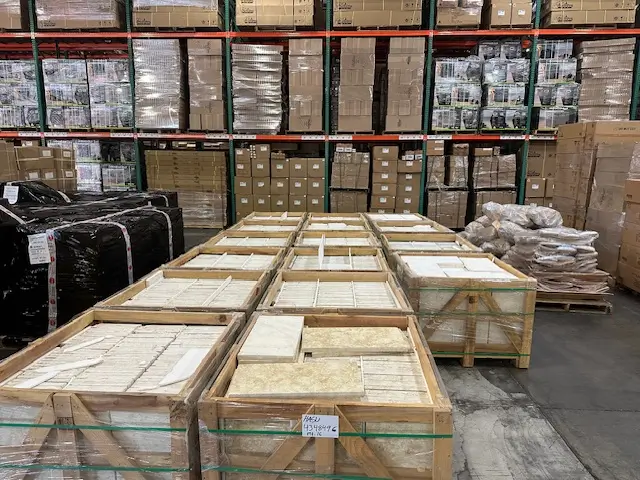
Sedimentary Formation and Mineral Composition
Blue limestone forms through marine carbonate sedimentation — shells, skeletal fragments, and calcite-rich mud compacting under pressure over millions of years. What distinguishes blue limestone from its paler relatives is the presence of fine clay minerals, particularly illite and smectite, along with trace iron sulphides such as pyrite. These compounds remain stable in reducing conditions during burial, and their preservation is precisely what imparts the blue-grey colouration. According to Britannica’s reference on limestone formation and characteristics, the diagenetic transformation of carbonate sediment into dense micritic limestone produces the tight crystal structure that gives quality blue limestone its characteristic hardness.
The calcite content in well-graded blue limestone typically exceeds 90%, with the remainder divided between dolomite, clay minerals, and minor silica. That high calcite dominance matters structurally — it contributes to a Mohs hardness range of 3–4 and supports compressive strengths commonly reaching 120–180 MPa in high-density variants. You’re specifying a material whose strength derives directly from its depositional history, not from surface treatment or finish processing.
- Calcite matrix above 90% supports reliable compressive strength across the density range
- Clay mineral inclusions (illite, smectite) create the blue-grey colour signature
- Trace iron sulphides remain stable when sealed and protected from prolonged oxidising exposure
- Micritic crystal structure reduces pore connectivity, lowering effective water absorption
- Formation depth and burial pressure directly correlate with final density and strength readings
Density, Compressive Strength, and Structural Specification
Density is the single number that collapses most of the blue limestone rock geology discussion into a specification-ready value. Dense blue limestone quarried from deep-seam deposits reliably measures 2,600–2,700 kg/m³, placing it at the upper end of the limestone family and comfortably above the 2,300 kg/m³ threshold where structural applications begin to diverge from decorative ones. That density directly determines how thick your slabs need to be for a given load scenario — and where most specifications go wrong is under-dimensioning thickness when density data isn’t verified from the specific quarry source.
Compressive strength data from blue limestone quarry stock shows a notable range depending on seam depth and clay content. Shallow-seam material may test at 80–100 MPa, adequate for pedestrian paving and light vehicular traffic, while deep-seam stock routinely exceeds 150 MPa — suitable for driveway loading and commercial hardscape. The Natural Stone Institute limestone technical specifications confirm that verified compressive strength testing under ASTM C170 is the baseline requirement before specifying any limestone for load-bearing applications. Your project’s structural engineer will want that test data, and you should be requesting quarry-specific certificates rather than relying on generic material datasheets.
- Pedestrian paving: minimum 80 MPa compressive strength, 30 mm nominal thickness
- Light vehicular use: target 100–120 MPa, 40 mm minimum thickness recommended
- Heavy driveway or commercial loading: specify 150 MPa+, 50–60 mm thickness, verified aggregate base
- Request ASTM C170 certificates from the quarry source — generic datasheet values are averages, not batch-specific
- Density variance within a single quarry can reach ±80 kg/m³ between seams — always confirm which seam a shipment originates from
Blue Limestone Quarry Extraction and Quality Grading
The blue limestone quarry process determines as much about final product quality as the geology itself. Bench quarrying with diamond wire saws produces the cleanest block extraction, preserving the natural bedding plane orientation that governs how the stone will behave in service. Slabs cut parallel to the bedding plane have superior flexural strength across their width — a critical detail when you’re specifying cantilevered pool coping or stair treads. Slabs cut across the bedding plane are weaker in bending and more prone to delamination under cyclical wet-dry stress.
At Citadel Stone, we inspect quarry blocks before processing and track bedding plane orientation through to finished slab grading. That step often gets skipped in commodity supply chains, and it’s one of the first things we check when a customer reports premature cracking in an otherwise well-installed application. The problem is almost always a bedding plane orientation error at the quarry processing stage, not an installation failure.
- Specify bedding plane orientation in your purchase order for structural applications — most suppliers won’t volunteer this unless asked
- Diamond wire saw extraction produces tighter dimensional tolerances than drill-and-blast methods
- Visual grading for blue limestone should assess colour consistency, vein presence, and fossil inclusion density
- Surface finish — honed, sawn, or brushed — affects slip resistance ratings significantly and should match the intended use environment
- Premium-grade stock shows uniform blue-grey colour with minimal brown iron staining at edges
Porosity, Water Absorption, and Durability in Service
Here’s what most technical summaries overlook: blue limestone’s low porosity doesn’t make it maintenance-free — it makes it more forgiving than high-porosity alternatives, but only within a specific performance envelope. Absorption rates below 1.5% mean that water ingress is slow, but it isn’t zero. In freeze-thaw regions, any absorbed moisture that cycles through freezing expands within the pore structure at roughly 9% volumetric increase, generating pressures that can exceed the material’s tensile strength if absorption is sustained over multiple seasons without sealing.
According to USGS data on limestone composition and construction applications, the interconnected pore structure of micritic limestone — which describes most blue limestone rock — limits capillary absorption compared to granular limestone types. That’s a geological advantage you can leverage in specification, but it requires pairing with a penetrating silane-siloxane sealer applied to a completely dry surface. You’ll achieve best results sealing at below 12% relative humidity in the stone — test with a moisture meter at the surface and 10 mm depth before applying. Field data consistently shows that sealer applied over residual moisture fails within 18–24 months, regardless of product quality.
For our quarried blue limestone rock, we recommend an initial seal within 30 days of installation and reapplication on a 3–5 year cycle depending on surface exposure and traffic intensity. High-UV environments and surfaces subject to regular wet-dry cycling warrant resealing at the shorter end of that range; sheltered interior applications can extend toward the 5-year mark without performance compromise.
Thermal Performance and Expansion Behaviour
The thermal expansion coefficient for dense blue limestone sits at approximately 7–8 × 10⁻⁶ per °C, which is lower than granite (approximately 10–12 × 10⁻⁶ per °C) but higher than engineered concrete pavers designed for dimensional stability. That number has a direct practical consequence: for outdoor paving in environments with significant diurnal temperature swings, expansion joints should be spaced at no more than 4–5 metres in each direction. Specifying at 6 metres — which generic guidelines sometimes allow for concrete — will create compressive stress concentrations at mid-panel that initiate surface spalling within a few years.
The thermal mass behaviour of blue limestone is a separate but related consideration. Dense blue limestone absorbs heat slowly and releases it gradually, which is genuinely useful in covered outdoor spaces and entry areas where you want to moderate temperature variation. In fully exposed, high-heat environments, surface temperatures can still reach 50–60°C in peak summer conditions, which is relevant for barefoot use applications. A brushed or textured finish reduces effective surface contact area and lowers perceived surface temperature compared to a honed mirror finish — a detail worth noting in your finish specification if comfort is a design requirement.
Complementary Stone Choices: Understanding the Broader Natural Stone Family
Blue limestone sits within a broader family of dense natural paving materials, and understanding where it sits relative to alternatives helps you make more confident specification decisions. Black slate crazy paving occupies a different part of that family — metamorphic rather than sedimentary, with foliation planes that give it a distinctly layered split-face character. Slate’s compressive strength can match blue limestone’s lighter grades, but its tensile strength across the cleavage plane is substantially lower, which creates constraints in applications with cantilever loading or point impact risk.
The choice between blue limestone and black slate crazy paving often comes down to the visual register required and the installation geometry. Irregular crazy paving formats in slate work well for naturalistic garden paths and informal terracing where joint widths vary and the organic character reads as intentional. Blue limestone’s more consistent colour and tighter dimensional tolerances make it the stronger candidate for formal paving, pool surrounds, and commercial hardscape where alignment precision matters. Both materials require a competent mortar bed installation — stable performance with either on a compacted granular base alone is unlikely when used as full slabs rather than stepping stones.
Cost Factors and Sourcing for Blue Limestone Projects
The material cost of blue limestone rock is only one component of your project budget, and in many scenarios it’s not the dominant one. Freight distance from the supply warehouse to your project site can add $8–$22 per square metre to the landed cost depending on delivery geography. That range matters when you’re comparing a blue limestone specification against locally available alternatives — a $4/m² price advantage at the quarry gate can disappear entirely if your project is three truck days from the nearest stocked warehouse.
Material-to-labour cost ratios shift significantly based on slab format. Larger slabs — 600×900 mm and above — reduce installation time per square metre because you’re laying fewer pieces, but they increase the crane and mechanical handling cost at delivery. A standard truck drop of palletised 600×600 mm blue limestone pavers can typically be offloaded with a standard pallet jack, while large-format slab deliveries require a truck with a Hiab or site crane — factor that into your logistics planning before committing to a format.
- Confirm warehouse stock levels before finalising project timelines — blue limestone in specialty grades can carry 4–6 week lead times from quarry to warehouse
- Freight cost per m² is lowest when you can schedule full truck loads — partial loads carry surcharges that erode unit cost advantages
- Labour rates for natural stone installation typically run 20–35% higher than for concrete paver installation due to the weight handling and precision cutting requirements
- Value engineering option: specify blue limestone in feature zones and a complementary grey limestone in secondary field areas to manage per-square-metre cost without compromising the design intent
- Request delivery scheduling that aligns with your site’s access window — truck access constraints on narrow residential sites can require smaller articulated vehicles, which add cost
Citadel Stone supplies blue limestone nationally from centralised warehouse stock, which compresses lead times to 1–2 weeks for most standard grades — considerably faster than the 6–8 week import cycle that applies when sourcing direct from overseas quarries without a domestic distribution partner.
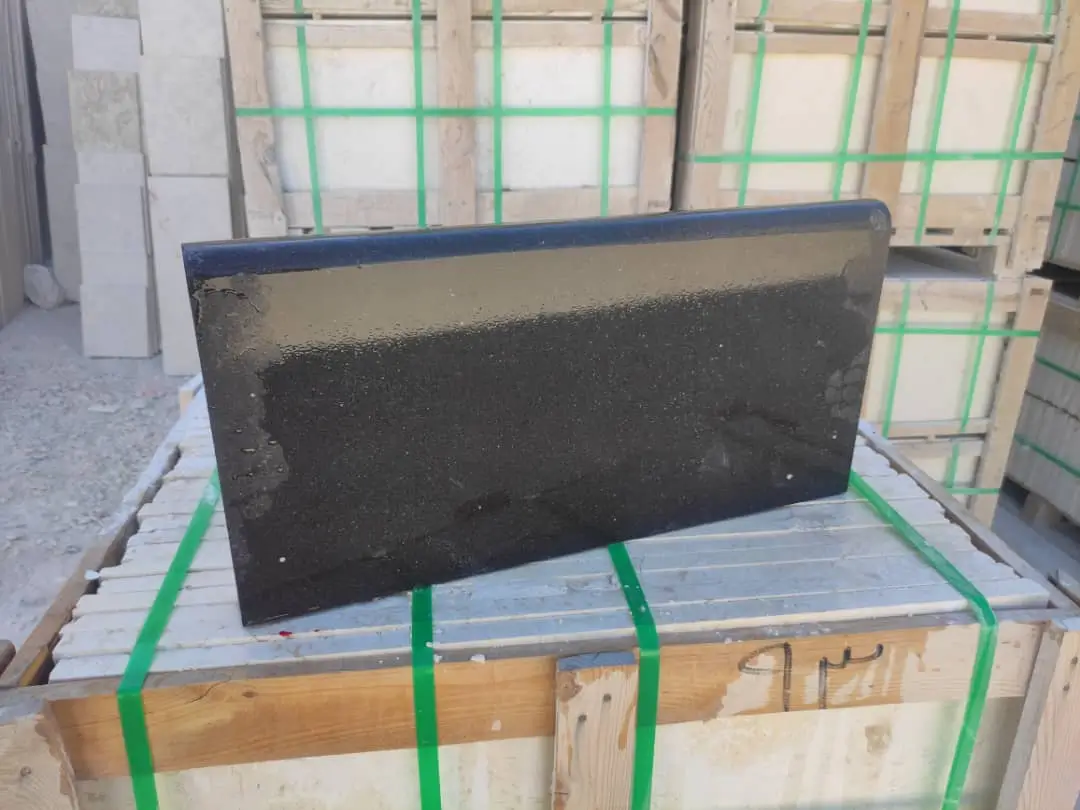
Blue Limestone Rock Formation in Practical Specification Context
The blue limestone rock formation data you need for a defensible specification isn’t complex, but it needs to come from the right level of the supply chain. Generic material certificates list average values for a broad geological unit — useful for preliminary feasibility but insufficient for final specification on any project where structural performance, aesthetic consistency, or longevity matters. You need quarry-seam-specific data: density, compressive strength, absorption rate, and flexural strength tested to ASTM C170, C97, and C880 respectively.
Your specification document should also define colour range tolerance, since blue limestone rock geology produces natural variation in the blue-grey spectrum. Specifying a “medium blue-grey” reference sample and requiring the supplier to match within a defined chromatic tolerance band protects you from batch-to-batch colour drift that’s common when quarry stock turns over between your initial sample approval and the main delivery. Request a full-pallet photographic record from the warehouse before dispatch — it takes ten minutes and prevents expensive site arguments about colour match after the material is already on the ground.
- Specify ASTM C170 compressive strength minimum on your drawing notes — not a product name alone
- Define thickness tolerance: ±2 mm for calibrated stock, ±4 mm for natural split product
- Require a colour reference sample approved before production and retained by both parties
- Confirm bedding plane orientation for stair treads, coping, and cantilevered elements
- Include sealing specification in the installation notes — it’s the single most common item omitted from natural stone project documents
Before You Specify Blue Limestone Rock
Blue limestone rock geology gives you a genuinely durable, dense, and visually consistent natural paving material — but the performance you get out of it is directly proportional to how precisely you specify it in. Verifying quarry source, seam depth, bedding plane orientation, and ASTM test data at the procurement stage costs you an hour of specification effort and saves weeks of dispute management after installation. The material’s intrinsic geology is your foundation, but the specification is what converts that geology into a reliable, long-service installation.
For colour specification decisions that run alongside your blue limestone selection — particularly if you’re considering lighter or warmer grey tones in adjacent areas — the grey limestone shade and tone guide covers how Citadel Stone grades and supplies the grey limestone spectrum, which pairs naturally with blue limestone in mixed-tone hardscape projects. Getting the tonal relationship right between stone zones is the kind of detail that separates a considered specification from a generic one. The mineral makeup of blue limestone — primarily calcite with trace clay and iron compounds — gives it the characteristic grey-blue hue that Citadel Stone carefully grades before supply.