

Understanding Long-Term Performance of Belgian Blue Limestone Flooring
Belgian blue limestone flooring develops its performance story over years, not weeks — and the variables that determine whether yours looks better at year ten than at year one are almost entirely in your hands. This material carries a compressive strength typically exceeding 150 MPa, which places it firmly in the upper tier of natural stone flooring options. What that number doesn’t tell you is how the stone responds to the cumulative stress of daily foot traffic, cleaning chemistry, and seasonal humidity shifts inside your space.
The honed finish most specifiers choose for interior applications creates a surface with a coefficient of friction between 0.60 and 0.72 — well within the range recommended by standard slip resistance guidelines for interior flooring. That reading changes when the stone is wet, which is why your sealing schedule matters as much as your initial installation quality. According to NSI limestone technical specifications, surface porosity and absorption rates directly influence how limestone responds to moisture exposure over its service life.
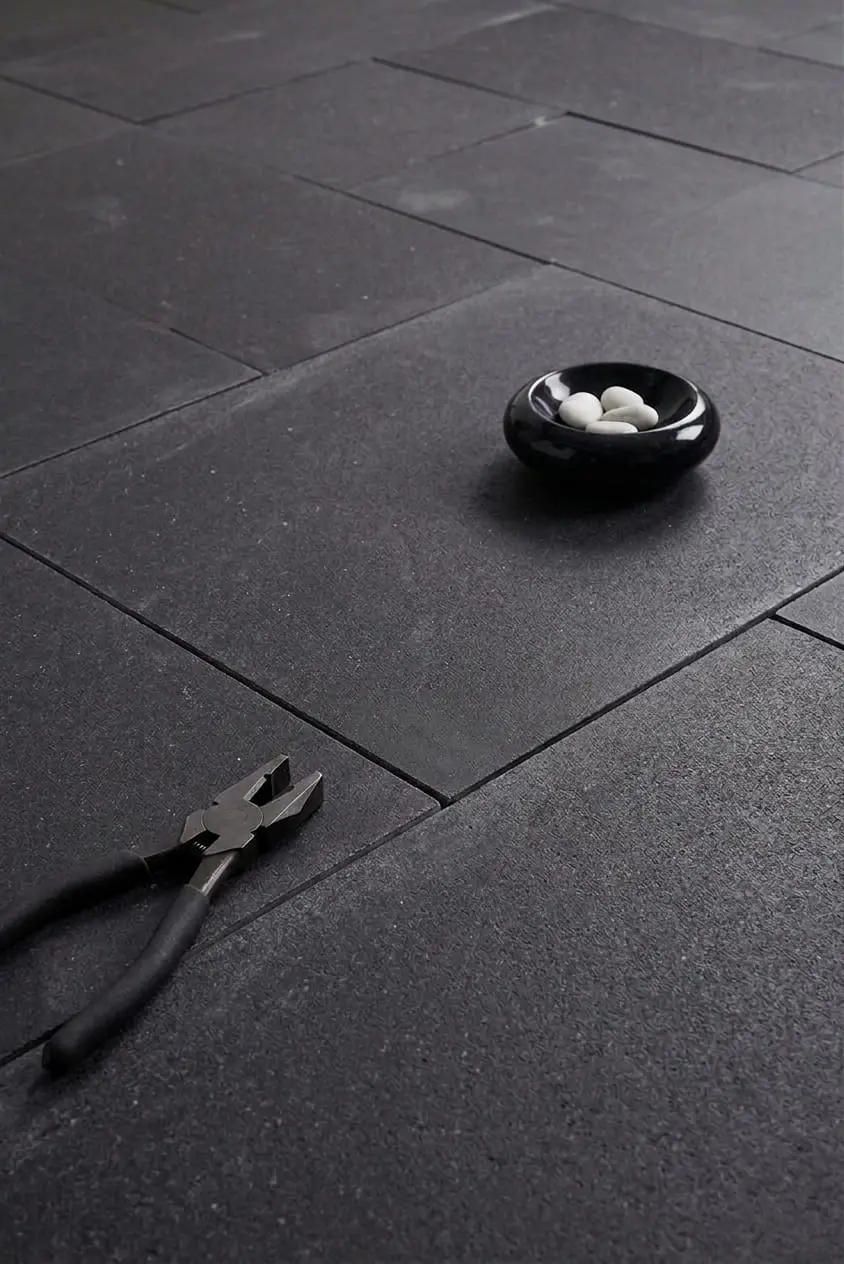
The Sealing Schedule That Actually Works
Your sealing protocol is the single highest-leverage maintenance decision for Belgian blue limestone flooring. The standard industry advice — “seal annually” — is a starting point, not a prescription. The honest answer depends on traffic volume, cleaning frequency, and whether the installation is in a kitchen, bathroom, or entry zone.
For moderate residential traffic, twice-yearly sealing with a penetrating silane-siloxane sealer delivers the most consistent protection. The stone’s interconnected pore structure means that surface topical sealers tend to peel under flex stress over time, particularly in areas with underfloor heating. Penetrating sealers bond within the matrix and don’t create a surface film that can trap moisture beneath it.
- Apply sealer only when the surface is completely dry — 48 hours after any cleaning or wet-mopping event
- Use a low-VOC penetrating impregnator rated for dense limestone with absorption rates below 0.5%
- Two thin coats outperform one heavy coat every time — allow 20 minutes between applications
- Wipe off excess sealer within 5 minutes of application to prevent surface hazing
- Test a small inconspicuous area first, especially on polished finishes — some sealers slightly deepen the colour
Daily Cleaning Without Causing Long-Term Damage
The most common source of long-term surface degradation in Belgian blue limestone flooring isn’t heavy use — it’s the wrong cleaning products used consistently over months. Acidic cleaners, vinegar-based solutions, and citrus-heavy products etch the calcium carbonate matrix. You won’t see the damage after one application, but after six months of weekly use, the surface starts to look dull and uneven in ways that polishing can’t fully reverse.
Your day-to-day cleaning routine should rely on a pH-neutral stone cleaner diluted to the manufacturer’s recommendation — typically 1:20 for regular maintenance. Avoid steam mops on unsealed or lightly sealed limestone; the combination of heat and moisture drives condensation into the pore structure faster than the stone can dry out between uses.
- Sweep or dry-mop daily in high-traffic areas to remove abrasive grit before it works into the surface
- Damp-mop with a well-wrung mop — standing water is the enemy of grout joints and stone edges
- Blot liquid spills immediately rather than wiping — wiping spreads the stain laterally into adjacent pores
- Address coffee, wine, and oil spills within two minutes for the best outcome on unsealed surfaces
According to USGS limestone composition data, the calcium carbonate mineralogy that gives Belgian blue its characteristic colour also makes it chemically reactive to acidic compounds — a property that directly informs your product selection for routine maintenance.
Joint Integrity and Grout Maintenance Over Time
The grout joints in your Belgian blue limestone flooring are a maintenance category in their own right. Unsanded grout in joints narrower than 3mm is standard practice for honed limestone tiles, but that joint width leaves very little material to resist the micro-movement that occurs in any structure over time. Cracks in grout joints aren’t just cosmetic — they become pathways for moisture and cleaning solution to reach the substrate.
For projects where our belgian blue limestone tiles are installed in areas with underfloor radiant heating, expansion in grout joints typically becomes visible within the first two heating cycles. Spec a flexible epoxy grout in those zones — the additional cost at installation is a fraction of what re-grouting costs once the floor is furnished.
- Inspect grout joints annually for hairline cracking, especially at perimeter edges and doorway thresholds
- Re-seal grout lines separately from the stone surface — grout absorbs at a different rate and needs its own impregnator
- Never use a stiff wire brush on grout — a soft nylon grout brush is the professional tool for stubborn grime
- Address cracked joints within one season — water infiltration beneath the stone leads to substrate damage that shows as hollow spots
How Mechanical and Weather Stress Affect Belgian Blue Over Time
Interior Belgian blue limestone flooring faces a different stress profile than exterior stone, but the principles of mechanical durability still apply. Heavy dropped objects, furniture leg pressure concentrated on small contact points, and — for installations near external doors or conservatory areas — wind-driven rain infiltration around thresholds all create localised stress that accumulates over years.
For flooring near external openings, edge restraint at transitions becomes a genuine performance variable. Where the stone meets a door threshold or expansion strip, movement from wind pressure differentials across the building envelope can transmit into the floor plane. Spec a flexible silicone transition joint rather than a rigid grout line at those interfaces — it absorbs the micro-movement that rigid joints crack under during storm events.
The stone itself handles impact well given its compressive strength, but the edges of tiles — particularly the 450×450 format popular for larger rooms — are the vulnerability point. Chipped edges in high-traffic corridors are almost always the result of point-load impact rather than general wear. Consider a 2mm bevelled arris on edge tiles in those zones.
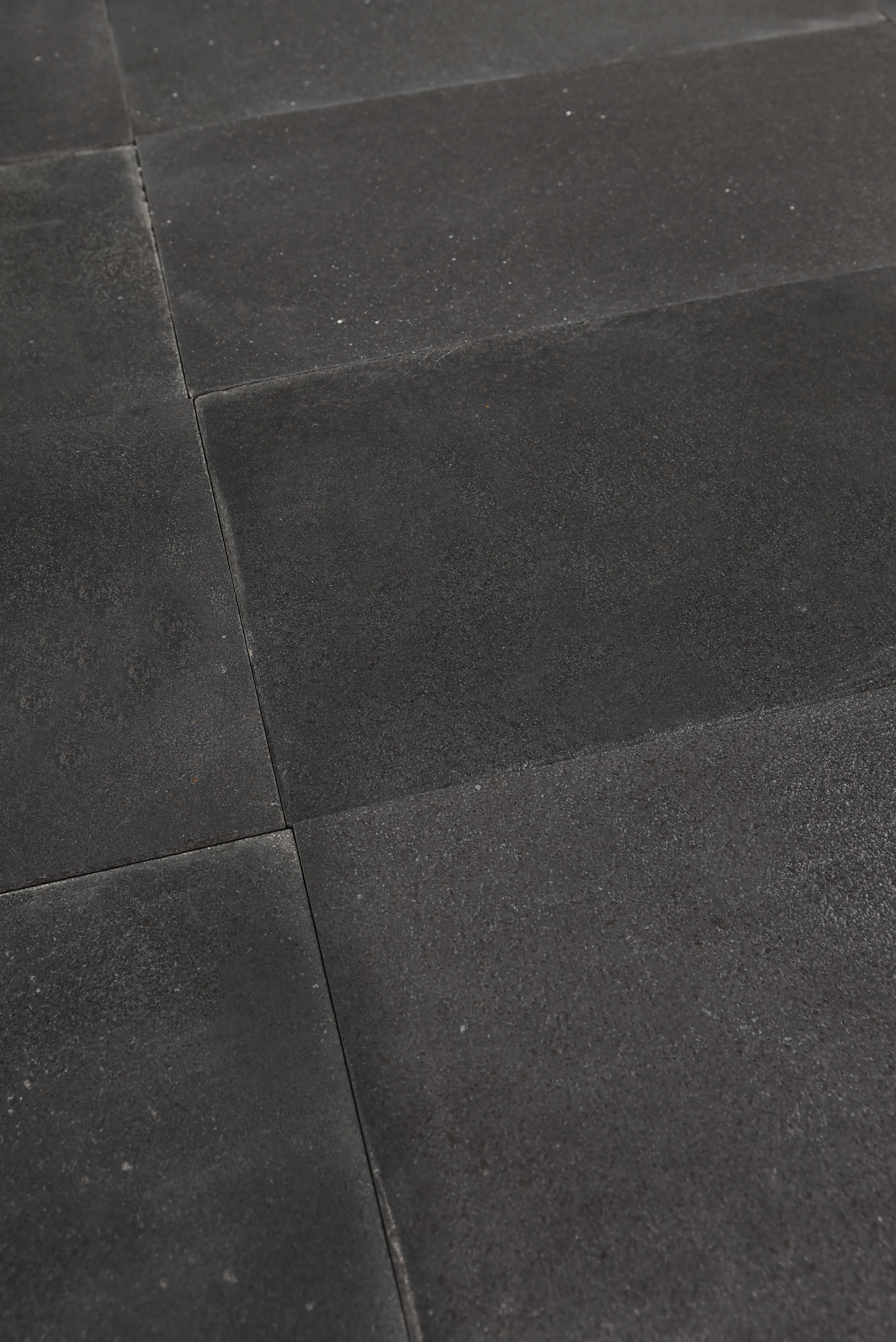
Repolishing and Surface Restoration: What’s Realistic
Belgian blue limestone flooring can be restored through professional honing and repolishing — but the process is more nuanced than general-purpose stone polishing. The blue-grey colouration in this limestone comes from mineral iron content and organic matter within the calcium carbonate matrix. Aggressive repolishing with coarse-grit diamond pads can expose lighter subsurface material and create tonal inconsistency across the floor.
A professional stone restoration contractor should start with a 200-grit hone to remove surface scratches, then step through 400, 800, and 1500 grit before any buffing compound is applied. The process takes longer per square foot on Belgian blue than on softer limestone varieties — budget accordingly. You’ll get a realistic 15 to 25-year window before the first full restoration is needed, assuming proper sealing and cleaning protocols are followed consistently.
- Minor surface scratches respond well to a 1200-grit hand pad between professional restoration cycles
- Deep etching from acid contact requires professional intervention — DIY repair attempts typically worsen tonal uniformity
- Test any restoration product on a tile from the original batch before applying across the full floor
- Budget for professional restoration every 15 years as a line item in any long-term maintenance plan
The TCNA natural stone installation standards provide guidance on substrate preparation and setting material compatibility that directly affects how well a floor holds up through restoration cycles — a detail worth reviewing before your initial specification is finalised.
Ordering, Stock, and Lead Time Planning
Your maintenance programme is only as effective as your ability to source matching replacement tiles when spot damage occurs. Belgian blue limestone flooring tiles vary in tone, veining, and surface character between quarry batches — which means sourcing a matching replacement years after the original installation is genuinely difficult without a known, consistent supplier.
At Citadel Stone, we maintain warehouse inventory of Belgian blue limestone flooring that allows most standard tile sizes to ship within one to two weeks rather than waiting through a six to eight week import cycle. Holding a reserve of ten to fifteen percent overage from your original order is standard professional practice — stored flat, dry, and wrapped, belgian blue limestone tiles hold indefinitely without degradation. Truck delivery for pallet quantities is available nationally, and your project coordinator should confirm access dimensions for the delivery address before the order ships.
For black paving slabs 450×450 — a format commonly used alongside Belgian blue in mixed interior-exterior projects — lead times and batch consistency follow the same logic: order from a single warehouse run wherever possible to maintain tonal continuity across the installation. When combining black paving slabs 450×450 with Belgian blue in the same project, confirming both batches ship together removes the risk of tonal drift between materials.
Making Belgian Blue Limestone Flooring Last: Final Considerations
Belgian blue limestone flooring rewards specifiers and homeowners who treat maintenance as a specification decision, not an afterthought. The twice-yearly sealing cycle, the pH-neutral cleaning protocol, the attention to grout joint integrity, and the careful edge detailing at thresholds — each of these is a simple, low-cost action that compounds into decades of performance. The material itself is fundamentally sound; it’s the accumulation of small maintenance choices that separates a floor that still looks exceptional at year twenty from one that needs full restoration at year eight.
For projects that combine Belgian blue limestone with other stone elements, the detailing principles carry across materials even when the maintenance schedules differ. If your project includes dark-toned hardscape in adjacent areas, blue-black slate paving options offer complementary tonal depth worth reviewing as you finalise your overall material palette. Sourced from internationally sourced quarries, Citadel Stone belgian blue limestone tiles resist etching better when sealed twice yearly.
Related reading: blue sandstone vs blue limestone · blue limestone countertops guide · gray pavers with black border.