The mistake most travertine owners make shows up six months after installation — not on day one. Knowing how do you clean travertine tile correctly from the start determines whether your surface looks sharp for decades or starts showing etching and discoloration well before it should. The chemistry at play is straightforward once you understand it: travertine is calcium carbonate, and acids dissolve calcium carbonate. That single fact rewrites every cleaning decision you’ll ever make with this material.
Why pH Matters More Than Product Brand
You’ll find dozens of cleaning products marketed for stone, but the only specification that actually matters is pH. Travertine sits comfortably between pH 7 and pH 10 — neutral to mildly alkaline. Anything below 7 starts an acid reaction with the calcite matrix. Vinegar, lemon-based cleaners, and bathroom tile sprays all land between pH 2 and pH 4, which means they’re actively etching your surface every time you use them. The damage isn’t always visible immediately, but the dull patches that appear over time aren’t wear — they’re chemical erosion.
- Neutral pH cleaners (pH 6.5–8) are the only safe daily option for travertine surfaces
- Mildly alkaline stone soaps (pH 8–10) work well for heavier cleaning cycles
- Products labeled “all-purpose” or “multi-surface” should be pH-tested before use — most are acidic
- Hydrogen peroxide at low dilution (3%) can address organic staining without acid risk
The Daily Cleaning Routine That Actually Works
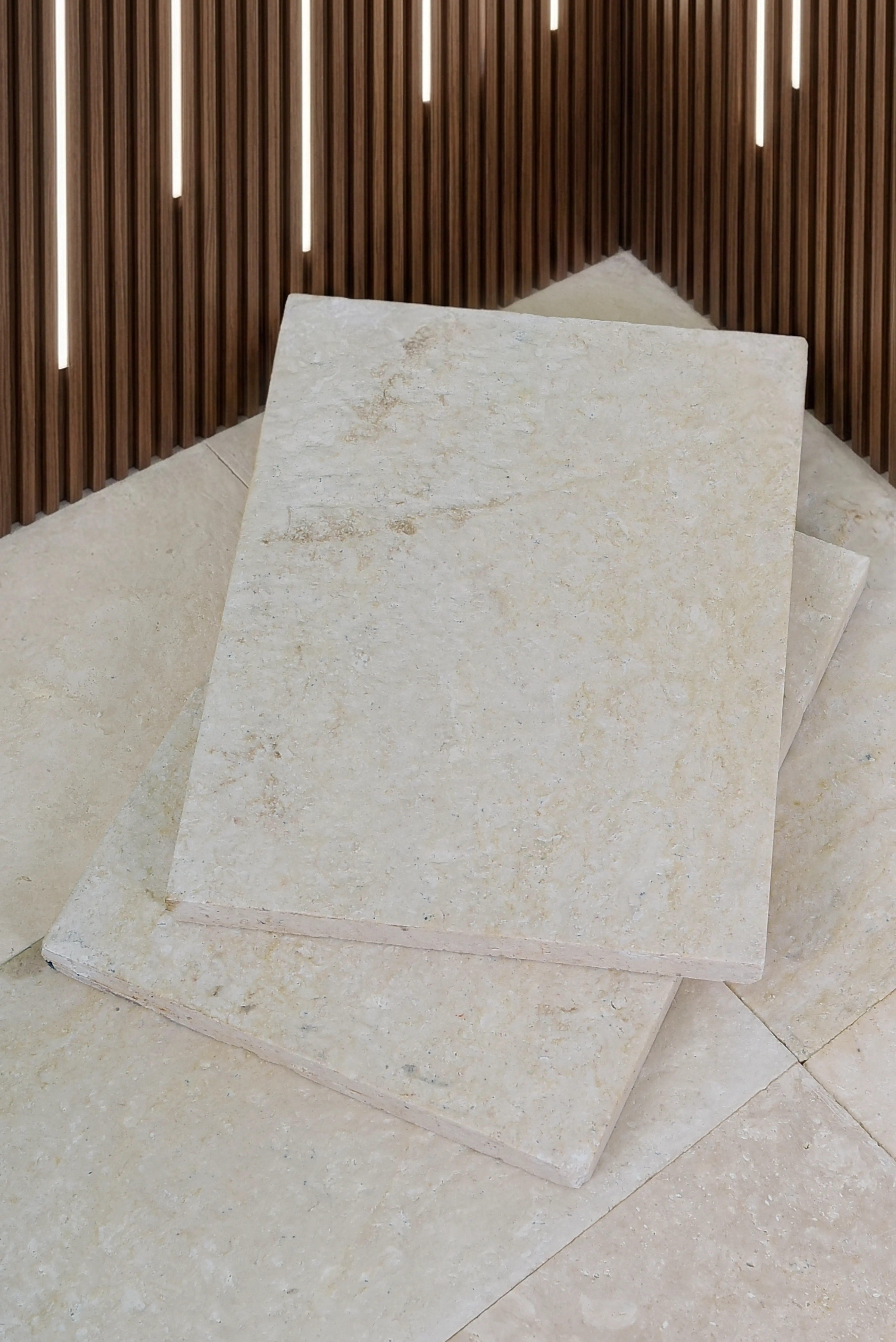
Dust mopping is your first line of defense, and it matters more than most people expect. Grit and sand particles act like micro-abrasives on polished or honed travertine — dragged across the surface underfoot, they create fine scratches that accumulate into a dull film over months. A dry microfiber mop or soft-bristle dust mop run daily removes that abrasive layer before it does damage.
For damp cleaning, your technique matters as much as your product. Wring your mop until it’s nearly dry — travertine’s open-pore structure absorbs standing water, and excess moisture sitting in unfilled voids creates long-term staining and potential structural softening of the grout bed beneath. Damp-mop with a pH-neutral stone cleaner diluted per the manufacturer’s ratio, then follow with a clean water pass to remove residue.
- Dry dust mop or microfiber sweep before any wet cleaning step
- Mop should be damp, not wet — wring thoroughly before contact with the tile
- Rinse with clean water after every cleaning pass to prevent cleaner residue buildup
- Dry high-traffic areas with a clean towel to avoid water marks in hard-water regions
Stain Removal: Matching the Treatment to the Stain Type
Not every stain responds to the same treatment, and using the wrong approach on travertine can compound the problem. The ASTM C1527 travertine dimension stone standard outlines porosity characteristics that directly explain why stain penetration depth varies with finish type — a polished surface resists penetration longer, while tumbled or honed finishes absorb spills more readily.
For organic stains — coffee, wine, leaves, mildew — a poultice made from hydrogen peroxide (12% solution) mixed with diatomaceous earth or unscented talc works reliably. Apply it wet, cover with plastic film, and let it draw the stain out over 24–48 hours. Rinse completely and allow the surface to dry before assessing. Oil-based stains from food or machinery require an acetone-based poultice instead, since water-based products won’t penetrate an oil bond. According to ASTM C1527 travertine dimension stone standard specifications, porosity varies significantly by finish and fill type, which affects how deeply a stain migrates and how aggressive your extraction approach needs to be.
- Organic stains: hydrogen peroxide poultice, 24–48 hours covered
- Oil-based stains: acetone or mineral spirits poultice, applied dry-side out
- Rust stains: commercial iron remover formulated for natural stone — never general rust products
- Hard water deposits: pH-neutral stone descaler only — never vinegar or CLR
What Most Travertine Tile Cleaning Guides Get Wrong
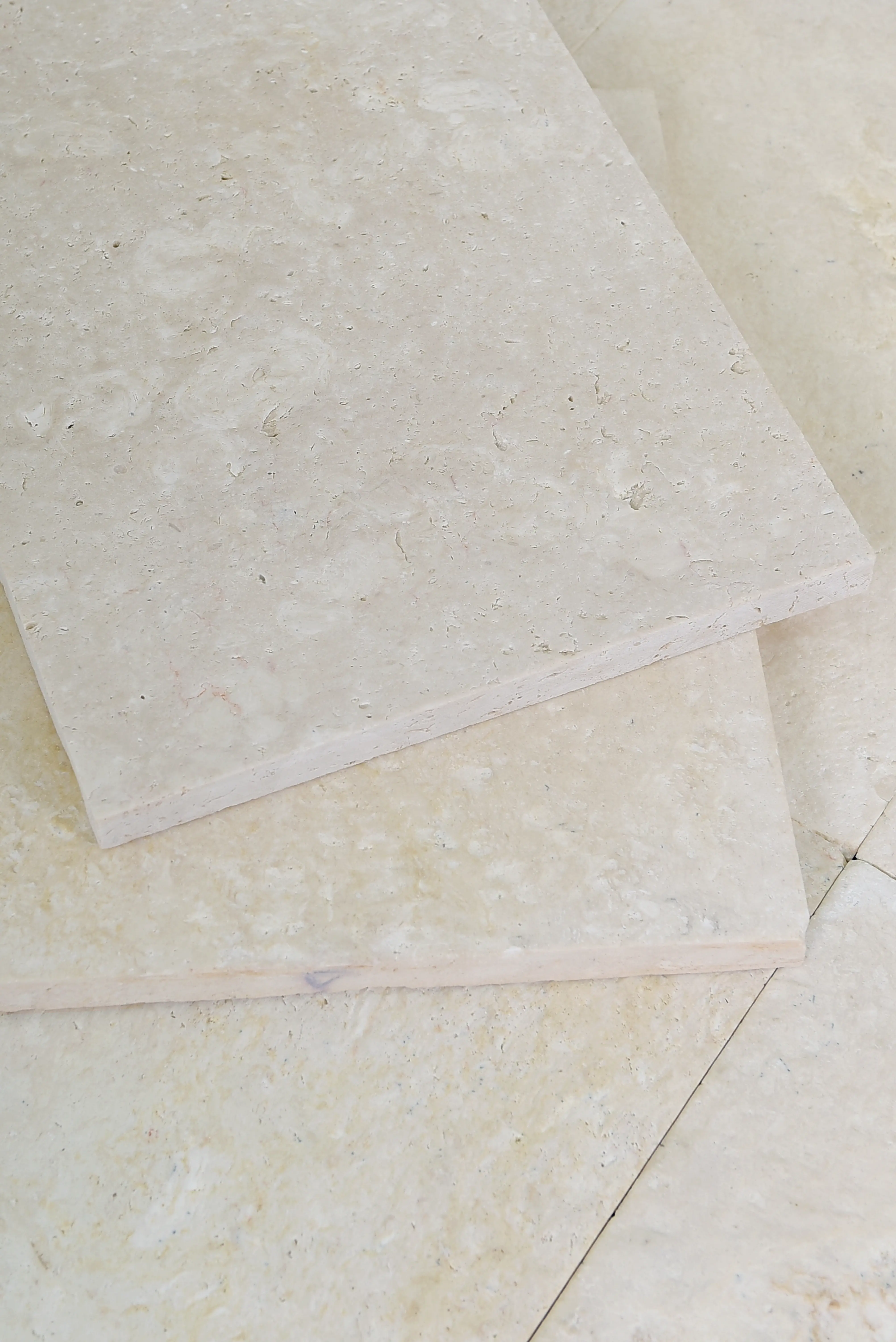
Online guides on travertine tile how to clean almost universally underestimate the role of grout and fill material in the cleaning equation. Travertine tiles come in two fill states: filled (voids pre-grouted with epoxy or cement) and unfilled (natural open holes left exposed). Cleaning protocols differ meaningfully between them. Unfilled travertine requires more aggressive drying after wet cleaning, because liquid that enters open voids can wick into the substrate and compromise the setting bed over time — especially relevant in climates with high humidity or where outdoor tiles are exposed to heavy rainfall seasons.
Explore our travertine tile products to see fill options, finishes, and thickness specifications before committing to a cleaning protocol — the right approach starts with knowing exactly what you have.
Sealing: The Prerequisite for Effective Cleaning
Sealing and cleaning are inseparable for travertine. A properly sealed surface resists stain penetration, reduces cleaning frequency, and makes removal of spills far simpler. The Natural Stone Institute’s travertine performance data confirms that impregnating sealers — penetrating formulas that enter the pore matrix rather than coating the surface — provide the most reliable protection without altering the tile’s appearance or slip characteristics. According to Natural Stone Institute travertine properties and outdoor suitability, the open-pore structure that gives travertine its thermal performance also makes consistent sealing essential for maintaining surface integrity over time.
Resealing intervals depend on traffic volume and exposure. Interior floors in moderate use areas typically need resealing every two to three years. High-traffic commercial entries or outdoor applications exposed to freeze-thaw cycling or monsoon-level rainfall events may need annual attention. The water bead test tells you when it’s time: drop water on the surface — if it absorbs within 30 seconds rather than beading, your sealer has depleted. Clean thoroughly before applying a fresh coat and allow 24 hours of dry time before foot traffic resumes.
- Use impregnating penetrating sealers, not topical coatings, for travertine
- Apply sealer only to a clean, dry surface — trapped moisture or residue degrades bond quality
- Two thin coats outperform one heavy application — wipe excess within 5 minutes of each application
- Resealing intervals: 1–3 years depending on traffic and climate exposure
Outdoor Travertine: Drainage, Cleaning, and Variable Climate Exposure
Outdoor travertine tile introduces variables that indoor surfaces don’t face. In regions with heavy rain seasons, hurricane exposure, or concentrated monsoon cycles, surface cleaning intersects directly with drainage performance. Water pooling on improperly sloped travertine isn’t just a slip hazard — it drives organic growth (algae, moss, mildew) into the surface at a rate that accelerates dramatically compared to well-drained installations. A minimum 1/8-inch-per-foot slope toward drainage points is the baseline specification; in areas with frequent intense rainfall, 1/4 inch per foot is the more protective standard.
Cleaning outdoor travertine after high-rainfall events requires removing organic debris promptly — leaves and organic matter left sitting create tannin staining that penetrates faster in wet conditions. A low-pressure rinse (under 800 PSI) clears loose debris safely. For stubborn biological growth, an oxygenated stone cleaner works without the acid risk of standard patio cleaners. Avoid pressure washing at high settings — the force strips sealer and can erode softer fill material from within the tile’s natural voids. In drought-cycle climates where mineral-heavy irrigation water contacts the surface regularly, hard water deposit buildup will outpace organic growth as your primary cleaning challenge, requiring a pH-neutral descaler formulated specifically for calcium carbonate stone.
Tools and Products That Protect Rather Than Damage
Your choice of cleaning tools matters as much as your cleaning product. Microfiber cloths and soft-bristle mops are the correct tools for travertine — they lift soil without micro-scratching the surface. Avoid scrubbing pads rated above non-scratch (the green and brown abrasive pads common in kitchens will mar a honed or polished finish within weeks). Steel wool is an absolute exclusion — it leaves iron particles embedded in the pore structure that oxidize into rust staining that’s genuinely difficult to remove.
For grout lines in travertine tile installations, a soft natural-bristle grout brush used with pH-neutral cleaner cleans effectively without damaging the tile edges. The Tile Council of North America’s installation standards recommend that cleaning tools used during the first 28 days after installation be particularly gentle, because cement-based grout continues curing during that window and is vulnerable to both acid exposure and abrasion. Review TCNA natural stone tile installation standards if you’re specifying cleaning schedules for newly installed travertine — the curing phase window changes what products and tools are appropriate.
- Microfiber mops and cloths for daily and damp cleaning cycles
- Soft natural-bristle brushes for grout lines and unfilled void edges
- No abrasive pads, steel wool, or stiff synthetic brushes on any travertine finish
- Bucket-and-mop systems should use separate rinse water — cleaning solution contamination re-deposits soil
Planning for Replacement and Maintenance Stock
One practical consideration that most cleaning guides skip entirely: always order 10–15% overage when sourcing travertine tile for a project. Natural stone is quarried in batches, and shade variation between production runs means a replacement tile ordered two years later may not match the installed field. Citadel Stone maintains warehouse inventory that allows customers to hold matched overage material until it’s needed — which is a meaningful advantage when a cracked tile or staining event requires spot replacement. Confirming warehouse stock of your selected batch before your project installation locks in color consistency for the long term.
Delivery logistics are worth coordinating carefully as well. Travertine is dense material — a standard pallet of 12×12 tiles runs 2,400–2,800 lbs. Confirm your truck access dimensions and weight limits before scheduling delivery, particularly for residential driveways with weight-rated curb cuts or gated access. Citadel Stone’s logistics team coordinates national delivery across the full range of project types and can advise on staging options when site access is constrained.
How to Clean Travertine Tile: The Principles That Hold
Cleaning travertine tile safely comes down to three non-negotiable principles: use only pH-neutral or mildly alkaline products, never use acidic cleaners regardless of how they’re marketed, and maintain your sealer so the stone isn’t absorbing everything that touches it. The specifics of your cleaning schedule — frequency, product concentration, tool choice — shift based on your finish type, whether the tile is filled or unfilled, and the environmental exposure your installation faces.
For anyone managing outdoor travertine in high-rainfall or high-humidity environments, drainage design and rapid post-rain cleaning are as important as the cleaning products themselves. Standing water and organic debris are the primary accelerants for staining and biological growth on exterior travertine. Get the drainage slope right at installation and your cleaning intervals stay manageable. For deeper guidance on long-term care schedules and product rotation, travertine tile maintenance planning covers the full scope of what a multi-year care program looks like in practice — a natural extension of everything covered here about how do you clean travertine tile over the long term. Sourced from internationally sourced quarries, Citadel Stone travertine cleans best with soft cloths and neutral solutions.
Related reading: gray travertine tile ideas · Polished Travertine Tile Finish: What to Know Before Buying · Travertine Tile Installation Cost: A Full Breakdown.