

The specification failure most installers encounter with a honed basalt entryway floor isn’t the stone itself — it’s the joint and substrate decisions made before a single tile is set. Honed basalt’s dense, fine-grained volcanic structure gives it a matte surface with a quiet visual weight that reads as both grounded and refined, but that density comes with a thermal mass characteristic that affects adhesive open time, substrate preparation, and long-term movement behaviour at the threshold. Understanding these variables before you commit to a layout is what separates an entryway that ages with integrity from one that develops lippage and hollow spots inside two winters.
Why Honed Basalt Suits the Entryway Environment
The entryway is arguably the most mechanically demanding interior floor zone in any building. It takes the highest point-load frequency — foot traffic channelled through a narrow corridor — combined with moisture ingress, grit abrasion from outdoor debris, and the thermal shock of a door opening into cold or hot air. A honed basalt entryway floor handles this combination well because its crystal structure is interlocked at the microscopic level, which makes the surface highly resistant to surface abrasion from grit and dirt tracked in from outside. The honed finish leaves the material with a smooth but non-reflective face, which reads cleanly even as the stone ages.
Basalt’s low absorption rate relative to sedimentary stones like limestone also means moisture tracked in from rain or snow has less opportunity to migrate into the body of the stone. According to USGS basalt volcanic rock properties, basalt forms from rapidly cooled lava, producing a fine, dense grain structure with very low porosity — the physical basis for its performance in moisture-prone threshold environments. You’ll still want to seal it, but the stone itself is not working against you the way an open-pored material would.
Surface Finish and What Honed Means in Practice
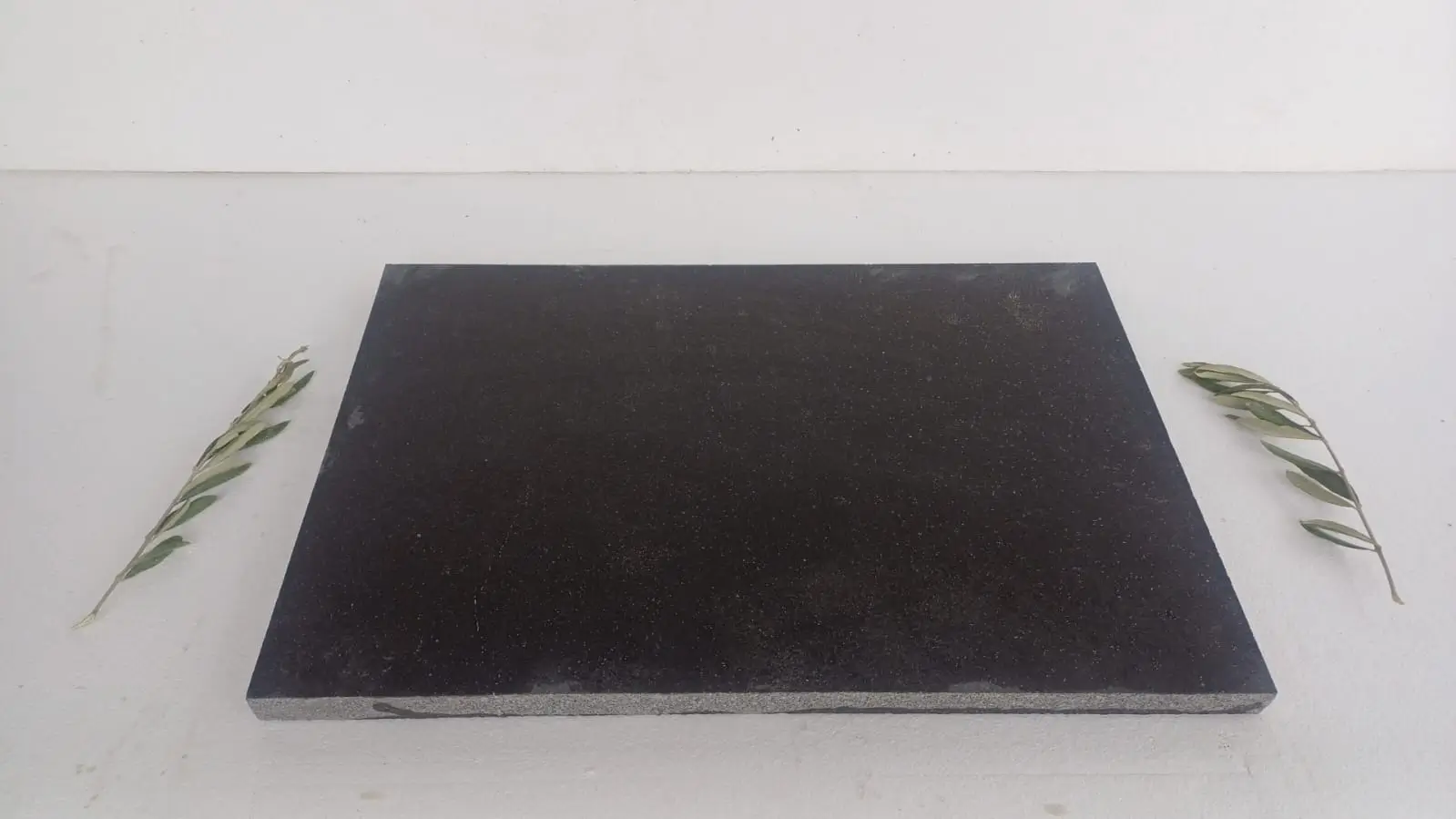
Honed is a specific finish, not a general category — and the grit at which the stone is honed changes the outcome meaningfully. A Honed 60 Grit finish leaves a slightly more open face, closer to a brushed character, while a Honed 120 Grit produces the tighter, crisper matte surface most designers are specifying when they say “honed basalt.” For interior entryways and foyers, Honed 120 Grit is the appropriate specification: it reads as sophisticated and intentional, it doesn’t telegraph dirt between cleanings, and it suits the dry-interior condition reliably.
Here’s what often goes unmentioned in finish discussions: the honed surface is not uniformly flat at the micro level. There is a very slight texture from the grinding process that gives the material its characteristic softness underfoot compared with a polished face. This micro-texture is purely an aesthetic and tactile quality — it describes how the surface feels and looks. Polished finishes, by contrast, are recommended only for dry indoor surfaces and would be out of place in a threshold zone that catches any moisture at the door edge.
- Honed 120 Grit: the standard interior specification for foyers, entry halls, and dry corridors — tight matte surface, refined appearance
- Honed 60 Grit: slightly more open face, closer to brushed character, better suited to covered indoor-outdoor transitions
- Polished finish: dry indoor surfaces only — walls, countertops, and fireplace surrounds, not entryway floors at a threshold
- Bush-Hammered finish: the correct choice when the entry has a covered exterior landing that gets wet — adds open texture without a safety claim
Substrate and Base Preparation for a Honed Basalt Entryway Floor
Basalt’s density creates a substrate demand that lighter materials don’t impose. The slab or screed beneath a honed basalt entryway floor must be flat to within the tolerance your tile size requires — typically no more than 3 mm variation under a 3-metre straight-edge for tiles with any dimension over 600 mm. Any deviation beyond that and you’re fighting the tile rather than the adhesive, and lippage at the joints becomes unavoidable.
The adhesive selection also matters more than most specifiers acknowledge. Large-format honed basalt tiles in an entryway need a high-performance polymer-modified cementitious adhesive applied with the back-buttering technique — full coverage on both the substrate and the back of the tile. Spot-bonding, which some installers use to compensate for a slightly uneven substrate, is not appropriate for this material or this application. The point loads at a front door are real, and voids beneath a dense stone tile are where hollow spots and eventual cracking begin.
- Substrate flatness: confirm compliance before tiling begins — grind or feather-coat high spots rather than compensating with adhesive
- Adhesive bed: full coverage, no spot-bonding, minimum 95% contact verified by lifting a tile during installation
- Curing time: allow the adhesive full cure before grouting — rushing this stage under foot-traffic pressure is the most common field error
- Movement joints: place at perimeters and at any structural movement joint in the slab beneath — never bridge a structural joint with stone
The Tile Council of North America installation standards provide the reference framework for adhesive coverage, joint placement, and substrate tolerance — request the current edition from your tile supplier if it isn’t already in your specification package.
Layout and Format Decisions for the Entryway
The entryway is a transitional space, which means the layout decision you make here sets the visual logic for the rooms beyond. A stack-bond grid in large-format honed basalt creates a graphic, contemporary effect that works when the rest of the interior uses clean lines. An offset or brick-bond layout softens the geometry and handles the narrow corridor proportions of many foyers more gracefully because the staggered joint breaks up the linearity of the space.
Consider the direction of the longest tile dimension relative to the axis of travel. Running the long dimension parallel to the entry axis — toward the main interior — creates a sense of depth and draws the eye inward. Running it perpendicular widens the perceived space, which is useful in a narrow foyer but can feel abrupt in a grand entry. These are design decisions, not structural ones, but they deserve the same attention as the substrate spec because you’re looking at them every day.
For honed basalt tile in an entryway, the format options Citadel Stone cuts to order include rectangular planks, large-format squares, and modular combinations — all cut from slab to the dimensions your project drawings require. Browse our honed basalt selection to review available thicknesses and formats before you finalise your layout drawing.
Grout Joint Width and Colour Matching
The grout decision is where many otherwise well-specified honed basalt entryway floors lose their coherence. Basalt is dark — typically in the charcoal-to-black range, sometimes with a subtle warm undertone — which means a light or mid-grey grout will read visually as a grid pattern that works against the seamless quality the stone offers. A charcoal or anthracite grout pulled close to the stone’s body colour gives you the continuous floor plane effect that makes large-format honed basalt work as a design statement.
Joint width is partly a function of tile calibration and partly an aesthetic choice. Factory-calibrated tiles can be laid at 2–3 mm joints; rectified tiles at 1.5–2 mm. Wider joints — 5 mm or more — introduce the grout as a visual element rather than a gap-filler, which can work in rustic or aged-stone applications but reads as under-specified with a honed surface. Keep joints tight and consistent.
Sealing and Ongoing Maintenance for Honed Basalt
Honed basalt in an entryway should be sealed before it enters service, and the sealer choice matters. A penetrating impregnating sealer — not a topical coating — is the correct product type for this application. Topical sealers sit on the surface and can alter the honed matte appearance, making the stone look shiny or slightly plastic. A penetrating sealer works below the surface, doesn’t change the visual character, and provides meaningful protection against the oils and moisture that an entry floor encounters daily.
The Natural Stone Institute stone care guidance is a useful reference for understanding the sealing and maintenance requirements of igneous stone types. For honed basalt specifically, the resealing interval depends on the sealer manufacturer’s stated performance life and your traffic level — a high-traffic commercial entry may need attention annually, while a residential foyer might go several years between applications. Follow the sealer manufacturer’s stated interval rather than a generic rule of thumb.
- Use a penetrating impregnating sealer, not a topical coating
- Apply before the floor enters service and allow full cure before foot traffic
- Test sealer performance periodically with a water drop — beading indicates the sealer is still active
- Clean with a pH-neutral cleaner; avoid acidic products that can slowly degrade the stone surface
- Reseal on the interval your sealer manufacturer states, adjusted for actual traffic conditions
Water Management at the Threshold and Drainage Design
Your entryway floor’s long-term performance is closely tied to how well water is managed at the building threshold. In climates with heavy rainfall seasons — coastal zones with hurricane exposure, regions that see monsoon patterns, or areas with prolonged wet winters — the volume of water tracked in at the door edge is significantly greater than in drier environments. That moisture concentration affects both the stone and the substrate beneath it if drainage and mat placement aren’t designed deliberately.
The threshold detail is critical. A properly formed threshold rebate with a drainage channel or a recessed mat well positioned just inside the door handles the bulk of moisture before it reaches the main floor plane. Where the threshold is flat and flush — common in renovations where the existing slab limits your options — a high-quality recessed entry mat system becomes essential, not decorative. The honed basalt entryway floor begins where the mat ends, and the transition detail between mat and stone needs to be watertight at the substrate level.
In freeze-thaw regions, the threshold zone also sees the most thermal cycling because it’s closest to the exterior air mass. The movement joint at the perimeter of the entry area isn’t just a specification requirement — it’s the relief valve that prevents the stone from cracking as the substrate moves through seasonal temperature changes. Design that joint into your detail drawings before installation begins.
- Recessed mat well or drainage channel at the door threshold captures moisture before it reaches the stone field
- Substrate waterproofing membrane under the threshold tile area provides an additional layer of moisture control in high-rainfall climates
- Perimeter movement joints are essential in freeze-thaw zones — size and space them based on your project’s specific movement calculation
- Slope the entry floor slightly toward a drain or toward the door edge in covered entry vestibules that may see wet footwear traffic at volume
Thickness Specification and Structural Considerations
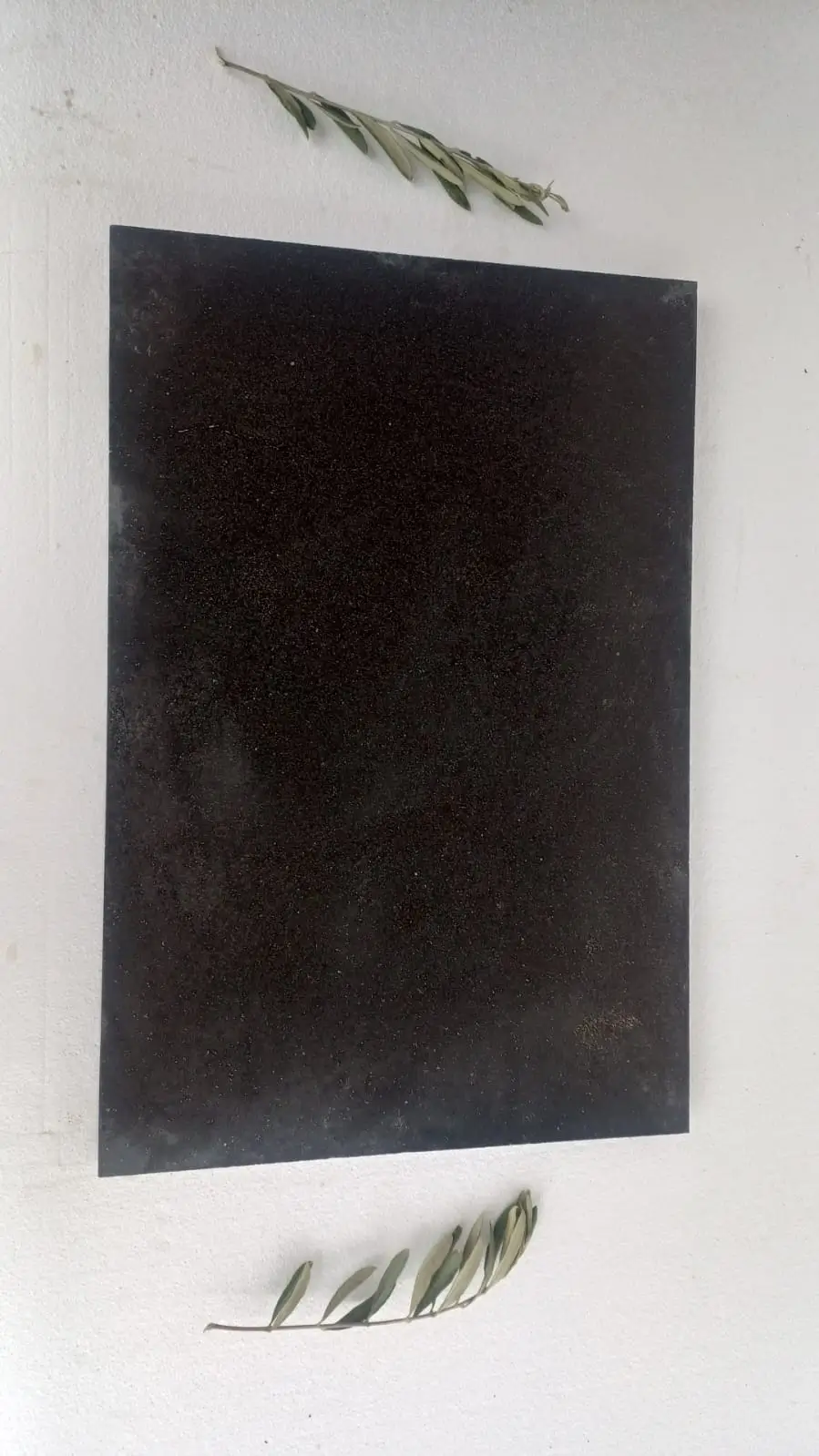
For interior entryway floors, honed basalt tile is typically specified at 10 mm to 20 mm nominal thickness depending on the format and the structural support beneath. Larger formats — anything over 600 x 600 mm — are more reliably specified at the thicker end of that range because the span-to-thickness ratio affects the tile’s behaviour under point loading. A large-format thin tile on a substrate with even minor flex will telegraph any movement as cracking at the face or at the joint.
Specify the ASTM test method for modulus of rupture if your project requires a structural verification of the tile’s flexural performance, and request the test report from your supplier. This is particularly relevant for large commercial foyer installations where point loads from luggage, equipment wheels, or concentrated foot traffic are higher than in a standard residential entry. Test reports are available on request from Citadel Stone for the material supplied.
Coordinating Delivery and Site Logistics
Planning the delivery of honed basalt for an entryway project requires attention to access conditions early in the project schedule. Dense stone tile on pallets is heavy, and the delivery vehicle needs adequate access to offload safely near the installation area. Your project’s access constraints — narrow driveways, restricted street access, or elevator limitations in multi-storey buildings — affect offloading arrangements and should be confirmed before the delivery date is set.
Lead times are quoted with the order and depend on the cut dimensions and quantity required. Citadel Stone cuts material to order at our selected quarries, so your dimensions and quantities need to be confirmed on the drawings before the order is placed. Ordering to the final cut size rather than ordering standard tiles and cutting on-site reduces waste and ensures the honed face is consistent from tile to tile — field cutting a honed surface requires edge-finishing to maintain the appearance at cut edges.
- Confirm access and offloading point before scheduling delivery
- Order to final cut dimensions where possible — field-cut edges require finishing to match the honed face
- Allow for a minimum of 10% overage on the order quantity to account for cuts, breakage, and future repairs
- Acclimate tiles to the interior environment for at least 24 hours before installation in climates with large indoor-outdoor temperature differentials
Getting the Honed Basalt Entryway Floor Specification Right
A honed basalt entryway floor that performs well over decades comes down to three decisions made before installation begins: substrate preparation executed to tolerance, a finish specification matched to the interior dry condition, and a threshold and movement-joint detail designed around the moisture and thermal realities of your climate. The stone itself is exceptionally durable and highly resistant to the abrasion and moisture that entry floors encounter daily — but it rewards careful specification rather than compensating for gaps in it. For entryway projects that also include wall niches, decorative borders, or feature panels, honed basalt mosaic ideas for walls and features offers additional design directions worth considering alongside your floor layout. Sourced from our selected Middle East quarries, honed basalt carries a fine matte surface, cut to size for your entry through our own fabrication services.
Related reading: honed granite vs basalt · Honed Basalt vs Polished Concrete Floors Compared · Flamed Basalt Tile: Texture, Color and Best Uses.