

Honed basalt mosaic ideas tend to converge on a single misunderstood decision: format size versus grout joint width, and how that ratio shapes the way an entire wall reads from across the room. A small-format mosaic on a large flat wall behaves very differently from the same tile used in a confined niche — the geometry of the space amplifies the pattern, so what looks restrained in a sample board can feel overwhelming when it wraps three sides of a shower recess. Getting that scale judgment right before you commit to layout is the specification step that separates installations people photograph from the ones they quietly tile over.
Why the Honed Finish Changes Everything for Mosaic
Honed basalt carries a matte, light-absorbing quality that polished stone simply does not. On a mosaic format — where the total grout-joint area is high relative to the stone surface — a polished finish would create a checkerboard of reflective stone and matte grout that competes visually. The honed surface unifies those two elements, keeping the eye on the overall pattern rather than jumping between individual pieces. That visual calm is exactly why designers reach for honed basalt mosaic ideas when they want texture without restlessness.
Basalt’s mineralogy reinforces the effect. The fine, even grain of this volcanic stone means the honed face is genuinely flat — not the micro-pitted surface you get when you hone a coarser-grained igneous stone. That flatness catches light diffusely and evenly, which is a meaningful advantage in spaces lit by task lighting from above, such as vanity alcoves and kitchen backsplash zones. The surface reads as a single tonal plane, not a field of individual reflectors.
Mosaic Format and Layout Options Worth Considering
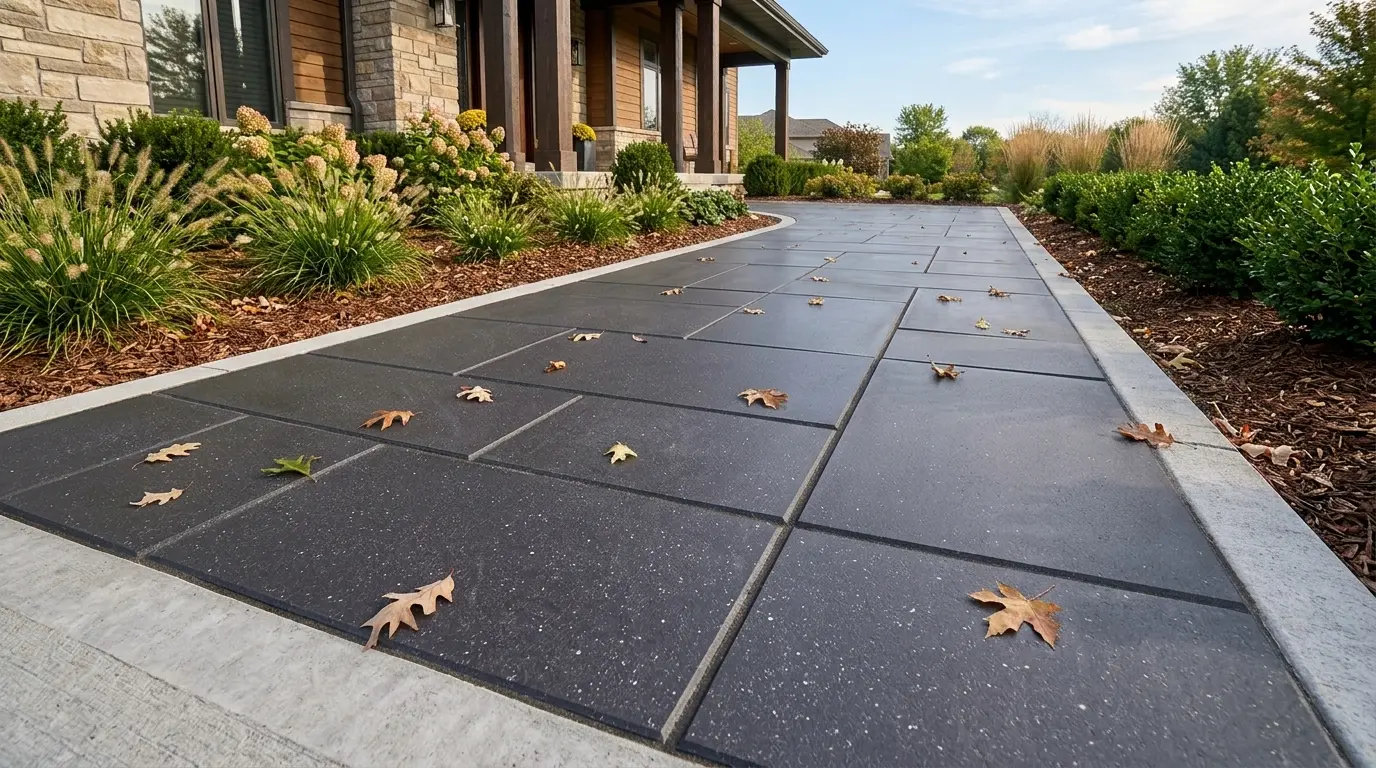
Format choice shapes the character of the installation more than almost any other variable. Smaller square formats — chip sizes in the 1-inch to 2-inch range — read as texture from a distance and resolve into individual pieces only when you are close. Larger brick-bond or elongated formats in the 1×3 or 2×4 range introduce directionality: horizontal coursing widens a space, vertical coursing lifts it. Both directions work with honed basalt mosaic ideas because the stone’s dark, neutral tone stays legible regardless of orientation.
Stack-bond layouts deserve specific attention here. A basalt stack honed mosaic in a strict grid reads as architectural and precise — it suits spaces where the design language is already geometric, such as a minimalist bathroom with frameless glass and linear hardware. Offset or herringbone layouts soften that rigidity without losing the material’s inherent seriousness. The grout joint width influences the outcome too: a tight joint in a stack bond maximises the stone’s presence, while a wider joint in the same format introduces a more artisanal rhythm.
For niches specifically, a running bond format on the back wall combined with a simple horizontal course at the shelf line gives the space a quiet structural logic. The layout defines the niche’s architecture, not just covers the surface.
Wall Applications: Feature Planes and Full Surrounds
Honed basalt mosaic feature walls read differently depending on the room’s light source and the wall’s relationship to adjacent materials. On a wall opposite a window, basalt’s dark surface absorbs rather than bounces light — it recedes, making the wall feel further away than it is. That effect can be used deliberately to dissolve boundaries in a small space, or it can be counterproductive if the goal is a warm, enveloping room. Knowing which outcome you are designing toward before specifying the stone is not optional.
According to Natural Stone Institute igneous stone technical standards, igneous stones such as basalt offer consistent mineral structure across the face, which matters when you are matching tone across many small mosaic pieces. Tonal consistency is the quality difference that becomes visible when sunlight rakes across a large feature wall — inconsistent pieces create a patchy field, while well-graded material produces a surface that breathes as a single element.
- Full-height feature walls benefit from a format with clear directionality — horizontal stack or running bond keeps the eye moving laterally rather than fragmenting the plane
- Half-height wainscot applications suit smaller chip formats, where the mosaic acts as a textural dado rather than a statement material
- Fireplace surrounds cut to size from honed basalt slab complement mosaic used elsewhere in the same room — the contrast between large-format slab and small-format mosaic reads as intentional and resolved; always verify the appliance manufacturer’s clearances and local code requirements before finalising the surround geometry
- External feature walls in covered outdoor rooms can carry honed basalt mosaic, though the finish selection for any surface that sees direct water requires careful thought — see the finish guidance below
Niche Design: Where Small Format Earns Its Keep
Niches are where honed basalt mosaic ideas genuinely shine. The confined geometry of a shower niche or a recessed alcove means the mosaic wraps three to five planes simultaneously, and the way the stone handles corners determines whether the finished niche looks crafted or awkward. Mitred corners on the tile sheets maintain the pattern without interruption; bullnose edges interrupt the field but are easier to execute on site. Most installers prefer the mitre on a material this dark because the grout joint at the corner becomes nearly invisible against the basalt ground.
Shelf niches in shower enclosures are a classic application, and for good reason — the small-format mosaic allows the waterproofing membrane to wrap continuously beneath the tile without the substrate transitions you would manage with a larger format. Your waterproofing system is what makes the niche function; the mosaic is what makes it beautiful. Specify the membrane system and the tile adhesive in the same step, not separately, and confirm that the adhesive is rated for continuous wet-area use with natural stone.
You can explore the depth and variety of finishes available by browsing our honed mosaic basalt range, which covers format options and sourcing details for current projects.
Outdoor and Landscape Applications
The design language of a landscape setting shapes which honed basalt mosaic ideas translate outdoors and which stay firmly indoors. In a modern minimalist garden — clean lines, restrained planting, concrete or Corten steel boundaries — a basalt mosaic used on a low retaining wall face or a water feature surround carries the same visual authority it has inside. The material connects the built and planted layers of the space without competing with either.
Desert xeriscaping and dry-climate garden styles pair particularly well with dark basalt because the stone’s volcanic origin resonates with the raw geological character of those landscapes. A mosaic panel on a courtyard wall, set among gravel and native planting, reads as an intentional material choice rather than an imported surface. Tropical garden settings are a different calculation — the lush foliage and high ambient humidity mean the stone’s dark tone can feel heavy against intensely green surrounds; in those contexts, a smaller mosaic accent used as a water feature liner or a planter face works better than a full wall application.
For outdoor mosaic on any surface that sees direct rain or irrigation overspray, a honed finish is appropriate for vertical planes such as walls and water feature surrounds. For pool decks, wet steps and slopes, choose a bush-hammered finish. For other outdoor paths, bush-hammered or brushed in our coarsest grit both work; check a sample.
Finish and Sealing Considerations for Mosaic Installations
The honed finish on basalt is achieved by stopping the grinding sequence before the surface reaches a reflective polish — it is an open, matte texture that accepts a penetrating sealer effectively. Because mosaic format means high grout-joint-to-stone ratios, your sealing strategy covers two different porous materials simultaneously: the basalt face and the cementitious grout. Those two materials absorb sealers at different rates, which matters when applying a penetrating impregnator.
According to Britannica’s overview of basalt, basalt’s dense, fine-grained mineralogy gives it lower porosity than many sedimentary stones, which affects how deeply a penetrating sealer migrates and how long each application cycle lasts. Your sealer manufacturer will specify reapplication intervals — follow those intervals rather than a generic rule of thumb, and reseal on the schedule they state for the specific product and the installation environment.
- Pre-seal the basalt face before grouting to prevent grout haze from bonding to the stone surface — this is the step most first-time natural stone mosaic installers skip
- Allow full adhesive cure before grouting, and full grout cure before sealing — compressing these stages introduces moisture that compromises both the bond and the sealer’s performance
- In wet areas, use an epoxy grout if the design calls for a very tight joint — it reduces porosity at the joint and simplifies long-term maintenance
- Apply the final sealer coat in thin, even passes; pooling sealer on a honed surface leaves a visible residue that dulls the finish unevenly
Surface Texture and Wet-Area Suitability
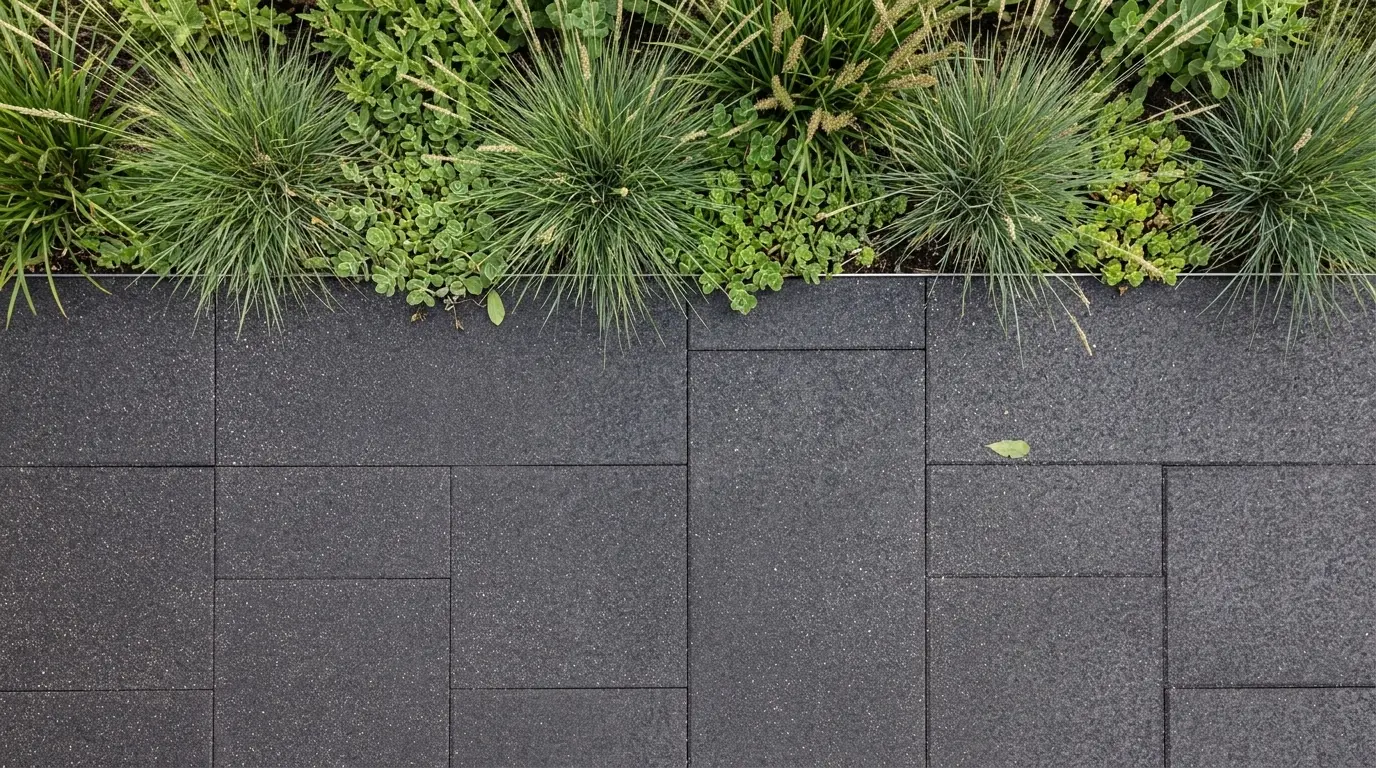
Slipperiness is a real concern wherever a mosaic surface gets wet, and it is worth understanding clearly before finalising a specification. The current standard for evaluating slip resistance of tile and natural stone in wet conditions is ANSI A326.3, which measures performance wet — the finish is the primary variable, and a test report from the supplier is the right document to request. Never rely on a dry test result to satisfy a wet-area requirement.
For indoor wet areas such as shower floors and wet-room floors, a honed basalt mosaic — particularly in a small format where the grout joints themselves provide surface articulation — warrants a closer look at ANSI A326.3 test data for the specific product. Request the test report. For outdoor wet surfaces and pool surrounds, a bush-hammered finish is the more appropriate specification. The USGS overview of basalt’s volcanic composition describes the stone’s dense mineral matrix, which is relevant context when specifying any basalt product for performance environments. Slipperiness on a shower niche vertical wall is not the concern; slipperiness on a shower floor absolutely is — specify accordingly.
Ordering and Project Planning for Mosaic Projects
Mosaic sheets arrive pre-mounted on mesh backing, which simplifies installation but adds a dimension to your quantity takeoff: you are ordering by sheet coverage, not by individual tile count. Calculate the net wall area, add your standard waste allowance for cuts and breakage, then confirm the sheet format with the supplier so your sheet count translates directly to the ordered quantity. Citadel Stone cuts stone to order at our selected quarries, so confirming the format and quantity early in the design phase gives the project a clean lead time to work with.
Delivery scheduling for mosaic orders should account for the palletised weight and the access constraints at your site. Mosaic crates are dense for their footprint, and a tight site corridor or a second-floor installation changes the offloading logistics. Confirm access and offloading arrangements before the delivery date is locked, and plan for a dedicated staging area where sheets can acclimatise to the installation environment before they go on the wall.
- Order a minimum of one full extra sheet beyond your calculated quantity — mosaic cuts generate more waste than large-format tile, and matching a batch later is difficult
- Check the batch code on all cartons before installation begins — tonal variation between batches is visible in basalt and impossible to correct once the sheets are on the wall
- Store sheets flat on a clean, dry surface; stacking them on edge risks adhesive delamination from the mesh backing before installation
What Matters Most in a Honed Basalt Mosaic Specification
The best honed basalt mosaic installations come from resolving three decisions before a single sheet goes on the wall: format and layout relative to the space geometry, finish and sealing relative to the moisture environment, and batch consistency relative to the tonal quality you specified. Each of those decisions has a downstream consequence — get the format wrong and the scale is off; skip the pre-seal and grout haze bonds permanently; ignore batch matching and the feature wall reads as patchy. These are the moments where material knowledge and field experience pay for themselves, and where a supplier who understands the product from the quarry to the finished cut makes a genuine difference to project outcomes. For shower floors and other natural stone wet-area surfaces, choosing stone for wet shower floors covers the specification detail that directly complements a mosaic niche or wall design.
Small-format honed mosaic from Citadel Stone is particularly well-suited to shower niches and backsplashes where a seamless, matte surface complements an otherwise stone-heavy interior palette.
Related reading: honed stone finish comparison · honed granite vs basalt · honed basalt vs polished concrete.