

Stone format is the variable most specifiers underestimate on a rock shower floor tile project — and it is the one that determines whether the installation drains cleanly or pools water at every grout line. The format controls how many linear feet of joint you introduce per square foot of floor, and in a shower, every joint is a potential low spot or a sealing maintenance point. Get the format right before you commit to a finish, because retrofitting a badly drained shower floor is a full tear-out job.
Why Stone Format Matters More Than You Think
Smaller tiles give you more joints, and more joints give the setting bed more movement accommodation — that is a structural benefit in a space where thermal cycling from hot shower water to ambient room temperature happens every single day. The expansion differential between a dense basalt tile and its underlying mortar bed is modest per cycle, but it accumulates over years. Larger format tiles reduce joint count, which sounds appealing, but it means each individual tile must follow the floor’s pitch precisely. Any deviation in the substrate telegraphs through a large format stone immediately.
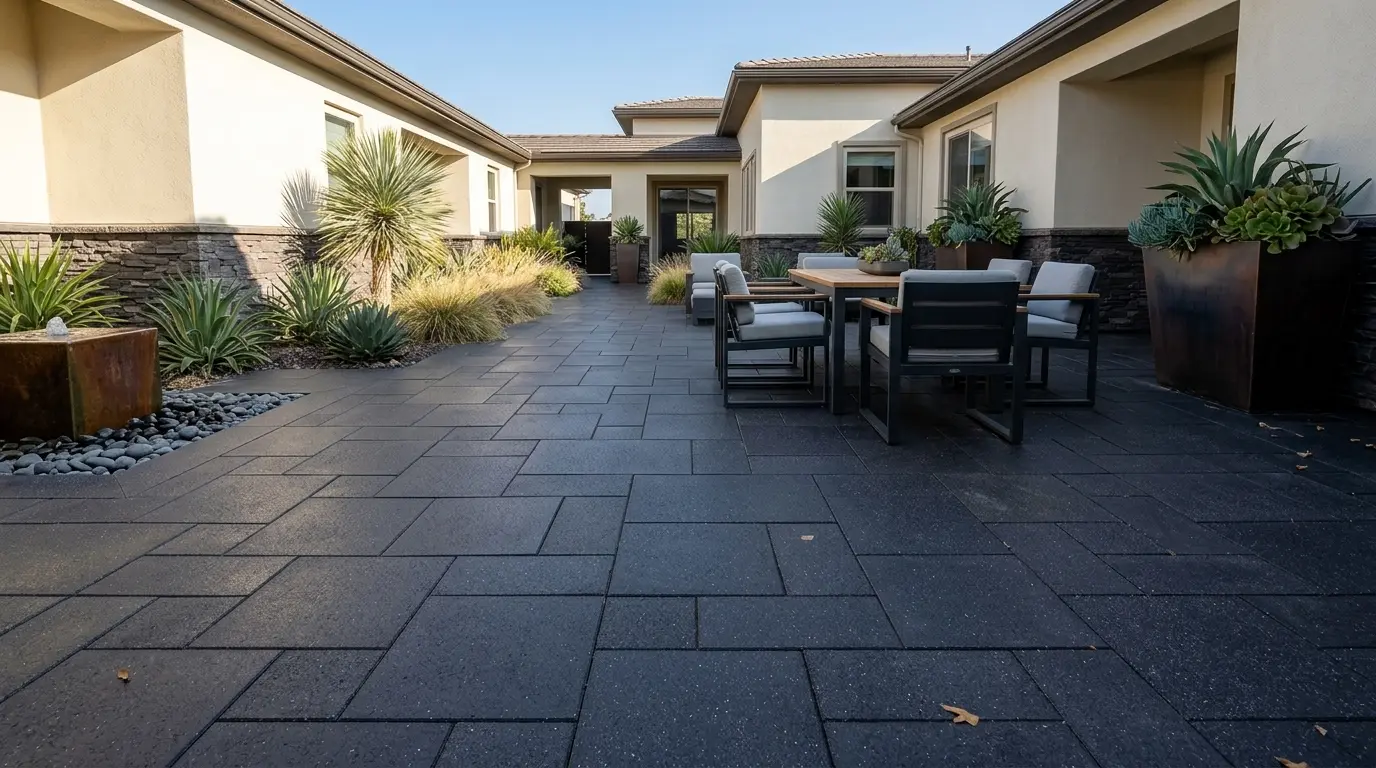
For rock shower floor tile, the sweet spot in most installations is a format small enough to follow the pre-slope without lippage but large enough that grout maintenance stays manageable. Mosaic pebble formats look natural but create a maintenance-intensive joint network that is worth considering honestly before you specify them.
Which Stone Types Work on Wet Shower Floors
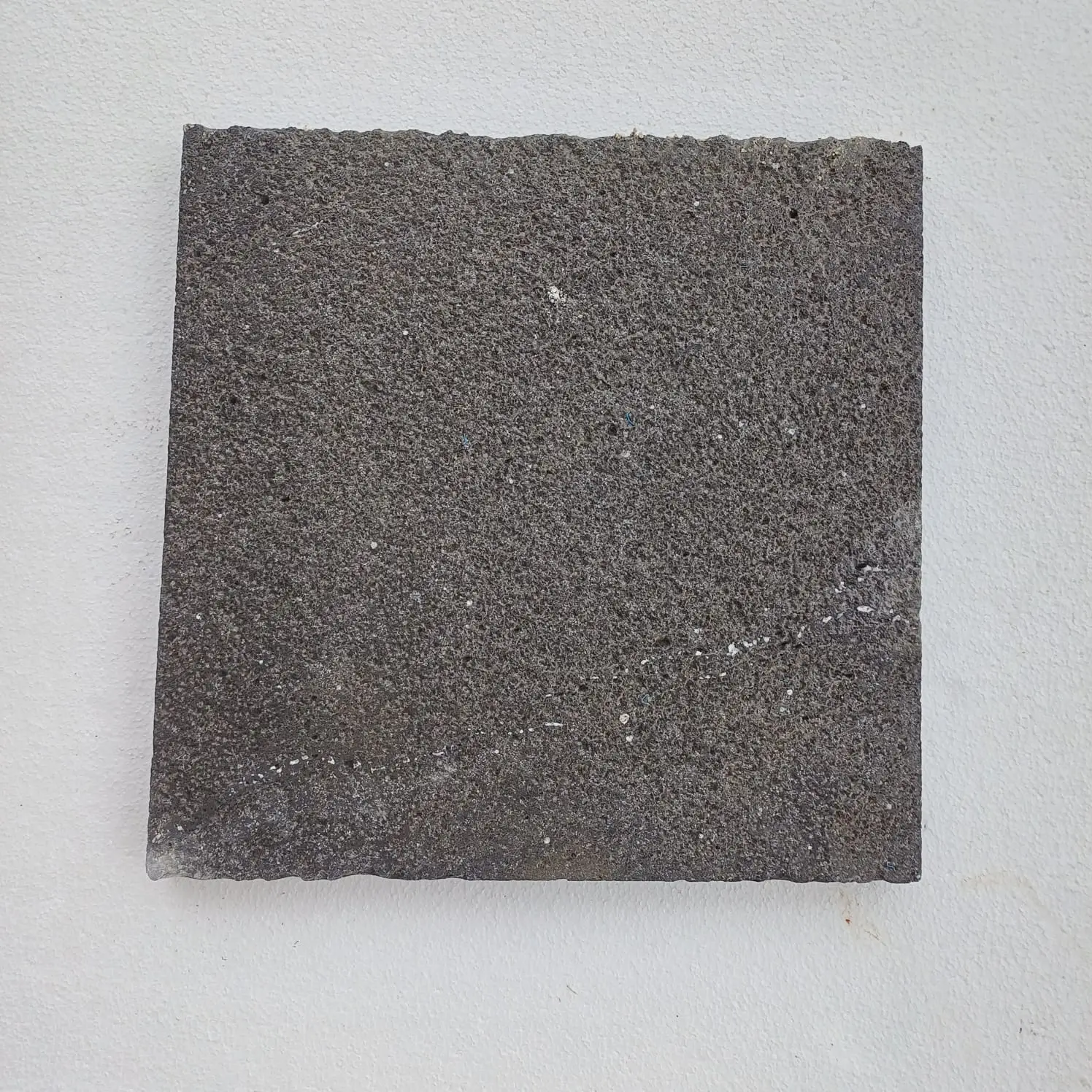
The short answer is that dense, low-absorption stones are the appropriate starting point, and the finish matters as much as the geology. Basalt is a strong candidate: it is a fine-grained volcanic stone with a tight, interlocked crystal structure and low porosity. According to USGS basalt volcanic rock properties, its dense composition makes it one of the more dimensionally stable natural stones available — a meaningful property in a space that cycles through wet and dry conditions daily.
- Basalt — dense, low-absorption, takes a honed or brushed finish well for wet-area use
- Limestone — works in showers when sealed correctly and the absorption rate is verified by test report; request ASTM C97 data from your supplier
- Granite — very low absorption and high density make it technically well-suited; confirm via test report
- Slate — naturally cleaved face gives texture without treatment; check for laminar stability in thin tiles
Stones to approach carefully include softer, more porous varieties where absorption performance cannot be confirmed by test report. Never specify a stone for a wet interior floor on visual appeal alone. The Natural Stone Institute ASTM tile stone specifications outline the test methods your supplier should be able to run against — absorption (ASTM C97), modulus of rupture (ASTM C99), and compressive strength (ASTM C170) are the core trio. Request the test report; do not accept a verbal assurance.
Finish Selection for Shower Floors
Your finish choice on a shower floor does more functional work than anywhere else in the project. A polished finish is reserved for dry indoor surfaces — countertops, vanity tops, dry bathroom walls — and has no place on a shower floor. For shower floors, the texture of the surface is what introduces the open, matte character that matters for wet-foot contact.
- Honed 120 Grit — smooth but not mirror-polished, appropriate for shower walls and dry wet-room floors; consult your project conditions before specifying for shower floors specifically
- Brushed finishes — Brushed 80 Grit gives an open, matte surface texture suited to barefoot areas and covered wet spaces
- Bush-Hammered — creates a textured, open surface and is the recommended finish for wet and public areas; appropriate for shower floors where a more pronounced texture is acceptable
- Tumbled — leaves an open, matte texture that suits some shower floor applications; confirm the tile thickness is consistent across the batch before installation
The finish is the variable that ANSI A326.3, measured wet, uses to evaluate stone tile in wet applications. The standard replaced the ASTM C1028 static test withdrawn in 2014. If a tested value exists for the tile and finish you are considering, the test report is available on request — ask the supplier directly rather than relying on a published figure.
Slope, Substrate, and Pre-Slope Requirements
The substrate under a rock shower floor tile installation is where the project either succeeds or fails quietly over a two-to-three-year period. A minimum slope to the drain is non-negotiable, and the tile format you choose must be capable of following that slope without creating high and low spots at tile edges. In traditional mud-bed installations, the pre-slope under the liner and the mortar bed above it each carry part of that geometry — both must be correct.
Thin-set-only installations on concrete substrates require that the concrete itself has the drain slope built in. Tile cannot create slope; it can only follow it or mask it badly. TCNA natural stone tile installation standards address shower floor installation sequences in detail and are worth pulling for your specification package. Your waterproofing layer, whether sheet membrane or liquid-applied, must be continuous to the drain flange — any gap there becomes a leak path that no amount of quality stone work covers up.
Grout Joint Width and Waterproofing Decisions
Joint width on a rock shower floor tile installation is a function of tile calibration, substrate flatness, and movement accommodation — not an aesthetic preference you dial in after the fact. Rectified tiles can run tighter joints; natural stone cut to size will have some dimensional variation across a batch, and your joint width needs to absorb that without creating lippage.
- Natural stone tile cut to order will have tighter dimensional tolerances than unprocessed flagstone but wider than fully rectified porcelain
- Epoxy grout is worth specifying for shower floors — it does not absorb moisture, resists staining, and does not require the sealing interval that cement-based grout does
- Movement joints at perimeter walls and at any changes in plane are not optional; in a shower they also serve as the point where thermal expansion from daily hot-water cycling has an outlet
- Sealant in movement joints must be compatible with wet-area exposure — standard acrylic caulk will not perform; specify a silicone or polyurethane product rated for continuous wet-area contact
Thermal Cycling and Long-Term Joint Performance
Here is the detail that separates well-specified shower floors from the ones that come back for remediation: every shower cycle introduces a temperature swing. Cold tile, hot water, then ambient temperature again — repeated daily. The differential between water temperature and ambient room temperature may seem small compared to an outdoor installation, but the frequency of cycling in a shower significantly exceeds that of most exterior applications.
Dense stone like basalt has a low coefficient of thermal expansion, but the cumulative movement over years at grout joints is real and measurable. In climates where bathroom ambient temperatures drop significantly overnight — particularly in homes without continuous heating — that day-night swing adds another layer of thermal cycling on top of the shower-use cycle. Perimeter joints and any field movement joints must accommodate this. Under-sized or missing movement joints are the primary cause of grout cracking and tile debonding that starts appearing in years two through four.
For small-format basalt tile in shower applications, Citadel Stone small-format basalt tile cut to order provides consistent calibration across the batch — a factor that directly affects joint consistency and the substrate-flatness tolerance you need to hold.
Sealing Natural Stone in Shower Applications
Sealing a rock shower floor tile installation is not a one-time event at project completion — it is a recurring maintenance commitment, and your client needs to understand that before the stone is selected. The sealing interval depends on the stone’s absorption characteristics (confirmed by the ASTM C97 test report), the finish texture, and the sealer product specified.
- Penetrating impregnator sealers are the correct product type for shower floors — topical sealers sit on the surface, trap moisture beneath them, and delaminate
- Apply sealer only to thoroughly dry stone — stone that has been wet during installation needs full drying time before sealer is applied, which often means waiting longer than the setting material’s stated cure time
- Re-apply on the interval your sealer manufacturer states, not on a fixed calendar schedule; test with a water-bead check to assess sealer condition
- Grout lines in cement-based grout also require sealing separately; epoxy grout does not
Format and Thickness Specification for Shower Floors
Your specification for rock shower floor tile in wet areas needs a minimum thickness call-out, and it needs to match the substrate and the installation method. Tile cut from slab at thicknesses suited to interior wet-area floor use — typically in the range confirmed by your structural engineer or tile installation standard for the span and substrate — must be consistent across the batch. Variation in thickness creates lippage at joints that no amount of setting-bed adjustment corrects cleanly.
At Citadel Stone, we cut tile to order at our selected quarries, which means the thickness and format you specify on the drawing are what arrives — not a nominal dimension that varies by half an inch across the pallet. Citadel Stone stocks material at its selected quarries so that cutting to a confirmed format can begin once the specification is locked. Lead times are quoted with the order.
Rock Shower Floor Tile Versus Other Floor Material Options
Porcelain tile is frequently positioned as a lower-maintenance alternative to natural stone in shower floors, and it is worth being honest about where that claim holds and where it does not. Porcelain is a manufactured tile with very low absorption, and its dimensional consistency across a batch typically exceeds natural stone. Those are real advantages.
- Natural stone offers visual depth, variation, and a surface character that manufactured tile cannot replicate — the geological variation in basalt or limestone is genuinely distinctive
- Porcelain’s printed surface can look dated as production runs change; natural stone’s appearance is inherent to the material and does not depend on a print layer
- Both materials require correct substrate preparation, slope, movement joints, and waterproofing — the tile does not compensate for a deficient substrate regardless of material type
- Natural stone requires sealing on a maintenance schedule; porcelain tile does not — that is an honest trade-off to put in front of your client
Getting Rock Shower Floor Tile Specifications Right
The decisions that separate a rock shower floor tile installation that holds up from one that needs remediation within five years are almost entirely made before the first tile is set. Format, finish, substrate slope, waterproofing continuity, joint width, and sealing specification are the variables — the stone itself is the starting point, not the whole answer. Dense, low-absorption stone with a matte, open-textured finish gives you the right material foundation; the rest is execution and specification discipline.
As you plan the full material palette for your project, related surfaces and stone applications may also factor into your decisions. For a complementary perspective on basalt as an interior flooring material alongside a manufactured alternative, honed basalt versus polished concrete covers how these two materials compare in a dry interior floor context — useful background if the shower floor decision connects to a broader interior stone specification. Slope, substrate prep, and stone format all affect how a shower floor performs long-term, and Citadel Stone tile cut to order at our selected quarries can be sized to suit each installation.
Related reading: honed granite vs basalt · flamed basalt tile finish · honed stone finish comparison.