What Makes Green Marble Distinctive
The guide to green marble selection begins not with aesthetics but with mineralogy — because what creates those signature greens directly affects how the material performs under stress. Green marble gets its color from serpentine minerals, chlorite, and in some varieties, fuchsite mica. These mineral compositions behave differently under load, thermal cycling, and moisture exposure than the calcite-dominant whites and creams most specifiers are more familiar with. Understanding this from the outset saves you from misapplied finishing specs and substrate mismatches that show up six months after installation.
Compressive strength in high-serpentine green marbles typically ranges from 12,000 to 18,000 PSI — a wide band that reflects real quarry variation. The softer end of that range requires careful thickness selection, particularly for spanning applications like tabletops and large-format flooring. Chlorite-rich varieties tend toward the lower end and benefit from a full mortar bed rather than spot bonding, which distributes load more evenly and prevents micro-fracturing at thin cross-sections.
The Natural Stone Institute confirms that marble’s calcium carbonate or magnesium carbonate base interacts with acidic cleaners and long-term moisture exposure in ways that alter surface finish and structural integrity over time — a detail worth flagging to end clients before they commit to a high-traffic floor specification. Per NSI marble technical properties, finish selection and ongoing maintenance protocols are as important as initial material selection for long-term performance.
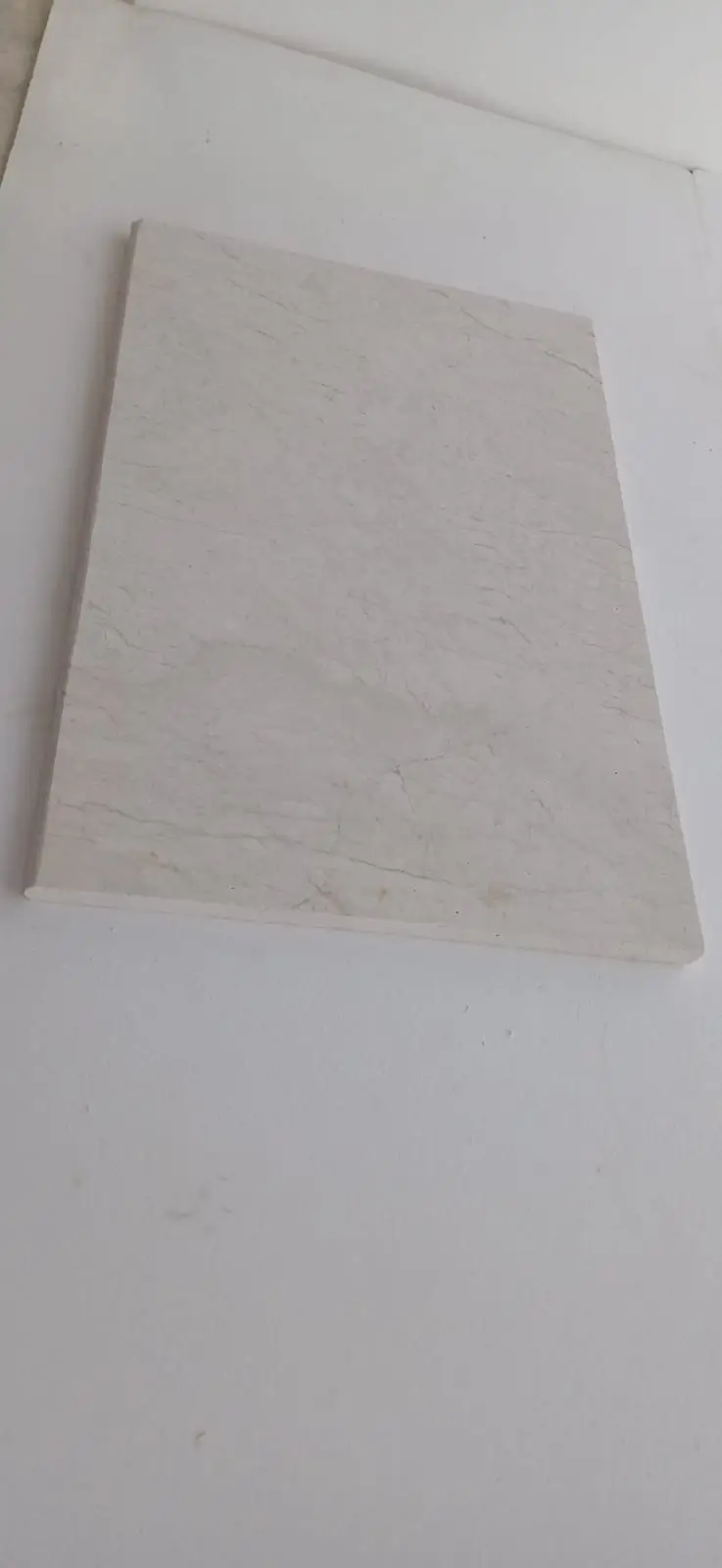
Green Marble Varieties and How to Read Them
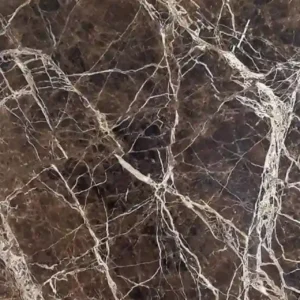
Your material selection gets sharper when you can distinguish the main commercial green marble families by their visual signatures and what those signatures tell you about performance. This guide to green marble varieties broadly groups them into four working categories: serpentine-dominant, verde (which often contains significant chlorite and epidote), forest greens with heavy calcite veining, and ocean or jade-toned varieties with more translucent mineral structures.
- Serpentine marbles carry bold, waxy patterns with dark crosshatch veining — their low porosity (typically 0.2–0.5% absorption) makes them well-suited for wet areas and countertop applications
- Verde varieties show mottled or cloud-like patterning with occasional gold flecks — they polish well but can exhibit directional weakness along chlorite planes, requiring consistent slab orientation during installation
- Forest green marbles with white or cream veining offer the most visual contrast and are frequently specified for feature walls and vanity tops where aesthetic drama is the priority
- Jade-toned and translucent varieties tend to be the most expensive and the most variable — quarry runs can shift significantly in tone, so book-matching across multiple slabs requires careful warehouse selection before cutting
The veining pattern is not cosmetic data — it’s structural information. Heavy veining across a narrow slab dimension creates a line of lower tensile resistance. Factor this into your cut planning, particularly for sink cutouts and long overhang spans where flexural stress concentrates at the edges.
Finish Options and What They Actually Change
Most clients default to polished finish because it showcases the color depth and veining contrast most dramatically. Polished green marble achieves a reflectance that can transform a dim interior, but it also concentrates scratching risk at the surface crystalline layer. For floor applications in higher-traffic zones, a honed finish at 400-grit gives you a matte surface that reads as sophisticated without demanding the same maintenance frequency as a mirror polish.
Leathered and brushed finishes are gaining traction for green marble in transitional and contemporary interiors. The texturing process opens the surface pores slightly, which means your sealing protocol becomes more important — a penetrating sealer rather than a topical coat is the correct call for leathered surfaces. Leathered green marble also tends to read as darker and richer in tone, which changes your lighting design assumptions for the space.
- Polished: reflectance 60–80 GU (gloss units), most dramatic color expression, requires biennial repolishing in floor applications
- Honed: matte to satin, 200–400 grit range, more forgiving for daily use, still requires sealing on absorbent varieties
- Leathered/brushed: textured surface with subdued sheen, highest tactile interest, slightly higher sealer consumption per application
- Sandblasted: rough texture used in exterior or accent contexts, significantly alters color perception, lowest maintenance of any finish
Finish decisions also affect slip resistance, which matters for flooring specifications. According to ASTM C503 marble dimension stone standards, surface finish directly influences friction coefficient ratings — polished marble in wet conditions requires additional slip-resistance measures, while honed and textured finishes typically meet standard thresholds without additional treatment.
Thickness and Format Selection
Thickness selection for green marble isn’t a single answer — it’s a function of application, span, substrate, and the specific mineral composition you’re working with. Standard slab thicknesses run 3/4 inch (20mm) and 1-1/4 inch (30mm), with 2 cm being the typical countertop and wall cladding specification and 3 cm reserved for floor tile, high-load countertops, and any application requiring an unsupported span greater than 18 inches.
A thorough guide to green marble floor applications points clearly toward 3 cm minimum for large-format tiles (24×24 and above) in commercial or high-use residential contexts. Thinner slabs in large formats require a full-coverage mortar bed — no spot bonding — and a substrate deflection rate no greater than L/720 to prevent cracking at mid-span. Your structural engineer needs this number before the substrate specification is finalized.
- 2 cm thickness: appropriate for wall cladding, backsplashes, and countertops with full substrate support and no cantilever exceeding 8 inches
- 3 cm thickness: floor tiles, countertops with overhangs, feature surfaces subject to incidental impact
- Custom thickness (up to 50mm): available from our green marble slab range for specialized architectural and furniture applications
- Mesh-backed tiles (typically 12×12 at 3/8 inch): decorative wall applications only — never floor-rated for heavy use
Understanding Porosity and Sealing Requirements
Porosity in green marble varies more than most product sheets suggest. A serpentine-dominant green marble may absorb less than 0.3% water by weight, making it essentially highly resistant for practical purposes. A chlorite-rich variety from a different quarry might absorb 0.8–1.2%, which changes your sealing frequency from every three years to every 18 months in kitchen or bathroom environments.
The water drop test is the quickest field check you can run before finalizing a sealing spec: apply a few drops of water to an unfinished sample and time how long absorption takes. Under 60 seconds indicates high porosity requiring immediate sealing attention; over 5 minutes indicates low porosity where a single high-quality impregnating sealer provides long-term protection. This test takes 10 minutes and eliminates guesswork from your maintenance spec.
- Penetrating silane/siloxane sealers: the professional standard for green marble — they don’t alter surface sheen and protect the crystalline structure from within
- Topical sealers: avoid on polished surfaces — they peel under thermal cycling and create a maintenance burden that compounds over time
- Sealer application frequency: every 12–24 months for floor applications in wet zones, every 24–36 months for vertical surfaces and low-traffic countertops
- Color-enhancing sealers: a legitimate option for matte or honed surfaces where you want to deepen the green tone without committing to a polished finish
Drainage, Moisture, and Outdoor Use
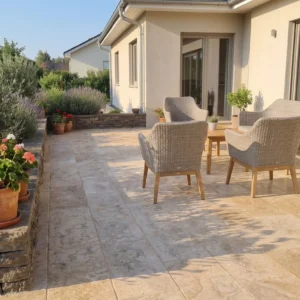
Outdoor applications of green marble require a drainage strategy that accounts for local precipitation intensity — whether that’s monsoon-season downpours, hurricane-season rain events, or consistent winter moisture cycles. The material itself handles wet conditions well at low porosity grades, but the substrate and installation geometry determine whether water moves through the system cleanly or pools beneath slabs and degrades the setting bed.
For any exterior green marble installation, a minimum 1/8-inch-per-foot slope away from structures is non-negotiable. Heavy rain events can saturate a flat installation and introduce hydrostatic pressure beneath the slab, which — in freeze-thaw regions — creates uplift forces that crack even properly bedded stone. Base preparation needs to include a compacted aggregate drainage layer of at least 4 inches, with edge drains at low points where slope geometry creates accumulation zones.
- Wet climates with high annual rainfall: specify open-jointed dry-lay installations with gap joints of 3/8 inch minimum to allow rapid surface drainage
- Areas with monsoon or hurricane-intensity precipitation: consider drainage channels parallel to the stone coursing, sized to handle peak flow without ponding
- Drought-cycle climates with occasional intense rainfall: sub-base compaction is critical — expansive clay soils shrink and swell with moisture cycles and undermine the setting bed over time
- Freeze-thaw regions: choose the lowest-porosity green marble available for outdoor use, and ensure all joints are pointed with flexible mortars rated for thermal movement
Moisture management also affects indoor installations in humid environments. In spaces with high ambient humidity — enclosed bathrooms, tropical-climate interiors, steam rooms — use an uncoupling membrane between substrate and stone. This separates the thermal and moisture movement of the substrate from the stone, preventing the differential stress that causes grout cracking and tile pop-outs within the first two years of installation.
Green Marble for Interior Applications
The applications where green marble genuinely outperforms other stone types are worth specifying correctly. Vanity tops and bathroom feature surfaces are where this material does its most impressive work — the combination of low thermal conductivity (so it doesn’t feel cold to the touch the way granite does), visual depth, and surface hardness creates a sensory experience other materials struggle to replicate.
Feature walls and fireplace surrounds represent another strong application category. Bookmatched green marble slabs on a fireplace surround create a symmetrical pattern that reads as architectural — not decorative. The key specification detail for fireplace surrounds is clearance from the firebox opening: stone within 6 inches of an open firebox needs thermal break isolation, because repeated high-heat exposure can cause surface spalling in calcite-rich varieties over several years.
Kitchen countertop specification requires the most honest client conversation. Green marble is absolutely viable in kitchens, but it needs an informed owner who understands acid etching from citrus and wine. The etch marks don’t penetrate deeply and can be honed out, but they require maintenance that quartz doesn’t. For clients who cook heavily and prefer low-maintenance surfaces, recommending a honed finish upfront reduces visible etching and sets expectations correctly.
Ordering, Logistics, and Lead-Time Planning
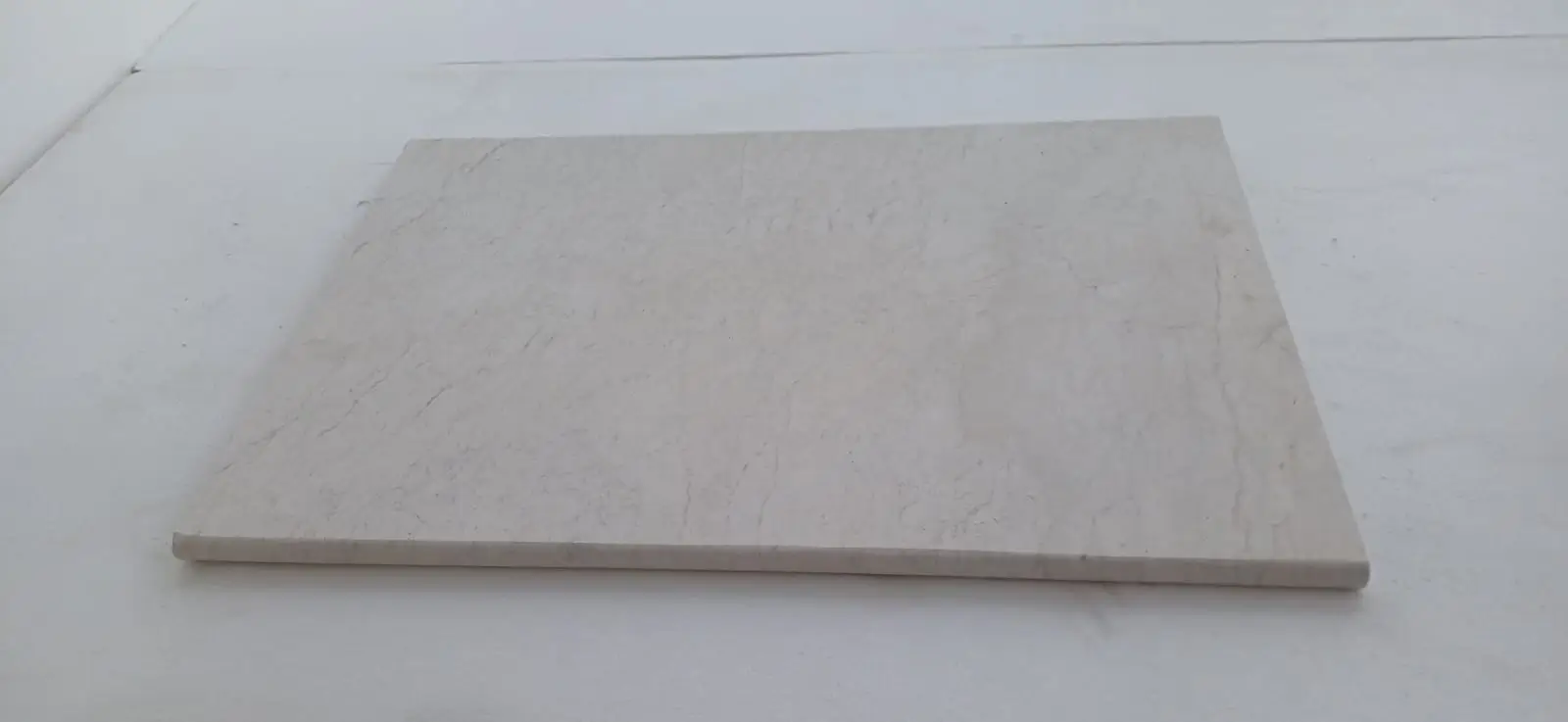
Project timelines need to account for the reality that green marble — particularly the more distinctive varieties — is not a commodity item available off any shelf. Warehouse stock of popular formats like 24×24 honed tiles in forest green or bookmatched polished slabs can turn around in 1–2 weeks from a national supplier with existing inventory. Specialty cuts, custom thicknesses, and bookmatched pairs for large feature walls may require 4–6 weeks if the specific lot needs to be sourced and confirmed.
The safest approach is to confirm warehouse availability before your client signs off on a specific stone. At Citadel Stone, we recommend locking in a slab lot reservation as soon as the design direction is confirmed — not after the contractor submits for permits. Lot variation in green marble is real: two pallets from the same quarry, six months apart, can show meaningful tone shifts that become visible on a completed installation.
- Confirm lot availability and request physical samples before ordering — digital images do not represent the tonal variation across a full pallet accurately
- Order 10–15% overage for tile formats to account for cuts, breakage, and future repairs — green marble lots are finite and re-matching months later is difficult
- Coordinate truck delivery scheduling with your contractor — large-format slabs require forklift off-loading and a clear staging area; communicate site access constraints before the delivery date is confirmed
- For phased projects, purchase and warehouse all material from a single lot at the outset — this is far preferable to sourcing additional material later and discovering a dye-lot mismatch
Citadel Stone ships nationwide, which means your project isn’t limited by proximity to a regional stone yard. Lead times from our warehouse to job site are typically 5–10 business days for standard formats, depending on truck routing from our distribution points.
Installation Compatibility and Common Specification Errors
The most frequent green marble installation failure isn’t the stone — it’s the adhesive specification. Green marble, particularly the serpentine-dominant varieties, has a coefficient of thermal expansion that differs from standard grey limestone and travertine. Using a rigid cement-based adhesive without a polymer modifier in large-format applications creates a system that can’t accommodate the differential movement between the stone and a concrete substrate during temperature swings.
Specify a premium polymer-modified mortar for all green marble floor and wall applications. The additional cost — typically $0.30–$0.50 per square foot over standard mortar — is negligible against the cost of a failure callback. Joint width also matters more than many installation guides acknowledge: 1/16-inch grout joints on large-format green marble floor tiles are too narrow for the thermal expansion cycle in most interior environments. Move to 1/8-inch minimum, and use an unsanded grout with high flexibility ratings.
- Avoid epoxy adhesives on serpentine-dominant marble — the bond strength can exceed the tensile strength of the stone at the surface plane, causing spalling rather than adhesive failure under stress
- Use white or grey mortar beds under light-toned green marbles — dark mortar can telegraph through thin or semi-translucent stone varieties and alter the apparent surface color
- Expansion joints every 20–25 feet in floor applications are mandatory, not optional — this is the most commonly omitted detail in residential installations
- For wall cladding above 10 feet in height, consult the geological properties of marble formation to understand cleavage planes before specifying anchor-fixed systems in lieu of full mortar coverage
Getting Green Marble Specifications Right
Getting green marble right across an entire project comes down to a sequence of decisions that compound on each other: variety selection, finish, thickness, sealing protocol, adhesive specification, and drainage geometry all interact. The specifiers who get the most consistent long-term results are the ones who treat this as an integrated system rather than a series of independent choices. You can’t optimize the stone selection in isolation from the substrate specification, and you can’t specify the substrate without understanding the drainage conditions the installation will face.
The investment in green marble is significant enough to justify detailed pre-installation consultation with your supplier. Our technical team at Citadel Stone works through specification details with architects, designers, and contractors before orders are placed — because the questions that surface during that conversation are far cheaper to answer then than after the stone is set. Projects where the final tone direction is still being evaluated between green marble and lighter veined options benefit from direct comparison: white marble and Calacatta compared covers performance and visual character distinctions that are genuinely useful when a complete material palette is still in development.
The long-term performance data on properly specified green marble installations is consistently strong — 25 to 35 years of service life with appropriate maintenance is realistic across a wide range of interior applications. That kind of longevity depends on getting the specification right at the outset, not on the stone itself being inherently maintenance-free. Treat your sealing schedule as part of the project specification, document it for the client, and the material will perform well beyond expectations. Green marble from Citadel Stone arrives in polished slabs ideal for vanities and feature surfaces.
Related reading: how to choose green marble · large marble tile · granite curb.