

Grey blue limestone’s compressive strength — typically ranging from 8,000 to 14,000 PSI depending on bed orientation and quarry formation — tells you more about long-term cost than the price per square foot ever will. Specifiers who focus exclusively on unit pricing routinely underestimate total installed cost by 20 to 35 percent, because the material’s density, thickness tolerance, and surface finish requirements all drive labor and substrate costs that don’t show up on a stone quote. Understanding the full performance picture is what separates a well-budgeted project from a costly field correction.
What Drives Grey Blue Limestone Pricing
Material cost for grey blue limestone doesn’t come from a single variable — it’s a layered calculation that starts at the quarry and ends at your subbase. Thickness is the first lever: 3 cm nominal pavers run roughly 15 to 25 percent more per square foot than 2 cm tiles sourced from the same formation, because yield loss during sawing is proportionally higher with denser stone. Surface finish adds another cost tier, with honed running less than brushed, and bush-hammered commanding a premium because the mechanical texturing process is slow and tool-intensive.
Coloration consistency is where most buyers get surprised. Grey blue limestone from selected quarries in the Middle East delivers tight chromatic uniformity, which carries a premium over material that exhibits wider natural variation. If your project specifies tight color matching — as most commercial and high-end residential jobs do — budget for premium-grade stone from the outset rather than attempting to sort your way through standard-grade inventory.
- Thickness (2 cm vs. 3 cm vs. 4 cm) directly affects yield and unit cost
- Surface finish — honed, brushed, flamed, or bush-hammered — adds 8 to 22 percent to base material price
- Color consistency grade (standard vs. premium selection) affects both per-unit cost and waste factor
- Order volume: pallet pricing typically begins at 500 sq ft, with meaningful breaks at 1,500 and 3,000 sq ft
- Edge profile requirements (pillowed, straight-cut, beveled) on pavers or coping add fabrication cost
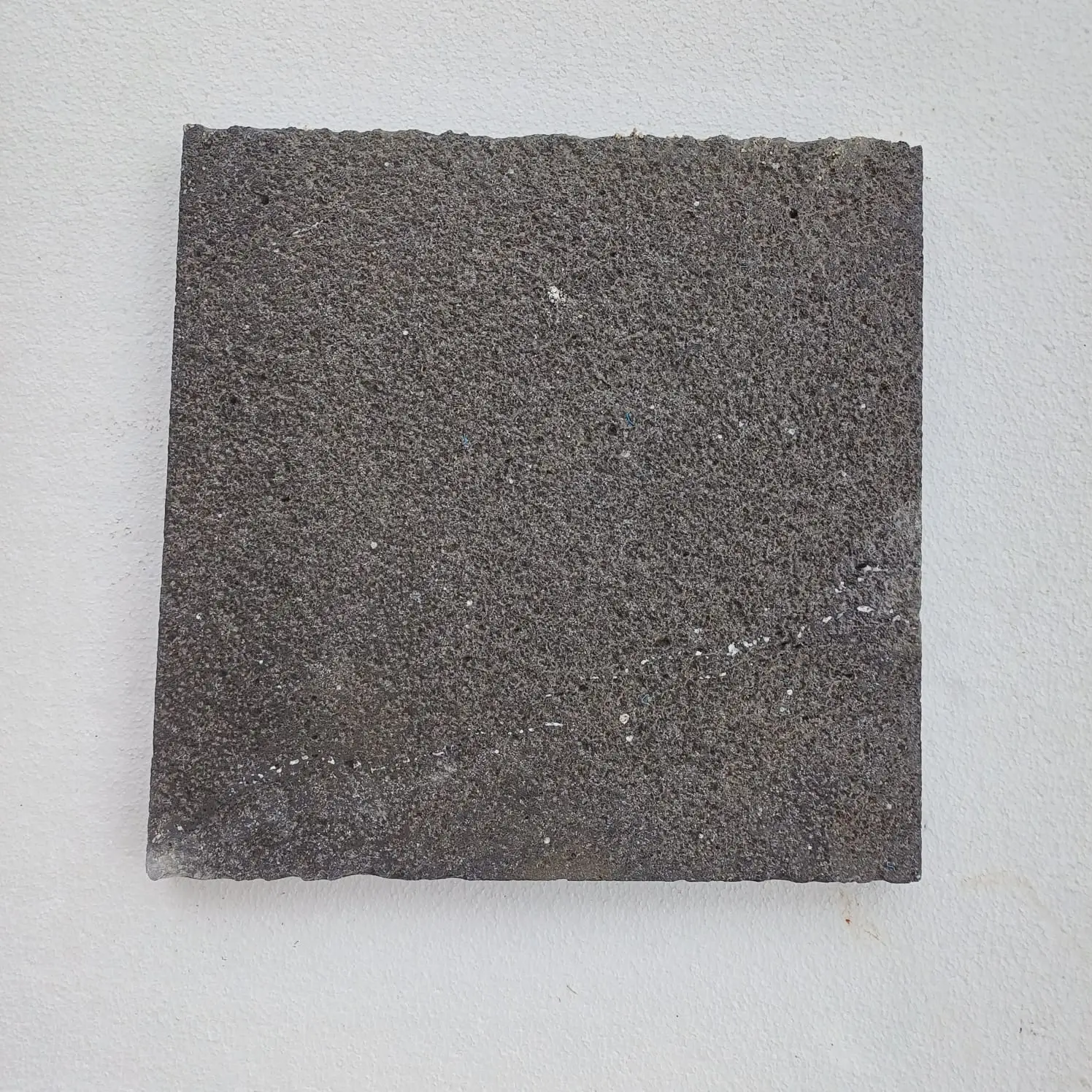
Material Cost Ranges by Application
Your material budget will shift significantly depending on the application. For patio and terrace paving — the most common use — grey blue limestone pavers in a 24×24 inch format at 3 cm thickness typically land between $12 and $22 per square foot, supply-only, depending on grade and finish. Pool coping in a bullnose profile runs $18 to $32 per linear foot because the profiling step adds fabrication time. Grey blue limestone tile at 18×18 inches in a 2 cm thickness for interior or covered outdoor use starts closer to $9 and reaches $16 at the premium-selection end.
According to NSI limestone technical properties, limestone’s absorption rate and density classification directly affect how the stone performs in wet and freeze-thaw environments — both of which should inform your finish and thickness specification before you lock in a price point. Specifying honed 2 cm material for a pool deck in a freeze-thaw region, for instance, sets up both a performance risk and an early replacement cost that dwarfs the savings at purchase.
For grey blue limestone pricing on larger commercial orders, the calculation shifts again. At volumes above 3,000 square feet, container-direct sourcing from Middle East quarries becomes viable, and the per-square-foot cost can drop 18 to 28 percent compared to warehouse stock pricing. The trade-off is lead time: container shipments typically require 10 to 14 weeks from order confirmation to delivery, versus 1 to 3 weeks from domestic inventory.
Freight and Logistical Cost Factors
Here’s what most project budgets miss: freight isn’t a flat cost, and it scales non-linearly with distance from port and pallet weight. Grey blue limestone is dense — typically 160 to 175 lbs per cubic foot — which means LTL freight rates for stone shipments hit dimensional weight limits quickly. A 500-square-foot order of 3 cm pavers can generate freight charges that equal 15 to 25 percent of the material cost depending on delivery distance from the distribution point.
Labor market conditions compound this. In markets where skilled stone installation labor runs $18 to $24 per hour, the material-to-labor cost ratio on a grey blue limestone patio sits around 55:45. In high-cost labor markets at $35 to $45 per hour, that ratio flips — labor can represent 55 to 65 percent of total installed cost. That shift changes value engineering decisions entirely: when labor dominates, investing in larger-format pavers that reduce the number of cuts and set pieces often saves more than sourcing cheaper material.
- LTL freight for dense stone: budget $0.80 to $1.80 per square foot for distances over 800 miles
- Truck access constraints at the delivery site can force smaller loads and multiple trips — always confirm site access before finalizing delivery terms
- Regional material availability affects lead time more than price: markets near import ports have faster access to warehouse inventory
- Value engineering option: upsizing from 16×16 to 24×24 format can reduce installation labor by 20 to 30 percent on large patios
- Waste factor: irregular site geometries add 8 to 15 percent material waste — include this in your total material order
You can review USGS limestone composition and construction data for background on how limestone density varies by formation — a useful reference when estimating freight weight before finalizing an order.
Blue Marble Limestone and Related Material Pricing
Blue marble limestone — a term used for tightly crystallized limestone formations that exhibit veining and a higher polish potential — occupies a distinct price tier above standard grey blue limestone. The distinction matters for budget alignment: blue marble limestone typically prices 30 to 50 percent higher per square foot in finished tile or slab form, reflecting both the quarrying difficulty and the finishing requirements for polished surfaces. Blue marble limestone appears most often in interior flooring and wall cladding specifications where a refined aesthetic is the primary driver.
For exterior paving applications, standard grey blue limestone from sedimentary formations generally outperforms its crystallized counterpart in slip resistance and thermal cycling resistance — two criteria that matter far more outdoors than the visual depth that blue marble limestone delivers. The practical guidance here is to match material to application before comparing price points between these two categories. Paying a premium for polished blue marble limestone on an outdoor terrace that requires a flamed finish to meet wet-condition slip requirements is a common and costly specification error.
Thickness Specification and Its Cost Implications
The thickness decision for grey blue limestone is where specification and budget intersect most directly. At Citadel Stone, we find that most residential patio projects are appropriately served by 3 cm material — it provides the structural margin for point loads, minor base imperfections, and thermal movement without the cost penalty of 4 cm. Specifying 4 cm for pedestrian-only areas is a common over-specification that adds 20 to 30 percent to material cost without meaningful performance gain.
Vehicular applications are the clear exception. Grey blue limestone pavers in driveways or areas with occasional vehicle access should be specified at a minimum of 4 cm, and ideally 5 cm where regular vehicle loading is expected. The formation characteristics of limestone — particularly its bedding plane structure — mean that flexural strength under point loads drops faster than compressive strength data suggests when the material is undersized relative to the loading regime. Undersized pavers in a driveway application fail at the mortar bed interface within 3 to 5 years, creating replacement costs that dwarf the original savings.
- 2 cm: interior tile, covered terraces, vertical cladding — not for exterior ground-level use under foot or vehicle traffic
- 3 cm: standard residential patios, pool surrounds, commercial pedestrian paving — the most cost-effective specification for most projects
- 4 cm: light vehicular areas, commercial plazas, high-traffic walkways — adds structural margin worth the cost premium
- 5 cm and above: heavy vehicular access, loading areas — typically requires mortar-set installation and reinforced sub-base
Installation Cost Variables That Move Your Budget
Your grey blue limestone pricing calculation isn’t complete until you’ve accounted for substrate requirements. A properly prepared compacted aggregate base with a mortar or concrete topping represents 35 to 55 percent of total installed cost for exterior paving — and cutting this budget is where most project failures originate. A base that settles unevenly causes grout joints to crack and pavers to rock within two to three seasonal cycles, requiring costly re-setting that could have been avoided with $2 to $4 per square foot of additional base preparation.
You can review our grey blue limestone stock to align your material selection with the thickness and finish options most suitable for your project’s base conditions before committing to a substrate specification. Joint width is another often-overlooked cost variable: tighter joints (1.5 to 3 mm) require precision setting and more skilled labor, while wider joints (8 to 10 mm) on tumbled or brushed formats accommodate natural variation and reduce installation time by 15 to 25 percent.
- Mortar-set installation: higher material and labor cost upfront, but delivers superior long-term stability
- Sand-set installation: lower initial cost, appropriate for permeable designs, but requires annual joint sand replenishment
- Epoxy grout: adds $1.50 to $3.00 per square foot over cement grout — worth the investment in pool surrounds and high-traffic commercial areas
- Sealing adds $0.50 to $1.50 per square foot initially and requires reapplication every 2 to 4 years depending on traffic and climate exposure
Sourcing Decisions and Total Project Cost
The sourcing decision for grey blue limestone has a larger effect on total project cost than most buyers realize. Material sourced directly from Middle East quarries — the primary origin for premium grey blue limestone formations — arrives in container quantities and requires coordination of import timing with your project schedule. For projects with firm start dates less than 12 weeks out, warehouse stock is almost always the lower-risk path despite the higher per-unit cost, because delay costs in construction typically exceed stone cost savings.
Citadel Stone maintains ready inventory across standard sizes and thicknesses, which allows you to confirm truck delivery schedules within 5 to 10 business days of order placement rather than managing import logistics. That operational reliability has tangible budget value: a two-week installation delay waiting on a container shipment costs far more than the per-square-foot premium on stocked material when you account for subcontractor rescheduling and project overhead.
Sealing, Maintenance, and Lifecycle Cost
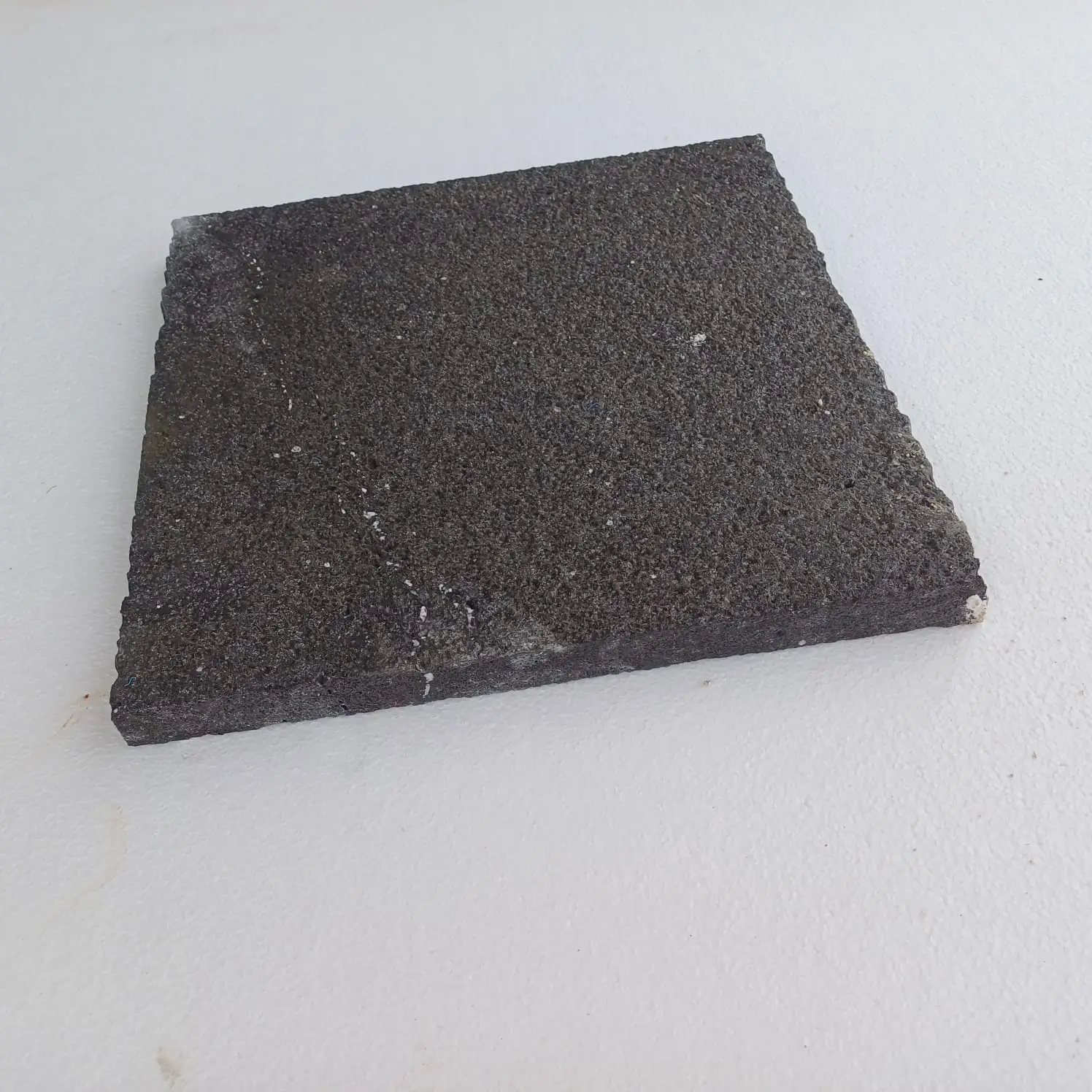
Total cost of ownership for grey blue limestone goes beyond the installed price. The material’s moderate porosity — typically 3 to 8 percent absorption by weight for most grey blue limestone formations — makes sealing a functional requirement rather than an optional upgrade. An impregnating silane-siloxane sealer applied at installation and refreshed every 2 to 3 years under normal exterior conditions keeps the stone resistant to staining and reduces surface carbonation in acidic rain environments.
Factoring sealing into your 10-year cost model adds roughly $0.30 to $0.60 per square foot per year — a modest but real line item. The more significant lifecycle cost comes from joint maintenance: cement-based grout in exterior applications will develop hairline cracks within 5 to 8 years in most climates, requiring selective re-grouting. Budget 8 to 12 percent of the original installation cost for a mid-lifecycle joint maintenance pass at the 7 to 10 year mark. Projects that skip this step typically require full re-setting within 15 years instead of performing for 25 or more.
Getting Grey Blue Limestone Specifications Right
Getting grey blue limestone right for your project means building your budget from the specification outward — not from the material price inward. The thickness, finish, format, and substrate decisions you make before requesting a quote determine whether the final installed cost falls in the lower third or upper third of the typical range. Projects that approach the material with a clear specification brief consistently achieve better cost outcomes than those that start with a target price and work backward.
For projects that include multiple stone types — as many landscape and commercial designs do — it’s worth reviewing how closely related limestone varieties compare in specification terms. A look at how Jura Blue and Bateig Blue compare can clarify whether a different formation better fits your aesthetic or structural requirements before you finalize material selection. Taking that step early in the design phase saves the costly process of redesigning around a material substitution mid-project. Stone from Citadel Stone arrives from internationally sourced quarries, keeping grey blue limestone pricing steady across bulk patio orders.
Related reading: Belgian Blue Limestone Flooring Care Tips · gascogne blue limestone tile · lagos blue limestone.