What Finish Does for Green Granite’s Character
Green granite pavers carry a chromatic complexity that most natural stones can’t match — the interplay of feldspar, quartz, and chlorite or serpentine minerals produces tones that shift between sage, olive, charcoal-green, and deep teal depending on light angle and surface preparation. Your finish choice doesn’t just affect texture; it fundamentally changes which tones dominate. A polished surface saturates the greens and brings out metallic flecks, while a flamed or bush-hammered finish cools the palette toward slate-grey-green. That distinction matters enormously in design coordination, and it’s the first specification decision you should lock down before anything else.
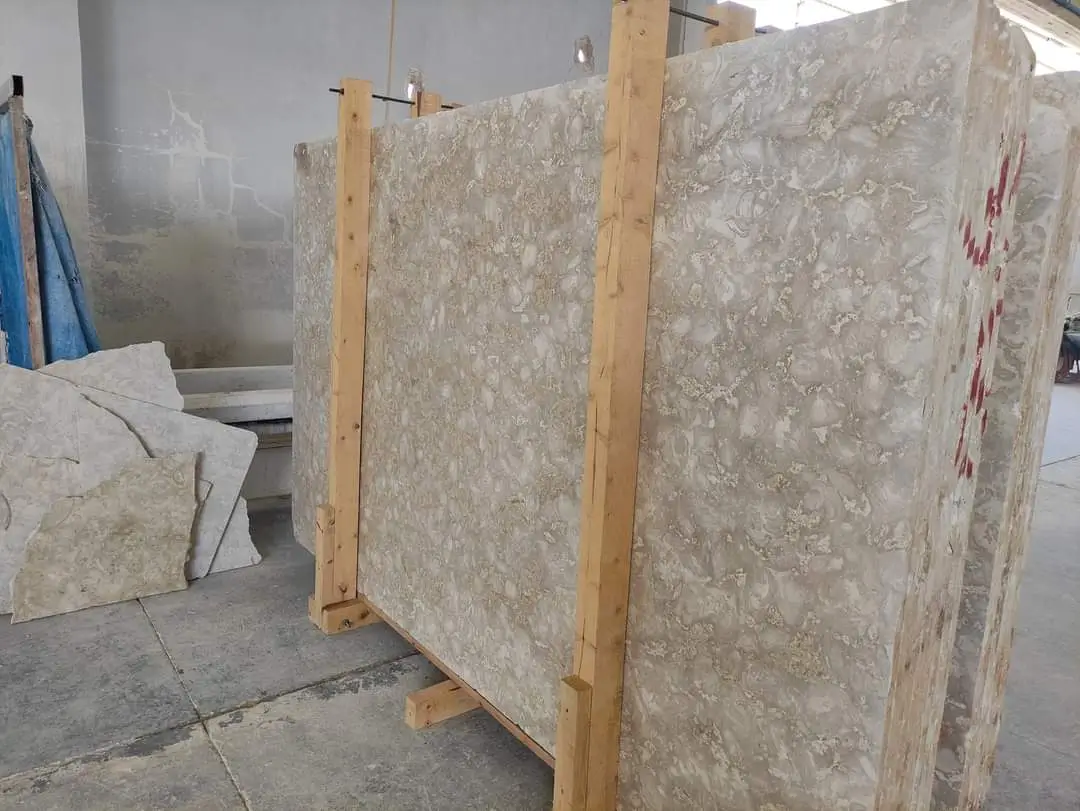
Finish Comparison: Honed, Flamed, and Polished
Three finishes dominate green granite paver specifications, and each performs differently across applications. Understanding the trade-offs helps you match surface preparation to both design intent and site demands.
- Polished: Brings out the deepest greens and mineral iridescence — ideal for sheltered courtyards, covered patios, and interior-adjacent thresholds where slip isn’t a wet-surface concern
- Honed: A matte, smooth surface that reads as softer and more contemporary — retains colour saturation without the mirror sheen, and offers moderate slip resistance suitable for most residential and light commercial walkways
- Flamed: Thermal treatment opens the surface texture dramatically, producing a rough, grip-positive profile that mutes colour to a cooler grey-green — the preferred finish for pool surrounds, ramps, and exposed walkways in freeze-thaw regions
- Bush-hammered: A mechanical texture similar in grip to flamed but with a more uniform, patterned surface — useful where consistent texture depth is a specification requirement under ASTM C615 dimensional stone standards
According to ASTM C615 granite dimension stone quality standards, finished granite used in paving applications must meet minimum flexural strength and absorption thresholds regardless of surface treatment — so finish selection doesn’t override structural specification, it refines it.
Format and Size Selection for Green Granite Pavers
Format choices shape how colour reads across a paved surface. Large-format green granite pavers — 24×24 inches and above — create expansive, uninterrupted colour fields that emphasise the stone’s natural tonal variation. Smaller formats like 4×8 setts or 12×12 tiles introduce joint lines that visually break the colour and shift the design toward pattern-driven layouts. Your project scale should drive this decision as much as your aesthetic preference.
- Large format (24×24 and up): Best for open terraces, driveways, and expansive commercial plazas — joint lines are minimal, tonal continuity is maximised
- Mid-format (12×12 to 18×18): Versatile for residential patios and pool decks — balances visual warmth with manageable installation weight
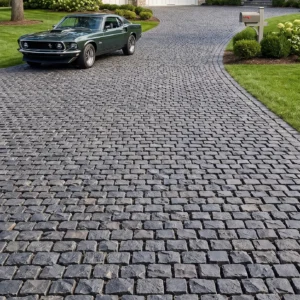
- Sett and cobble formats (4×4 to 4×8): Suit curved pathways, garden edges, and traditional streetscape aesthetics — joint frequency adds visual texture that complements the stone’s colour variation
- Irregular flagging: Allows tonal blending across organic shapes — requires more precise base preparation to maintain consistent surface plane
The Natural Stone Institute granite durability and application specifications consistently reinforce that format selection for exterior paving should factor in load distribution across the nominated base system — larger slabs require a stiffer, more uniform sub-base to prevent rocking and edge chipping over time.
Colour Pairing and Design Ideas
Green granite pavers sit in a genuinely versatile chromatic range — they work with warm timber tones, crisp white render, dark charcoal cladding, and terracotta-adjacent palettes. The key is deciding which direction you’re pulling the stone’s green. Here’s how to approach pairings with intention.
- Pair olive-toned green granite with warm-white rendered walls and bronze hardware for a Mediterranean-influenced courtyard — the warmth in the render keeps the green from reading cold
- Use deep teal-green pavers against dark charcoal cladding or black steel edging for a contemporary monochrome-plus-nature palette — the contrast is dramatic without being jarring
- Combine sage-toned green granite with natural timber decking at adjacent levels — the shared earth-mineral register unifies two very different materials convincingly
- In formal garden designs, green granite pavers laid in a running bond pattern alongside clipped hedging creates a structured, estate aesthetic that polished or honed finishes reinforce particularly well
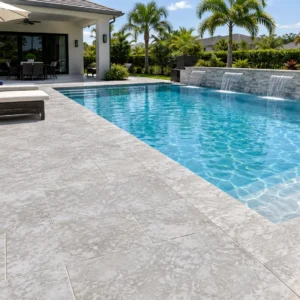
- For pool surrounds, flamed green granite paired with glass tile pool interiors in aqua or teal creates tonal layering that reads as cohesive from above — a combination frequently specified in resort-style residential projects
Terrain, Drainage, and Base Preparation for Sloped Sites
Your site’s topography directly affects how green granite pavers perform over time, and this is an area where many projects underinvest at the specification stage. On flat sites, a standard 100–150mm compacted aggregate base with a 1–2% fall to drainage is generally sufficient. On sloped or hillside installations, the engineering becomes substantially more involved.
Grade changes above 5% require you to evaluate lateral load transfer through the paver bed. Green granite’s density — typically 2,600–2,800 kg/m³ — means individual pavers are heavy enough that slope creep becomes a real risk without proper edge restraint. Concrete haunching or granite kerb edging set at grade transitions prevents this, but it needs to be detailed before paving begins, not retrofitted. Drainage geometry on sloped sites also demands more careful planning — you’ll need to route surface water away from building footings while avoiding concentrated flow across the paved surface itself, which accelerates joint erosion. On low-lying sites, the opposite challenge applies: hydrostatic pressure can lift improperly bedded pavers if sub-surface drainage is inadequate. A granular drainage layer of 40mm clean stone below your compacted base resolves this in most residential contexts.
At Citadel Stone, we recommend specifying base depth as a site-specific calculation rather than a standard figure — particularly on hillside projects where soil compaction varies significantly across the installation footprint.
Mixing Green Granite with Other Natural Stone
Green granite pavers combine particularly well with certain companion materials, and understanding which pairings work structurally as well as visually saves you from costly retrofits. The most reliable combinations share similar thermal expansion coefficients and absorption rates, which prevents differential movement at material junctions over time.
- Green granite and grey limestone: A classic pairing for courtyard borders — the limestone’s warmer grey reads as a complement, not a contrast, and both materials accept similar jointing compounds
- Green granite and black basalt: High contrast, sharply contemporary — works best in rectilinear layouts where the material boundary is a deliberate design element
- Green granite cobbles alongside large-format granite slabs: Mixing formats within the same material family is structurally straightforward and allows you to use sett borders as both aesthetic detail and practical edge restraint
- Avoid pairing green granite directly with unsealed travertine in wet zones — the absorption rate differential causes staining migration at joints that’s difficult to remediate
Explore our colored granite pavers for the full format and finish range available for these combination layouts.
Ordering, Lead Times, and Project Planning
Colour and tonal consistency is one of the most underrated specification challenges with green granite pavers. The mineral composition of granite varies naturally between quarry batches, which means pavers from two separate orders — even from the same quarry — can read differently under identical lighting. Your best protection is to specify your full project quantity from a single warehouse lot, verified before any product ships.
Citadel Stone sources green granite pavers from internationally certified quarries and maintains warehouse stock across multiple formats, which significantly reduces the batch inconsistency risk that affects direct-import orders. Lead times for in-stock formats typically run 1–2 weeks from order confirmation — considerably faster than the 6–8 week timeline for special-order quantities. Plan your truck delivery scheduling with your installer before confirming the order date, particularly on projects where site access is restricted by grade or narrow entry points. Tight truck access on hillside or elevated sites can require smaller load splits, which affects total delivery cost and timeline.
According to USGS granite production and construction use statistics, granite remains one of the most consistently supplied dimension stones in the national market, but quarry-specific colour variants — including green-toned granites — are subject to availability cycles that make advance ordering essential for large projects.
Maintenance and Long-Term Performance
Green granite pavers are among the lowest-maintenance natural stone options available, but “low maintenance” doesn’t mean zero maintenance. Your long-term performance outcome depends on two decisions made at installation: sealing and joint specification.
- Sealing: A penetrating impregnator sealer applied within 30 days of installation protects against oil and organic staining without altering the surface finish — reapply every 3–5 years depending on traffic exposure
- Joint sand: Polymeric joint sand set to 90–95% joint depth prevents weed infiltration and maintains bedding stability — check and top up annually on sloped installations where rainfall erosion is a factor
- Cleaning: A neutral pH stone cleaner applied with a soft brush is sufficient for routine maintenance — avoid acid-based cleaners, which etch the surface and accelerate mineral bleaching on green-toned granites specifically
- Surface inspection: Check for rocking pavers annually — a rocking unit indicates sub-base settlement and should be re-bedded before it creates a trip hazard or allows water infiltration to the base layer
You can realistically expect 25–35 years of structural performance from properly installed green granite pavers with biennial joint maintenance and five-yearly sealer renewal. That’s a materially better life-cycle return than most concrete alternatives, which typically require resurfacing or replacement within 15–20 years under comparable conditions.
Getting Your Green Granite Paver Specification Right
Selecting green granite pavers is a layered decision — finish, format, tonal direction, site engineering, and supply planning all feed into an outcome that either holds its quality for decades or shows its compromises within the first few seasons. The design ideas and format comparisons in this article give you a structured starting point, but the execution details matter just as much as the aesthetic choices. Get your base preparation right for your specific terrain, lock in your full project quantity from a consistent warehouse batch, and confirm your finish selection against physical samples under your site’s actual lighting conditions before committing. If you’re also planning complementary hardscape elements and want to understand the investment side of granite more broadly, granite driveway cost and installation covers the full financial picture worth reviewing alongside your paver specification. Green granite pavers from Citadel Stone are cut from internationally sourced quarries, giving consistent tone across larger paved areas.
Related reading: black granite stone outdoor use · how to choose landscaping granite · decomposed granite driveway problems.