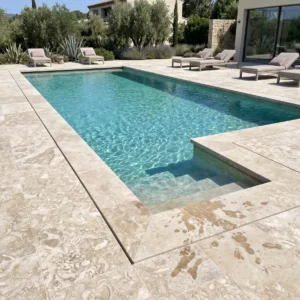
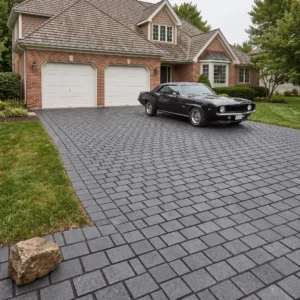
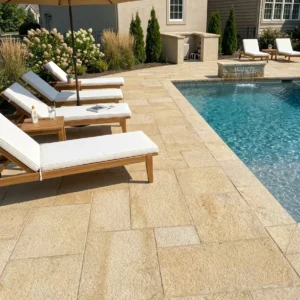
French pattern travertine forces a specification decision that catches many designers off guard — the layout geometry demands four distinct tile sizes cut to tolerances tighter than most domestic fabricators maintain. You’re working with a module built around 16×16, 8×16, 8×8, and 4×8 inch pieces, and when even one size drifts by more than 1/16 inch, the pattern breaks visibly at every repeat. That precision requirement is the first thing to evaluate before anything else, because it filters your sourcing options down considerably.
Understanding the French Pattern Geometry
The classic french pattern travertine layout — sometimes called a Roman pattern or opus pattern — relies on a mathematical relationship between its four components. All four sizes share a common module, typically 4 inches, which means every joint line aligns horizontally or vertically across the entire field. The visual effect reads as both ordered and organic, which is why it works so well in transitional interiors and large-format exterior installations. What you’ll notice on any well-executed job is that the 16×16 anchor piece sets the rhythm for everything around it.
The module relationship also means you can’t swap in a different size without breaking the geometry entirely. If you’re tempted to substitute 12×12 for the 16×16 to reduce material cost, the joint lines shift and the pattern collapses. Commit to the four-piece system or choose a different layout — there’s no halfway option.
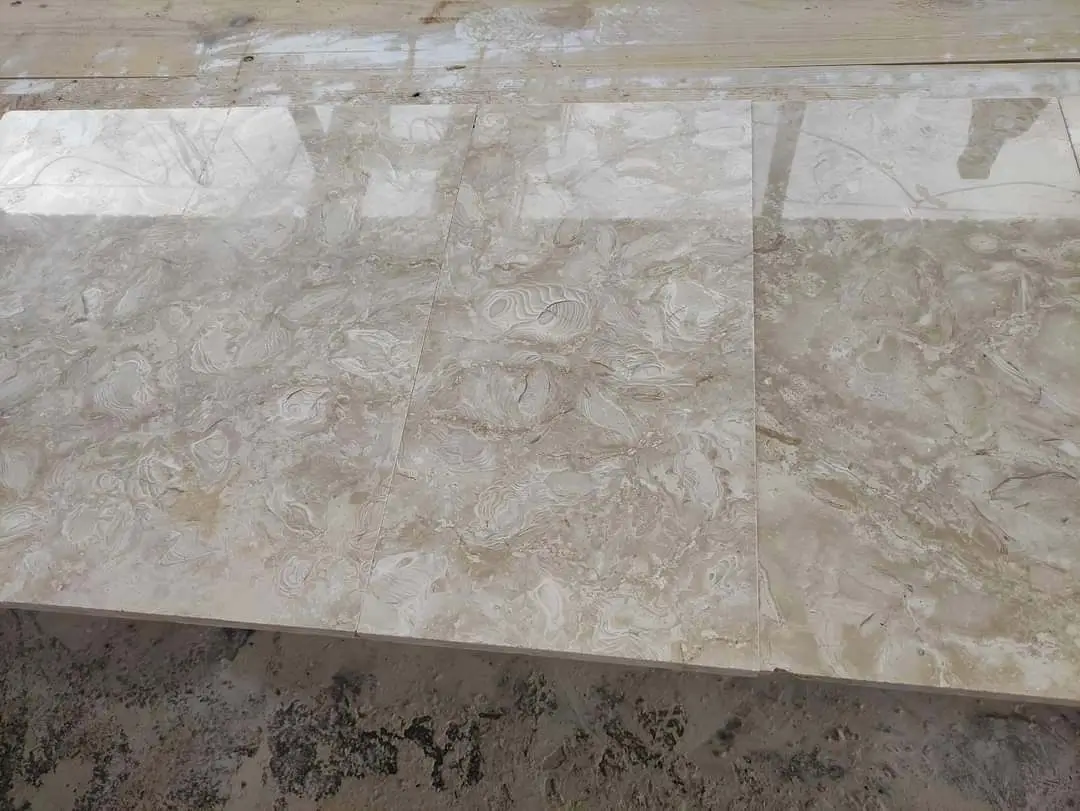
Stone Grade and Selection Criteria
Travertine grading follows a tiered system — Standard, Commercial, and Select — and the grade you specify directly determines how the finished installation reads from ten feet away. For french pattern travertine specifically, grade consistency across all four tile sizes matters more than in a simple square-format layout, because the eye traces continuous joint lines across multiple piece sizes. A grading mismatch between the 16×16 and the 8×8 creates tone and fill variation that reads as installation error even when the workmanship is perfect.
- Select grade: minimal voids, highly consistent fill, tightest colour banding — best for interior applications where the stone is viewed at close range
- Commercial grade: moderate voids, acceptable fill variation, broader colour range — suits exterior terraces and high-traffic areas where texture reads as character
- Standard grade: heavier voids, more pronounced travertine pitting, significant tone variation — appropriate for rustic or heavily tumbled applications
- Honed finish: reveals the true stone colour and pore structure; requires sealing before grouting to prevent grout absorption into open pores
- Tumbled finish: rounds edges and creates a weathered surface texture that is highly forgiving of minor joint irregularities in the field
According to Natural Stone Institute travertine properties and outdoor suitability, travertine’s open-pore calcium carbonate structure contributes to its moderate absorption rate, which directly influences both finish selection and long-term maintenance protocols. Understanding that relationship before you specify the finish saves significant remediation cost later.
Tile Thickness and Structural Loading
Thickness selection for french pattern travertine is less straightforward than most specification guides suggest, because the four-piece layout creates variable point-loading conditions. The 16×16 anchor tile spans the greatest unsupported area, while the 4×8 pieces sit in zones of high edge stress near joints. Specify 3/4-inch (18–20 mm) nominal thickness for any floor application — 1/2-inch material works for wall cladding but deflects under foot traffic in a way that stresses grout joints progressively.
For exterior applications subject to freeze-thaw cycling, the structural argument for 3/4-inch thickness becomes even more compelling. Thinner material absorbs water at the edges, and when that water expands during freezing, the tensile stress concentrates at the thinnest cross-section — which is typically the 4×8 piece. You’ll see edge spalling on 1/2-inch exterior material within two to three winters in regions with repeated freeze-thaw cycles, while properly specified 3/4-inch material handles those same conditions with decades of service life remaining.
Surface Finish Options and Their Field Performance
The finish you select on french pattern travertine affects slip resistance, maintenance burden, and visual longevity in ways that specification sheets rarely capture fully. Honed travertine in an 18×18 castle honed travertine configuration, for example, delivers a matte surface with a coefficient of friction (COF) in the 0.5–0.6 range when dry — acceptable for most interior floors but marginal for exterior wet zones without a texture additive in the sealer. Polished finishes drop that COF below 0.4 when wet, which eliminates them from any pool-adjacent or entry application where rain exposure is routine.
- Honed finish: COF 0.5–0.6 dry, 0.35–0.45 wet — seal before grouting, reseal every 18–24 months in high-traffic areas
- Tumbled finish: COF 0.65–0.75 dry — the textured surface retains grip when wet, requires less frequent sealing, hides minor scratches naturally
- Brushed finish: COF 0.55–0.65 dry — a good middle ground between the refinement of honed and the grip of tumbled
- Polished finish: COF below 0.4 wet — restrict to interior vertical surfaces or low-traffic decorative floors with slip-resistant area rugs
The ASTM C1527 travertine dimension stone standard establishes minimum physical property thresholds — including absorption rate and modulus of rupture — that your specified stone should meet or exceed. Request the test certificates from your supplier and verify the values against those minimums before the material ships.
Base Preparation and Setting Bed Requirements for Large-Format Tile
Your installation’s longevity traces back almost entirely to what happens below the tile, not above it. For french pattern travertine on a concrete substrate, you need a flatness tolerance of L/360 or better before the setting bed goes down — that translates to no more than 1/8-inch variation over any 10-foot span. The multi-size format is particularly unforgiving of substrate irregularities because the 16×16 and the adjacent 8×8 pieces bridge different spans, and any substrate dip creates a lippage difference between sizes that no amount of back-buttering corrects.
Large-format tiles in the 48×48 range amplify this substrate demand even further — at that scale, substrate flatness requirements tighten to 1/8-inch over 10 feet with no more than 1/16-inch deviation in any 24-inch span per ANSI A108.02. That’s a standard most residential slabs don’t meet without grinding and patching, so budget that work into your schedule before tile delivery arrives. The jump from standard square formats to large floor tiles at 48×48 scale represents one of the most significant substrate preparation upgrades you’ll encounter on a stone specification.
- Mortar bed (mud set): 3/4 to 1-1/4 inch Portland cement bed — the gold standard for large-format travertine, allows precise leveling adjustments during installation
- Large-format tile mortar: use a medium-bed or large-format mortar with extended open time — standard thinset skins over before you can properly seat a 16×16 piece
- Back-buttering: 100% mortar coverage on all four sizes is non-negotiable — voids beneath travertine accelerate cracking under point loads
- Movement joints: space control joints every 8–10 feet in each direction, at all changes of plane, and wherever the tile field meets a restraining element like a wall or column base
Budgeting and Sourcing Considerations
The cost structure for french pattern travertine projects differs from single-format tile work in ways that affect your budget from the first line item. Material pricing for the four-piece set typically runs 15–25% higher per square foot than equivalent single-size travertine, because the cutting and sorting required to maintain grade consistency across four dimensions adds fabrication time at the quarry. That premium is real, but it’s also where sourcing decisions have the most leverage.
Freight distance is the second major variable. Travertine quarried from Middle East quarries and shipped directly to a national warehouse typically carries a lower landed cost than material routed through regional distributors with intermediate markup layers. The trade-off is lead time — direct import orders require 6–8 weeks from order to warehouse, while domestically stocked material ships within 7–14 days. Your project schedule determines which sourcing path makes financial sense. Explore Citadel Stone pattern sets to confirm current stock levels and lead times before locking your project schedule.
Labor cost ratios also shift with french pattern travertine compared to simpler layouts. The pattern layout requires skilled tile setters who understand module geometry and can cut pieces to maintain consistent joint width across all four sizes. Expect labor rates 20–30% above standard square-format tile installation in most markets, because the layout time and cut complexity are genuine — not a subcontractor markup. Factor that into your material-to-labor ratio early so the number doesn’t surface as a budget surprise at bid.
Sealing and Long-Term Maintenance
Travertine’s open-pore structure makes pre-grout sealing non-negotiable on honed and polished surfaces. Apply a penetrating impregnating sealer before grouting — not after — so grout doesn’t migrate into the natural voids and permanently stain the stone. Two coats of a solvent-based or water-based impregnator, applied 20–30 minutes apart with the second coat applied while the first is still slightly tacky, gives you the best pore penetration without surface buildup. This approach is equally critical whether you’re sealing a french pattern travertine floor field or a single-format installation such as an 18×18 castle honed travertine surround.
Post-installation maintenance for french pattern travertine follows a straightforward schedule, but the specifics matter more than the frequency. Travertine’s absorption characteristics require resealing intervals calibrated to traffic volume and cleaning product acidity — not just calendar time. High-traffic commercial floors need resealing every 12–18 months; residential installations every 24–36 months is typically sufficient when pH-neutral cleaners are used exclusively.
- Never use acidic cleaners — vinegar, citrus-based products, and many tile cleaners etch the calcium carbonate surface permanently
- Fill open travertine voids with a colour-matched grout or stone filler before first use — unfilled voids collect debris and become visually prominent over time
- Address grout joint cracks within one season of appearance — delayed repair allows water infiltration that undermines the setting bed progressively
- Test sealer efficacy annually by placing a few drops of water on the surface; if the water absorbs rather than beads within 5 minutes, reseal immediately
Design Applications and Layout Planning
Planning a french pattern travertine layout requires you to work the pattern out on paper — or digitally — before a single piece is cut. Start from the optical center of the room, not the physical center, because the human eye reads balance relative to dominant architectural features like fireplace surrounds, window walls, and primary sight lines from entry points. An optically centered layout avoids the awkward partial-piece condition at the most visible perimeter edge.
Running the pattern diagonally at 45 degrees is an option many designers overlook. A diagonal french pattern travertine layout widens the perceived room width and eliminates the geometric rigidity that some clients find too formal. The trade-off is a 15–20% increase in cut waste at perimeters, so adjust your material take-off accordingly. For exterior terraces, the diagonal orientation also improves drainage geometry when combined with the correct slope — water sheets off the joint lines rather than pooling in them.
The Tile Council of North America provides installation standards through TCNA natural stone tile installation guidelines that address layout planning, joint width tolerances, and movement accommodation in detail — particularly useful when your french pattern travertine installation spans multiple substrate conditions or transitions between interior and exterior planes.
Final Considerations
The specification decisions that define a french pattern travertine installation come down to grade consistency, thickness, substrate preparation, and sourcing lead time — not just material selection. Get those four variables locked in before the project schedule is set, because changing any one of them mid-project triggers cascading delays that cost more than the original specification decision would have. Your material order should confirm that all four tile sizes in the pattern set are cut from the same quarry batch, matched for tone and fill level, and certified to the physical property minimums your application demands.
Citadel Stone maintains warehouse inventory of travertine pattern sets that ships nationally, which gives you the scheduling flexibility to plan installation crews without waiting on extended import cycles. As your project extends into complementary stone elements — countertops, wet bars, or kitchen surfaces — understanding travertine countertop material costs helps you maintain a consistent material palette across interior applications without budget surprises. Sourced from internationally sourced quarries, Citadel Stone ships french pattern travertine with matched tones for a seamless finished layout.
Related reading: floor tile sizes compared · how to fill travertine holes · cleaning a travertine floor.