Travertine’s open-pore calcium carbonate structure makes how to clean travertine floors a genuinely different challenge from cleaning ceramic or porcelain — and the difference matters more than most homeowners realize until they’ve already caused damage. The pores that give travertine its warmth and character are also pathways for acidic cleaners to reach the calcium matrix beneath the surface finish. Understanding that vulnerability changes everything about your product selection and your routine.
Why Travertine Reacts Differently to Cleaners
Travertine is formed through mineral-rich water depositing calcium carbonate over centuries, which is precisely why it etches on contact with acids. That etching isn’t a surface scratch — it’s a chemical dissolution of the stone itself. You’ll see it as a dull, matte spot where the finish once had a consistent sheen, and no amount of polishing compound fixes it without professional honing.
The reaction happens fast. Vinegar, lemon juice, many multi-surface sprays, and even some “stone-safe” products marketed at hardware stores carry pH levels between 3 and 5 — well inside the danger zone for travertine. According to Natural Stone Institute travertine properties, the calcium carbonate matrix in travertine is particularly susceptible to acid attack, which is why pH-neutral formulations are the professional standard, not an optional upgrade.
- Travertine’s pH sensitivity begins below pH 7 — anything acidic causes measurable surface change
- Common household cleaners like bathroom sprays, grout cleaners, and descalers are almost always acidic
- Even hard water deposits, if treated with acid-based descalers, will etch the stone before removing the calcium scale
- Ammonia-based cleaners are less damaging than acids but still break down sealer over time
The Right Daily and Weekly Cleaning Routine
Your daily maintenance should be simple: dry dust-mopping with a microfiber pad. That single habit removes grit and particulate before it gets ground into the stone surface underfoot. Travertine rates between 3 and 4 on the Mohs hardness scale, so fine quartz sand — which sits at 7 — will abrade a honed finish if you let it accumulate.
For damp mopping, water temperature matters more than people expect. Hot water opens travertine’s pores slightly and pulls residual minerals from the stone more aggressively than cool water. Stick to room-temperature water with a pH-neutral stone cleaner diluted to the manufacturer’s specification. Wring the mop nearly dry — you want a barely damp surface, not a wet one. Standing water on travertine floors migrates into open pores and can trigger subsurface moisture issues, especially over concrete substrates that haven’t fully cured.
- Dust-mop daily in high-traffic areas — this is your highest-return maintenance task
- Damp-mop with pH-neutral cleaner at least once a week in kitchens and entryways
- Avoid steam mops — the heat and pressure force moisture into pores and can loosen grout over time
- Never use disposable-pad spray mop systems — most refill solutions are not pH-neutral for natural stone
- Change mop water frequently — a dirty mop redistributes grime rather than removing it
Choosing the Right Cleaner for Travertine Floors
A reliable cleaner for travertine floors sits at pH 7 to 8 — strictly neutral to mildly alkaline. You’ll find dedicated stone cleaners from brands like Miracle Sealants, Akemi, and StoneTech that hit this range and include surfactants designed to lift oils without disrupting the stone’s mineral structure. Reading the label isn’t enough — look for the pH value explicitly stated, and if it isn’t listed, contact the manufacturer or skip that product.
Dish soap is a common workaround that many people reach for, and it’s genuinely problematic. The surfactant residue builds up over multiple cleanings and creates a film that dulls the finish and attracts particulate. You’ll notice the floor looking hazy after a few months — not because the stone degraded, but because a soap layer has formed. A professional rinse with clean water and a squeegee is the fix, but it’s an avoidable problem from the start.
- Target pH 7–8 on every cleaning product you use on travertine
- Enzyme-based cleaners work well for pet accidents — they break down organic matter without acidic agents
- For kitchen grease, a diluted pH-neutral degreaser at no more than pH 9 is the upper safe limit
- Hydrogen peroxide at 3% concentration is acceptable for spot-treating stains, but test in an inconspicuous area first
- Avoid any product labeled “scrubbing” or “deep-clean” — these rely on abrasive or acidic agents
Step-by-Step Travertine Floor Cleaning Walkthrough
Here’s the sequence that produces consistently clean results without surface damage when cleaning a travertine floor. Work through these steps in order — skipping straight to wet mopping without dry-sweeping first is the most common mistake in travertine floor cleaning, and it causes micro-scratching that accumulates into visible surface wear over two to three years.
Start by clearing the floor of furniture and rugs, then dry dust-mop in overlapping passes from far wall to exit. After dry-sweeping, mix your pH-neutral stone cleaner in a bucket of cool to room-temperature water at the stated dilution ratio. Dip your mop, wring until barely damp, and work in sections of roughly 4 square feet, overlapping each pass by about 6 inches. Follow immediately with a clean rinse mop dampened with plain water — this step removes cleaner residue that could dull the finish if left to dry.
- Step 1: Remove loose furniture and entry mats
- Step 2: Dry dust-mop the entire floor with a microfiber pad
- Step 3: Mix pH-neutral cleaner per label directions in cool water
- Step 4: Damp-mop in 4-square-foot sections, wringing thoroughly before each pass
- Step 5: Follow with a clean rinse mop using plain water
- Step 6: Allow to air-dry fully before foot traffic — roughly 15–20 minutes in normal conditions
- Step 7: Buff with a dry microfiber cloth if any water spots remain after drying
Cleaning Filled vs. Unfilled Travertine — What Changes
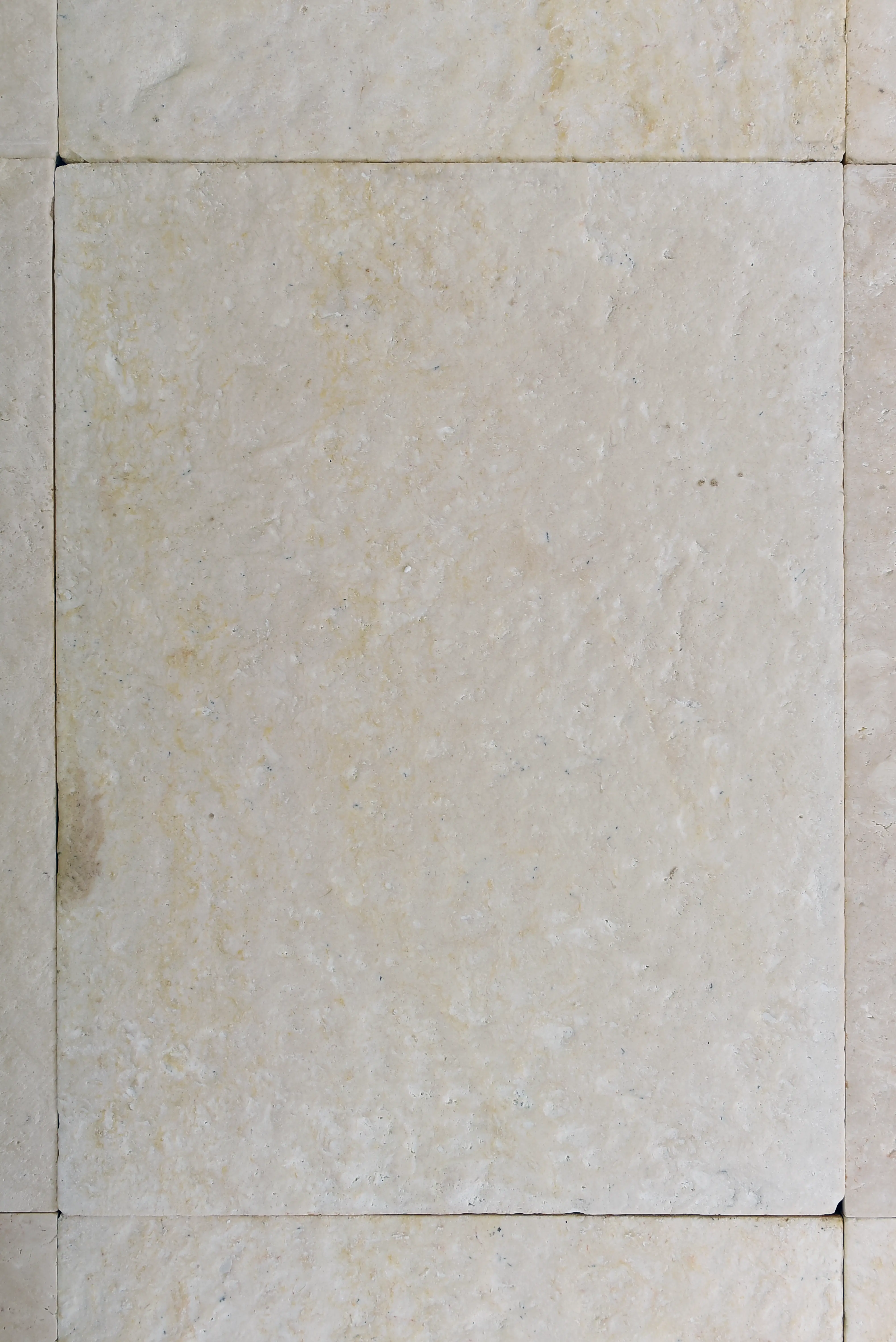
Travertine floors come filled or unfilled, and the distinction affects your cleaning approach more than most stone references mention. Filled travertine has the natural voids grouted with cement, epoxy, or resin — this creates a smoother surface that’s easier to clean and less vulnerable to moisture infiltration. Unfilled travertine preserves the natural pitting, which can trap particulate and cleaning solution residue.
For unfilled travertine, use a soft-bristle grout brush on the pits during your weekly clean, working in small circular motions before the rinse pass. The TCNA natural stone tile installation standards recommend that grout joints and voids in natural stone receive compatible, non-acidic cleaners specifically to avoid weakening fill material and stone edges. Your mop won’t reach into those voids — you need targeted tool contact.
Filled travertine with epoxy fill requires extra caution with alkaline cleaners. Strong alkaline products above pH 10 can soften or discolor epoxy fill over repeated use. Stay within the pH 7–8 range and you’ll protect both the stone and the fill material simultaneously. Citadel Stone’s technical team regularly advises clients on this distinction when reviewing specifications for travertine tile installations, particularly for larger format tiles where void density can vary noticeably across slabs.
Dealing with Stains and Spills on Travertine
Your response time to spills is the single biggest variable in stain outcomes on travertine floors. Travertine’s absorption rate — typically 2–4% by weight depending on density — means a red wine spill left for 20 minutes will penetrate significantly deeper than one blotted within 60 seconds. The goal is always to blot first, never wipe — wiping spreads the stain laterally into adjacent open pores.
For organic stains like coffee, wine, and food, a poultice of hydrogen peroxide (3%) mixed with diatomaceous earth or unbleached flour draws the stain back out of the stone as it dries. Apply a quarter-inch layer, cover with plastic wrap taped at the edges, and leave it for 24 to 48 hours. Scrape gently with a plastic putty knife — never metal — and rinse with clean water. According to ASTM C1527 travertine dimension stone standards, surface absorption characteristics of travertine vary by finish type, meaning honed surfaces typically absorb faster than polished ones and may require a longer poultice dwell time.
- Blot spills immediately with a clean cloth — never rub
- For oil-based stains, use a poultice with acetone instead of hydrogen peroxide
- For rust stains, avoid commercial rust removers — they’re highly acidic; consult a stone restoration professional
- Ink stains respond well to a poultice with mineral spirits, followed by a clean-water rinse
- Always test poultice materials in an inconspicuous area before treating a prominent surface
Sealing and Its Role in Easier Cleaning
Properly sealed travertine floors are dramatically easier to maintain — a penetrating impregnating sealer reduces absorption from roughly 3–4% down to under 1%, giving you significantly more reaction time when spills occur. The sealer doesn’t sit on top of the stone; it occupies the pore space below the surface, leaving the finish texture and appearance unchanged while blocking liquid penetration.
Resealing travertine floors every 12 to 18 months in residential settings — or every 6 to 12 months in high-traffic commercial environments — keeps the protection effective. The water bead test tells you when it’s time: drop a few tablespoons of water on the floor surface. If it beads into a tight dome shape, the sealer is intact. If it spreads and darkens the stone within 60 seconds, you’re past due for a reapplication. Applying a fresh sealer coat to an unsealed or degraded surface requires a thorough cleaning first — any residue or soil trapped under new sealer will be sealed in permanently.
For travertine floor cleaning before resealing, a deeper alkaline cleaner at pH 9 to 10 removes years of cleaner residue and oil buildup without damaging the stone. At Citadel Stone, we’ve seen installations where homeowners skipped the pre-seal cleaning step and sealed over a hazy film — the result is a matte appearance that can’t be corrected without stripping and re-sealing entirely. For popular format selections like our 18×18 Travertine Tile, the larger surface area makes pre-seal cleaning particularly important since any streaking is more visible across wider slabs.
Design Context and Aesthetic Maintenance Considerations
Travertine floors carry different visual expectations depending on the design style they serve. In a modern minimalist interior, a honed finish demands flawless surface uniformity — any etch mark or water spot is immediately visible against the clean, matte plane. In a Mediterranean or rustic colonial setting, the natural variation of a tumbled or brushed travertine surface is part of the aesthetic, which means minor surface imperfections read as character rather than damage.
Understanding your design context shapes your maintenance priorities. Desert-influenced interiors that pair travertine with warm terracotta, natural plasters, and xeriscaped outdoor views tend to use warmer-toned travertine — ivory, walnut, or classic — which shows calcium deposits from hard water more readily than cooler-toned varieties. In those settings, a distilled-water rinse step in the cleaning a travertine floor sequence makes a visible difference. Tropical or lush-landscape settings where travertine flows between interior and covered outdoor spaces need particular attention to organic staining from plant material and irrigation overspray at the transition zones.
Maintaining Travertine Floors — What Matters Most
Travertine floor cleaning done correctly comes down to consistent habits more than expensive products. pH-neutral cleaners, dry dust-mopping before any wet step, and timely spill response protect the stone far more reliably than periodic deep-cleaning sessions with the wrong chemistry. Your sealing schedule is the structural foundation of that system — let it lapse and you’re working against the stone’s natural absorption tendency rather than with it.
Citadel Stone sources travertine through selected quarries from the Middle East and conducts warehouse quality checks on fill consistency, finish uniformity, and density before any material ships — because the variation between lower-density and higher-density travertine affects both absorption rate and long-term maintenance demands. If you’re extending your project scope to outdoor applications, travertine tile for pool environments covers how those same maintenance principles translate to wet-zone and pool deck installations. Stone specialists at Citadel Stone note that acidic household cleaners are among the most common causes of surface etching on travertine floors, making pH-neutral products essential for routine care.
Related reading: how to fill travertine holes · floor tile sizes compared.