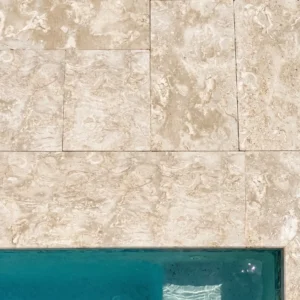
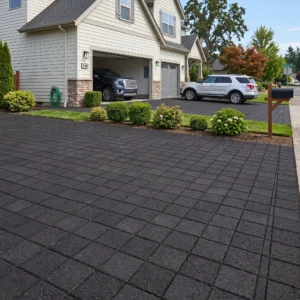
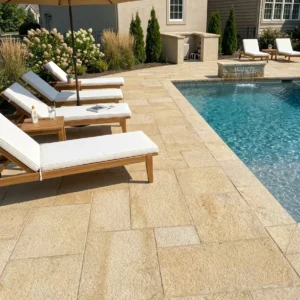
Cayman’s rental market is unlike any in this cluster: thousands of relocating professionals — finance, law, insurance, medicine — arriving on multi-year contracts with corporate housing budgets and metropolitan expectations, renting apartments, townhomes and family houses across the island’s strata and estate stock. For landlords the market is a gift with standards attached, and stone is the finish that meets both halves. Here is the professional-tenancy playbook, Cayman edition.
The tenant who audits like a surveyor
The relocating professional views properties the way they review contracts: methodically, comparatively, with attention to what daily life will actually feel like. Floors and terraces register immediately — cool underfoot in the commute-home heat, solid rather than hollow-sounding, joints and edges reading as maintained — and the stone-finished property clears the first filter that condemns tired stock: it photographs credibly in the listing and confirms in person. The long-let fundamentals apply at Cayman rates, where the premium tier is deep and the difference between securing a two-year corporate let and a sequence of short stays is measured in real money.
- Floors that read cool underfoot on the walk in from a hot commute.
- Surfaces that sound solid rather than hollow when crossed.
- Joints and edges that are consistent, because inconsistency reads as neglect.
- Outdoor space that is usable rather than decorative.
- Evidence of maintenance, which a professional tenant equates with a responsive landlord.
Corporate lets and the HR filter
A distinctive Cayman channel is the corporate placement: employers and relocation agents shortlisting properties for arriving staff, applying institutional filters — safety, condition, maintenance responsiveness — before any tenant falls in love with a view. Stone serves the filter’s letter and spirit: documented slip-safe outdoor surfaces, evident storm-worthiness on the mass-and-anchorage logic, and the maintainability story — attic stock, care sheet, repair history — that tells a relocation agent this landlord answers tickets. Properties that pass institutionally rent continuously; the channel remembers.
Strata apartments: the shared-asset tenancy
Much of the market rents inside strata buildings, where the tenant experience blends private unit and shared realm: the amenity deck, the walkways, the parking court. Landlords control their unit’s finishes and inherit the building’s — which makes unit-level stone (balcony surfaces on the above-grade rules, interior floors running cool through the seasons) the landlord’s lever, and strata participation the longer game: owners who back amenity upgrades through the AGM process lift every unit’s rentability, their own first.
Family houses: the school-run register
The market’s family tier rents on liveability: safe outdoor space for children, terraces that host the weekend’s barbecue, gardens that survive a busy household’s benign neglect. The stone answers run the family-proof specification at tenancy pitch — forgiving mid-tones, eased edges, textured pool surrounds with sightlines from the kitchen — plus the rental overlay: surfaces that reset between tenancies with a clean rather than a spend, and the turnover economics that make stone the landlord’s compounding asset across a decade of two-year cycles.
Turnover at professional cadence
Cayman tenancies turn on contract rhythms — arrivals clustering with hiring seasons, departures with rotations — and the make-ready window is short and expectations high. Stone’s turnover kit is the cluster’s standing one, run briskly: deep clean returning day-one presentation, joint and edge inspection, the odd chip repaired from attic stock, outdoor furniture reset, listing photographs refreshed while everything gleams. The property that re-lists within days at full standard captures the arriving cohort; the one awaiting contractors watches it sign elsewhere.
- A make-ready window measured in days, not weeks, between tenancies.
- Surfaces that deep-clean back to presentation rather than needing refinishing.
- Spare units held so a chip is swapped during turnover, not scheduled for later.
- Inventory photographs from fixed points at every check-in and check-out.
- A care note in the tenancy pack naming approved cleaners and excluded products.
The investment arithmetic
The market’s numbers reward the upgrade: professional rents at Cayman levels amortize stone quickly, vacancy avoided is the largest line in any rental spreadsheet, and the finish that never needs replacing compounds across ownership. Entry points rank by tenant impact — outdoor living space first (the terrace is the island lifestyle tenants relocated for), entrance and parking second, wet zones third — phased through tenancy gaps with batch continuity. The Cayman supply hub quotes landlord packages routinely: modest orders, professional documentation, and finishes specified for the tenant who audits like a surveyor — because on this island, they all do.
The turnkey fit-out: furnishing the landlord’s outdoors
Cayman’s rental market hands over furnished, and the outdoor schedule is where furnished either means finished or means cheap. The fit-out list around the stone deserves the same landlord logic as the stone itself: furniture in materials that shrug sun and salt — powder-coated frames, marine-grade textiles, nothing that rusts onto the deck it sits on — planters with saucers and feet so irrigation never stains the terrace, barbecue stations on their own hard apron with grease management the deposit inspection will thank you for, and shade that either engineers for wind or stows in minutes. Every choice audits against two questions: what does it do to the stone beneath it, and what does it cost to replace when a tenant’s guest breaks it?
Placement is specification too. Furniture feet get pads as policy — a carton of them costs nothing against a season of drag scratches; heavy pieces sit where the deck’s thickness was stepped up for them; and the layout leaves the drainage falls and the access routes the maintenance rhythm needs. The inventory annexe should photograph the outdoor rooms as carefully as the kitchen: pieces listed, condition recorded, the stone’s state documented in the same set — because the deposit conversation about a stained terrace is short when the check-in photographs are good and endless when they are not.
The arithmetic mirrors the surfaces’: buy the outdoor fit-out once at durable grade and it survives tenancy after tenancy, photographing well in every listing between; buy it seasonally and the replacement cycle quietly eats a month’s rent a year. Landlord-grade means the whole outdoor room — stone, furniture, fittings — running on the same decade clock, and the tenants who audit like surveyors notice exactly that.
The material properties a rental floor actually needs
Rental surfaces meet more cleaning products and more different households than any owner-occupied floor. The Natural Stone Institute notes that limestone varies widely, with absorption from below one percent to above ten and dolomitic varieties generally denser, stronger and more abrasion resistant.
- Low absorption in kitchens, bathrooms and on terraces where liquids land.
- Higher abrasion resistance on the routes tenants walk in shoes.
- Mid-tones that carry real life invisibly between cleans.
- Acid-sensitive stone kept out of kitchens, since tenants use whatever cleaner they buy.
- Modular formats so one damaged unit is a swap rather than a project.
Slip resistance a landlord can point to
Duty of care does not pause because a property is let, and wet floors are where it is tested. This account of friction testing on stone walking surfaces explains the standard and its limits.
- ANSI A326.3 measures dynamic coefficient of friction and can be run in place as well as in a laboratory.
- The 0.42 benchmark applies to level interior surfaces walked on wet, which covers bathrooms.
- No exterior threshold is specified, so terraces and steps need a specifier judgment.
- Polished finishes generally fall short and are a poor choice in a let property.
- Keeping the test result on file costs nothing and matters if a claim ever arises.
Where the money actually goes
Landlords rarely have an unlimited budget, so the order of spending decides the return.
- The terrace first, since it is the space that closes viewings in this market.
- The entrance second, which sets the impression before the door opens.
- Kitchen and bathroom floors as they come up for renewal.
- Steps and level changes, where complaints and incidents concentrate.
- Attic stock last but never omitted, because it is what keeps turnovers cheap.
Expat rental property stone and where the money goes
Cayman tenants audit a property the way they audit a contract, and they are paying corporate money to do it. That argues for dense, mid-tone, textured stone in modular formats, a documented slip result, spares from the original batch, and a care note in the tenancy pack. Spend on the terrace and the entrance first and the rest can follow a renewal at a time. Where the unit sits inside a strata building, our strata renovation approval guide covers the shared realm. Specify for the fifth tenancy and the first four never notice a thing.