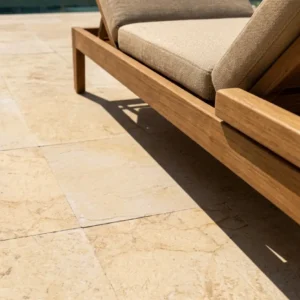
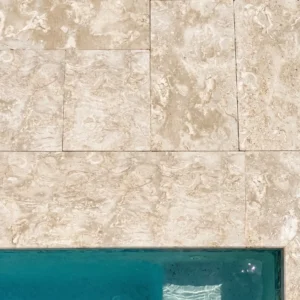
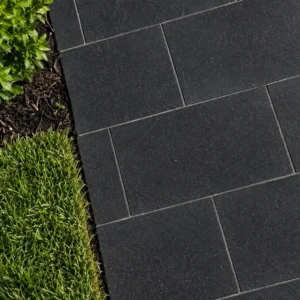
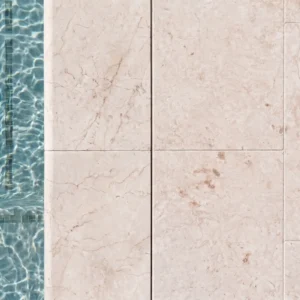
The only tropical rainforest in the US national forest system rises an hour east of San Juan: El Yunque, the rain mountain of the island’s first peoples, pulling clouds off the Atlantic and sending them down as the rivers that carve the northeast. Around its protected slopes runs a distinctive property belt — Luquillo and Río Grande’s villas and resorts, mountain-road homes in perpetual green — where building means joining the wettest microclimate on the island. Here is the rain mountain’s guide.
The forest-edge privilege
Properties at the boundary hold the island’s greenest views and its most reliable weather: cloud-forest humidity, afternoon showers arriving on schedule, rivers running loud after rain. The design posture is this library’s boundary-covenant instinct in its lush inversion — deference to the protected neighbor, runoff excluded from forest watersheds, dark-sky manners under skies the coquí serenade — and the practical spec is Dominica’s: the wet-country law of drainage-first design, wet-grip textures everywhere, and surfaces chosen to be swept of the forest’s constant confetti.
River rooms and swimming holes
The mountain’s rivers write the region’s recreation: pools below the falls, the river-terrace genre at Puerto Rican pitch — villa decks above running water with flood lines read honestly, footings armored, structures held above the storm profile the mountain reliably tests. Access craft serves the swimming-hole culture: stepped paths on permanent-wet grip, handholds where the current says so, and the flash-flood law respected absolutely, because the rain mountain’s rivers rise on the mountain’s schedule, not the picnic’s.
- Falls set generously, because average rainfall figures understate the peaks
- Open joints or permeable bedding so water is never held under the units
- Cross drains at every level change on a sloping approach
- Textures that keep grip once a surface has been wet for days
Luquillo’s corridor
Between forest and sea runs the beach town the capital loves: Luquillo’s palm-fringed crescent, the famous kiosk strip feeding weekend migrations, and a villa-and-condo market selling the double amenity — rainforest morning, beach afternoon. The corridor’s premises split their specification accordingly: seaward faces on the coastal salt rules, mountain faces on the wet-green rules, and the short drive between them the whole sales pitch. Resort operations add the forest’s visitor traffic: excursion staging on honest aprons, rinse-and-mud thresholds at the returning end, and lobbies that greet guests coming back happily soaked.
Mountain-road homes
The roads climbing the foothills carry a quieter register: homes in the perpetual green where the cloud-belt disciplines apply at rainforest strength — the grip audit as seasonal routine, gutters sized for sky-first deliveries, retaining on engineered honesty, and the mountain-road realities of delivery trucks, switchbacks and the last hundred meters by smaller wheels. The reward is the island’s coolest air and greenest mornings; the price is maintenance run on the forest’s calendar, not the owner’s.
- Non-ferrous fixings throughout, since damp air corrodes constantly
- Timber contact details avoided where a surface never fully dries
- Gutter and downpipe discharge taken away from paved routes
- Access left for annual cleaning of every drainage run
Storm truth at the boundary
María crossed this forest directly and stripped it gray; the recovery — forest and neighborhoods both — wrote the region’s current standard: structures at code-plus honesty, landscapes debris-audited before every season, stone ground as the layer that held while lighter layers traveled. Edge properties carry the memory as method, and the energy-resilience layer runs strongest here, where the grid’s mountain runs were always the first to fail and the last to return.
Specifying for the rain mountain
The forest-edge kit is wet-country law at full strength: drainage-first ground, permanent-wet textures, armored river craft, boundary manners and storm honesty — served at domestic rhythm from the island supply page. The mountain makes the weather, the rivers carry it seaward, and the properties that thrive at the edge are the ones that joined the water’s logic on day one — in stone that treats rain as climate, not event.
The coquí’s hours: designing for the forest’s night
Nothing prepares a visitor for the volume. As dusk settles on the rain mountain the coquí begin — the island’s beloved tree frog, two syllables repeated by thousands, a sound Puerto Ricans abroad describe as the thing they miss most — and the forest edge’s night register is built around it. Properties here design for the chorus rather than against it: terraces positioned to enjoy the sound as the evening’s soundtrack, glazing and ventilation chosen so bedrooms can stay open to it, and the acoustic instinct inverted from the usual brief — here the ambient noise is the amenity, and mechanical plant is the intruder. Generator and pool equipment siting deserves double care at the forest edge for exactly that reason.
The lighting brief follows the same logic as the sound. Warm, low, shielded fixtures serve the paths without washing the canopy; the dark-margin discipline the island’s protected places enforce applies here on ecological grounds, since forest-edge insects, frogs and the bats working above them all read artificial light as disruption. The reward is the register itself: a terrace lit just enough to pour a drink, the mountain black beyond it, and the chorus filling the space where a floodlit garden would have delivered only its own reflection.
Materials play their quiet part. Stone terraces hold the day’s warmth into the cool mountain evening — the forest edge runs genuinely fresh after dark — and their sound is neutral where timber decking creaks and metal furniture announces every movement. The visitor sitting out at nine with a coffee, listening, is having the experience the property was actually bought for; the design’s job is to have removed everything that could have interrupted it.
The forest sitting above the site
Building on this side of the island means building below a protected watershed. The USDA Forest Service describes El Yunque as nearly 29,000 acres spanning eight municipalities, from Rio Grande and Luquillo across to Naguabo and Juncos, and as the only tropical rainforest in the entire national forest system. Everything downhill of it inherits that hydrology. Water arrives faster, stays longer, and carries more with it than the same rainfall would on flatter, drier ground.
- Treat the site as part of a catchment, not as an isolated plot
- Design for the flow arriving from above, not only the rain falling on site
- Keep silt out of watercourses during construction as a standing rule
- Check what the ground does after three wet days, not after one
What two hundred inches actually does
The numbers here are unlike anywhere else in the United States. The NOAA state climate summary for Puerto Rico records an island average near 64 inches a year but a range that runs from under 40 inches at Ponce to more than 200 inches in the highlands around El Yunque. At the upper end of that range, drainage stops being a detail and becomes the primary structure of the design. Surfaces are wet for long stretches, subgrades stay saturated, and anything that traps water will fail before anything that sheds it.
- Size outlets for the local extreme, not the island average
- Assume the subgrade is wet when calculating the build-up
- Avoid closed joints and sealed perimeters that hold water in
- Provide an overflow route for the day the primary drain blocks
Biological growth is the maintenance item
In permanent damp the enemy is not weathering, it is what grows. Algae, moss and lichen colonize any surface that stays wet and shaded, and they change the friction of a walking route long before they change its appearance. Planning for that from the start is cheaper than reacting to it every wet season.
- Prune and thin planting so surfaces get some drying time
- Choose textures that clean without aggressive chemicals
- Schedule cleaning by season rather than by complaint
- Keep a test area to try any new cleaning product before it is used widely
Choosing rainforest edge stone below the peaks
Specify for water and everything else follows. Drain generously, keep joints open, use fixings that tolerate constant damp, and accept that cleaning is part of the design rather than a failure of it. Our Puerto Rico stone supply guide sets out the formats, finishes and lead times that suit this island. Below a rainforest the surface that drains fastest is the one that lasts longest.