

Understanding Basalt’s Physical Properties
Before you start cutting, you need to understand what makes basalt tick. This isn’t just any stone—it’s a volcanic rock born from cooled lava, giving it a tight, fine-grained structure that’s both a blessing and a hurdle.
Hardness That Demands Respect
Basalt scores 6 to 7 on the Mohs hardness scale, meaning it’s tougher than steel but not quite as unyielding as quartz. That hardness is why it serves for generations in high-traffic areas, but it also means regular blades won’t cut it—literally. You’ll need diamond-tipped tools to slice through without a fight.
Grain Structure and Density
Unlike layered stones like slate, basalt’s fine grains are packed tight with no obvious weak spots. This density gives it strength but makes cutting a deliberate process. The upside? Cuts tend to be clean, with less risk of splitting unpredictably.
Typical Thicknesses for Pavers
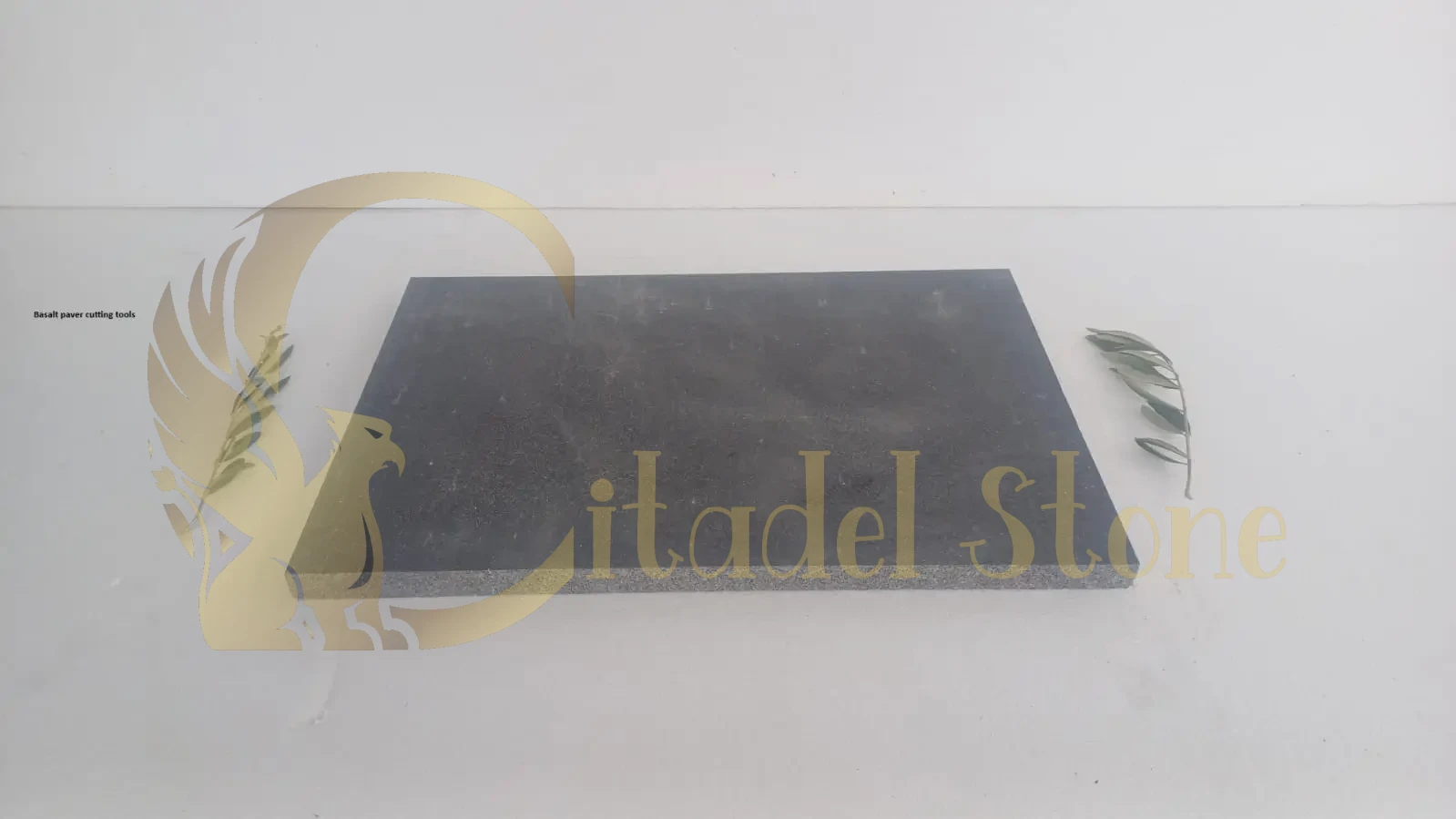
Most basalt pavers range from 1 to 2 inches thick, perfect for patios or walkways. For heavy-duty spots like driveways, you might see 3-inch slabs. Thickness matters—it dictates whether you can snap a paver after scoring or need a full-on saw cut. Knowing this helps you pick the right approach from the get-go.
Essential Cutting Tools
To cut basalt pavers, you need tools that can handle its toughness. Here’s your lineup of essentials, each with strengths and trade-offs depending on the job.
Wet Saws: Precision Powerhouses
A wet saw uses a diamond blade and water to cool it down and keep dust in check. It’s your go-to for straight, flawless cuts on thick pavers. They’re not cheap or portable, but for big projects, they’re worth it. Expert tip: Check the water flow before starting—clogs can overheat your blade.
Angle Grinders: Versatile Workhorses
Angle grinders are handheld champs for curves, small cuts, or tight spaces. Pair them with a diamond blade, and you’ve got flexibility wet saws can’t match. They take skill to control, though—practice steady hands. Expert tip: Use a light grip to avoid digging too deep.
Hand-Held Splitters: Quick and Simple
For fast, rough cuts on thinner pavers, a hand-held splitter gets it done with no power cords. It’s like a heavy-duty chisel with leverage—line it up, squeeze, and split. Precision isn’t its strength, so save it for rustic looks. Expert tip: Mark your line clearly; there’s no redo.
Diamond Blades: The Real MVPs
No matter the tool, diamond blades are non-negotiable for basalt tile cutting tools. Their diamond-edged design chews through basalt’s hardness without dulling fast. They’re pricier, but the clean cuts save you time and frustration. Explore our basalt cutting blade selection for top-tier options.
Safety Gear & Best Practices
Cutting basalt kicks up dust, noise, and debris—safety isn’t optional. Gear up and follow these practices to keep your job site hazard-free.
Must-Have Protective Gear
Eye Protection: Goggles or safety glasses block flying chips and dust.
Ear Protection: Earplugs or earmuffs cut the roar of power tools.
Respiratory Protection: A dust mask or respirator stops fine particles from hitting your lungs.
Gloves: Grip pavers and shield your hands from sharp edges.
Keeping the Site Safe
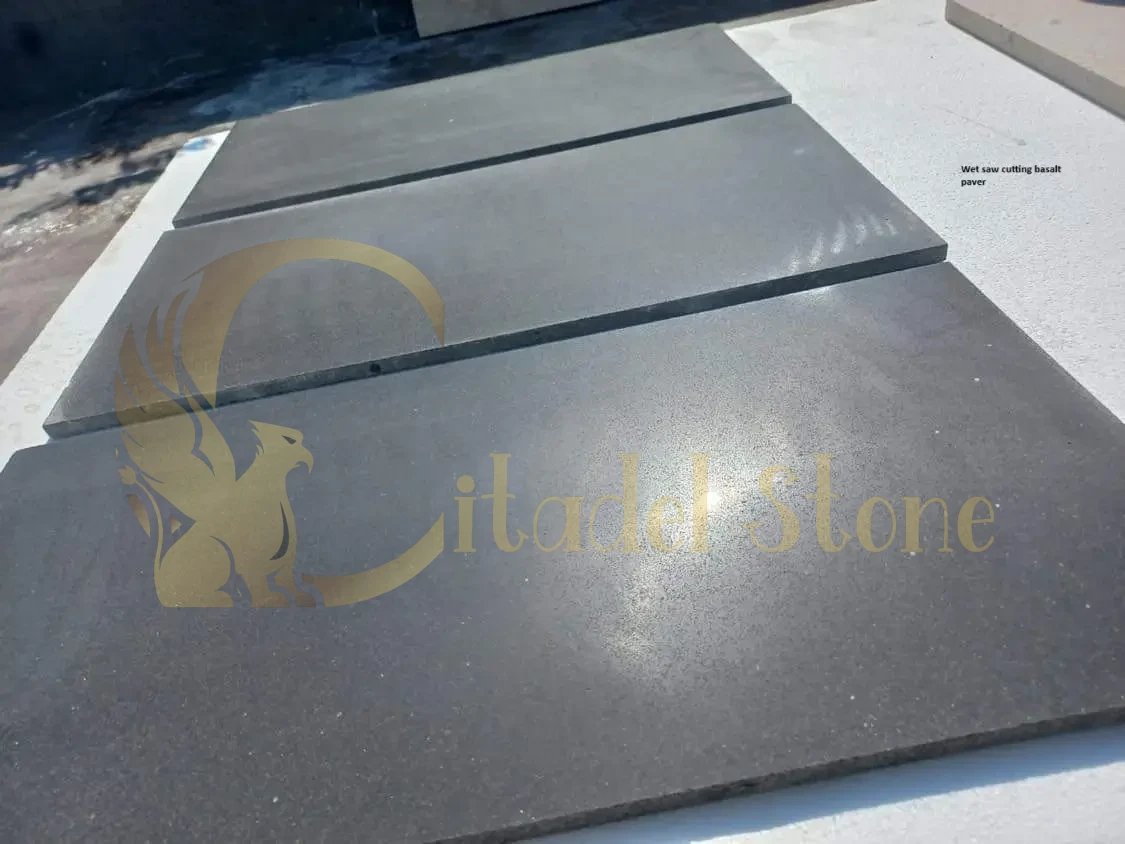
Dust is a big deal with basalt—use a wet saw or attach a vacuum to dry tools to control it. When swapping blades, always unplug the tool first and double-check the fit. Secure your paver on a flat surface so it doesn’t shift mid-cut. Expert tip: Wet cutting beats dry every time for cleaner air and smoother results.
Basic Cutting Techniques
Ready to make your first cut? These foundational stone saw techniques will get you started with confidence.
Straight Cuts Made Easy
Grab a wet saw, mark your line with chalk, and align the paver. Push it slowly through the blade—don’t rush. The water keeps things cool and clean. Expert tip: Use a straightedge to guide your mark for dead-on accuracy.
Bevels for Style and Function
Tilt your wet saw’s blade to 45 degrees for beveled edges—great for steps or borders. Follow the same slow push as a straight cut. Expert tip: Test the angle on scrap first to nail the look.
Score-and-Snap for Speed
For pavers under 1 inch thick, score a shallow line with an angle grinder, then tap with a hammer over a straight edge to snap it. It’s quick but rough—best for hidden edges. Expert tip: Score deeper if it doesn’t break cleanly.
Advanced Shaping Methods
Want custom basalt shapes like curves or intricate designs? These techniques take your skills up a notch.
Curves and Circles
Switch to an angle grinder with a diamond blade. For curves, freehand it with small, controlled passes. For circles, trace a template and cut along the edge. Expert tip: Mark heavily—faint lines disappear under dust.
Intricate Patterns
A stone router with a diamond bit lets you carve details like inlays or fancy borders. Steady hands or a jig keep it precise. Expert tip: Start shallow and deepen gradually for control.
Jigs and Templates
Cut a shape from wood or plastic, clamp it to your paver, and follow it with your grinder. It’s a time-saver for repeating shapes. Expert tip: Sand the template edges smooth for cleaner cuts.
Finishing & Edge Treatment
Raw cut edges can be jagged or sharp—finishing makes them safe and polished.
Chiseling Away Rough Spots
A stone chisel and hammer knock off small burrs. Tap lightly along the edge. Expert tip: Angle the chisel slightly to avoid gouging.
Grinding for Smoothness
An angle grinder with a grinding wheel rounds edges fast. Keep it moving to prevent uneven spots. Expert tip: Switch to a finer wheel for a satin finish.
Sanding and Polishing
Start with 80-grit sandpaper, then move to 220-grit for a sleek look. Wet sanding cuts dust and shines brighter. Expert tip: Polish with a pad for showroom-worthy edges.
Sealing the Deal
Brush on a stone sealer to protect and boost color. Let it dry fully before installing. Expert tip: Test on a scrap piece—some sealers darken more than others.
Common Cutting Challenges & Solutions
Mistakes happen—here’s how to fix them and keep your project on track.
Chipping Woes
Chips pop up with dull blades or fast cuts. Use a fresh diamond blade and take it slow. Expert tip: Tape the cut line with masking tape to hold the edge together.
Blade Binding Blues
If your blade jams, the paver might be shifting. Clamp it tight and check blade alignment. Expert tip: Back off and restart if it sticks—forcing it burns the motor.
Uneven Cuts
Wobbly lines mean poor guides or tool drift. Use a straightedge or template and recheck your setup. Expert tip: Mark both sides of the paver for a truer cut.
Waste-Saving Hacks:
Cut slow to avoid breakage.
Save scraps for fillers or accents.
Measure twice, every time.
Maintenance of Cutting Equipment
Your tools deserve care—here’s how to keep them cutting like new.
Blade TLC
Wipe blades clean after use and store dry. A gunked-up blade cuts poorly. Expert tip: Soak in water if residue sticks.
Alignment Checks
Wobbly saws or grinders mess up cuts. Test for play and tighten loose parts. Expert tip: Check monthly, even if unused.
Water Supply for Wet Saws
Clear the pump and lines—dirty water overheats blades. Expert tip: Flush with clean water post-job.
Replacing Worn Parts
Dull blades or shaky bearings kill efficiency. Swap them out when cuts slow or vibrate. Expert tip: Keep spares handy for big jobs.
Cost & Time Considerations
Planning saves headaches—here’s what cutting basalt pavers costs in money and time.
Tool Rental vs. Purchase
Rent a wet saw for $50-$100 a day—fine for one-offs. Buying runs $500-$2,000 but pays off for regulars. Expert tip: Rent first, buy if you love it.
Consumable Costs
Diamond blades hit $50-$200 each, depending on size. Add sandpaper and sealer—budget $100 extra. Expert tip: Buy quality blades; cheap ones wear out fast.
Project Timelines
Straight cuts take minutes; curves or patterns can stretch to hours. Map your cuts ahead. Expert tip: Double your estimate—basalt doesn’t rush.
Cutting for a cold-climate project? Review the freeze-thaw performance guide before you finalise formats and finishes.
Real Orders, Real Deliveries
We only publish projects we have actually supplied. See our Las Vegas white limestone delivery — two containers, 6,884 sq ft, 32 crates, shipped door to door — and how we supplied Creative Environments in Arizona with 21 containers across a 70,000+ sq ft installation: white limestone pavers and tiles, shellstone and Ocean Reef pavers.
Had Citadel Stone material installed on your project? Send us your photos and we will feature the work here, with your permission.
Conclusion
Cutting basalt pavers is a craft worth mastering. With the right basalt paver cutting tools, techniques, and a steady hand, you can shape this rugged stone into anything your project demands. From basic straight lines to sweeping curves, this guide equips you to work safely, solve hiccups, and finish like a pro. Dive in, take your time, and watch your hardscape vision come to life. For more expert tips and top-notch gear, download our basalt cutting guide and build something extraordinary.
Why Citadel Stone?
At Citadel Stone, the leading basalt tiles supplier worldwide, we’re all about helping you craft hardscapes that stand the test of time. Our premium basalt pavers and cutting tools are built for precision and durability, backed by resources to make your work shine. Explore our range and let us fuel your next masterpiece.