

Cobblestone for driveway applications demands a higher level of specification discipline than most paving materials — the unit sizes, joint geometry, and base thickness interact in ways that can accelerate settlement or lock in decades of stable performance depending on how carefully you approach each decision. Most specifiers focus on aesthetics first and discover the structural variables only after the first winter cycle reveals weak points. Understanding the full technical picture before material selection saves both cost and frustration on every project scale, from a modest residential entry to a long commercial approach.
Why Cobblestone Works for Driveways
The load-distribution mechanics of a well-set cobblestone driveway differ fundamentally from poured concrete or asphalt. Each unit acts semi-independently within the matrix, transferring vertical loads laterally through tight bedding and jointing rather than relying on tensile strength across the slab. That characteristic makes cobblestone for driveway applications highly resistant to the cracking patterns that compromise monolithic surfaces when subgrade movement occurs.
Natural stone cobblestones and setts carry compressive strength figures that far exceed typical vehicle load requirements — test reports are available on request for specific material lots. The relevant advantage in driveway service isn’t raw compressive strength alone; it’s the combination of individual unit rigidity, interlock geometry, and bedding layer compliance working together. This system tolerates minor subgrade adjustment without propagating surface failure, which is why heritage cobblestone streets still function after more than a century of service.
- Vertical load transfer through bedding and jointing reduces concentrated stress at any single point
- Individual unit replacement is straightforward without disturbing the surrounding field
- Natural stone surface texture provides adequate friction characteristics in normal conditions
- Thermal mass moderates surface temperature swings compared to asphalt in hot climates
- Aesthetically, cobblestone adds permanent character that synthetic alternatives struggle to replicate
Material Types for Driveway Cobblestone
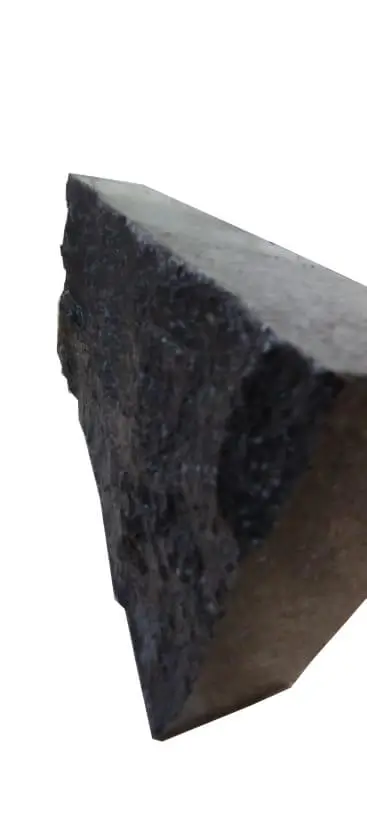
Granite dominates the driveway cobblestone market for good reason. Its density and resistance to surface abrasion from tire contact make it exceptionally durable under repeated vehicular cycling. According to Natural Stone Institute granite durability and application specifications, granite’s crystalline structure delivers performance characteristics well suited to high-traffic outdoor paving. Granite setts are available in a range of grey, buff, and charcoal tones that complement most residential and commercial exterior palettes.
Basalt is a strong secondary choice for driveways where a darker, more uniform appearance is the design priority. Its volcanic composition gives it high density and low absorption, which translates to strong performance in freeze-thaw conditions. Limestone cobblestone is available and performs well in lower-traffic residential settings, though it requires more attentive sealing protocols than granite or basalt to maintain surface integrity over extended service life.
- Granite setts: best overall durability for vehicular driveways, broad colour range
- Basalt cobbles: dense, dark, highly consistent appearance, excellent freeze-thaw performance
- Limestone cobblestone: appropriate for light residential traffic, requires periodic resealing
- Mixed material designs: granite field with limestone border, or contrasting grey and buff tones
Sizing and Thickness Specifications
Selecting the right unit size for a cobblestone driveway affects both structural performance and installation time. Smaller setts — typically in the 4×4-inch or 4×6-inch range — produce tighter interlock and handle point loads from vehicle tires more effectively than larger, thinner units. The height dimension is equally critical: driveway-grade setts should run at least 3.5 inches nominal, with 4-inch material strongly preferred for any application seeing regular passenger vehicle traffic or occasional delivery trucks.
Larger cobble formats (fan patterns using 6×9-inch or 4×8-inch setts) are common in wider driveway aprons and approach courts. These lay faster, but they require a flatter, more precisely compacted bedding layer to avoid rocking. Any unit thickness below 3 inches is a red flag for driveway use — it’s a product proportioned for pedestrian applications and will not perform reliably under repeated vehicular load cycling.
- Standard driveway sett: 4×4 inches face, minimum 3.5 inches thick
- Heavy-duty or commercial driveway: 4×4 or 4×6 inches face, 4 inches thick
- Large format apron units: 4×8 or 6×9 inches, minimum 3.5-inch thickness
- Pedestrian-only formats (2-inch nominal): not appropriate for vehicle traffic
- Verify nominal versus actual dimensions with your supplier before designing joint spacing
Base Preparation and Subgrade Stability
The subgrade underneath your cobblestone driveway determines more of the long-term outcome than any material choice above it. Expansive clay soils present the most challenging condition — when clay absorbs moisture, it swells; when it dries, it contracts. That cyclical movement transfers directly to the bedding layer and stone units above, producing the uneven, rocking setts that characterize poorly specified driveway installations in clay-dominant regions. The standard response is to over-excavate by at least 4 to 6 inches beyond what a sandy or gravelly subgrade would require and replace the clay profile with compacted crushed stone in 4-inch lifts.
Sandy and well-draining soils present fewer complications but require consistent compaction across the full excavation depth. Loose sand tends to migrate laterally under load if not properly confined by edge restraints and adequate base depth. Rocky subgrades — including caliche formations common in drier regions — require mechanical breaking or selective excavation to achieve a uniform bearing surface before base aggregate placement begins. A subgrade that varies in bearing capacity across even a short span will show differential settlement at the surface within two to three seasonal cycles.
- Clay-heavy subgrade: excavate 18–24 inches, install compacted sub-base in 4-inch lifts with geotextile separation layer
- Sandy subgrade: minimum 12-inch compacted aggregate base, confirmed with plate compactor test passes
- Caliche or rocky subgrade: break out high spots to ±1-inch tolerance, fill low spots with compacted dense-grade aggregate
- All subgrades: achieve minimum 98% Standard Proctor density before bedding layer placement
- Geotextile fabric between native subgrade and base aggregate prevents fines migration and base contamination
Drainage geometry integrates directly with subgrade preparation. A cobblestone driveway needs a minimum 2% cross-slope to move surface water laterally away from the structure. In clay-soil conditions, subsurface drainage — either a perforated pipe system or a French drain alongside the driveway edge — prevents water from pooling at the subgrade interface and accelerating the swell-shrink cycle. Skipping this step is one of the most common errors in residential driveway specifications, and one of the most expensive to remediate after installation.
Bedding Layer and Setting Methods
For a cobblestone driveway, two primary setting method options exist: dry-laid sand bedding or mortar-set. Each carries distinct performance trade-offs that affect long-term maintenance, drainage, and the ability to re-level individual units after any subgrade movement.
Dry-laid installation uses a 1-inch screeded layer of coarse, washed bedding sand — not fine masonry sand — as the setting medium, with dry-packed or polymeric sand swept into joints after compaction. This method is highly forgiving of minor subgrade shifts; individual setts can be lifted and re-leveled without disturbing the broader field. It also allows water infiltration through the joints, which reduces surface runoff and connects naturally to permeable drainage design principles. According to ASLA driveway paving material guidance and environmental performance, permeable hardscape systems that allow infiltration reduce stormwater runoff and support sustainable site management — a consideration worth documenting for projects subject to municipal stormwater requirements.
Mortar-set cobblestone on a concrete sub-slab provides higher initial rigidity, but it sacrifices flexibility. Cracks in the sub-slab translate directly to the mortar bed and stone surface. The drainage benefit of open joints is also lost with this approach. Mortar-set is appropriate where vehicle loads are particularly heavy or where you need absolute surface stability for accessibility compliance — in most residential driveway contexts, dry-laid with polymeric sand joint fill performs better across a full service life.
- Dry-laid bedding: 1-inch screeded coarse sand, compacted post-setting, joints filled with polymeric sand
- Mortar-set: minimum 4-inch reinforced concrete sub-slab, Type S mortar bed, fully pointed joints
- Dry-laid preferred: allows re-leveling, supports drainage, tolerates subgrade movement
- Mortar-set preferred: extremely heavy loads, accessibility-critical surfaces, zero-tolerance for movement
- Bedding sand must be coarse and angular — fine or rounded sand migrates under load and allows unit rocking
Pattern Layout and Driveway Pavers Ideas
Pattern selection for a cobblestone driveway influences both structural performance and visual character. Running bond and herringbone patterns distribute load more effectively than stack bond because alternating joints prevent continuous failure planes from developing across the surface. Herringbone at 45 or 90 degrees is the standard for vehicular applications — it provides excellent interlock across multiple directions and handles the braking and turning forces that straight-running patterns resist less effectively.
Fan patterns, often called Belgian or radiating fan layouts, are among the most distinctive driveway pavers ideas for circular drive aprons and entrance courts. They’re visually dramatic but require careful cutting at the perimeter and a high skill level to maintain consistent joint width across the arcs. For a driveway approach leading to a fan apron, many designers run a simple stretcher bond along the approach lanes and introduce the fan geometry only at the widened arrival area — this balances efficiency with visual impact.
- Herringbone (45°): strongest interlock for vehicular lanes, recommended for all driveway paving areas
- Herringbone (90°): easier to install, nearly equivalent structural performance, cleaner geometric appearance
- Running bond: common for walkway borders adjacent to driveway lanes, less effective for vehicle areas alone
- Fan pattern: visually distinctive for aprons and turnarounds, requires experienced installers
- Two-colour borders: define driveway edges cleanly, add design depth without complex field patterns
- Mixed sett sizes: larger units in the field with smaller edge course creates a traditional European streetscape aesthetic
The variety of interlocking pavers driveway options on the market means cobblestone competes against both concrete interlocking pavers and natural stone alternatives. Cobblestone’s advantage is the depth of character that comes from natural variation in tone and surface texture — no two driveways look identical, and the material improves aesthetically with age in a way that concrete paver surfaces generally do not. When exploring driveway pavers ideas, the combination of herringbone layout, natural stone colour variation, and border detailing gives cobblestone a presence that pre-cast alternatives rarely match.
For current sizing options and surface finish availability, Citadel Stone driveway setts covers the full range of granite and basalt formats stocked for vehicular driveway applications.
Edge Restraints and Perimeter Details
Edge restraint is not a cosmetic detail — it’s a structural requirement for any cobblestone driveway installation. Without a continuous, fixed perimeter, bedding sand migrates outward under load, joints widen at the edges, and field units begin to spread and rock within one or two seasons. Every cobblestone for driveway project needs rigid edge confinement, regardless of how well the base is constructed.
Steel or heavy-gauge aluminium edge restraint spiked at 12-inch intervals into the compacted base is the standard solution for residential driveway edges. For heavier applications or where a cleaner finished appearance is needed, a cast-in-place concrete kerb or a cut granite kerb course provides superior lateral resistance and integrates naturally with the material palette. The concrete kerb option should be formed and cured before cobblestone setting begins — trying to cast kerbs against a completed stone field almost always produces alignment issues and cracked bedding.
- Steel or aluminium paver edge restraint: minimum 4-inch depth, spiked at 12-inch centers
- Granite kerb course: cut to match sett height, mortar-set as a perimeter anchor, then dry-lay field setts against it
- Concrete kerb: form, pour, and cure completely before beginning sett installation
- Any perimeter edge that terminates against existing concrete or asphalt: caulk joint with polyurethane sealant to prevent water infiltration at the transition
Sealing and Long-Term Maintenance
Granite cobblestone for driveway use does not require sealing the way limestone does, but sealing still offers tangible benefits: it reduces surface staining from vehicle fluids, slows the weathering of joint sand, and deepens the natural colour of the stone for a richer visual appearance. A penetrating silane-siloxane sealer applied to a clean, dry surface is the appropriate product category — not a topical film sealer, which can trap moisture and peel under thermal cycling.
Plan your sealing schedule around the material type. Granite setts benefit from sealing at installation and reapplication every three to five years depending on traffic intensity and climate exposure. Limestone cobblestone warrants a more frequent schedule — every two to three years — and benefits from a sealer with higher alkali resistance to address potential joint mortar residue. Check the sealer manufacturer’s specifications for compatibility with your specific stone before application; some sealers produce a glossy finish on basalt that alters the natural matte character of the stone.
Joint sand maintenance is equally important. Polymeric sand joints should be inspected annually and topped up wherever erosion has dropped the fill below the upper quarter of the joint depth. Depleted joints allow unit movement, which accelerates edge wear and creates the uneven surface that gradually becomes a drainage hazard. This is a low-cost annual task that extends service life measurably.
- Sealer type: penetrating silane-siloxane — avoid topical film sealers on vehicular surfaces
- Granite driveway cobblestone: seal at installation, reseal every 3–5 years
- Limestone cobblestone: reseal every 2–3 years, prioritize alkali-resistant formulations
- Joint sand top-up: annual inspection, refill where fill depth has dropped below recommended level
- Oil and tyre stain management: treat promptly with pH-neutral stone cleaner — avoid acid-based or alkaline degreasers on natural stone
Ordering, Logistics, and Project Planning
Quantifying cobblestone for a driveway project accurately requires accounting for the cut waste at borders and perimeter cuts — typically 8 to 12 percent above the net surface area for herringbone patterns, and up to 15 percent for fan or curved layouts. Order material in a single lot where possible; stone from different quarry pulls can show subtle colour variation that becomes visible in natural light after installation. Citadel Stone ships driveway cobblestone in project-matched lots, which means your entire order draws from the same production run to maintain visual consistency across the finished surface.
Confirm warehouse stock availability before finalizing your installation schedule. Delivery of cobblestone pallets requires a firm, level surface at the drop point — standard residential driveways often need the delivery positioned at the street edge rather than at the garage, and you should factor in manual movement of materials from the delivery point to the work area when planning your labour allocation. Lead times from warehouse to job site vary by order size and destination, so communicate your installation start date early to allow adequate scheduling buffer.
According to USGS cobblestone and granite sett dimension stone data, dimension stone demand for paving applications has remained consistent across multiple market cycles, which reflects the material’s reliable long-term value proposition for both residential and commercial buyers. That demand stability also supports reasonable lead time predictability from well-stocked suppliers — another reason to confirm warehouse inventory levels before you lock in your project timeline.
- Waste factor: add 8–12% for straight herringbone, 12–15% for fan or complex curved patterns
- Order in a single lot: prevents colour variation between different quarry production runs
- Delivery access: confirm the delivery vehicle can reach your designated unloading point before scheduling
- Pallet weight: standard cobblestone pallets run 2,200–2,800 lbs — verify access route load limits for long private drives
- Timeline: communicate installation start date to your supplier at least 2–3 weeks in advance for standard residential volumes
Getting Cobblestone Driveway Specifications Right
Successful cobblestone for driveway projects comes down to the decisions made before a single sett is placed — subgrade assessment, base depth, material selection, and unit sizing all compound on each other. A rushed specification at the base preparation stage creates problems that no amount of quality stone can overcome once the installation is complete. Taking time to understand soil conditions, confirm drainage geometry, and select a unit thickness proportioned for the actual vehicle loads the driveway will carry is the difference between a surface that settles unevenly after two seasons and one that delivers decades of stable, low-maintenance performance.
Stone type matters as well. Granite’s density and abrasion resistance make it the right default for almost any vehicular driveway application, with basalt as a strong alternative where colour uniformity is the design priority. For lighter residential driveways with careful sealing maintenance, limestone cobblestone delivers exceptional character. The pattern layout — herringbone for structural reliability, fan for visual impact — should align with the installer’s experience level as much as the design intent. Interlocking pavers driveway layouts benefit from the same planning rigour whether the material is natural stone or concrete, but cobblestone’s natural variation gives it a depth of character that manufactured alternatives rarely achieve.
Planning a driveway project often raises questions about how cobblestone compares to other natural stone paving formats in terms of installation requirements and long-term performance. For a closer look at how the materials stack up, how cobblestone differs from standard pavers covers the key specification distinctions worth reviewing before finalizing your material selection. Driveway cobblestone from Citadel Stone ships in project-matched lots, drawn from premium quarries in Turkey and the broader Middle East region.
Related reading: patio cobblestone pavers · permeable cobblestone pavers · thin cobblestone pavers explained.