

Thickness is the specification decision that most buyers overlook until it causes a problem — and thin cobblestone pavers explained properly reveal both the genuine advantages and the hard structural limits of the format. Thin cobblestone pavers — typically ranging from 20 mm to 40 mm in nominal depth — occupy a very specific performance envelope, and understanding where that envelope ends is as important as knowing where it begins. The format delivers genuine advantages in weight reduction, installation speed, and design flexibility, but it also introduces structural constraints that full-depth cobblestone simply doesn’t have.
What Thin Cobblestone Pavers Actually Are
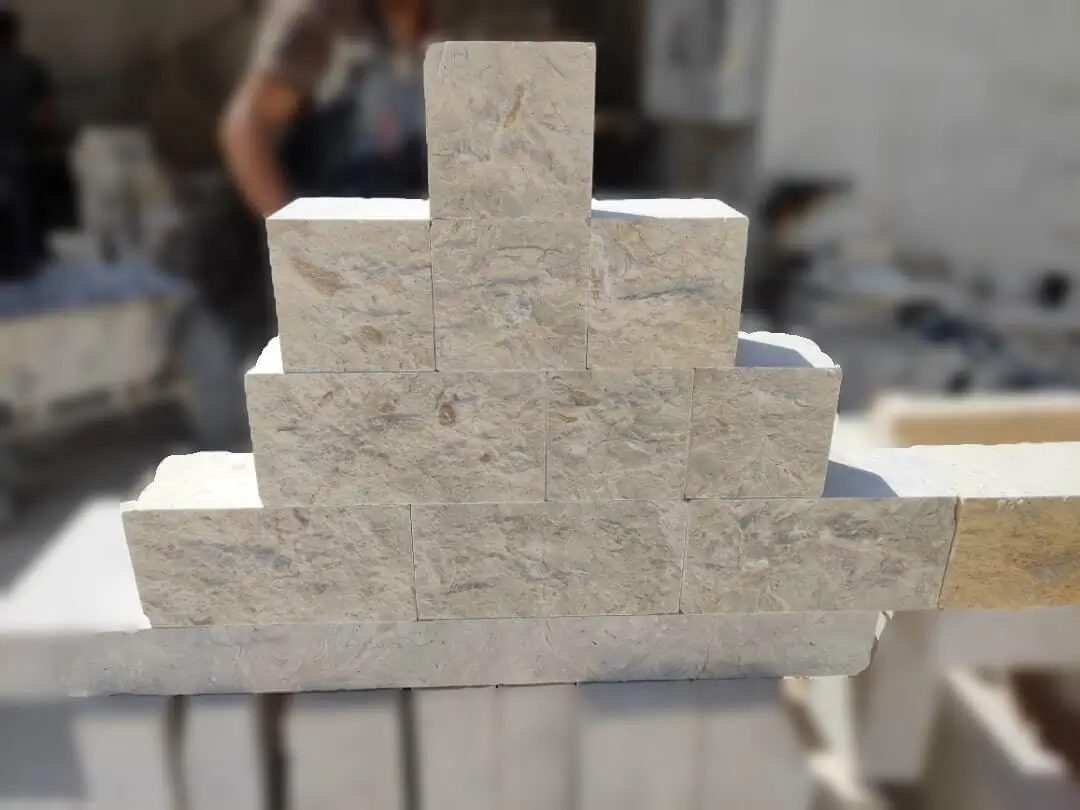
The term “thin” in the cobblestone category refers to pavers cut or split to a depth below the traditional 60–80 mm range associated with full-bed driveway-grade cobbles. You’ll typically encounter thin cobblestone pavers in two configurations: individually cut units in the 20–40 mm range, and mesh cobblestone pavers sheets — factory-assembled panels where smaller cobble units are pre-mounted on a fiberglass or polymer mesh backing for faster installation. Both formats serve overlay and surface-renewal applications rather than structural base-replacement applications.
The stone type matters here as much as the format. Granite is by far the most common material used in thin cobblestone formats because of its density and the clean face it produces at reduced depth. You’ll also find basalt and certain hard limestone variants in the thin-cut category. Softer limestone or highly porous stone shouldn’t be specified in thin formats for exterior load-bearing applications — the reduced cross-section amplifies the risk of flexural failure under point loading.
According to Natural Stone Institute granite specifications, granite’s interlocked crystalline structure gives it the flexural strength profile that makes thinner cuts viable in a way that isn’t possible with most sedimentary stone types. That’s not a minor detail — it’s the reason granite dominates this format category.
Structural Limits of the Thin Format
Here’s what most specifiers miss when they first evaluate thin cobblestone pavers: the structural performance isn’t determined by the stone alone — it’s determined by the substrate beneath it. A 25 mm granite cobble bonded to a sound, fully cured concrete slab performs differently than the same unit set in a mortar bed over a flexible base. The stone’s own bending resistance becomes secondary when it’s fully supported from below. Where it becomes primary is at joints, edges, and anywhere the substrate has voids or differential settlement.
Load-bearing thresholds for thin formats should be assessed conservatively:
- Pedestrian-only traffic on a sound concrete substrate: thin cobblestone pavers in the 25–40 mm range are generally suitable when properly bonded
- Light occasional vehicle overhang (parking aprons, not driveways): 40 mm is the practical minimum, and substrate integrity must be verified before specification
- Frequent vehicular traffic, heavy vehicles, or forklifts: thin formats are not appropriate — full-depth cobblestone or a different paver format is the right call
- Residential driveways with regular passenger vehicle use: this is a borderline application where sub-base assessment is essential before committing to a thin format
The sub-base conversation isn’t optional. Sub-base depth and integrity directly determine whether a thin cobblestone installation performs for decades or begins showing edge failure and joint cracking within a few years. Thin pavers transfer load differently than full-depth units, and the substrate has to compensate for what the stone cross-section can’t.
Mesh Cobblestone Pavers Sheets: What They Solve
Cobblestone pavers sheets pre-mounted on mesh backing solve a specific installation problem — the time and skill required to individually set and align small cobble units while maintaining consistent joint spacing. A skilled installer laying individual cobbles on mortar can cover roughly 15–20 sq ft per hour once layout is established. The same installer working with mesh-mounted panels can cover two to three times that area in comparable conditions.
The speed advantage translates to lower labor cost per square foot, which is particularly relevant for large commercial lobby floors, hotel courtyards, and restaurant terraces where the cobblestone aesthetic is desired but installation budgets are tight. For those projects, mesh-mounted cobblestone from Citadel Stone provides the visual character of traditionally laid stone with a significantly more controlled installation process.
There are genuine trade-offs with mesh-mounted formats, though. The mesh backing fixes joint spacing, which removes your ability to make minor adjustments for irregular substrates or custom layout patterns. If your design calls for a specific fan pattern or radial layout, individually set thin cobblestone pavers give you layout control that panel formats can’t match. Mesh cobblestone pavers sheets are optimized for grid and running-bond patterns.
Substrate Requirements for Thin Cobblestone Installation
The single most important pre-installation check for thin cobblestone pavers is deflection testing of the existing substrate. A concrete slab that flexes even slightly under load will transmit that movement directly to the stone through the bond layer, and 25–30 mm granite doesn’t have the cross-section to absorb that movement without cracking at the joint lines or through the face.
Your substrate preparation checklist before specifying thin formats:
- Existing concrete: minimum 3,000 PSI compressive strength, no active cracks wider than 1/8″, no evidence of sub-slab voids or differential settlement
- Mortar bed over aggregate base: minimum 1-inch mortar bed, well-compacted aggregate beneath — the base determines the mortar bed’s long-term stability
- Existing tile or pavement used as a substrate: verify bond integrity of the existing layer before tiling over — a debonded substrate doubles the failure risk
- Drainage slope: 1/8″ per foot minimum fall away from structures — thin cobbles don’t forgive pooling at joints the way full-depth units do
- Expansion joint placement: any existing control joints in the concrete below must be carried through the thin cobblestone layer — bridging them will result in reflective cracking
Don’t assume a substrate is sound because it looks sound. Tapping the existing surface with a hammer and listening for hollow spots is a fast field check that saves expensive callbacks later.
Design Integration and Landscape Aesthetic
Thin cobblestone pavers open up design applications that full-depth cobblestone simply can’t serve — and that’s where the format’s real value sits for many projects. The reduced weight (typically 30–40% lighter per square foot than full-depth equivalents) makes thin formats feasible for rooftop terraces, elevated deck overlays, and interior-to-exterior threshold transitions where structural load limits rule out heavier stone.
From a design perspective, the cobblestone aesthetic translates remarkably well across different landscape styles. In a modern minimalist courtyard, a tightly jointed thin granite cobble in a charcoal or dark basalt tone creates ground-plane texture without visual noise — the irregular surface catches light differently at different times of day, adding depth without pattern complexity. In a traditional colonial or formal garden setting, a lighter granite or warm-toned limestone cobble in a fan or herringbone layout reads as a deliberate historical reference that connects the hardscape to regional architectural vocabulary.
Xeriscaping projects benefit from the thermal mass characteristics of thin cobblestone pavers when used as dry-laid accent panels between gravel beds or as stepping areas in low-water gardens. According to ASLA guidance on permeable surfaces and low-impact materials, integrating natural stone with open-joint or permeable gravel zones contributes meaningfully to site stormwater management — a design consideration that’s becoming a specification requirement in many jurisdictions.
Tropical and lush planting schemes use thin cobblestone pavers differently — often as winding path surfaces where the irregular texture and weathered character of the stone surface contrasts with dense foliage. For those applications, a tumbled finish on the thin cobble softens the visual edge and integrates naturally with organic landscape compositions.
Finish Options and Surface Performance
The finish you specify on thin cobblestone pavers affects surface texture, joint sealing requirements, and maintenance protocols — three variables that interact in ways that aren’t always obvious at the specification stage.
Natural split or flamed finishes produce a rougher surface profile that performs differently under wet conditions compared to sawn or honed faces. This is a finish-variable conversation rather than a numerical one — for areas where wet conditions are frequent, specifiers and designers should review finish options relative to ANSI A326.3, which is the current standard for wet dynamic coefficient of friction, replacing the ASTM C1028 static test withdrawn in 2014. The finish is the variable you control; the standard is the benchmark you verify against.
For sealing thin cobblestone pavers, penetrating sealers are generally the right choice for exterior applications because they don’t add a surface film that can trap moisture beneath it. Film-forming sealers on exterior cobblestone — particularly in freeze-thaw regions — can delaminate when subsurface moisture expands during freeze events. Apply penetrating sealer after full cure of any mortar or adhesive bed and after initial joint sand or grout has been installed and cleaned.
Ordering, Lead Times, and Logistics
Thin cobblestone pavers and mesh panel formats are not always stock items — this is a planning detail that catches projects off-guard more than any other logistics factor. Standard full-depth cobbles in granite or basalt move through warehouse inventory relatively predictably. Thin-format cuts, particularly in specific size ranges or custom panel configurations, may require fabrication scheduling at our selected quarries, which adds lead time to your project timeline.
Your ordering and delivery plan should account for these practical realities:
- Verify warehouse stock levels for your specific format and finish before committing to an installation date — thin formats sell out faster than restocking timelines allow
- Mesh panel formats are typically palletized differently than individual cobbles — confirm truck access at your delivery site, particularly for rooftop or elevated installations where crane or freight elevator specs apply
- Order a 10–12% overage on thin cobblestone pavers for cuts, waste, and pattern-matching — thin stone is more sensitive to breakage during cutting than full-depth units
- Confirm that your installer has handled thin-format natural stone before — the bonding and grouting techniques differ meaningfully from full-depth cobble installation
Citadel Stone maintains national warehouse inventory across multiple formats, which typically reduces standard lead times compared to direct-import sourcing for most in-stock thin cobblestone products. For custom mesh panel sizes or specific stone types, discuss fabrication timelines early in the project planning phase.
Maintenance and Long-Term Performance
Thin cobblestone pavers in well-specified applications — sound substrate, correct adhesive or mortar system, appropriate finish for the use case — can deliver decades of service life. The maintenance protocols that protect that performance are straightforward, but they require consistency rather than intensity.
Joint integrity is the primary maintenance variable for thin cobblestone installations. Jointing compound, whether epoxy grout, polymeric sand, or cementitious grout, degrades before the stone does. Checking and repointing joints every three to five years prevents water infiltration at the joint line, which is the leading cause of substrate deterioration beneath thin formats. A 2-hour joint inspection and repointing session every few years is far less disruptive than partial panel replacement after sub-surface moisture damage.
For mesh cobblestone pavers sheets installed in interior or covered exterior settings, the maintenance requirement is even lighter — periodic cleaning with a pH-neutral stone cleaner and resealing on a five-to-seven-year cycle depending on traffic volume. According to USGS dimension stone production and construction use data, granite remains one of the most widely specified natural stone materials for paving precisely because of its combination of hardness and low maintenance burden when properly installed. That performance characteristic extends to thin-format granite cobblestone when the substrate specification is correct.
Getting Thin Cobblestone Paver Specifications Right
Thin cobblestone pavers sit at an interesting intersection — they deliver the visual weight and tactile character of traditional cobblestone with a format that broadens the application range significantly. The key is matching the format’s structural characteristics to the application’s actual demands rather than treating all cobblestone formats as interchangeable. Substrate condition, load type, stone species, finish, and jointing system all feed into whether a thin-format specification performs as intended. If you’re also evaluating how cobblestone integrates with drainage and site hydrology, permeable cobblestone design considerations covers the open-joint and sub-base configurations that manage stormwater in hardscape settings — a related dimension of cobblestone specification worth reviewing alongside thin-format planning. Buyers should clarify load-bearing requirements with Citadel Stone before selecting a thin or mesh-mounted cobblestone format, since sub-base depth and substrate type significantly affect suitability.
Related reading: cobblestone paver patterns · Cobblestone Edging Pavers: Borders That Hold Their Shape · cobblestone pavers for patio.