

Cobblestone pavers for patio installations demand a level of specification precision that most buyers underestimate until they’re standing on an uneven surface six months after install. The stone type, the sett dimensions, the bedding depth, and the jointing compound all interact — and getting one of those variables wrong creates a cascade of problems that no amount of polymeric sand can fix after the fact. This guide cuts straight to the decisions that separate a 30-year patio from one that needs rework inside a decade.
Stone Type and Grade: What the Numbers Actually Tell You
Not all cobblestone is the same material, and that distinction matters enormously once you’re committing to a full patio specification. Granite cobblestone — the most common option for outdoor residential and commercial patios — offers density and surface hardness that outlasts most alternatives in outdoor conditions. Limestone cobblestone runs softer, which means it tools more easily but also weathers differently depending on moisture cycling in your region. Basalt sits in an interesting middle ground: very dense, typically darker in tone, and exceptionally resistant to freeze-thaw spalling when the stone is properly graded and sealed.
Grade matters as much as stone species. When evaluating patio cobblestone pavers, look for consistent sett dimensions within a tolerance of ±3mm — anything wider than that and your joint lines drift noticeably across a large field. A reputable supplier should be able to provide test reports on request for absorption and compressive performance. At Citadel Stone, we inspect incoming material at the warehouse before it ships, specifically checking for dimensional consistency and surface integrity that photographs alone won’t reveal.
According to Natural Stone Institute granite cobblestone and sett specifications, granite setts used in outdoor paving applications should meet grading criteria that account for both surface finish tolerance and split-face edge regularity — two variables that directly affect how the finished patio reads visually and how it performs under point loads.
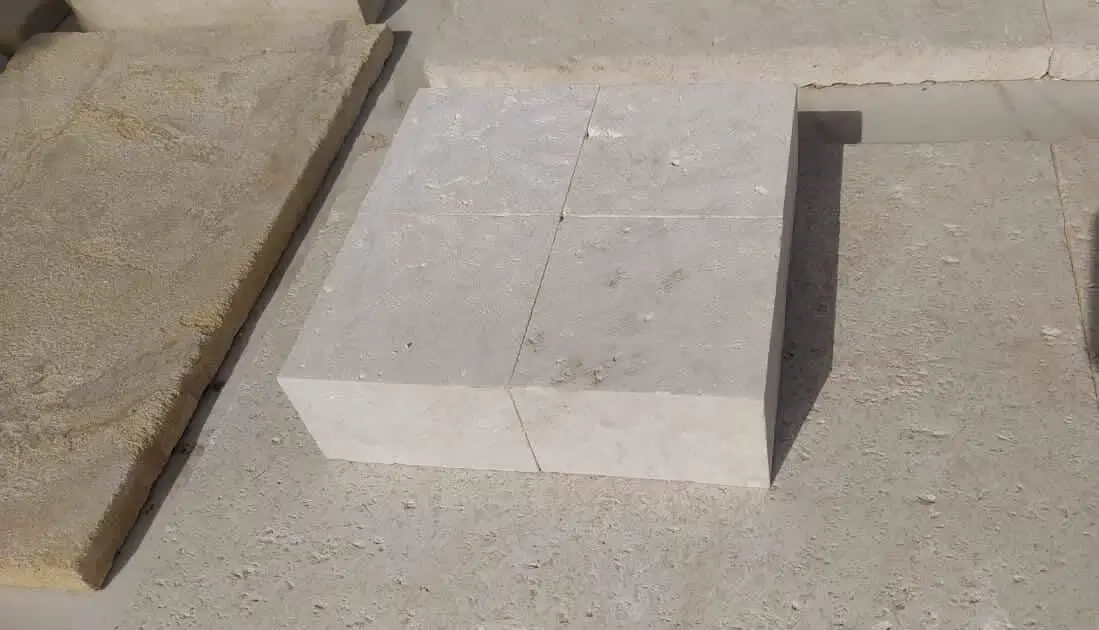
Sett Size Selection for Cobblestone Pavers for Patio Layouts
Your patio dimensions should drive sett size selection — not the other way around. A 4×4-inch sett on a 12-foot-wide patio works out to clean arithmetic; a 4×4-inch sett on a 13.5-foot-wide space produces a perimeter cut scenario that either wastes material or forces you into a border detail. The math is worth doing before you order anything.
Standard cobblestone sett sizes for patio applications typically run in three practical ranges: small format (4×4 inches, roughly 100×100mm), medium format (4×6 inches), and larger rectangles in the 4×8 range. Small format creates a denser joint pattern — more visual texture, more grout lines, more labour. Medium format reads as a cleaner field from a normal viewing distance and tends to be more forgiving on slightly uneven sub-bases. Large rectangles behave more like flagstone at that point and the installation method shifts accordingly.
- Map your patio perimeter dimensions before selecting sett size — avoid fractional cuts at borders wherever possible
- For fan or herringbone patterns, small-format setts give you more flexibility in curved sections
- Running bond layouts with rectangular setts require strict staggering discipline — mark your offset lines before laying the first course
- Circular insets read best with setts in the 4×4 range; larger formats create awkward wedge cuts in radiused sections
- Account for a 3–5% overage on material when cutting to irregular perimeters
Outdoor cobblestone pavers in a fan pattern are among the most rewarding layouts visually but also the most unforgiving dimensionally. The radial joint lines must converge cleanly, which means your centre point placement and your sett tolerance both need to be exact before the first stone goes down.
Base Preparation: Depth and Long-Term Stability
The base is where patio cobblestone installations either earn their longevity or lose it. Compacted aggregate depth for a pedestrian patio typically runs 4–6 inches of well-graded crushed stone over prepared subgrade — but that range assumes reasonably stable soil. Clay-heavy subgrades expand and contract with moisture cycling in ways that push setts upward unevenly, which is why some specifiers increase aggregate depth to 8 inches on expansive soil sites and add a geotextile separation layer at the subgrade interface.
Your bedding layer — the 1-inch nominal sand or grit layer that the setts sit in — should be screeded to a consistent depth and never compacted before laying. Compacting the bedding layer before stone placement removes the fine-tuning ability that lets you adjust individual setts to a flat plane. Compact after laying, with a plate compactor and a protective rubber pad or sandbag layer over the surface.
- Minimum aggregate base for pedestrian patio: 4 inches compacted crushed stone
- Expansive clay subgrades: increase to 6–8 inches with geotextile separation
- Bedding sand depth: 1 inch nominal, screeded not compacted before laying
- Slope the sub-base at a minimum 1% gradient for positive drainage — 2% is more reliable on large patio areas
- Check aggregate compaction with a plate compactor before screeding the bedding layer — settlement after laying is the primary cause of localized dips
The ASLA cobblestone and block paving landscape design guidance highlights drainage geometry as a primary design consideration for stone paving installations — a reminder that slope planning belongs in the base preparation phase, not as an afterthought once you’ve started laying stone.
Finish Options and How Surface Texture Affects Patio Performance
Cobblestone pavers arrive in a few distinct finish states, and your selection here affects both aesthetics and how the surface performs under wet and dry conditions. Split-face cobblestone — where the exposed face is cleaved rather than sawn — provides a naturally textured, rustic surface. Sawn-top cobblestone produces a flatter, more refined face that reads cleaner from a distance but reflects more light. Tumbled cobblestone has softened arrises and a worn appearance that suits informal garden settings well.
Surface finish is the primary variable that governs slip resistance on wet patio surfaces. For guidance on evaluating wet surface performance in outdoor installations, ANSI A326.3 is the current standard — it replaced the ASTM C1028 static test withdrawn in 2014. The finish category determines which surfaces are appropriate for outdoor wet zones; test reports are available from your supplier for specific products. What matters practically is that split-face and tumbled finishes generally offer more texture than sawn-top finishes under wet conditions — your finish selection should reflect how the patio drains and whether it sits in a shaded area that stays wet longer after rain.
- Split-face: maximum texture, most traditional appearance, suits informal and garden-adjacent patios
- Sawn-top: clean reading, flatter plane, best for contemporary layouts where geometric precision matters
- Tumbled: softened edges, aged aesthetic, lowest visual formality — excellent for curved or irregular layouts
- Honed finishes on cobblestone are less common but available for interior-adjacent covered patio situations
Jointing Compounds and Joint Integrity Over Time
Joint integrity is where a lot of patio cobblestone installations slowly deteriorate — not dramatically, but progressively. Standard kiln-dried jointing sand washes out over a few seasons on any patio that receives regular rainfall or irrigation overspray. Polymeric jointing sand, when properly installed and cured, bonds the joint and dramatically reduces erosion and ant activity. The installation method matters: joints must be dry and clean before application, and the compaction and activation sequence has to follow the manufacturer’s specification closely or the polymer doesn’t cure properly.
Explore our outdoor cobblestone paver selection to match sett dimensions and joint specifications to your specific layout before ordering material.
Resin-bonded jointing compounds offer a step up from polymeric sand in demanding conditions — they’re more rigid, more resistant to weed intrusion, and better suited to patios with significant joint width variation. The trade-off is that repairs are more involved when an individual sett needs resetting. For patios in regions that experience significant storm events and wind-driven rain, resin jointing is worth the additional cost. Wind-driven rain at sustained speeds forces water into joints at pressure angles that standard sand jointing can’t resist over time — you’ll see the evidence as sand migrates toward the low side of a sloped patio after a major storm.
- Kiln-dried sand: lowest cost, requires annual replenishment in most climates
- Polymeric sand: mid-range cost, 5–8 year performance when properly activated
- Resin jointing: highest cost, best long-term integrity, suited to high-exposure or heavily used patios
- Joint width should match sett dimensional tolerance — joints below 5mm are difficult to fill consistently
- For patios adjacent to planting beds, resin jointing significantly reduces weed pressure through the field
Edge Restraint Specification for Long-Term Durability
Edge restraints don’t get enough attention in patio specifications, and the consequence of undersizing them shows up most clearly after severe weather events. A cobblestone patio without adequate perimeter restraint will creep outward incrementally under repeated thermal cycling and loading — but a major storm event, particularly one with saturated ground conditions and strong wind loads on adjacent structures, can accelerate that movement dramatically in a single event.
For a patio installation, the edge restraint options run from steel or aluminium landscape edging through to mortared concrete haunch at the perimeter. Steel or aluminium edging staked at 12-inch intervals handles most residential patio conditions well. Where the patio abuts a structure, a mortared haunch creates a rigid tie-in that transfers no lateral movement to the field. Where the patio edge is exposed and unsupported — a free-standing patio island, for example — a mortared concrete haunch at the perimeter or a pre-cast concrete edging unit provides the rigidity that flexible steel edging cannot.
- Flexible steel edging: adequate for most residential patios with contained perimeters
- Aluminium edging: lighter, corrosion-resistant, suits areas with moisture exposure
- Mortared concrete haunch: required for patios adjacent to structures or exposed free-standing edges
- Stake spacing at 12 inches maximum for flexible edging — increase to 8 inches on curved sections
- In freeze-thaw climates, check edge restraint integrity each spring — frost heave can displace stakes over winter
- Hail impact and falling debris in severe weather regions argues for denser, harder stone grades — granite over limestone where both are available for the application
The performance data in the USGS cobblestone and granite sett dimension stone data shows granite as the dominant sett material in commercial applications — partly for its compressive strength credentials, partly for its edge integrity under repetitive loading. Both attributes translate directly to patio durability in high-exposure outdoor settings.
Sealing and Maintenance: What the Schedule Actually Looks Like
Sealing cobblestone pavers for patio use is a topic that generates more confusion than almost any other maintenance question. The short answer: seal if you want to slow staining absorption and enhance colour depth; don’t seal if you prefer the natural weathered patina that develops over time on granite or basalt. Limestone cobblestone is a different story — its higher absorption rate makes sealing worth doing from the outset to reduce oil and tannin staining from adjacent organic material.
The sealing schedule for outdoor cobblestone pavers depends on the stone species and the sealer type. Penetrating sealers on granite typically need reapplication every 3–5 years under normal conditions. Limestone benefits from more frequent attention — plan for reapplication every 2–3 years, or after any season where staining is visible. Before any resealing, the surface needs cleaning: a pH-neutral stone cleaner, mechanical agitation on stubborn spots, and full drying time before the sealer goes down. Sealing over damp stone traps moisture and clouds the finish.
- Granite cobblestone: penetrating sealer every 3–5 years, more frequently in high-traffic or food-adjacent areas
- Limestone cobblestone: penetrating sealer every 2–3 years; apply from initial installation
- Basalt cobblestone: lower absorption generally means sealing is optional, but initial sealing reduces early staining risk
- Always test sealer on a sample sett first — colour enhancement sealers alter the appearance permanently
- Clean first, dry completely, then seal — no exceptions to this sequence
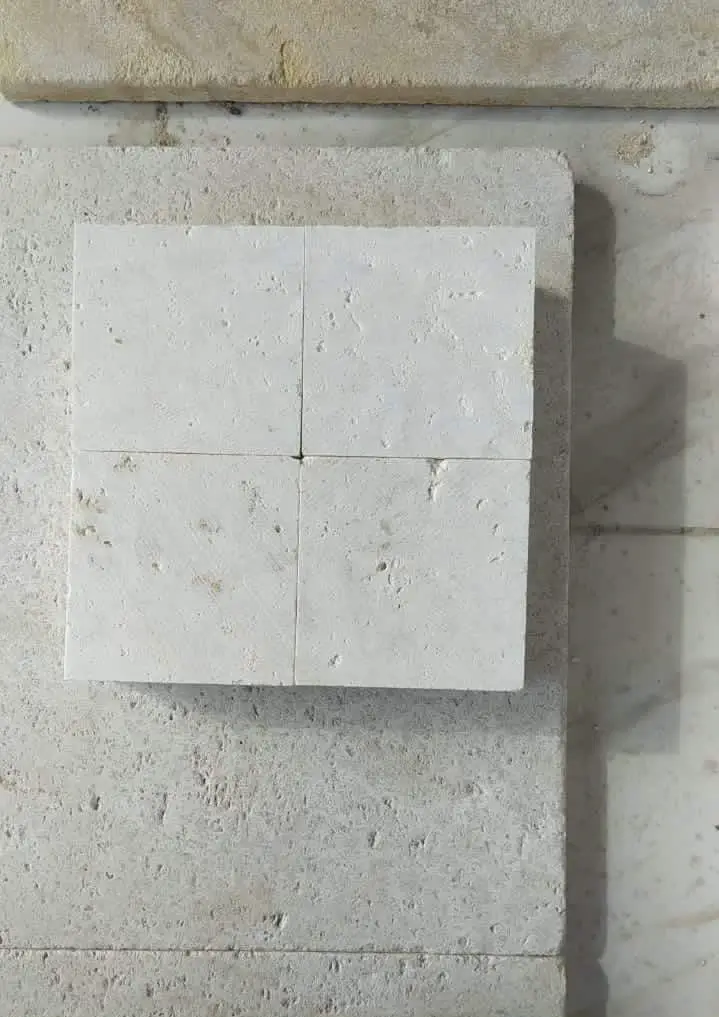
Ordering, Logistics, and Getting Material to Site
Cobblestone is heavy. A single pallet of granite setts typically runs 2,000–2,500 lbs, and a mid-size patio project might require four to six pallets. Your truck access conditions at the delivery address matter from the moment you place the order — a delivery truck that can’t reach the drop point means hand-bombing material a significant distance, which adds labour cost and delays the project start.
Plan your delivery sequence before the stone arrives. Ideally, pallets drop within 20–30 feet of the work zone — further than that and the handling cost climbs quickly. Citadel Stone ships nationwide from warehouse stock, which typically keeps lead times in the 1–2 week range for standard sett sizes. Verify stock levels for your specific sett dimensions and stone type before you finalize your installation date — some specialty sizes or finish combinations require longer lead times from our selected quarries, and you don’t want your crew standing by while a partial order arrives.
Here’s what most specifiers overlook on material quantity: always order a minimum 10% overage. Cutting waste on cobblestone — especially for diagonal or fan patterns — runs higher than most estimating guides suggest. Border cuts at irregular perimeters consume material quickly, and you want matching material on hand for any future repairs rather than trying to source an exact colour match from a later batch.
- Confirm truck access dimensions before scheduling delivery — height and weight restrictions on private roads or alleys affect vehicle selection
- 10% overage is a minimum; 15% for complex patterns or irregular perimeters
- Stage pallets close to the work zone to reduce handling time
- Check warehouse stock confirmation against your installation timeline — don’t schedule crew before material is confirmed
- Store pallets on flat, stable ground away from drainage paths — water pooling under pallets accelerates stone discolouration in storage
Getting Cobblestone Paver Specifications Right
Selecting cobblestone pavers for patio installations correctly comes down to respecting the specification sequence: stone type and grade first, sett dimensions calculated against actual patio geometry, base depth matched to site soil conditions, jointing compound selected for exposure level, and edge restraint detailed for the long term. Each of those decisions informs the next. Skipping ahead — choosing a pattern before you’ve confirmed sett dimensions, for example — creates problems that compound through the whole installation.
Your patio will also benefit from thinking about the border treatment before the field is laid. Cobblestone edging units along the perimeter create a clean visual frame and provide an opportunity to introduce a contrasting material or a tighter sett format that defines the space. As you work through your patio specification, it’s worth reviewing cobblestone edging and border options to understand how perimeter detailing integrates with field sett selection. A well-considered border doesn’t just look intentional — it also reinforces the structural integrity of the whole installation by completing the edge restraint system in a material that matches the field aesthetically. Specifying the correct sett size with Citadel Stone before layout begins helps ensure pattern continuity across the full patio footprint without awkward cuts at the perimeter.
Related reading: cobblestone paver patterns · how to install cobblestone pavers.