

Pattern Fundamentals That Determine Long-Term Performance
Cobblestone paver patterns do far more than define the visual character of a surface — the bond direction you choose governs how load distributes across the substrate, how well water drains off the field, and whether edge units stay locked under lateral pressure. A running bond set parallel to the primary traffic direction, for instance, creates a shear plane that can migrate under heavy wheel loads. Rotate that same pattern 45 degrees or switch to a herringbone and you immediately interlock unit against unit, breaking up the linear shear path. That mechanical difference is what separates a driveway surface that holds for two decades from one that loosens in five.
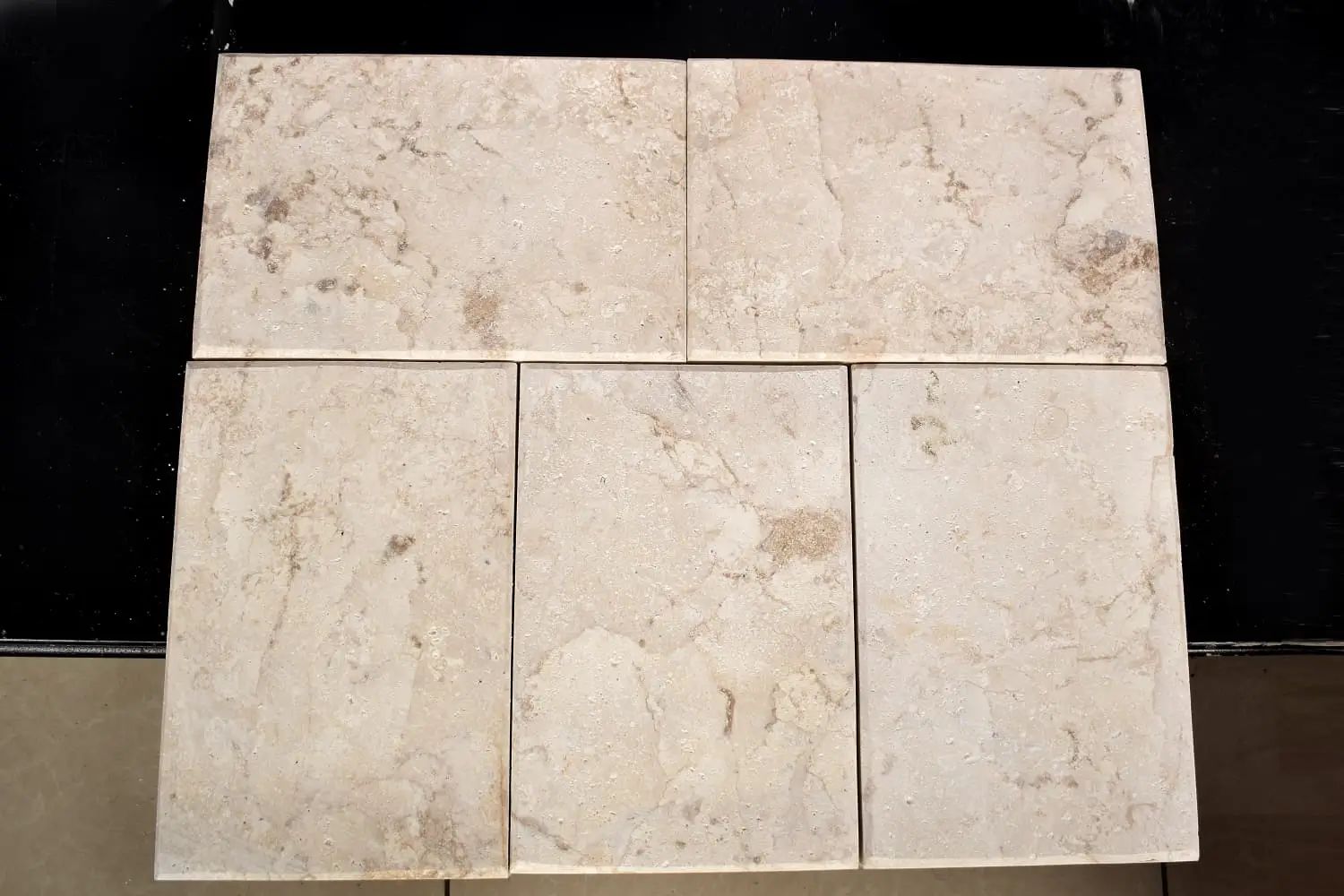
Classic Cobblestone Paver Patterns and Where They Belong
Several time-tested layouts remain in use precisely because each one solves a different installation challenge. Understanding which pattern fits which surface type is one of the first decisions you’ll make — and one of the hardest to reverse once mortar or compacted bedding sand is down.
- Running bond (single offset): best suited to walkways and garden paths where pedestrian loading is light and a clean, directional aesthetic is the goal — keep the bond perpendicular to foot traffic to limit rocking
- Herringbone at 90 degrees: the standard for driveways and areas with vehicle access; the interlocking V geometry resists horizontal creep better than any straight-jointed pattern
- Herringbone at 45 degrees: visually richer than the 90-degree version and equally strong structurally, though it generates more cut units at perimeter edges — factor that into your material order with at least an 8–10% overage
- Basket weave: pairs of cobblestones set at alternating right angles; works well on patios and courtyard surfaces where the look is informal and vehicle loading is absent
- Fan or radial pattern (roman cobblestone): units fan outward from a central arc, creating the curved-row effect historically associated with European street paving — demanding to set accurately but highly effective on curved aprons and circular plaza features
- Random or informal scatter: irregular placement that mimics a natural riverbed aesthetic; requires careful height-setting discipline to avoid surface lippage
The roman cobblestone fan layout deserves specific attention because it introduces non-parallel joint lines that many installers underestimate. Setting it correctly requires a chalk-line radius from a defined centre point, with each unit rotated incrementally to maintain consistent joint width at both the inner and outer arc edges. Miss that discipline and the fan reads as uneven — a problem that becomes permanent once the bedding layer sets.
Base Depth, Structural Requirements, and Code Considerations
Your pattern choice influences aesthetics, but your base specification determines whether the installation stays structurally sound across seasonal cycles. Most residential applications require a compacted aggregate base of at least 4 inches for pedestrian-only surfaces; vehicle-accessible areas typically demand 6–8 inches of compacted crushed aggregate below a bedding sand layer. In freeze-thaw regions, base depth must extend below the local frost line — a figure that varies significantly depending on your climate zone. Your local building department or municipal engineering office can confirm the frost line depth requirement for your specific location, and some jurisdictions also enforce edge-restraint specifications through permit review.
According to Natural Stone Institute granite cobblestone and sett specifications, the dimensional stability of natural stone setts depends on proper sub-base preparation as much as on the stone’s own physical properties. Skipping the engineering layer is the most common reason cobblestone surfaces fail prematurely — not the stone itself. Seismic zones add another layer of specification complexity: flexible bedding systems that allow minor differential movement without cracking the surface are generally preferred over fully rigid mortar-set installations in areas with active seismic risk. Check IBC and local amendments before finalising your base design on any commercial or high-load project.
Material Thickness and Load Rating for Different Applications
Cobblestone paver patterns interact directly with unit thickness. A visually detailed fan or radial layout set in 2-inch-nominal cobblestones handles residential foot traffic and light vehicle use with appropriate base support. Step up to driveways where passenger vehicles park or turn, and 2.75-inch to 3-inch units become the practical minimum. Heavy-load applications — delivery vehicle access, large RV pads, commercial drop-off zones — typically call for units at or above 3.5 inches combined with a reinforced granular base.
The USGS dimension stone production data confirms that federal granite and dimension stone data supports granite as the predominant cobblestone material in high-load applications, primarily because of its density and abrasion resistance under wheeled traffic. Limestone and basalt cobblestones perform well in pedestrian environments and lower-traffic residential driveways, each bringing a different surface texture profile that affects both aesthetics and the surface’s behaviour in wet conditions.
- 2-inch nominal: walkways, patios, garden paths, pool surrounds — pedestrian traffic only
- 2.75–3-inch nominal: residential driveways, parking aprons, light vehicle access
- 3.5-inch and above: commercial entrances, delivery zones, heavy vehicle pads
- Confirm thickness requirements with your structural engineer if the project carries a commercial permit or is subject to local load-rating ordinances
How Cobblestone Paver Patterns Affect Drainage Performance
Surface drainage is where pattern selection has a direct functional consequence that often gets overlooked at the design stage. Joint lines running parallel to a slope channel water efficiently in one direction — useful for a ramp or steeply graded entry but problematic on a flat courtyard where water needs to disperse laterally as well as longitudinally. A herringbone pattern’s diagonal joint network naturally disperses sheet flow in multiple directions simultaneously, which is why it performs so well on broad, relatively flat surfaces where ponding is a risk.
The ASLA guidance on permeable paving surfaces highlights that joint width and infill material are as important as pattern geometry when drainage performance is a design requirement. Wider joints filled with graded aggregate rather than polymeric sand increase permeability significantly and can help manage storm-water runoff on properties where local code encourages or requires on-site infiltration. You’ll want to confirm your municipality’s stance on permeable surface credit before specifying joint-fill type — some jurisdictions offer impervious-surface exemptions for documented permeable installations.
Ordering, Warehouse Stock, and Project Logistics
Your pattern choice directly affects how you order material. A straight running bond on a rectangular surface is forgiving — your cut waste stays low and a 5% overage typically covers field cuts and breakage. A 45-degree herringbone or a radial fan pattern on an irregular footprint is a different calculation entirely; expect 12–15% overage on complex layouts, and confirm warehouse stock levels before you commit to a start date. Running short mid-project on a specific size or batch is one of the most avoidable delays in stone installation, and it becomes a real problem if the material is sourced in limited lot quantities.
For projects with specific pattern requirements and tight timelines, confirming Cobblestone Pavers availability early in the design phase is the practical move. Citadel Stone quarries, templates, and handles material from selected quarries with direct inventory control, which means you’re not waiting on an intermediary to confirm stock. Truck delivery scheduling is worth discussing at the order stage too — large format cobblestone pallets are heavy, and your site’s truck access constraints will determine whether a standard flatbed can reach the drop point or whether a smaller delivery vehicle needs to be arranged.
Finish Selection and Surface Character
The surface finish you specify will alter how any cobblestone paver pattern reads visually and how the surface behaves underfoot in different conditions. Tumbled cobblestones soften the edge profile and create an aged, irregular look that suits rustic and traditional settings. Sawn cobblestones present cleaner, more uniform faces that work better in contemporary hardscape designs. Flamed or bush-hammered finishes introduce a textured surface profile that is especially relevant for sloped applications — the finish becomes the variable governing wet-surface behaviour, and ANSI A326.3 is the current standard for evaluating wet dynamic coefficient of friction; point your specifier toward that document rather than relying on finish descriptions alone.
- Tumbled: rounded edges, aged appearance, well-suited to garden paths and traditional courtyards
- Sawn: clean faces, uniform joint lines, effective in modern and commercial settings
- Flamed or bush-hammered: increased surface texture, better wet-surface performance on sloped or ramp surfaces — verify finish with test report data under ANSI A326.3 before specifying for heavily trafficked slopes
- Honed: smooth but not polished, best reserved for indoor or covered applications
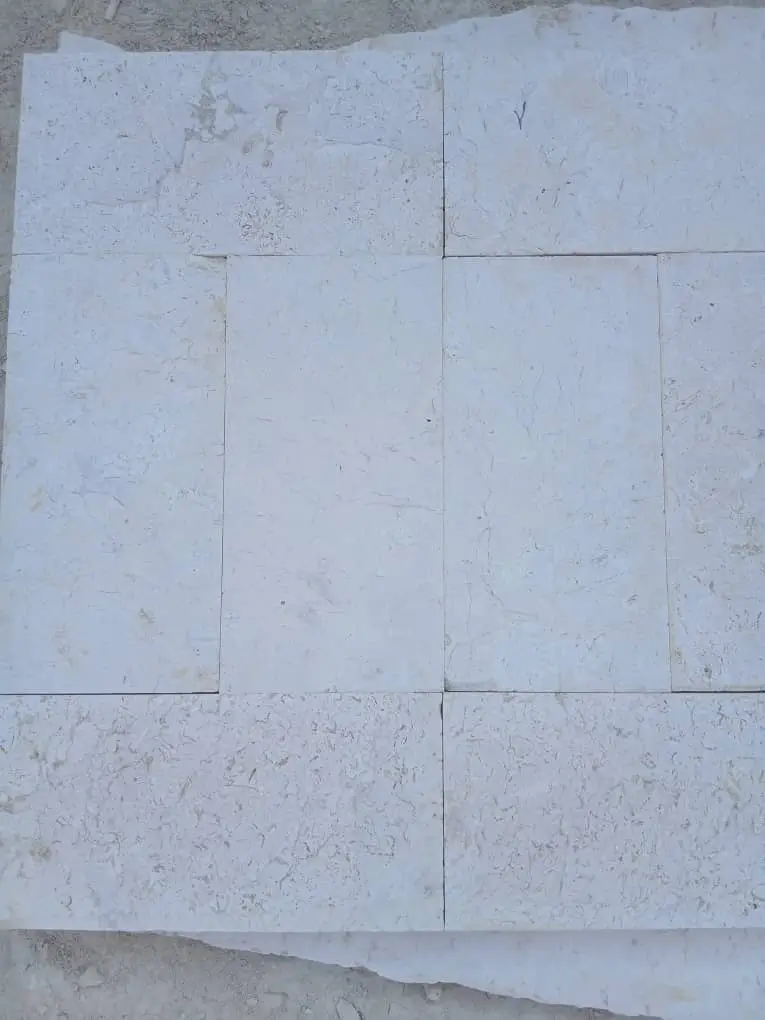
Setting Accuracy and Joint Discipline Across Pattern Types
The quality of a finished cobblestone surface comes down almost entirely to joint consistency. Varying joint widths by even 3–4 mm across a large field throws off the visual rhythm of the pattern and creates high spots where units shift slightly in height — a problem you feel underfoot before you see it with the eye. For herringbone layouts, string lines set at both 90 and 45 degrees give you two cross-reference checks as you set each unit. For radial patterns, including the roman cobblestone fan layout, a story pole radiating from your defined centre point keeps arc spacing consistent through the full sweep.
Bedding sand compaction discipline matters just as much as the setting process itself. Sand that isn’t evenly compacted before unit placement will allow individual cobblestones to settle at different rates — particularly in the first season after installation. Specifying a 1-inch nominal bedding sand layer, compacted to consistent density before any units are placed, is the standard that holds up in high-traffic applications. Field testing by vibrating plate compaction after final unit placement locks the system and reduces post-installation settlement significantly.
Final Considerations for Cobblestone Paver Pattern Selection
Getting cobblestone paver patterns right is ultimately a sequence of interdependent decisions: pattern geometry feeds into cut-waste calculations, which affect material orders; base depth responds to local code and frost requirements; finish selection governs surface behaviour in wet conditions; and joint discipline at the setting stage determines whether the installation looks as designed five years on. Each variable feeds the next, which is why experienced specifiers lock down the pattern before finalising the base specification, not after. For anyone moving from pattern selection into the physical installation phase, reviewing the full process for cobblestone paver installation steps provides the sequential technical detail that bridges the design decision to the field reality. At Citadel Stone, we source material at our selected quarries and carry direct warehouse inventory, so the technical consultation process connects pattern specification to actual stock availability — not to a catalogue that may or may not reflect what’s on the ground. Selecting the right layout before ordering from Citadel Stone helps avoid mid-project size adjustments that slow installation and raise material costs.