

What Permeable Really Means in a Cobblestone System
Permeable cobblestone pavers function as a system, not as an isolated surface material — the cobble itself is dense and largely non-absorptive, and infiltration is created by the void geometry between units, the joint material, and the sub-base layers beneath. Understanding this distinction shapes every specification decision you’ll make, from joint width to aggregate gradation. Miss it, and you’ve built an expensive surface that sheds water just like standard pavement.
How the Infiltration System Actually Works
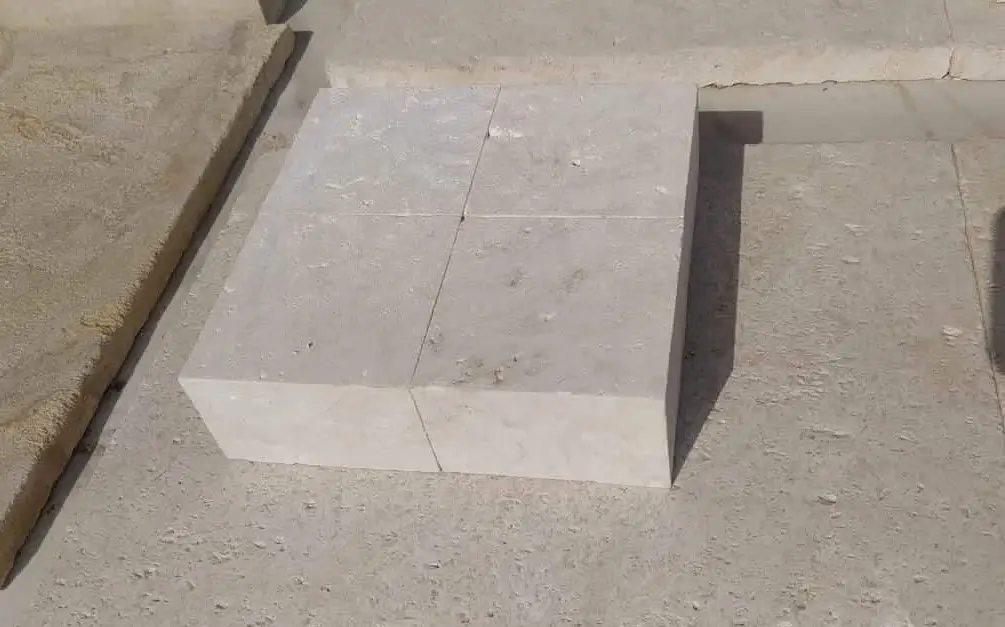
The performance breakdown of a permeable cobblestone system has three active layers: the surface joints, the bedding course, and the sub-base reservoir. Stormwater enters through open joints — typically 8 to 25 mm wide depending on cobble format and project loading — and migrates into a washed angular aggregate bedding course, then into a deeper sub-base that acts as a temporary storage and release zone.
Your joint aggregate selection is the variable that most installers underestimate. Pea gravel and rounded particles choke under traffic compaction and dramatically reduce void space within the first two seasons. Angular, washed stone — crushed granite or basalt screenings in the 3–6 mm fraction — maintains its interlock under load and keeps infiltration channels open long-term. The ASLA permeable surface guidance reinforces this distinction: aggregate geometry is the governing variable in surface permeability, not material porosity alone.
Joint Width and Pattern Geometry
Your pattern layout directly affects how much of the total surface area is available for infiltration. A tight fan or herringbone pattern with 8 mm joints across a standard 100 mm cobble face yields roughly 10–12% open area. Wider random-coursed layouts with 15–20 mm joints can push that figure closer to 18–22% — a meaningful difference when you’re targeting a specific runoff coefficient for a drainage design.
- Fan patterns offer aesthetic richness but constrain joint consistency — keep a template gauge on-site during installation
- Running bond gives you the most predictable joint geometry for infiltration calculations
- Irregular or random cobble formats require oversized joint allowances to prevent rocking under point loads
- Edge restraints must be rigid — any lateral movement closes joints progressively over time
The geometry of our drainage-focused cobblestone options is specified with these joint requirements in mind, so your infiltration calculations start from a consistent baseline rather than a field estimate.
Sub-Base Design for Water Storage and Release
The sub-base is where the real hydraulic engineering happens. A properly designed permeable cobblestone system uses an open-graded aggregate reservoir — typically 200 to 400 mm deep depending on site hydrology and native soil permeability — that stores stormwater temporarily before it infiltrates into the ground or exits through perforated underdrains.
For clay-heavy native soils with low permeability, a geotextile separation layer between the sub-base and native grade is critical. Without it, fines migrate upward under hydraulic pressure and progressively blind the base aggregate. The USGS dimension stone and pavement data underscores that long-term performance in permeable systems depends heavily on sub-base integrity, not just surface material quality. Request a percolation test on your native soil before finalizing sub-base depth — it’s a two-hour field test that eliminates one of the most common failure modes.
Freeze-Thaw Performance and Thermal Cycling
Temperature cycling is where permeable cobblestone systems face their most demanding structural test — and where the specification details separate functional installations from ones that need significant remedial work within five years. In regions with pronounced freeze-thaw cycles, water retained within the joint aggregate and sub-base expands approximately 9% as it freezes. That volumetric change generates heave forces that can displace individual cobbles and break down joint aggregate structure over multiple seasons.
Thermal expansion across the cobble field itself adds another variable. Natural stone expands and contracts with temperature shifts, and in areas experiencing 50°F or greater day-to-night temperature swings, the cumulative movement across a large paved area becomes significant. Your layout should incorporate flexible edge restraints that accommodate this dimensional change rather than rigid perimeter constraints that force stress into the cobble joints.
- Sub-base aggregate in freeze-thaw zones should use clean, angular crushed stone — not recycled concrete screenings that retain fines
- Avoid saturated sub-base conditions heading into a freeze cycle: a well-designed underdrain prevents this
- Cobble thickness of 100 mm or greater provides better thermal mass buffering than thinner formats in high-swing climates
- Open-graded bases drain faster than dense-graded ones, reducing the volume of water available to freeze within the profile
The Natural Stone Institute granite and cobblestone specifications address freeze-thaw durability as a primary selection criterion for exterior paving — particularly for dense igneous stone like granite cobbles, which maintain low absorption and perform well through repeated thermal cycling.
Cost of Cobblestone Pavers and Full System Pricing
The cost of cobblestone pavers is only the starting point in a permeable system budget. You’ll need to account for the open-graded sub-base aggregate, geotextile separation fabric, perforated underdrain pipe if required, and the angular bedding course — all of which add to the installed cost but are non-negotiable for system longevity.
Material pricing varies meaningfully by cobble format, size, and stone type. Granite cobbles in the standard 100 × 100 × 100 mm format typically represent the broadest supply and most stable pricing. Irregular or tumbled formats carry premium pricing due to sorting and selection labour at the quarry. For national projects, Citadel Stone maintains consistent warehouse inventory that reduces the lead-time risk that often inflates project budgets through schedule delays — verify stock availability before locking in your construction timeline.
- Sub-base aggregate and bedding course typically add 30–45% to the material cost of the cobble itself
- Underdrain installation and outlet connection are the most variable cost items — site conditions drive this figure
- Permeable systems generally require less grading precision than monolithic pavement, which can offset some installation labour
- Long-term maintenance costs are lower when joint aggregate is specified correctly from the outset
Maintenance and Joint Replenishment
Permeable cobblestone pavers require active joint maintenance to preserve infiltration capacity over time. Fine particles — wind-deposited sediment, organic debris, tyre abrasion residue — migrate into joints and progressively reduce void space. A structured maintenance programme is part of the specification, not an afterthought.
For most installations, a biennial inspection with vacuum extraction of surface fines and joint aggregate replenishment maintains system performance at close to original design capacity. High-traffic or high-sediment-load sites may need annual attention. The USGS dimension stone data confirms that well-maintained natural stone paving systems — including cobblestone and granite sett installations — regularly deliver decades of service life, provided that joint integrity is preserved through periodic maintenance cycles.
- Use a stiff-bristle broom, not a wire brush, for surface debris removal — wire damages stone edges over time
- Top-dress joint aggregate to the upper 5 mm of the joint cavity — overfilling seals the infiltration pathway
- Inspect edge restraints annually for lateral creep — any movement should be corrected before it cascades across the field
- Avoid pressure washing with fine-nozzle tips, which dislodge joint aggregate rapidly
Specifying Cobble Thickness and Loading Class
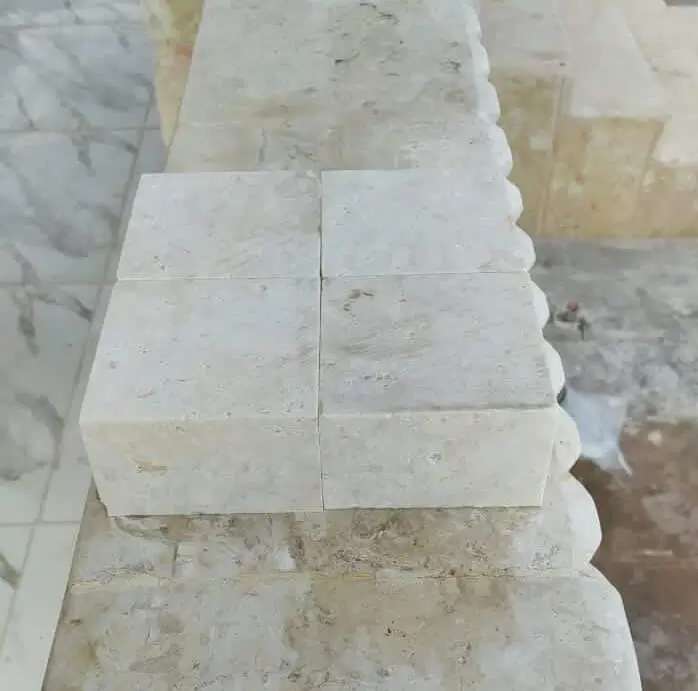
Cobble thickness is a structural specification, not an aesthetic one. For pedestrian applications — courtyards, walkways, residential driveways with light passenger vehicles — a 60 to 80 mm cobble depth on a 100 to 150 mm open-graded base is a workable baseline. Commercial driveways and access roads with regular delivery vehicle traffic should move to 100 mm minimum cobble thickness with a 300 mm base to distribute point loads effectively.
Permeable cobblestone pavers in parking applications face a particular challenge: frequent stopping and starting generates horizontal shear forces at the cobble-to-bedding interface. Angular bedding aggregate resists this better than rounded material, and a slight mechanical interlock at the cobble pattern edges provides additional shear resistance. Your vehicle access plan for material delivery also informs this specification — if the finished surface will see regular heavy traffic, thickness and base depth need to be calculated accordingly rather than defaulted to residential specifications.
Getting Permeable Cobblestone Paver Specifications Right
Getting permeable cobblestone pavers right is fundamentally a system-design exercise. The cobble you specify matters — stone density, format consistency, and dimension tolerance all affect how the surface performs — but the sub-base design, joint aggregate selection, and maintenance programme determine whether the infiltration function remains active over the service life of the installation. Your specification should treat all three layers as interdependent components, not separate line items.
For complementary stone applications on your property, cobblestone for patio applications covers how similar cobble formats perform in outdoor living and entertainment contexts, where load characteristics and aesthetic priorities shift the specification in different directions. At Citadel Stone, we quarry, template, manufacture, and handle our stone directly from our selected quarries — which means the dimensional consistency you receive from our warehouse reflects source-level quality control, not just downstream sorting. When specifying a permeable base system, working with Citadel Stone’s cobblestone in open-jointed configurations generally produces more predictable infiltration than closed mortar beds.
Related reading: how to install cobblestone pavers · cobblestone paver patterns · cobblestone edging pavers.