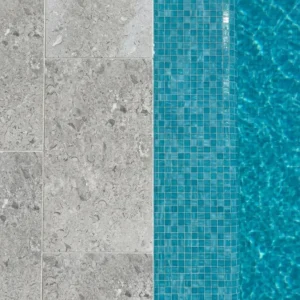
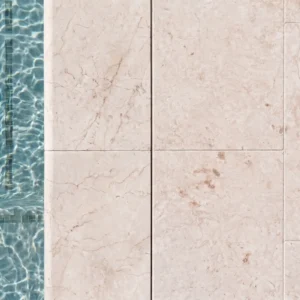
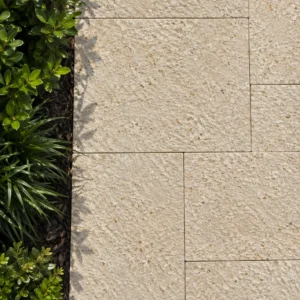
Specifying cast stone versus natural limestone for architectural trim comes down to more than aesthetics — the decision directly affects structural performance, code compliance, and long-term maintenance obligations. The cast stone vs limestone question surfaces most often at the trim and surround level: cornices, quoins, window surrounds, lintels, and sills where dimensional precision and load-bearing capacity intersect. Understanding how each material behaves under those conditions will keep your project on schedule and off the remediation call list.
What Is Cast Stone and How Is It Made?
Cast stone is a refined architectural concrete product — not natural quarried material — manufactured from fine aggregates, portland cement, and pigments compressed and cured under controlled conditions. Cast stone manufacturers engineer each unit to precise dimensional tolerances, typically within ±1/8 inch, which is a specification advantage natural stone rarely matches without additional shop fabrication. The result is a product that replicates the appearance of natural limestone or sandstone while delivering consistent mechanical properties across every unit in a run.
The internal structure matters here. Well-made cast stone achieves compressive strengths between 6,500 and 8,500 PSI, with water absorption rates below 6% — figures that put it comfortably within the performance range required by most commercial building codes. What varies between cast stone manufacturers is the aggregate gradation and curing protocol, so you’ll want certified test data from any supplier before specifying the product for load-bearing applications.
- Compressive strength: 6,500–8,500 PSI for quality cast stone units
- Water absorption: typically under 6% per ASTM C1364 limits
- Dimensional tolerance: ±1/8 inch — essential for complex trim profiles
- Color consistency: pigment-matched batches maintain uniformity across large facades
- Custom profiles: cast in any mold, so unusual cornice or surround geometries are achievable
Natural Limestone as Architectural Trim
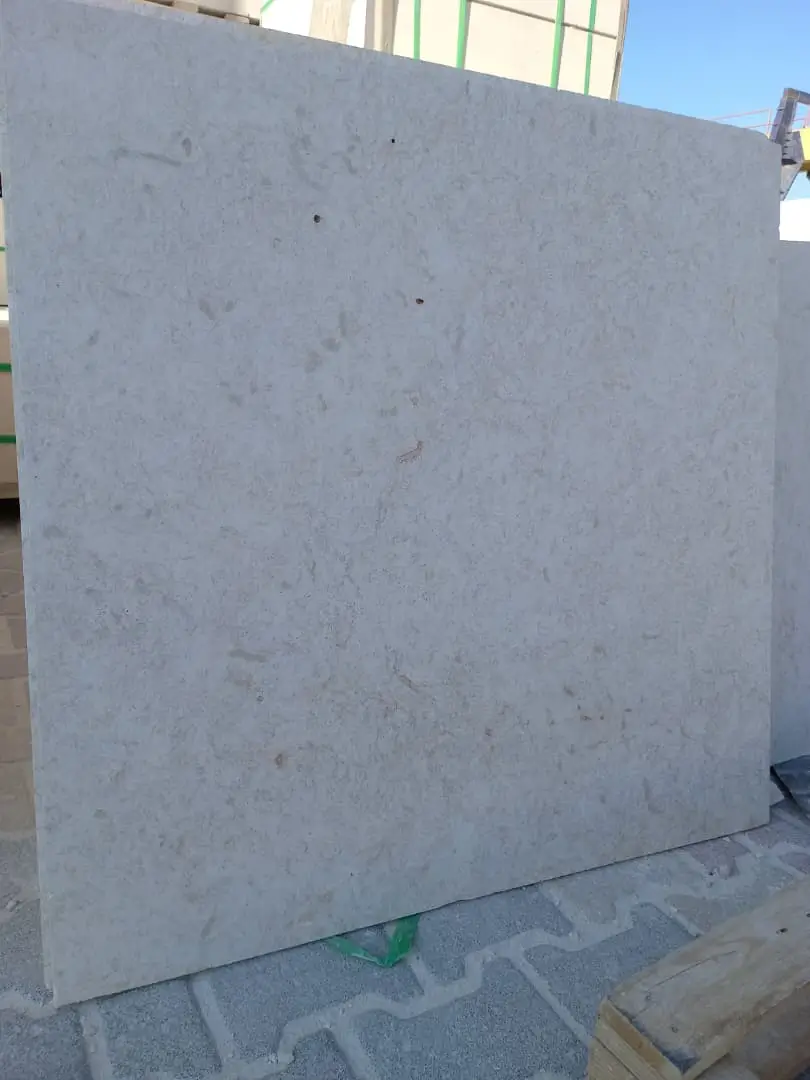
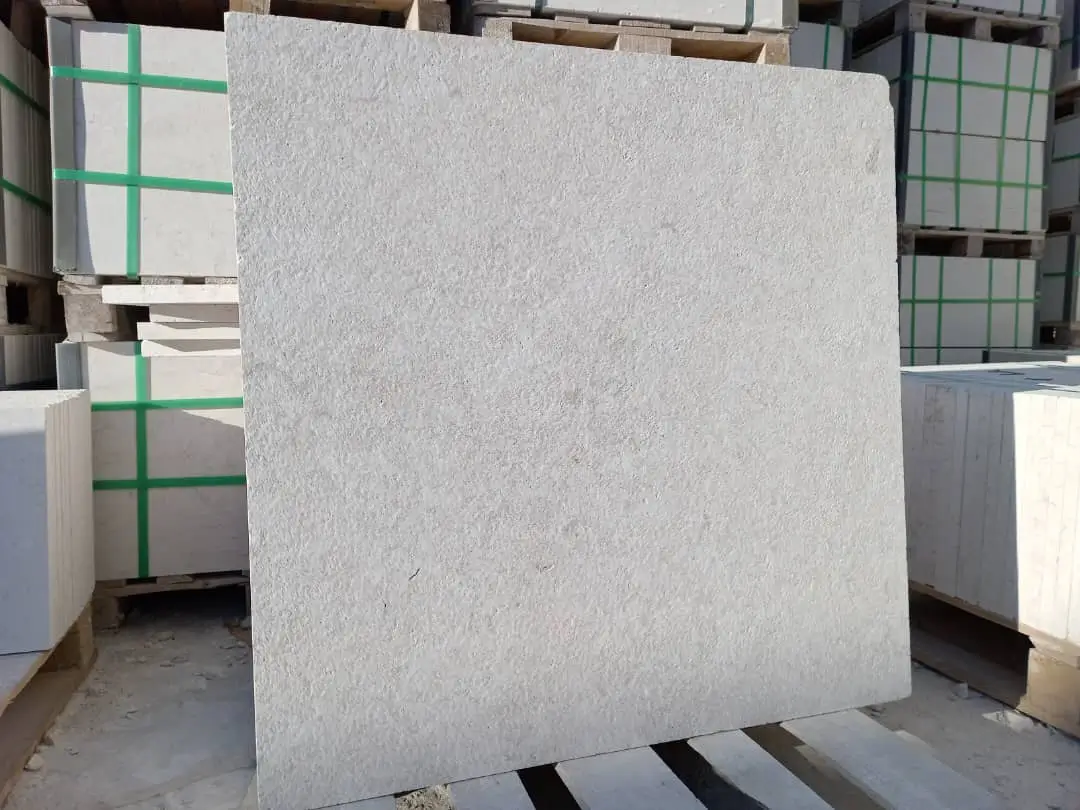
Natural limestone has been the architectural trim material of record for centuries, and for good reason. Quarried from sedimentary deposits and cut to profile, it offers genuine mineralogical depth — the veining, shell fragments, and tonal variation that cast stone approximates but never fully replicates. According to NSI limestone specifications, the material encompasses a broad hardness range depending on formation depth and calcium carbonate content, which means not all limestone performs identically in trim applications.
Density drives most of the performance differences you’ll encounter in the field. Dense limestone grades deliver compressive strengths above 4,000 PSI and absorb less than 3% water. Softer formations can drop to 1,500 PSI and absorb upward of 15%, making them unsuitable for projecting trim elements exposed to freeze-thaw cycling. Your specification should call out the specific grade and density range, not just “limestone,” to avoid receiving a product that performs below project requirements.
- Compressive strength range: 1,500–12,000 PSI depending on formation and grade
- Natural variation: unique coloration and fossil patterning unavailable in manufactured products
- Thermal mass: high-density limestone moderates surface temperature in sunny exposures
- Workability: amenable to hand carving and complex profiles in the fabrication shop
- Age-appropriateness: historically accurate for restoration and preservation projects
Cast Stone vs Limestone: Head-to-Head Performance
The cast stone vs limestone performance comparison breaks differently depending on which trim application you’re evaluating. For window sills and lintels carrying structural load, cast stone’s controlled compressive strength gives you a predictable design value — something natural stone’s variability makes harder to nail down without individual unit testing. For carved decorative elements where surface detail is the priority, natural limestone’s workability in the fabrication shop is a genuine advantage that cast stone molds can only partially match.
Durability over time is where the comparison gets nuanced. Dense natural limestone weathers gradually and develops a patina that many architects actively specify. Cast stone ages differently — the cement matrix can lighten or develop minor surface map cracking after 15–20 years if the mix design or curing wasn’t optimal. Both materials benefit from periodic inspection, but the failure modes are distinct enough that your maintenance protocol should be material-specific.
- Load-bearing lintels: cast stone offers more predictable structural values
- Decorative carving: natural limestone provides superior detail resolution
- Color consistency: cast stone wins for uniform facade runs; limestone wins for natural character
- Freeze-thaw durability: dense limestone and quality cast stone both perform well; soft limestone does not
- Long-term weathering: limestone patinates naturally; cast stone may show surface changes at year 15–20
- Lead time: cast stone can be manufactured to order; natural limestone requires quarry scheduling
Code Compliance and Structural Specification
Building codes treat cast stone and natural limestone differently, and those distinctions directly affect how you detail trim elements in your construction documents. IBC Chapter 21 governs masonry and veneer applications for both materials, but cast stone is classified as manufactured masonry and must comply with ASTM C1364 for dimension tolerances and absorption limits. Natural limestone falls under ASTM dimension stone standards, which require density and absorption testing but don’t impose the same manufacturing controls. Your structural engineer needs to know which material is on the spec to select the correct design standard.
Lintel sizing is where the code compliance angle becomes most consequential. Cast stone lintels can be reinforced internally with steel rebar during manufacturing — reconstituted stone manufacturers routinely offer this option for spans over 4 feet. Natural limestone lintels rely entirely on the material’s compressive and flexural strength, which limits practical unreinforced span to roughly 3 feet for a typical trim profile. For wider openings, you’re either adding a concealed steel angle or switching to cast stone with embedded reinforcement.
Seismic detailing introduces another layer. In high-seismic regions, both materials require positive mechanical anchoring to the substrate — adhesive attachment alone won’t satisfy code. Your anchorage schedule should specify stainless steel ties at maximum 24-inch vertical spacing for veneer trim applications, regardless of which material is specified. Frost line depth affects base detailing for freestanding elements like pier caps and gate surrounds: footings need to extend below the frost line or the seasonal movement will crack mortar joints within two or three winters.
Installation Variables That Affect Material Choice
Your installation sequence looks different depending on which material you’ve specified, and the differences start before the first unit is set. Cast stone arrives from building stone manufacturers in precise, ready-to-install dimensions — you check the delivery against the shop drawings, verify that warehouse inventory matches the batch certification, and proceed to setting. Natural limestone from a quarry-direct source often requires some field adjustment: units may vary by 3/16 inch or more in thickness, and projecting profiles may need back-grinding for a consistent reveal.
Mortar selection matters more than most specifiers realize. Type S mortar works well for most trim applications, but dense natural limestone — particularly polished or honed profiles — needs a mortar joint that can accommodate differential thermal movement without telegraphing stress cracks through the face. For cast stone, the manufacturer’s installation guide should specify the mortar type; using a mortar that’s too stiff relative to the unit’s modulus can cause face spalling at joints within five years. If the manufacturer doesn’t provide a mortar specification, that’s a red flag worth investigating before you commit to the product.
- Verify unit dimensions at delivery against approved shop drawings
- Confirm mortar type matches material modulus — Type S for most applications
- Allow 24–48 hours cure time before applying sealant to avoid trapping moisture
- Maintain 3/8-inch minimum joint width for projecting trim to allow thermal movement
- Use stainless steel anchors — never uncoated carbon steel — at all mechanical tie points
Sourcing, Lead Times, and Supply Chain Considerations
The practical sourcing reality of cast stone vs limestone shows up in project schedules before it shows up on the building. Cast stone is manufactured to order, which means a standard run of window surrounds or cornice profiles typically requires 6–10 weeks from approved shop drawings to truck delivery. Custom profiles with unusual geometry can push to 14–16 weeks. Natural limestone from established suppliers can move faster if the profile is a stock shape, but quarry-direct orders for matched stone — especially for restoration where color matching matters — can easily run 8–12 weeks.
At Citadel Stone, we work directly with both cast stone manufacturers and natural limestone quarries, which lets us cross-check availability and lead times before you’re committed to a schedule. Warehouse inventory on standard profiles can sometimes cut lead times significantly — a project that would have waited 10 weeks for a manufactured run can occasionally ship within two weeks from existing warehouse stock. It’s worth a conversation early in the design phase, not after the steel package is issued.
You can explore our cast stone and limestone selection to compare available profiles and request material samples before finalizing your specification. Getting physical samples in hand — ideally from the same production batch — is the step most project teams skip and later regret when the installed color doesn’t match the approved submittal.
Maintenance Protocols and Long-Term Care
Both materials require maintenance, but the protocols differ enough that you should communicate them explicitly to building owners at project closeout. Natural limestone benefits from penetrating sealer application every 3–5 years, using a silane-siloxane formulation that preserves breathability while reducing water absorption. Over-sealing with a film-forming product traps moisture and can cause sub-surface spalling — a failure mode that’s particularly damaging on projecting elements like sills and copings where water pools.
Cast stone maintenance centers on joint inspection rather than surface sealing. The cement matrix is generally self-protective against surface staining, but mortar joints are the vulnerability. According to USGS limestone composition data, carbonate materials — including the limestone aggregate in quality cast stone — can show selective leaching at exposed joint lines over 10–20-year cycles, which signals a repointing requirement. Catching this at year 15 is a straightforward maintenance task; ignoring it until year 25 means structural repair.
- Limestone: silane-siloxane penetrating sealer every 3–5 years
- Cast stone: visual joint inspection annually; repoint at first sign of mortar recession
- Both materials: clear weep holes in coping and sill profiles after heavy weather events
- Both materials: avoid pressure washing — use low-pressure rinse and pH-neutral cleaners
- Both materials: document the original batch and supplier for future repair matching
Cost, Value, and When Each Material Wins
Material cost for cast stone vs limestone architectural trim varies significantly by profile complexity, supply availability, and project volume. As a general benchmark, standard cast stone trim profiles run $35–$65 per linear foot installed, while comparable natural limestone profiles from quality building stone manufacturers typically range $55–$110 per linear foot depending on grade and finish. The gap narrows for simple rectangular profiles and widens for complex carved details where limestone fabrication labor is the dominant cost driver.
Value calculation goes beyond unit price. Cast stone’s dimensional consistency reduces installation labor — your mason isn’t adjusting for unit-to-unit variation — which can offset the material cost premium on large facade runs. Natural limestone commands a premium on heritage and preservation projects where material authenticity affects property valuation, insurance classification, or historic tax credit eligibility. The Natural Stone Institute limestone resource documents the material’s role in historic preservation contexts, which matters when your project is subject to historic review board approval.
The decision framework really comes down to three questions: Does the project require material authenticity — historic designation, restoration match, or owner preference for natural material? Does the trim geometry require the dimensional precision that cast stone delivers better than quarry-variable natural stone? And does the budget support the fabrication and lead time requirements of the chosen material? Answer those three questions honestly and the cast stone vs limestone decision usually resolves itself.
Your Cast Stone vs Limestone Action Plan
Nail down the structural requirement first. If your trim includes lintels spanning more than 3 feet, reinforced cast stone is almost always the right call — the predictable structural value and the availability of embedded reinforcement from reconstituted stone manufacturers make it the safer specification. For purely decorative trim where span and load aren’t factors, let aesthetics and project character drive the decision.
Request certified test data — compressive strength, absorption, and freeze-thaw cycling results — from any supplier before approving a submittal. This applies to both cast stone and natural limestone; the documentation requirement is your protection against underperforming material reaching the job site. Confirm lead times against your construction schedule at least 12 weeks before the installation window, and order samples from the actual production run, not generic showroom pieces.
As you finalize your trim specification, related decisions about wall stone and veneer can inform your approach to surface detailing elsewhere on the facade. For another dimension of natural stone specification, choosing stacked stone for wall applications covers material selection criteria worth reviewing alongside your trim package. Projects where weight load on structural lintels is a concern often benefit from the material comparison Citadel Stone provides between cast stone and natural limestone profiles.
Related reading: stone veneer siding manufacturers · natural stone manufacturers · Sintered Stone vs Quartz: What You Need to Know.