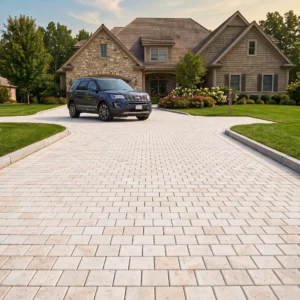
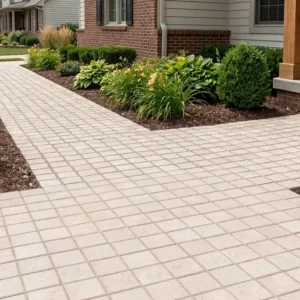
The engineered vs natural stone decision carries real structural and performance consequences that show up years into an installation — not just at the point of purchase. Most specifiers approach this comparison by evaluating surface finishes and price points, but the variables that actually determine long-term value run much deeper: compressive strength ratios, absorption coefficients, thermal cycling behavior, and how each material responds to the load-bearing requirements embedded in building codes. Getting this comparison right means understanding what each material is made of, how it performs under real conditions, and where the trade-offs genuinely lie.
What Each Material Actually Is
Natural stone is quarried directly from the earth — limestone, granite, travertine, basalt, and slate among the most common dimensional varieties. Each slab or paver carries the geological record of its formation: mineral composition, crystalline structure, porosity, and density that no manufacturing process can precisely replicate. That variability is both the appeal and the specification challenge.
Engineered stone, by contrast, is a composite material — typically 90–95% crushed quartz or other mineral aggregate bound with polymer resins. Artificial stone manufacturers control the production environment tightly, which yields consistent sizing, predictable absorption rates, and uniform coloration. What engineered stone gains in consistency, it concedes in thermal mass and mineral authenticity. Understanding this fundamental distinction is the starting point for any honest engineered vs natural stone comparison.
Compressive Strength and Structural Performance
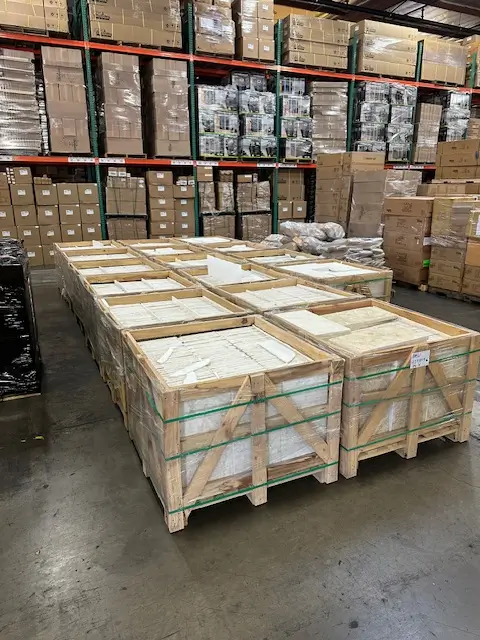
Field performance begins with structural integrity. Dense granite delivers compressive strength values above 19,000 PSI — well above what most residential and light commercial applications demand. Hard limestone typically sits in the 8,000–12,000 PSI range, and engineered quartz surfaces commonly test between 15,000–18,000 PSI depending on resin formulation. On paper, those numbers look competitive. In practice, the difference emerges at stress concentrations: point loads, edge impacts, and freeze-thaw cycling.
Engineered surfaces distribute loads relatively uniformly because the resin matrix creates isotropic behavior — stress travels through the material without following a cleavage plane. Natural stone has directional grain, which means it performs extraordinarily well when loaded parallel to its bedding plane but can fracture unpredictably when force is applied at an angle to that plane. This is a detail that matters in countertop overhangs and in stair tread applications where dynamic loading occurs.
- Granite compressive strength: 19,000–25,000 PSI (ASTM C615 compliant grades)
- Engineered quartz compressive strength: 15,000–18,000 PSI
- Limestone compressive strength: 4,000–12,000 PSI depending on density classification
- Flexural strength of natural stone is highly directional — orientation at installation matters
- Resin-bound engineered surfaces exhibit greater isotropic load distribution
Building Codes and Specification Requirements
The building code context here is more than a checkbox — it directly affects which material you can specify. Most jurisdictions follow IBC Chapter 4 for floor load ratings and Chapter 21 for masonry and veneer applications. In seismic design categories C through F, natural stone veneer panels require additional anchoring per ASCE 7-22 provisions that engineered panel systems may not need, because engineered panels often qualify for different attachment classifications depending on their polymer content.
For interior flooring applications, live load requirements typically range from 40 PSF (residential) to 100 PSF (assembly occupancies). Both natural and engineered stone surfaces can meet these benchmarks when properly installed over a structurally adequate substrate. The critical specification variable isn’t the stone itself — it’s the substrate deflection limit. Industry standards generally call for L/360 minimum deflection for tile and stone installations. Exceed that deflection threshold and neither material category will prevent grout failure or lippage over time.
- IBC Section 1405.7 governs natural stone veneer anchoring requirements by seismic category
- Substrate deflection must meet L/360 minimum under full live load — non-negotiable for both material types
- Frost line depth affects base thickness for exterior applications — check local jurisdiction requirements
- Engineered panels in wet areas require separate ANSI A326.3 compliance review for absorption classification
- Edge restraint and expansion joint spacing requirements apply equally to both material types in exterior paving
According to Natural Stone Institute ASTM standards for stone, matching the correct ASTM classification to your application — C615 for granite, C568 for limestone, C629 for slate — is the first step toward code-compliant specification. Engineered stone manufacturers publish their own compliance documentation, and you should request it alongside natural stone certifications for an apples-to-apples comparison.
Thermal Performance and Heat Response
Here’s a performance distinction that gets underweighted in most comparison guides: thermal mass. Natural stone absorbs heat slowly and releases it gradually. Dense materials like granite and basalt have thermal conductivity values in the range of 2.5–3.5 W/(m·K), which means they moderate surface temperature swings in hot, dry climates and in freeze-thaw regions where thermal cycling accelerates substrate movement.
Engineered surfaces, because of their polymer resin content, have notably lower thermal conductivity — typically 1.0–1.5 W/(m·K). In interior applications, that translates to a surface that feels less thermally heavy underfoot. In exterior applications in regions with significant seasonal temperature variation, resin-bound materials can exhibit differential thermal expansion between the mineral aggregate and the polymer matrix. Over time, this can create micro-fractures at the aggregate-resin interface that aren’t visible on the surface but reduce structural integrity at the slab level.
- Natural stone thermal expansion coefficient: typically 4–8 × 10⁻⁶ per °F depending on mineral composition
- Engineered quartz thermal expansion: 6–10 × 10⁻⁶ per °F — note the higher upper range
- Engineered surfaces are generally not recommended for outdoor applications in freeze-thaw regions without manufacturer confirmation of frost resistance
- Natural stone countertops adjacent to cooktops require thermal break isolation regardless of material density
Porosity, Absorption, and Maintenance Reality
The absorption rate is where the practical maintenance conversation really begins. Engineered quartz surfaces are essentially non-porous — water absorption below 0.1% is standard across most engineered stone manufacturers’ product lines. That makes them highly resistant to bacterial penetration and staining from acidic liquids, which is the primary driver behind their dominance in kitchen countertop applications.
Natural stone carries a much wider absorption spectrum. Dense black granite typically absorbs less than 0.4% water by weight. Travertine, with its open-pore structure, can absorb 2–4% in unfilled finishes. Certain porous limestones exceed 6%. Each percentage point translates to additional sealing requirements and more precise maintenance scheduling. That said, Natural Stone Institute stone variety specifications confirm that properly sealed natural stone — maintained on a two-to-three-year resealing cycle — performs comparably to engineered surfaces in controlled interior environments over a 20-year service life.
At Citadel Stone, we test absorption rates on incoming natural stone inventory before it ships, because quarry batches can vary — and knowing your stone’s actual absorption rate, not just its nominal classification, is the only reliable basis for sealing specification. That kind of upstream quality control is what separates a sound material selection process from a guess.
- Engineered quartz absorption: typically below 0.1% — effectively non-porous
- Granite absorption: 0.2–0.4% — low maintenance, excellent for wet areas
- Travertine absorption: 2–4% — requires sealing before installation and annually in high-use applications
- Limestone absorption: 1–6% — varies significantly by density classification
- Both material types require pH-neutral cleaners — acidic or alkaline cleaners degrade sealers and surface finishes
Scratch Resistance and Surface Durability
Engineered stone surfaces score high on the Mohs hardness scale — engineered quartz sits at 7, which means steel and most metal utensils won’t scratch the surface under normal use. Natural granite reaches 6–7, making it comparably scratch-resistant. Where the comparison diverges is UV performance. The polymer resins in engineered surfaces are susceptible to UV degradation — color shift, gloss reduction, and surface hazing can develop in exterior applications or in interior spaces with sustained direct sun exposure through unfiltered glass.
Natural stone doesn’t have a UV degradation threshold in the same way. A granite countertop in direct sun will look the same in year 20 as it did on installation day, assuming standard maintenance. That durability advantage makes natural stone the specification default for applications near south-facing windows, in sunrooms, or in any installation where the surface receives extended direct light exposure. Factor that into your specification before committing to engineered surfaces for hospitality or retail environments with significant glazing.
Comparing Engineered vs Natural Stone Surfaces Side by Side
Pulling all the performance factors together, the engineered vs natural stone comparison comes down to application context rather than a universal winner. Engineered surfaces excel in controlled interior environments where consistency, low porosity, and predictable maintenance schedules are priorities. Natural stone carries the field in exterior applications, high-UV environments, large-format architectural installations, and projects where thermal mass or long-term resale value is a specification driver.
Your project brief determines which column wins. For a commercial kitchen countertop application — hygienic surface, predictable maintenance, no UV exposure — engineered quartz is a rational specification. For a hotel lobby floor with floor-to-ceiling glazing, radiant heating, and a 40-year design life expectation, natural stone surfaces will outperform engineered panels on every metric that matters: thermal stability, UV resistance, patina development, and lifecycle value. You can browse Citadel Stone interior stone surfaces to see the natural stone options that perform in exactly these demanding interior contexts.
- Kitchen countertops: engineered quartz leads on hygiene and stain resistance
- Bathroom vanities: both materials perform well — natural stone requires sealing, engineered does not
- Lobby and commercial flooring: natural stone leads on durability, UV resistance, and architectural value
- Exterior coping and paving: natural stone is the specification default — most engineered surfaces carry exterior use restrictions
- High-traffic retail: dense granite or comparable engineered stone surfaces in equivalent density grades both work — confirm COF rating for safety compliance
What Manufacturers Actually Control
Understanding the supply chain behind each material helps you spec with more confidence. Natural stone manufacturers — more accurately, quarry operators and fabricators — control extraction, dimensional cutting, and surface finishing. They do not control the geological variation within a quarry deposit. Color lots can shift between blocks, veining patterns change within a single slab, and absorption rates vary between quarry levels. Accounting for that variation in quantity estimates is essential — ordering 10–15% overage for natural stone projects is standard practice, not padding.
Manufactured stone manufacturers, whether producing engineered quartz or concrete-based artificial stone, control the entire production chain from aggregate mixing through curing and finishing. That control produces lot consistency that natural stone quarries simply cannot match. Artificial stone manufacturers can guarantee color matching across an entire production run — something that matters significantly in large installations where visual uniformity is a design requirement.
According to USGS dimension stone production data, the domestic natural stone industry produces significant dimensional stone volume annually, but supply variability between quarry batches is a documented industry characteristic — particularly for specialty stones where extraction depth affects mineral density and coloration. Your specification should account for batch verification, not assume quarry-to-installation consistency.
Logistics, Lead Times, and Project Planning
Delivery logistics are a practical consideration that the engineered vs natural stone comparison often omits until it’s too late in the project timeline. Engineered stone slabs are manufactured domestically and internationally, and warehouse stock levels for standard colors tend to be well-maintained by major suppliers. You can typically expect 1–2 week lead times for standard engineered quartz slabs from warehouse inventory, with custom colors or discontinued lots running 6–8 weeks on import cycles.
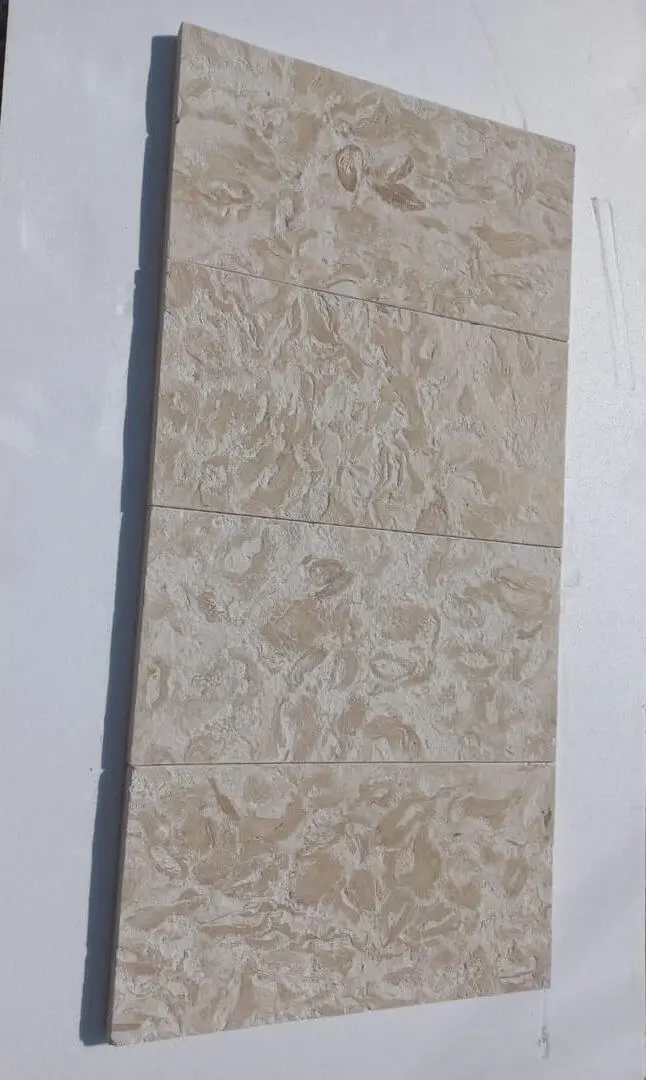
Natural stone lead times depend heavily on whether the material is in warehouse stock or requires quarry sourcing. Common granites and limestones in standard finishes are typically available from warehouse inventory on short notice. Specialty stones — rare marble varieties, specific travertine grades, large-format custom cuts — may require 8–12 week lead times from quarry to site. Citadel Stone maintains national warehouse inventory across a broad natural stone range, which reduces those lead times significantly for most standard applications. Your project schedule should account for a truck delivery window, particularly for large-slab shipments requiring specialized handling equipment on site.
Cost, Lifecycle, and Value Analysis
Material cost comparisons between engineered and natural stone surfaces are frequently oversimplified. Engineered quartz countertop material costs typically run $60–$120 per square foot installed in standard residential specifications. Mid-tier natural stone surfaces — granite, limestone, some travertine grades — fall in the $55–$110 range installed, with premium varieties extending above that considerably. The material cost delta is narrower than most consumers expect.
Lifecycle cost is where natural stone’s long-term value proposition becomes clear. A properly sealed and maintained granite or limestone installation has a documented service life of 50–100 years in interior applications. Engineered quartz, depending on UV exposure and thermal cycling, typically carries manufacturer warranty coverage of 10–15 years — a meaningful gap when you’re specifying for a building with a multi-decade design horizon. Sealing costs factor into natural stone’s lifecycle calculation, but those costs are modest — biennial sealing for most interior stone surfaces runs $0.50–$1.50 per square foot when done as part of routine maintenance scheduling.
- Engineered quartz material + installation: $60–$120 per square foot (standard residential grade)
- Natural stone material + installation: $55–$110 per square foot mid-tier, higher for premium varieties
- Natural stone service life: 50–100 years with proper maintenance
- Engineered quartz service life: manufacturer warranty typically covers 10–15 years
- Sealing costs for natural stone: $0.50–$1.50 per square foot biannually
- Resale value: natural stone consistently outperforms engineered surfaces in appraisal impact
Making the Right Engineered vs Natural Stone Decision
The engineered vs natural stone decision ultimately comes down to matching material properties to application requirements — not brand preference or price point. For interior countertop and vanity applications with low UV exposure and hygiene as a priority, engineered surfaces offer genuine advantages. For architectural flooring, exterior surfaces, high-UV environments, and projects with 30-plus-year design horizons, natural stone delivers performance that manufactured alternatives cannot replicate at the structural and visual level.
Your specification process should start with the performance requirements — absorption tolerance, thermal exposure, structural loading, code compliance, and lifecycle expectation — and work backward to material selection, not forward from a finish sample. If you’re weighing stone veneer as part of the broader material palette for your project, manufactured vs natural stone veneer covers the vertical surface comparison in comparable depth — a useful reference when the engineered vs natural stone question extends beyond horizontal surfaces to cladding and facade applications. At Citadel Stone, we work with specifiers nationally to match the right natural stone product to the exact performance brief — from quarry sourcing and warehouse stock verification through delivery logistics and technical specification support. Interior designers frequently consult Citadel Stone when weighing the long-term performance of natural stone against engineered panels for countertop and vanity applications.