

What Makes Black Galaxy Granite Different From Other Dark Stones
Compressive strength ratings above 25,000 PSI put a black galaxy granite slab in a category that most dark-colored alternatives simply can’t reach — and that gap matters enormously once you start modeling load distribution across a large-format installation. The stone originates from a single quarry region in Andhra Pradesh, India, which is why its characteristic gold and bronze speckle pattern — caused by bronzite and enstatite mineral inclusions — remains so visually consistent from slab to slab. That geological specificity is both its greatest commercial asset and the first variable you need to manage during procurement.
The mineral matrix also produces a material with extremely low water absorption, typically below 0.2% by weight, which directly influences how you spec adhesives and sealers. Unlike sedimentary stones where porosity varies by formation layer, black galaxy granite behaves predictably across the full thickness of the slab — a quality that simplifies both your moisture management detailing and your long-term maintenance schedule.
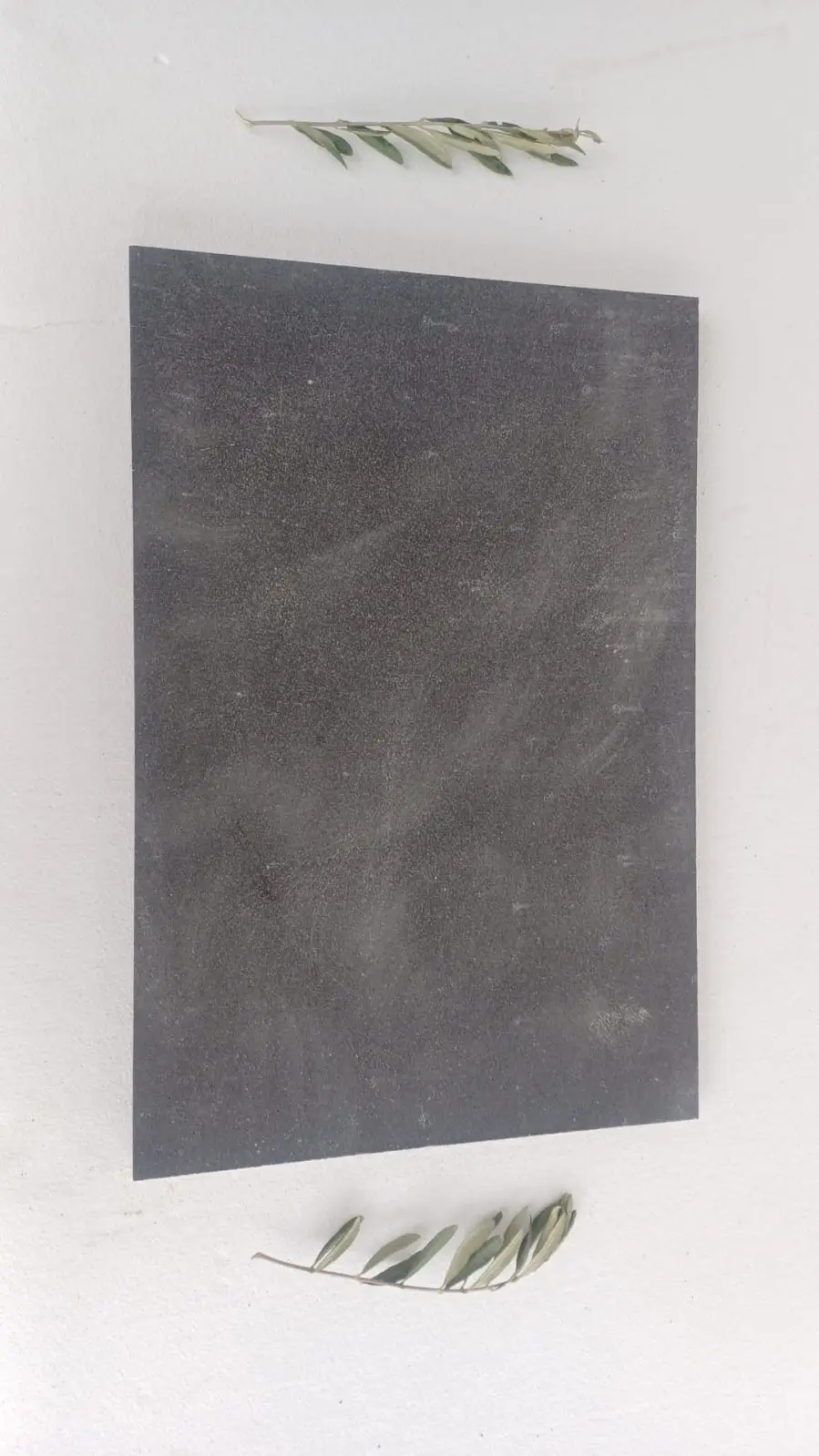
Slab Thickness and Structural Specifications You Need to Get Right
Your thickness selection is the single most consequential decision in any black galaxy granite slab project, and the margin for error is narrower than most specifiers expect. Standard slab thicknesses run at 18mm, 20mm, and 30mm nominal, but field-cut tolerances can introduce ±2mm variation — which means your substrate must compensate rather than the stone.
- 18mm slabs are suitable for interior wall cladding, countertop applications, and light-duty flooring with full-mortar bed support beneath
- 20mm nominal is the workhorse thickness for commercial flooring, exterior paving, and vanity tops where point load resistance matters
- 30mm slabs handle heavy-duty exterior applications, stair treads, and any installation where vehicular edge loads are possible
- For exterior installations, always verify actual received thickness against nominal spec — a 2mm shortfall at 30mm nominal changes your structural calculation meaningfully
- Slab dimensions typically arrive at 260cm × 160cm or 300cm × 200cm; plan your cut layout before the truck delivers to minimize waste and offcut cost
According to ASTM C615 granite dimension stone quality standards, granite used in dimension stone applications must meet minimum flexural strength and absorption thresholds that black galaxy granite consistently exceeds — so you’re working with a material that passes the toughest benchmarks in the specification toolkit.
Surface Finishes and Performance Trade-Offs
The polished finish is what most buyers associate with this stone, and for good reason — the mirror surface amplifies the gold speckle constellation against the deep black background in a way no other finish can replicate. That optical impact comes with a practical trade-off worth understanding before you commit your finish selection.
Polished surfaces on black granite slabs leave a closed, low-texture face, which is why they are not specified where the ANSI A326.3 minimum wet DCOF of 0.42 governs exterior and wet-area applications. Your finish decision, therefore, should be driven by application context first and aesthetics second.
- Polished: ideal for interior countertops, feature walls, and dry-area flooring — delivers the full visual impact of the speckle pattern
- Honed: matte surface with COF typically 0.55–0.65 wet, better suited to bathroom floors and entry areas with controlled foot traffic
- Flamed: thermal finish that opens the surface texture and raises COF above 0.70 — the right call for exterior paving in any climate zone that sees wet conditions regularly
- Leathered: brushed texture retains more of the polish-like sheen than honed while improving slip resistance — increasingly specified for kitchen countertops where both aesthetics and practicality matter
The Natural Stone Institute provides technical performance data confirming that igneous stone finishes meaningfully affect both granite durability and application suitability — particularly for exterior installations where surface texture intersects with drainage geometry and foot traffic load.
Installation Detailing for Large-Format Slabs
Large-format black galaxy granite slab installations introduce a set of challenges that don’t exist at smaller module sizes — and the most common source of cracking in these projects isn’t the stone itself, it’s the setting bed. Full-coverage epoxy adhesive or modified thin-set with back-buttering to 95% coverage is non-negotiable at slab sizes above 90cm × 90cm. Voids beneath the stone concentrate stress and create flex points that the material’s rigidity cannot accommodate.
Movement joint layout requires careful planning before any adhesive touches the substrate. Industry guidance calls for movement joints at 8–12 foot intervals in both directions for interior installations, but exterior applications in environments that see significant temperature swings demand tighter spacing — closer to 8 feet. Galaxy black granite’s thermal expansion coefficient runs around 4.7–8.0 × 10⁻⁶ per °F depending on mineral composition, which means a 10-foot run can expand by nearly 3mm across a 100°F temperature differential. Design that expansion out of the system rather than letting the grout joints absorb it.
- Always use a bond coat on both the substrate and the back of the slab — single-sided application fails at the bond line under thermal cycling
- Lippage tolerance for large-format granite is typically 1.5mm maximum across any 10-foot span — spec this explicitly in your installation scope
- Diagonal cuts and mitered edges require factory CNC work; field-cutting these profiles with a hand saw will introduce micro-fractures at the edge that become full cracks under load
- Allow 48–72 hours cure time before grouting — rushing this phase with large, heavy slabs creates the bond failures that surface 6–12 months into the installation
Storm Resistance, Mechanical Durability, and Edge Integrity
The mechanical properties of a black galaxy granite slab make it one of the more credible choices for exterior cladding and paving in regions that experience significant storm events. With a Mohs hardness rating of 6–7 and impact resistance well above sedimentary alternatives, the stone resists hail impact and wind-driven debris markedly better than limestone or travertine of equivalent thickness.
What the hardness rating doesn’t protect, though, is edge integrity under wind load cycling. Exterior cladding installations need positive mechanical anchorage — relying on adhesive bond alone exposes the installation to progressive failure when wind loads create repeated flex cycles at the panel edges. For horizontal paving installations exposed to wind-driven rain, joint integrity becomes the critical vulnerability. Unsanded or under-filled joints allow water infiltration under wind pressure, which then exerts hydraulic force on the bond line during the next wet-dry cycle.
- Specify edge restraints with mechanical fasteners rated for the wind load zone relevant to your project — adhesive-only restraint is a maintenance issue waiting to surface
- Wind-driven rain penetration into open grout joints can undermine the setting bed over multiple storm seasons — fill joints to full depth with appropriate polymer-modified grout
- For exposed exterior applications, a 30mm slab provides measurably better impact resistance against hail events than 18mm or 20mm nominal
- Inspect panel anchors and joint sealant annually on cladding installations — catch degrading sealant before the first major storm of the season creates a repair scenario
- The stone’s own density — typically 2.63–2.75 g/cm³ — adds useful dead load resistance to uplift forces on horizontal exterior paving, reducing panel movement risk in high-wind events
Beyond structural considerations, the flamed finish described earlier provides a surface texture that drains wind-driven rain more effectively than polished surfaces — a practical reason to favour texture over polish for any exterior application where wet conditions are part of the performance environment.
Comparing Black Granite Slabs to Alternative Dark Stones
Specifiers regularly reach for a black galaxy granite slab when a dark, high-gloss surface is the design brief, but it’s worth understanding where it sits relative to its closest competitors — because the right call isn’t always the most visually obvious one.
Absolute black granite produces a uniform jet-black surface without the speckle pattern. It’s the choice when you need a solid, unbroken black field — but its lower flexural strength compared to black galaxy granite makes it less suitable for cantilevered countertop overhangs beyond 10–12 inches. The mineral inclusions in galaxy black granite actually reinforce its flexural performance, which is a detail that often surprises specifiers who assume uniformity equals strength.
- Black limestone offers a softer aesthetic but carries significantly higher porosity (3–8% absorption versus 0.2% for granite) — sealing requirements are substantially more demanding and ongoing
- Black slate delivers natural cleft texture with good slip resistance but limited compressive strength, making it unsuitable for heavy-traffic commercial flooring
- Black basalt offers similar hardness but with a finer-grained structure — it lacks the speckle visual character that makes black granite slabs architecturally distinctive
- For applications where the speckle pattern is not the point, absolute black granite may be the cleaner specification — but where depth and movement in the stone surface matter, black galaxy granite consistently outperforms on visual impact
To see how other dark-toned igneous and dense stone options compare within a broader supply context, our black granite range covers the specification parameters across multiple dark stone categories in detail.
Procurement, Logistics, and Lead-Time Planning
The single-source quarry origin of this material creates a supply dynamic that doesn’t apply to stones with multiple production regions. Warehouse stock levels for black galaxy granite slab can fluctuate significantly around major Indian export periods and monsoon-season quarry closures — which means your project timeline needs to account for a procurement window, not just a delivery window.
Book confirmed quantities against warehouse stock at least 8–10 weeks before your installation start date for large commercial projects. For residential projects, 4–6 weeks is typically sufficient when the supplier holds standing domestic inventory. At Citadel Stone, we maintain confirmed warehouse stock across a range of slab sizes and thicknesses, which reduces the lead time exposure that comes with direct import ordering on a per-project basis.
- Confirm slab availability by lot number — not just by product SKU — to ensure consistent speckle density and background color across your full project quantity
- Request sample slabs from the same lot before approving your full order; cross-lot variation in this material is real and visible under direct lighting
- Factor truck access into your delivery planning — full granite slabs on a pallet require a flat-bed truck with forklift capability at the delivery point; residential sites often need a crane tail-lift truck if forklift access isn’t available
- Inspect every slab on delivery before signing the freight note — hidden corner chips and stress fractures can develop during transit and are far easier to resolve before installation begins
- Order a minimum 10% overage on your calculated quantity to cover cut waste, breakage, and future repair stock
Citadel Stone’s national supply network means truck delivery reaches most major metro areas within standard lead times, which is a practical advantage for projects where material delays create downstream scheduling pressure on other trades.

Sealing, Maintenance, and Long-Term Performance Expectations
Black galaxy granite slab is one of the lower-maintenance natural stones in the specification toolkit, but “lower maintenance” isn’t the same as “no maintenance” — and setting that expectation accurately with clients or end users prevents the dissatisfaction that comes from unrealistic assumptions.
The stone’s absorption rate below 0.2% means it resists staining with far greater effectiveness than porous sedimentary stones, but polished surfaces are still vulnerable to etching from acidic substances — citrus, vinegar-based cleaners, and even some grout residues. In countertop applications, a penetrating impregnating sealer applied at installation and refreshed every 3–5 years is the correct protocol. Topical sealers trap moisture and eventually yellow on dark stones — avoid them.
- Use only pH-neutral stone cleaners for routine maintenance — alkaline or acidic products will progressively dull the polished surface
- Re-polish small surface scratches using a granite polishing compound rated for dark stones; test on an inconspicuous area first
- For exterior applications, inspect grout and sealant joints annually — joint failure is the primary maintenance trigger on exterior installations, not the stone itself
- Thermal shock from power-washing hot stone with cold water can stress the surface at the mineral grain boundaries — allow the surface to cool before washing, or use a low-pressure warm rinse
- In freeze-thaw regions, the stone’s low absorption rate works strongly in its favour — water infiltration into the matrix is minimal, which means spalling risk is negligible compared to higher-porosity alternatives
According to USGS granite production and construction use data, granite dimension stone consistently demonstrates the longest service life of any natural paving and cladding category — a direct result of the low absorption and high compressive strength characteristics that define this material class.
Getting Black Galaxy Granite Slab Specifications Right
A successful black galaxy granite slab specification comes down to a sequence of decisions — thickness matched to structural load, finish matched to application context, lot selection managed before delivery, and installation detailing that respects the material’s thermal behavior. The stone itself is genuinely exceptional in its performance class, but the installation conditions around it determine whether that performance is realised over 20 years or compromised within five.
Your procurement process deserves as much rigor as your technical specification. Confirm lot numbers, inspect slab-by-slab on delivery, plan your truck access and unloading logistics before the delivery date, and build overage into your quantity from the start. Projects that skip these steps don’t fail because of the stone — they fail because the stone wasn’t managed correctly from the point of purchase through to cure. For a broader perspective on how natural stone geology influences material performance decisions, exploring how rock type shapes stone performance offers useful context on why igneous, sedimentary, and metamorphic stones behave differently across the same installation conditions. Direct from quarries in Turkey, the Mediterranean, and beyond, Citadel Stone inspects each black galaxy granite slab for consistent speckle density.
Related reading: black limestone shower · Black Limestone Fireplace Ideas: Heat, Style & Finish · black countertops.