

What Black Limestone Countertops Actually Cost
Black limestone countertops carry a price range that surprises most buyers — not because the material is expensive, but because the spread is wide. You’re looking at roughly $55 to $140 per square foot installed, depending on slab thickness, finish type, edge profile complexity, and how far the stone travels from the warehouse to your fabrication shop. Honed finishes, which are by far the most popular for black limestone countertops, sit toward the lower end of that range because they require less machine time than a full polish. Leathered and brushed finishes add $8 to $15 per square foot on average.
The thickness question matters more than most homeowners realize. Standard 3/4-inch (20mm) slabs work fine for most residential countertop applications, but if you’re specifying an island overhang beyond 12 inches without a support bracket, you’ll want 1.25-inch (30mm) material. That extra thickness bumps your material cost by 20 to 30 percent but saves you from a cracked slab and an expensive remediation job. Fabricators rarely volunteer this detail upfront.
Seam placement and layout efficiency also drive costs in ways the per-square-foot price doesn’t capture. Black limestone’s distinctive veining and color variation mean a skilled fabricator will prioritize book-matching or flow-matching at seams, which increases material waste. Budget for 15 to 20 percent overage on slabs — tighter than granite but more than engineered stone.
Material Properties That Define Performance
Black limestone countertops are sedimentary stone, which means their performance profile differs fundamentally from igneous alternatives like granite. According to NSI limestone technical properties, limestone sits in the 3 to 4 range on the Mohs hardness scale — softer than granite (6 to 7) but adequate for countertop use when the surface is properly sealed and maintained. The real performance story is in the porosity. Black limestone typically shows water absorption rates between 0.5 and 2.5 percent by weight, depending on origin and density. Dense varieties from Belgium and the Middle East trend toward the lower end; lighter material from some Mediterranean sources can absorb more.
That porosity range directly determines your sealing schedule, your finish choice, and your long-term maintenance burden. A stone absorbing less than 1 percent is genuinely low-maintenance with annual resealing. One absorbing 2 percent or more needs sealing every six months in a busy kitchen — and will show etching from acidic foods faster than the specification sheet implies. The standard water-drop absorption test you can do yourself in 10 minutes tells you more than the supplier’s data sheet in most cases.
Compressive strength for quality black limestone typically runs between 8,000 and 14,000 PSI — more than adequate for countertop loading but worth knowing if you’re specifying it for a commercial prep area with heavy equipment. USGS limestone composition and construction data confirms that the calcium carbonate matrix governing these properties varies significantly by quarry geology, which is why sourcing consistency matters as much as the species name.
Honed vs. Polished vs. Leathered Finishes
Your finish choice affects more than aesthetics — it changes the stone’s daily performance in measurable ways. Honed black limestone produces a matte, velvety surface that absorbs slightly more than polished because the pore structure remains more open. It’s more forgiving of water spots and fingerprints, which makes it the practical choice for kitchens that actually get used. Polished finishes close the surface more tightly, reducing absorption by 15 to 25 percent depending on stone density, but they amplify every scratch, watermark, and dull spot from acidic contact.
Leathered finishes occupy a genuinely useful middle ground. The brushing process closes some surface pores while leaving textural relief that hides minor scratches and daily wear far better than either honed or polished. For a kitchen island or butler’s pantry, the leathered finish consistently outperforms the alternatives on long-term appearance retention.
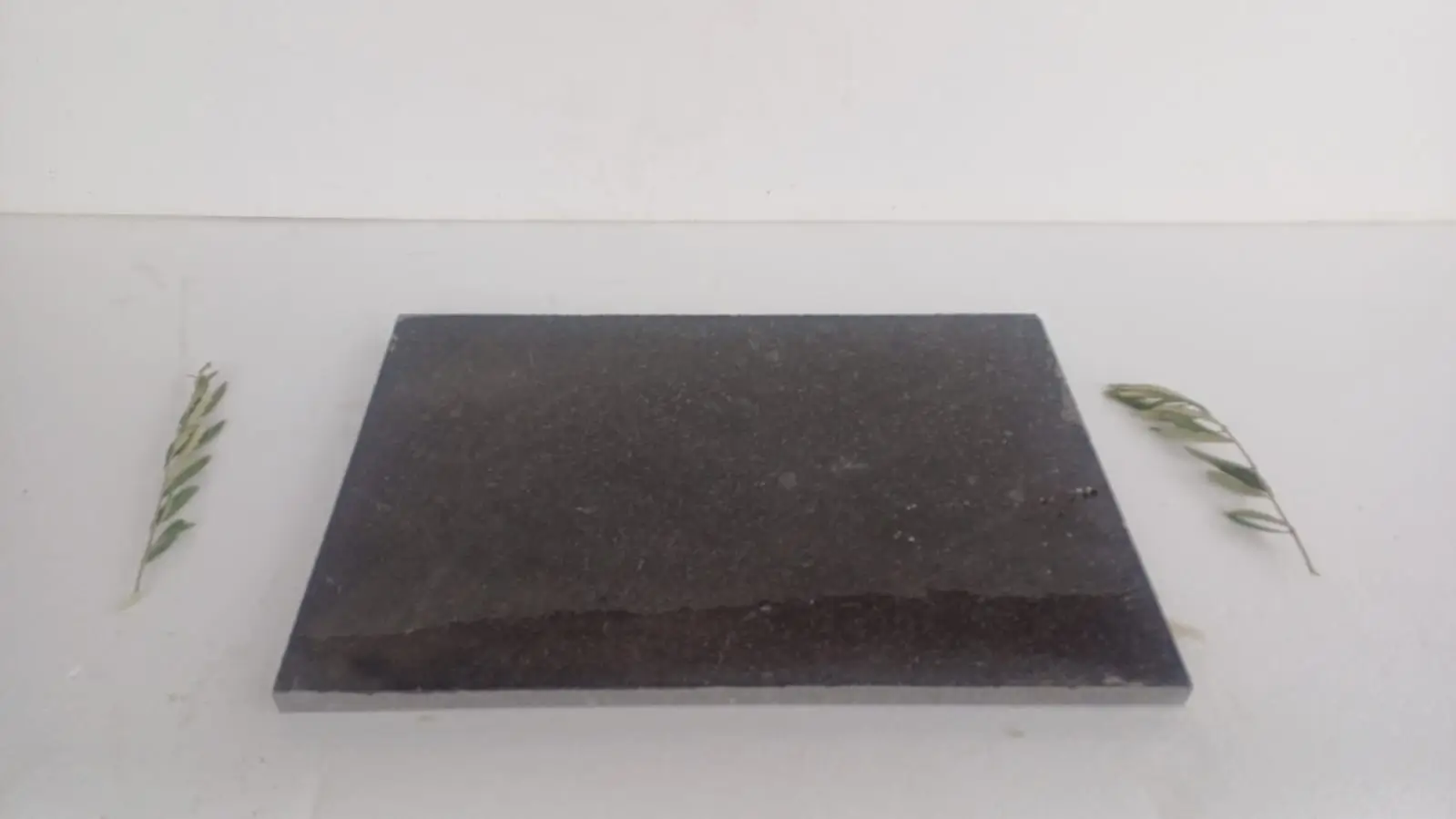
Black marble texture comparisons come up often in client conversations, and the distinction is worth making clearly: limestone lacks the distinct crystalline veining of marble, which is a metamorphic rock. Black limestone’s patterning is more subtle — often showing fossil traces, faint grey undertones, or tonal variation across the slab rather than the dramatic white veining most people associate with black marble texture. If the dramatic vein is the design goal, that’s a different specification decision entirely.
Sun Exposure and UV Effects on Countertop Stone
Countertop applications near large windows or skylights introduce a variable that indoor stone specs rarely address: sustained UV exposure. Black limestone countertops in direct sunlight for several hours daily can experience gradual surface oxidation and color shift over a period of years. The dark pigmentation — derived from carbon-based organic inclusions and iron compounds in the stone’s matrix — reacts differently to UV radiation than the calcium carbonate base. In practical terms, you may notice a slight brownish or greyish cast developing in the most sun-exposed sections of a slab, while areas under cabinet shadow retain the original deep black tone.
Finish selection is your most effective tool against this. Penetrating sealers with UV-inhibitor chemistry slow the oxidation process considerably compared to standard impregnating sealers. Several professional-grade products on the market now include UV stabilizers formulated specifically for dark sedimentary stone. At Citadel Stone, we recommend discussing finish and sealer options with your fabricator before the slab leaves the shop — the sealer applied at the fabrication stage is your first line of defense, not an afterthought. Reapplication on high-UV surfaces should follow an annual schedule rather than the standard biennial cycle recommended for interior applications away from direct light.
Explore our natural black limestone range to review available slab densities, finishes, and thickness options before your fabricator begins templating.
How Black Limestone Compares to Black Granite Countertops
The comparison between black limestone countertops and black granite countertops comes up in nearly every specification conversation, and it deserves a direct answer. Black granite countertops — including true granite varieties like Absolute Black and Black Galaxy — are harder, less porous, and more resistant to acidic etching than limestone. For a kitchen with heavy cooking use, raw meat prep, and citrus contact, black granite countertops offer a meaningful durability advantage that no amount of sealing fully closes.
That said, black limestone offers something black granite countertops typically don’t: a warmer, more organic visual character. The tonal depth in quality black limestone reads differently under lighting than the uniform flatness of Absolute Black granite. Design-focused projects where the stone is a statement material — a primary bathroom vanity, a wine room feature counter, a butler’s pantry — often specify black limestone precisely because it doesn’t look like engineered stone or basic granite. The trade-off is higher maintenance, not lower performance.
- Black granite countertops rate 6–7 on Mohs scale; black limestone rates 3–4 — relevant for knife-contact areas
- Black granite’s near-zero porosity means no etching from acids; limestone requires sealer protection against citrus and vinegar
- Limestone’s weight runs slightly lighter per square foot than dense granite — helpful for islands on upper floors
- Black granite countertops typically offer more slab consistency lot-to-lot; limestone shows more natural variation between slabs
- Fabrication costs are comparable; edge profiles on limestone require slightly more care to avoid chipping at corners
Black Countertops in Kitchen Design
The broader category of black countertops spans materials with very different performance profiles — limestone, granite, soapstone, quartzite, and engineered quartz. Understanding where black limestone sits in that group helps you advise clients accurately. Soapstone is softer and develops a patina over time; quartzite is harder than limestone and more acid-resistant; engineered quartz offers near-zero maintenance but lacks the natural stone character.
Black limestone’s niche in the black countertops market is the middle zone: more character than engineered stone, more maintenance than granite, better value than premium quartzite. Kitchen designers consistently pair it with white oak cabinetry, raw brass hardware, and plaster walls — a combination where limestone’s matte depth reads as intentional warmth rather than high-gloss drama. The honed surface doesn’t fight for attention with other design elements, which is a genuine specification advantage in complex kitchen compositions.
Installation Requirements and Substrate Prep
Substrate preparation for black limestone countertops follows the same core requirements as any natural stone installation, but a few details specific to limestone deserve attention. Cabinet levelness tolerance is tighter than it is for engineered stone — limestone is less flexible, and a cabinet run that varies more than 1/8 inch over 10 feet will create stress concentrations at seams that show up as hairline cracks within the first year. Shim every cabinet run to within 1/16 inch before the fabricator templates. This is not a step to negotiate away.
Support under cutouts — sink openings, cooktop cutouts, farmhouse apron fronts — requires a continuous substrate or visible bridging structure beneath the stone. The standard rule is that no unsupported span should exceed 24 inches in 3/4-inch limestone. For thinner material or spans approaching 30 inches, either increase thickness to 1.25 inches or add a plywood substrate with full coverage. Undermount sinks create a long, unsupported front edge that most installers mitigate with a thin hidden support clip system — specify this in writing before installation begins.
- Verify cabinet levelness to 1/16-inch tolerance before template day — fabricators should not inherit substrate problems
- Specify undermount sink clip systems in writing; do not assume this is included in standard installation pricing
- All cutout edges should be reinforced — ask your fabricator about rodding or epoxy reinforcement at sink corners
- Caulk at all seams and wall joints using a silicone product color-matched to the stone — never grout these joints
- Allow 24 hours before placing heavy objects on the countertop after installation
Sealing Schedule and Daily Care
The sealing conversation is where most black limestone countertop installations succeed or fail in the long run. The stone leaves the warehouse sealed — typically with a penetrating impregnator applied during fabrication — but that initial seal is a starting point, not a long-term solution. Your ongoing sealing schedule depends on your stone’s specific absorption rate and your installation’s daily use pattern.
For typical kitchen installations with moderate use, a quality penetrating sealer reapplied annually keeps black limestone performing well. High-use kitchens, homes with children, and any surface near a window receiving direct afternoon sun warrant a six-month cycle. Britannica’s limestone composition overview notes that calcium carbonate surfaces react readily with acids — this is the chemistry behind etching, and it’s irreversible without mechanical refinishing. Sealing slows acid penetration but doesn’t prevent etching entirely; it buys you reaction time to wipe up spills before damage sets in.
Daily care is straightforward: pH-neutral stone cleaner or plain warm water, soft microfiber cloth, no abrasive scrubbers. The products to avoid are the ones most people already have under their kitchen sink — bleach-based cleaners, citrus degreasers, and vinegar-based sprays all etch limestone on contact. Draft a short maintenance sheet for clients at handover; the ones who receive one are the ones who don’t call you six months later with etching complaints.
Identifying and Addressing Etching Early
Etching shows as a dull, lighter-toned mark on a honed surface — most visible in raking light from a window or pendant fixture. On polished limestone, the contrast is even sharper. Early-stage etching caught within the first six months can often be addressed with a marble and limestone etch remover product applied by hand; the abrasive chemistry re-hones the surface at a microscopic level. Deeper etching from prolonged acid contact or ignored spills requires professional re-honing with progressively finer diamond abrasives — a cost that typically runs $8 to $15 per square foot for the affected area.
The practical message for clients: act within 30 seconds, not 30 minutes. A lemon wedge sitting in a water ring for an hour on honed black limestone will produce a visible etch ring. The same lemon sitting for 10 seconds and wiped immediately leaves no mark. Limestone rewards attentive care and punishes neglect more visibly than most countertop materials — that’s an honest trade-off worth stating clearly before the sale.
Ordering, Logistics, and Project Timelines
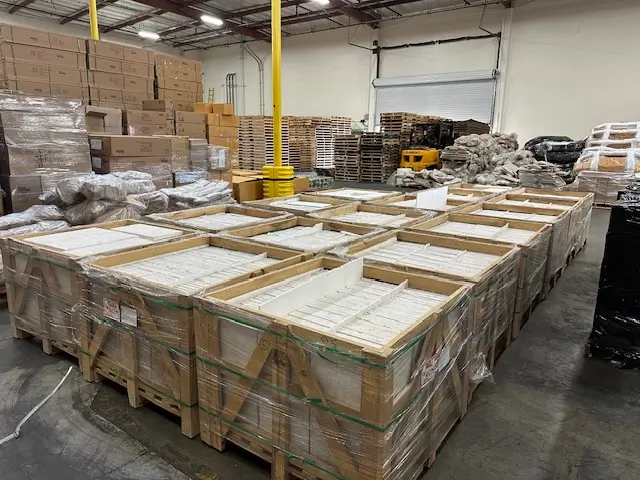
Planning your black limestone countertop project requires accounting for the full supply chain, not just fabrication time. Slab availability varies considerably by material origin and current demand. Dense black varieties from Belgian and Middle Eastern quarries typically move through warehouse inventory faster than lighter Mediterranean options because of sustained specification demand in contemporary kitchen design. Checking warehouse stock levels before finalizing your project schedule is a step that pays for itself in avoided delays.
Standard project flow runs roughly as follows: slab selection and reservation (1 to 3 days), cabinet installation and levelness verification (variable), template day (1 day), fabrication (5 to 10 business days), and installation (1 day for most residential jobs). Total elapsed time from slab selection to installed countertop runs 3 to 4 weeks under normal conditions. Projects specifying rare or oversized slabs that require truck freight from a remote warehouse location should add 1 to 2 weeks for logistics. Communicate these timelines to clients early — kitchen renovations stall painfully when countertop delivery is the critical path item.
Citadel Stone maintains consistent warehouse stock of black limestone slabs in standard residential thicknesses, which means most projects can move from selection to fabrication without the extended import lead times that affect special-order materials. For larger commercial projects or unusual format requests, our technical team advises verifying stock before finalizing specifications.
Getting Black Limestone Countertop Specifications Right
Black limestone countertops reward careful specification and honest client communication more than almost any other natural stone product in the residential market. The material performs beautifully when the installation variables are controlled — substrate levelness, appropriate thickness for spans and cutouts, a realistic sealing commitment, and a daily care protocol that respects the stone’s chemistry. Cut corners on any of those, and the material’s sensitivity becomes the story instead of its character. The cost and care questions this article addresses are the ones that separate a successful long-term installation from a dissatisfied client two years out.
As you complete your countertop specification, natural stone’s versatility in other interior applications is worth exploring. black limestone fireplace design ideas shows how the same material transitions from horizontal work surfaces to vertical statement features, which can help you coordinate a cohesive stone specification across multiple elements in one project. Sourced from quarries across the Mediterranean and Middle East, Citadel Stone black limestone countertops arrive with consistent honed surfaces.
Related reading: does black limestone fade · black limestone sealer · granite slabs.