

Your Finish Choice Determines Everything About Black Limestone Fireplace Ideas
Black limestone fireplace ideas live or die on finish selection — and this is the decision most designers rush past. The same slab in a honed finish versus a leathered one behaves completely differently under radiant heat, shows contrast differently against mortar joints, and demands a different maintenance approach over time. Your surround’s long-term performance starts here, not with the stone selection itself.
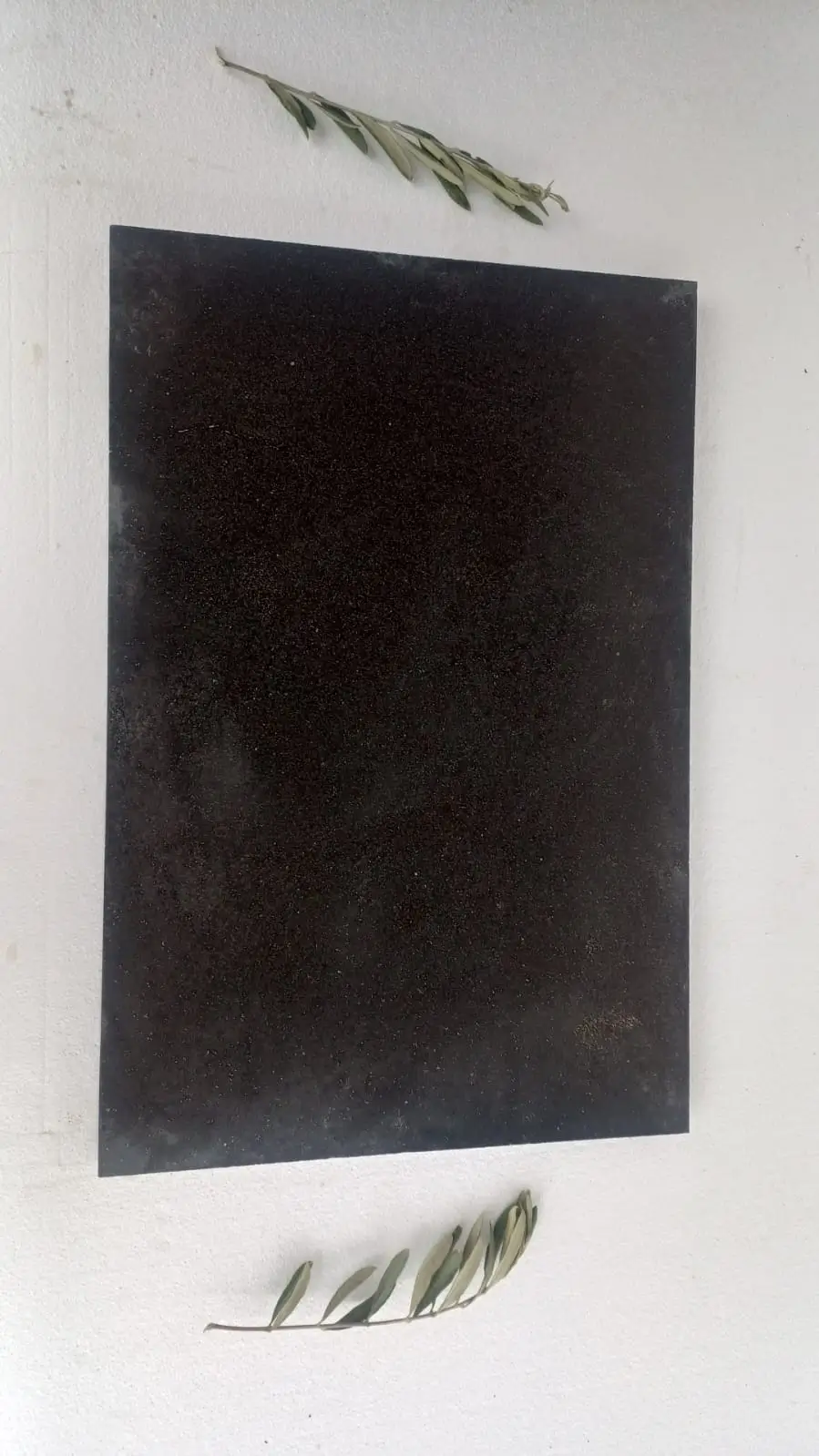
Honed Black Limestone: The Clean, Flat-Matte Approach
Honed black limestone delivers a flat, matte surface that absorbs light rather than reflecting it — which is exactly why it reads so dramatically around a firebox opening. The depth of colour is maximised when the surface is cut smooth without polishing to a gloss. The stone appears almost charcoal in low ambient light and shifts toward a truer black when heat and moisture interact with the surface.
Thermal cycling from the firebox doesn’t distort a honed finish the way it can stress a polished one. According to NSI limestone performance data, honed limestone maintains dimensional stability across repeated heat exposure cycles better than many alternative stone types, making it a logical specification for surround applications. Mortar selection still matters — a white or cream-tone mortar against honed black limestone creates a grid pattern that competes with the stone, while a charcoal or anthracite grout lets the material read as a continuous field.
Leathered and Brushed Finishes for Texture
The leathered finish has overtaken polished options as the specification of choice for contemporary black limestone fireplace surrounds, and for good reason. Brushing the surface opens the stone’s natural pore structure slightly, creating a tactile texture that catches raking light and reveals the material’s internal variation in ways a flat honed finish won’t.
- Leathered surfaces hide fingerprints, dust, and minor soiling far better than polished alternatives — a practical advantage in living spaces
- The texture diffuses glare from firelight rather than reflecting it, creating a warmer visual effect at night
- Micro-relief in a brushed surface gives installers a more forgiving adhesion profile when bedding into setting mortar
- Leathered black limestone requires resealing every 18–24 months rather than the 36-month cycle common for honed surfaces
The distinction between leathered black limestone and a leather finish black granite is worth spelling out clearly. Granite’s harder crystalline structure produces a more dramatic texture variation under the leather process, with visible mica and feldspar flashing. Black limestone’s leathered surface is more uniform and matte — a quieter, more architectural result that suits traditional and transitional fireplace styles equally well. A leather finish black granite will flash more aggressively under firelight, which suits some design briefs but competes with the restrained character black limestone delivers.
Surround Design: Proportions, Projections, and Material Thickness
Black limestone fireplace surround design rewards proportion discipline. The surround’s leg width relative to the firebox opening follows a ratio that most experienced specifiers hold at roughly 1:4 to 1:5 — meaning leg width should land between one-quarter and one-fifth of the opening width. Narrower than that and the surround looks strapped; wider and it dominates the room rather than framing the fire.
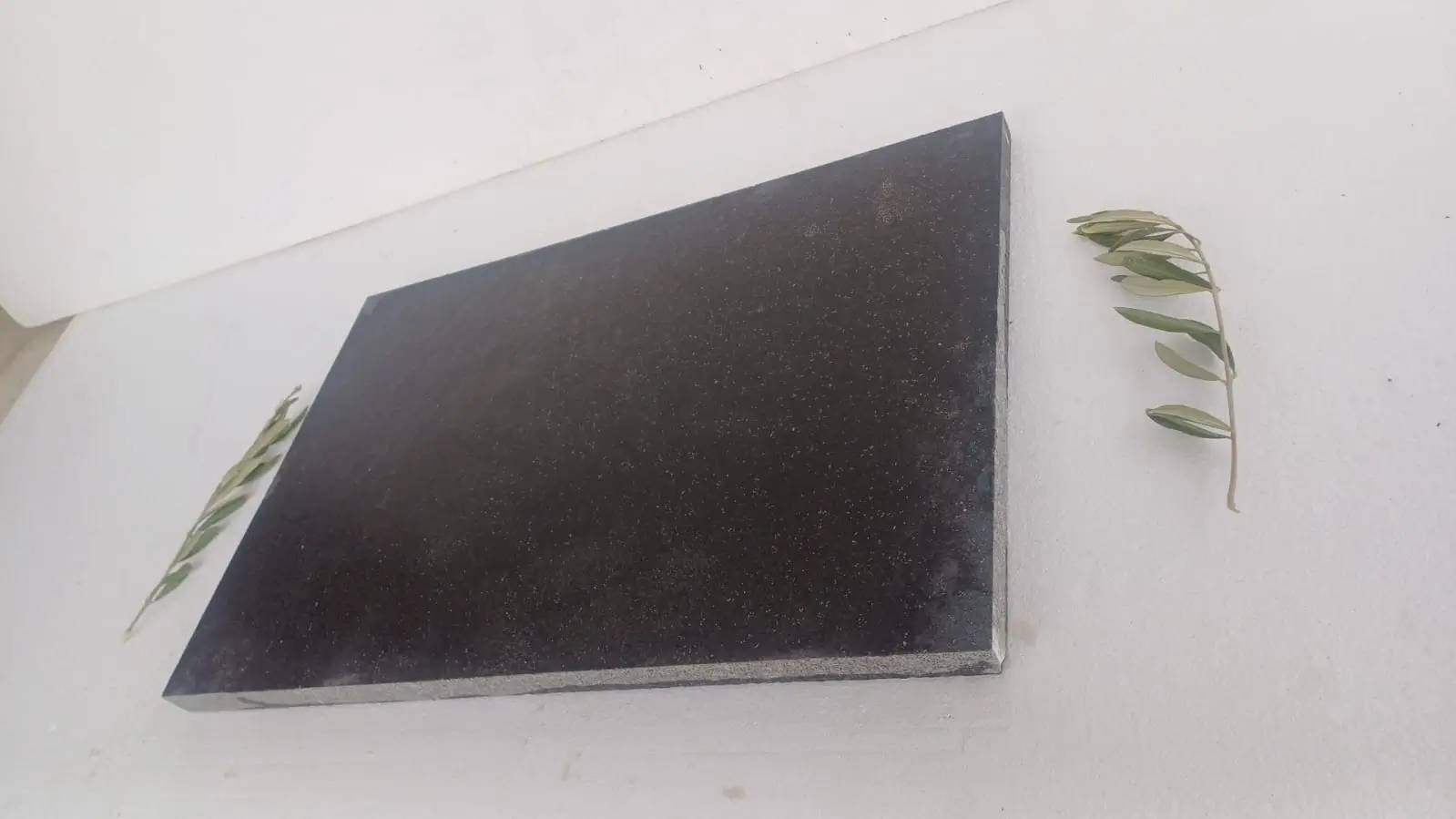
Material thickness for fireplace surround components should be specified at a minimum of 30mm for hearth slabs carrying foot traffic load, and 20mm for surround legs and the header. Thinner profiles are available in black limestone and can work for feature panel applications, but they’ll require mechanical fixing rather than adhesive-only installation — especially for pieces over 600mm in any single dimension. The installer needs to know the substrate type before committing to a fixing method.
Building Code Considerations for Stone Fireplace Surrounds
Here’s a detail that catches projects off guard: in most jurisdictions, the masonry or stone elements around a fireplace are subject to the same load-path review as any structural wall component if the surround is load-bearing. The International Building Code Chapter 21 governs natural stone masonry and veneer installation, and the authority having jurisdiction may require documentation of stone compressive strength — typically a minimum of 1,800 PSI for dimension stone veneer applications.
- Non-combustible clearance requirements apply to the stone itself — black limestone qualifies as non-combustible, but adhesive and substrate board selections must also meet code
- Hearth extension dimensions are code-regulated: the hearth must project at least 16 inches from the firebox opening for openings under 6 square feet, and 20 inches for larger openings
- Substrate board behind stone veneer must be a cementitious backer rated for the application — standard drywall is not permitted behind stone fireplace surrounds under most residential codes
- In seismic design categories D and above, mechanical anchoring of stone surround panels is typically required in addition to adhesive bedding
Checking these requirements before ordering material protects the project from costly rework. Citadel Stone’s technical team can provide material data sheets with compressive strength and absorption values for code submission — that documentation is something to confirm before stone ships from the warehouse.
Mixing Stone Types: Black Limestone and Complementary Materials
Introducing a second stone into a fireplace design — an inlay strip, a contrasting hearth slab, or a mantel shelf in a different material — amplifies the drama of black limestone when the pairing is chosen deliberately. Black and yellow marble as an inlay detail against a black limestone field surround is a pairing that reads as genuinely bold, with the ochre and cream movement of the marble providing warmth that counterbalances the cool austerity of the black ground. Black and yellow marble works particularly well when the limestone is leathered, since both surfaces share a similar matte quality that unifies the composition.
The practical challenge with mixed-stone designs is managing thickness tolerances. Black limestone and marble don’t always finish to identical thicknesses from different quarry batches, and a 1–2mm height differential at a flush joint is visible and tactile. Specify both materials at the same nominal thickness and request pre-installation thickness checks before the installer commits to setting mortar. This is especially relevant if the two materials are arriving from different suppliers or warehouse locations.
How Black Limestone Handles Radiant Heat
Understanding how a firebox transfers heat to surrounding stone matters for both aesthetics and longevity. A fireplace surround is exposed primarily to radiant heat — infrared energy travelling through air — not direct conductive flame contact. Black limestone’s thermal conductivity sits in the range of 1.3–2.1 W/m·K depending on density and pore structure, which means it absorbs and re-radiates heat steadily rather than spiking to surface temperatures that stress the material.
The absorption characteristic that makes black limestone a reliable thermal performer also means the surface will feel noticeably warm to the touch during extended fire use. That’s not a defect — it’s the stone’s mass doing exactly what is intended. What to avoid is directing a cold air return or HVAC vent directly at a heated black limestone surround panel; rapid thermal differential across a stone surface is where micro-cracking originates. According to USGS limestone composition data, limestone’s calcium carbonate matrix responds to thermal stress at significantly lower thresholds than igneous alternatives, which reinforces the importance of gradual, even heat exposure in fireplace applications.
For those exploring our black natural limestone paving as a complementary hearth or transition floor material adjacent to the fireplace, the same thermal stability principles apply — consistent gradients protect the material’s long-term integrity.
Sealing Protocols for Black Limestone Fireplace Applications
Black limestone is a porous sedimentary stone, and sealing it correctly before the fireplace goes into use is not optional — it’s the single maintenance step that separates a 25-year surround from a 10-year one. A penetrating impregnating sealer rated for natural limestone should be applied to all exposed surfaces before grouting, allowed to cure fully, and then reapplied after the initial grout cure.
- Use a solvent-based impregnating sealer for black limestone fireplace applications — water-based sealers offer adequate protection for flooring contexts but penetrate less effectively in dense fireplace-adjacent heat zones
- Apply sealer to the back face of hearth slabs before bedding — this prevents moisture wicking from the screed from migrating through the stone and appearing as efflorescence on the face
- Test sealer coverage with a water-drop test: water should bead within 5 minutes on a correctly sealed surface; if it absorbs, apply a second coat before proceeding
- Avoid silicone-based topical sealers near active fireplaces — heat degrades the silicone layer and can cause a surface haze that is difficult to remove from a dark stone
The Britannica overview of limestone characteristics confirms the stone’s open pore interconnection at a structural level — which is exactly why penetrating sealer chemistry is the right approach rather than a topical barrier coat.
Getting Black Limestone Fireplace Specifications Right
Black limestone fireplace ideas succeed when three things are nailed: finish selection matched to the room’s light conditions, stone thickness appropriate to each element’s structural role, and a sealing protocol that treats the material’s porosity seriously before it’s ever exposed to heat. The design ideas — leathered field surrounds, contrasting inlays, bold hearth slabs — are genuinely compelling, but they only deliver long-term if the specification behind them is sound. As a project moves from design to procurement, confirm code clearance requirements and material data sheets early, and verify warehouse availability before locking in a programme timeline. If the fireplace project opens a wider interest in black stone applications throughout the home, it’s worth exploring how black limestone in wet room design extends the material’s visual language into a completely different environment. Radiant heat from a firebox affects stone differently than direct flame, and Citadel Stone’s black limestone is generally selected for its stable thermal behaviour.
Related reading: black limestone sealer · Black Limestone Restorer Guide: Revive Dull Slabs · black limestone vs black granite.