

Why Finish Selection Defines Your Black Limestone Shower Design
Black limestone shower ideas live or die on the finish decision — and that choice goes far deeper than aesthetics. Honed finishes open the stone’s micro-texture just enough to deliver a static coefficient of friction above 0.60 wet, which meets the threshold most building officials reference during residential wet-room inspections. Polished black limestone reads dramatic under recessed lighting, but you’re accepting a surface that demands more aggressive slip-resistance measures and more frequent sealing cycles. Your design intent and your safety obligation have to be reconciled before tile is ever ordered.
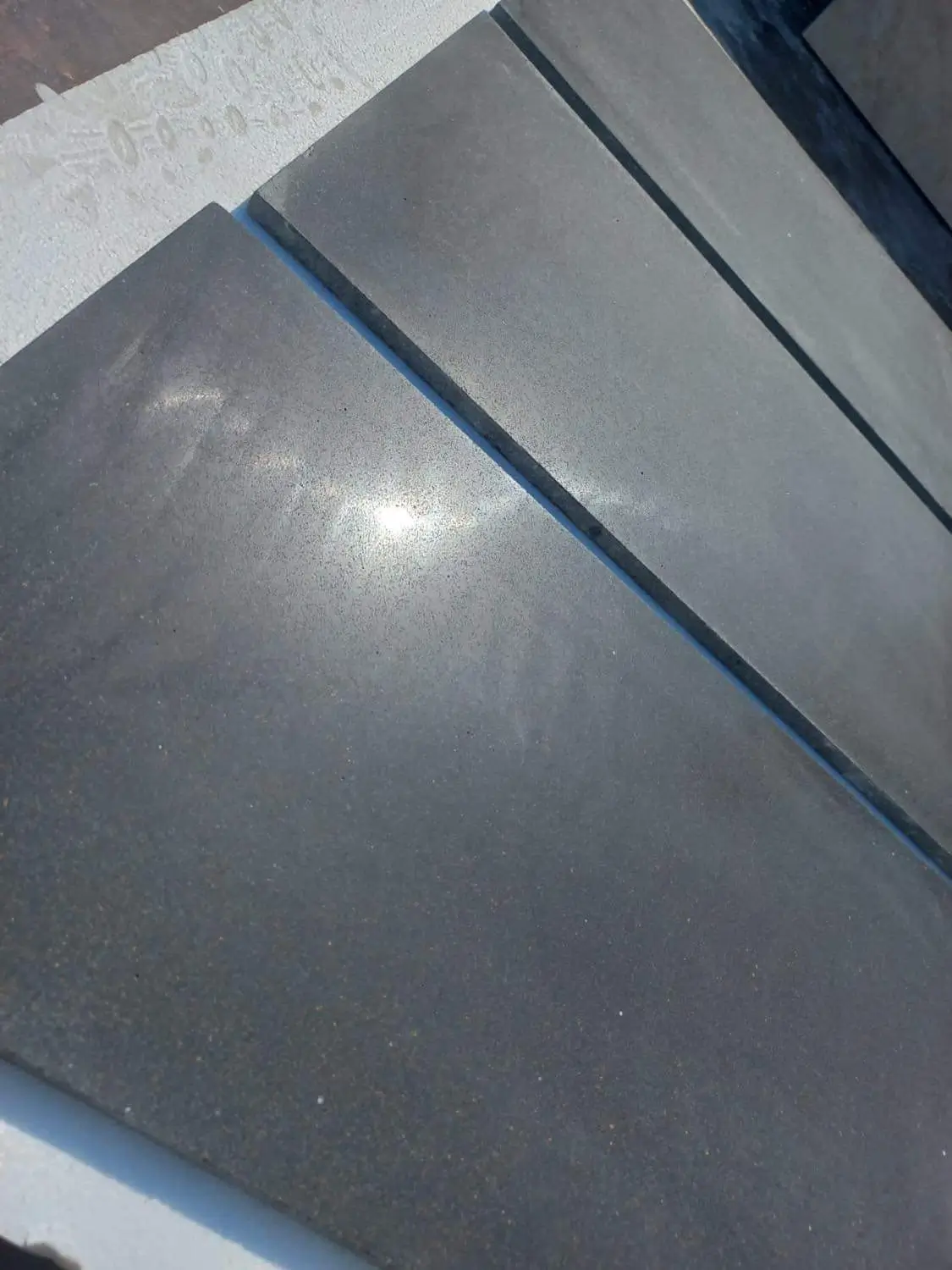
Bold Design Directions for the Black Limestone Shower
The strongest black limestone shower ideas share one trait — they commit fully to contrast. Pairing floor-to-ceiling black limestone wall panels with a single white grout line creates a grid effect that reads as architectural rather than simply decorative. Alternatively, you can push in the opposite direction: use wide-format slabs with near-invisible epoxy grout joints to achieve a monolithic look that makes the shower feel like a carved room rather than a tiled enclosure.
Here’s what most designers overlook when planning these spaces: black limestone’s natural variation — the silver fossil veining, the subtle grey cloud formations within the matrix — does the visual work for you. You don’t need pattern to create interest. Consistent, large-format black limestone shower wall and floor use lets that inherent character breathe. Consider a 24×24-inch format on walls with a 12×24 running bond on the floor — the directional shift subtly separates the planes while keeping the palette unified.
- Honed or brushed finish for floors — both deliver texture and genuine wet-surface grip
- Polished finish reserved for accent niches or dry vertical panels where slip risk is zero
- Natural vein variation means each tile reads differently — embrace sequencing, don’t fight it
- Warm brass or matte black fixtures amplify the stone’s depth rather than competing with it
- Open linear drains complement large-format slabs by eliminating the visual clutter of point drains
How Lighting Changes Black Limestone’s Character
Lighting strategy in a black limestone shower isn’t a finishing detail — it’s a core specification decision. Recessed warm-white LED fixtures at a 2700–3000K colour temperature pull the grey undertones forward, warming the overall palette and making the space feel enclosing in a luxurious rather than claustrophobic way. Cool-white fixtures above 4000K do the opposite: they blue-shift the stone, sharpening the contrast between the black field and any silver veining, which reads as more contemporary and harder-edged.
According to NSI limestone properties and surface characteristics, honed limestone surfaces diffuse light rather than reflecting it directionally — this matters because it means your shower’s mood changes less dramatically with lighting angle than a polished granite would. That diffuse quality is actually a design asset in a wet room, where you want consistent, calm visual depth rather than hot spots and glare.
Slip Resistance, Wet-Room Code, and What Inspectors Check
Your black limestone shower floor specification needs to satisfy both aesthetic goals and the technical requirements your jurisdiction enforces. Most residential building codes reference ANSI A326.3 or the IBC’s wet-surface friction thresholds when inspecting shower installations — a Dynamic Coefficient of Friction (DCOF) of 0.42 or higher is the current benchmark for wet, level floors. Whether a honed black limestone meets that benchmark depends on the finish and the batch; polished material typically does not without an applied anti-slip treatment. Request the wet DCOF test report for the finish you are specifying.
Structural requirements matter here too. Shower floors in multi-storey construction must meet deflection limits — typically L/360 of the span under live load — and your substrate must be verified before specifying natural stone. A 3/4-inch OSB subfloor without a cement backer board layer introduces enough flex to crack grout joints within 18 months, regardless of how well the tile itself performs. Specify a minimum 1/2-inch Hardiebacker or equivalent cement board on all wet-room surfaces, and confirm your floor joist spacing meets the deflection standard for your tile format size. For larger 24×24-inch panels, this becomes non-negotiable. According to ASTM stone tile absorption and slip resistance testing, material performance data only holds when the substrate and installation system are specified to match.
- DCOF ≥ 0.42 required for wet level floors — verify your finish meets this before ordering
- Cement backer board mandatory on all wet-room substrates — never tile directly over OSB
- Deflection limit L/360 must be confirmed for your joist span and tile format
- Shower pan liners and waterproofing membranes must integrate with the stone installation, not be treated as independent systems
- Local AHJ (Authority Having Jurisdiction) may enforce stricter thresholds — verify before design is finalised
Choosing the Right Thickness and Format
Format selection for black limestone shower wall and floor use directly affects structural load, installation complexity, and visual impact. Standard 3/8-inch (10mm) nominal tiles work well for wall applications and shower niches, but floor installations in wet rooms — especially those with radiant heat beneath — benefit from 1/2-inch (12mm) nominal material. The added mass improves thermal stability and reduces the risk of micro-cracking at grout joints when the floor cycles through heating and cooling.
For Citadel Stone shower stone options, the available formats run from compact 12×12 mosaics for curved shower floors through to dramatic 24×48 slab-style panels for feature walls. Matching your format to your shower’s footprint matters — a 36×36-inch shower stall looks proportionally right with 12×24 tiles; scaling up to 24×24 in a compact wet room can create a disjointed, overscaled appearance. In larger walk-in designs above 60 inches wide, slab-format panels genuinely transform the space.
Grout Selection and Long-Term Maintenance
Grout colour is a decision that fundamentally alters how your black limestone shower reads. Dark charcoal or near-black epoxy grout creates the monolithic, near-groutless look that showcases large-format stone at its best. Light grout introduces a grid that can fragment the visual field — sometimes intentionally, sometimes not. Epoxy grout in wet rooms outperforms cementitious grout on every performance metric: stain resistance, colour stability, and chemical resistance to shampoos and body wash pH levels that sit between 5.5 and 7.0.
Maintenance for black limestone requires more attention than lighter stones simply because etching and water marks show more readily against a dark ground. A quality penetrating sealer applied to the stone before grouting is the single most effective maintenance intervention you can make — it reduces absorption at the surface without altering the matte character of a honed finish. Plan for reapplication every 12–18 months in high-use showers, and use a pH-neutral cleaner consistently. Acidic cleaners — including many common bathroom products — will etch the calcium carbonate matrix and leave dull patches that can’t be buffed out without professional refinishing.
- Epoxy grout preferred in wet rooms — chemical-resistant, stain-proof, and colour-stable over time
- Dark grout colour preserves the monolithic visual effect of large-format black limestone
- Penetrating sealer before grouting — not after — is the correct sequence for black limestone installations
- pH-neutral cleaners only — check product labels before use, not after damage occurs
- Resealing every 12–18 months in daily-use showers maintains surface integrity long-term
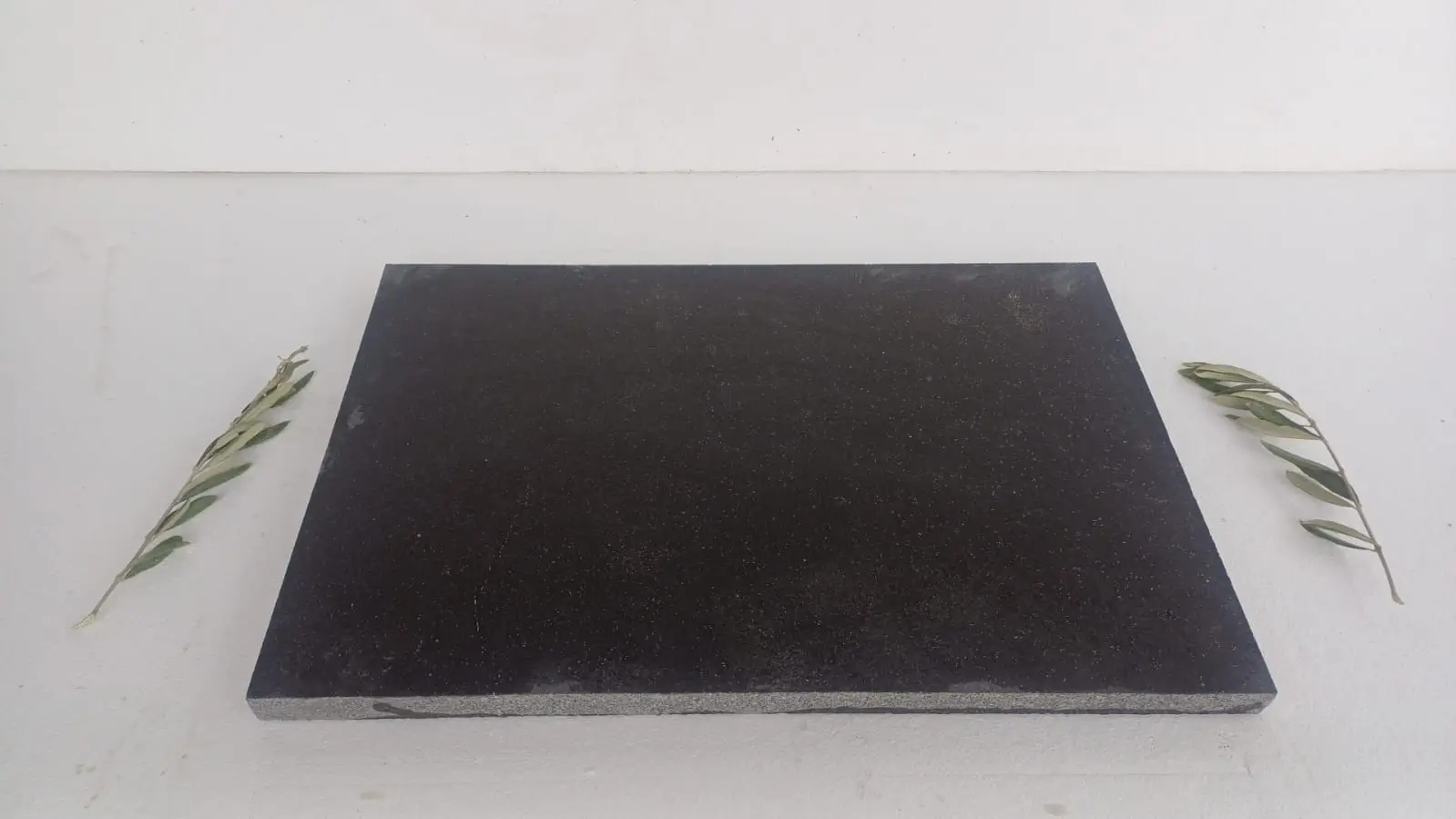
Accent Applications and Feature Wall Ideas
Not every black limestone shower idea needs to commit the entire enclosure to one material. A single feature wall behind the shower valve in full-height black limestone — with adjacent walls in a complementary white or grey ceramic — delivers the bold visual impact without the full cost of an all-stone enclosure. This approach also gives you a practical advantage: the black limestone wall and floor use can be concentrated where structural load and waterproofing are most robustly detailed, while the secondary surfaces carry less critical finishing.
Niche design is another area where black limestone creates a strong design statement. A recessed shower niche lined entirely in black limestone, with a matching honed limestone shelf, functions as a focal accent that reads as intentional and refined rather than utilitarian. Integrate LED strip lighting behind a frosted glass niche lip, and the stone’s natural veining becomes visible even in a steam-filled environment — a detail that rewards the close-up experience of the space. Citadel Stone maintains warehouse inventory that allows you to match niche pieces to your field tile batch, which matters more with black limestone than most materials because colour variation between production runs is real and visible.
Ordering, Logistics, and Project Planning
Black limestone is a consistent performer in warehouse inventory cycles, but you should verify stock depth before finalising your specification. Allow 10–15% overage on all wet-room tile orders — cuts around drains, niches, and fixtures consume material faster than most contractors budget for, and matching a batch after the fact introduces colour inconsistency risk. Natural stone batches are quarried in runs, and two different production periods of ostensibly identical black limestone can read noticeably different under the same lighting conditions.
Truck delivery logistics for slab-format material require thought before ordering. Large-format panels — especially 24×48 or larger — ship palletised and typically require a two-person offload minimum. Confirm your site access allows the delivery truck to reach a reasonable proximity to the installation area; carrying full-size stone slabs more than 50 feet from truck to wet room significantly increases breakage risk and labour cost. According to NSI limestone specifications and handling guidance, slab-format limestone should be stored vertically on A-frames at the site to prevent surface-to-surface abrasion during the installation period.
- Order 10–15% overage minimum on all wet-room tile specifications
- Verify batch consistency before signing off on delivery — inspect tiles from multiple boxes
- Slab format material requires two-person offload and careful site access planning
- Store vertically on A-frames on site — never flat-stacked, never on an unprotected floor
- Confirm warehouse availability before project scheduling commitments are made with your client
Your Action Plan for Black Limestone Shower Success
Strong black limestone shower ideas succeed when every specification decision — finish, format, substrate, grout, and sealer — is treated as an integrated system rather than a checklist of independent choices. Start with your structural substrate and confirm deflection compliance for your chosen tile format. Then lock in your finish based on the wet-surface friction requirement for your floor. Design your grout and sealer strategy around the stone, not the other way around. The visual result — that bold, architectural wet room — follows naturally from getting those technical foundations right.
As you develop your full project scope, understanding how black limestone performs relative to other dark natural stones can sharpen your specification confidence. How black limestone and granite compare is worth reviewing before finalising your material selection. A penetrating sealer applied before grouting is strongly recommended for black limestone shower floors, and Citadel Stone’s team can advise on suitable products.
Related reading: black limestone restorer guide · does black limestone fade · black limestone sealer.