

Why Black Limestone Changes Color Over Time
Whether black limestone fades comes down to mineralogy, not marketing — and the answer is yes, it can, but the rate and severity depend entirely on which pigmenting agents dominate your specific slab. Black limestone gets its color from organic carbon compounds, iron sulfides, and fine-grained clay minerals locked within the calcium carbonate matrix, and each of those agents responds differently to UV exposure, moisture cycling, and surface chemistry. Understanding which one dominates your slab tells you far more about long-term performance than any finish label ever will. According to NSI limestone technical specifications, the mineral composition of limestone varies considerably between quarry sources, which directly affects color stability across outdoor applications.
Your biggest variable is the carbon content. High-carbon black limestones — sometimes called bituminous limestone — carry a warm, almost blue-black depth that can lighten noticeably within two to three years of outdoor installation if left unsealed. Lower-carbon varieties with iron sulfide pigmentation tend to hold their depth longer but can develop surface oxidation that shifts the hue toward grey-brown. Neither behavior means the material is failing — it means you need to match your maintenance protocol to the actual pigmentation chemistry of your chosen stone.
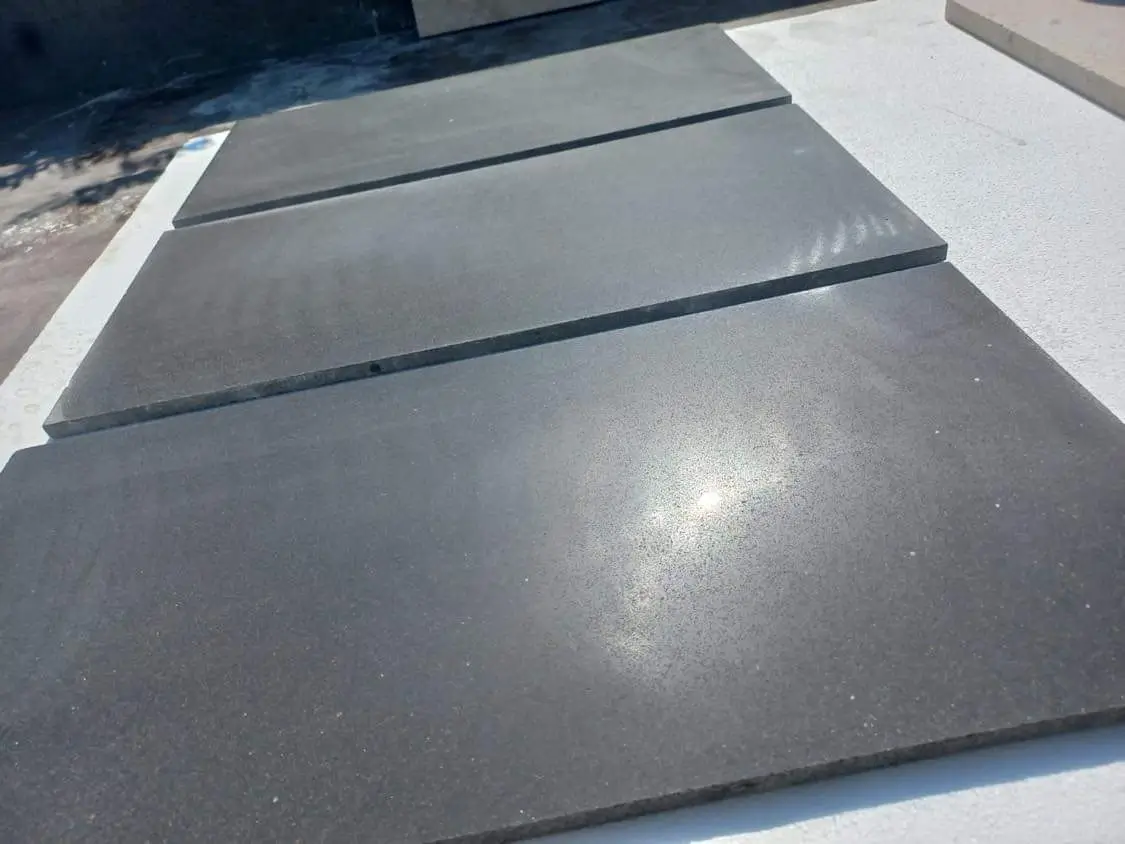
How UV Exposure Drives Fading in Natural Limestone
UV radiation breaks down organic pigments at the molecular level — it is the same process that fades colored concrete, timber decking, and asphalt. For natural limestone, the rate of color change depends on surface porosity, finish type, and how much direct solar exposure the installation receives daily. Honed black limestone surfaces typically show fading earlier than sawn or bush-hammered finishes because the smoother surface presents more exposed mineral area per square inch to incoming UV.
What most specifiers miss is the cumulative bleaching effect at the surface micro-layer. The top 0.5 to 1.5 millimetres of an unsealed black limestone slab acts as a sacrificial colour zone. UV energy oxidizes the carbon compounds in this layer progressively, working inward from the surface. You will often see this as an uneven lightening that starts around high-traffic areas and joint edges — not because the stone is wearing away structurally, but because those zones experience the highest combination of UV exposure and moisture cycling. USGS limestone composition data confirms that the calcium carbonate matrix itself is UV-stable; it is the trace minerals and organic compounds that carry the colour load and respond to environmental exposure.
Sealed vs. Unsealed: The Real Performance Difference
Sealing is the single most impactful decision you will make after choosing black limestone paving as your primary material. A penetrating impregnating sealer — not a surface topcoat — fills the pore structure of the stone without creating a film layer that can peel, yellow, or trap moisture beneath it. Done correctly at installation and maintained on a two-year cycle, penetrating sealer dramatically slows UV penetration into the carbon-bearing layers and reduces the moisture cycling that accelerates oxidation of iron sulfide pigments.
- Penetrating silane-siloxane sealers are appropriate for most black limestone pavers used outdoors — they allow vapor transmission while blocking liquid water ingress
- Solvent-based impregnators penetrate deeper in dense, low-porosity black limestone and are preferable when absorption testing shows less than 0.5% water absorption by weight
- Color-enhancing sealers deepen the perceived black tone and can partially restore faded surfaces, but they require more frequent reapplication than neutral sealers
- Topcoat acrylic sealers should be avoided on exterior black limestone — UV breakdown of the coating itself creates a patchy, uneven appearance within 18 to 24 months
- First application timing matters: sealing within 48 hours of grouting completion, once the grout has fully cured, prevents early UV exposure during the installation’s most vulnerable window
A well-sealed black limestone installation can retain 85 to 90 percent of its original color depth through the first decade, compared to 60 to 70 percent for an equivalent unsealed installation under the same exposure conditions. That gap widens considerably in high-UV environments.
Finish Type and Its Effect on Long-Term Color Depth
Finish selection at the time of ordering has a direct bearing on how the stone’s color reads over time — and this is a detail worth discussing with your supplier before cutting the purchase order. Honed finishes create a matte surface that reads as a rich, uniform black in the short term but shows micro-scratching and UV bleaching more readily because the surface is optically smooth. Sawn finishes leave a slightly textured face that diffuses light and tends to maintain a consistent visual depth for longer, even as minor surface lightening occurs.
Bush-hammered and flamed finishes are worth considering specifically for their long-term color consistency outdoors. The textured, fractured surface created by these processes means that light scatters rather than reflecting off a flat plane — and scattered light tends to read as darker and more uniform to the human eye, even when the mineral surface itself has lightened slightly. This is a practical perceptual advantage, not just an aesthetic one. When specifying does black limestone fade performance over a 10 to 20-year horizon, a bush-hammered or flamed finish often outperforms honed on the color-retention question even before sealing is factored in.
Installation Timing, Seasonal Conditions, and Why They Matter
The season in which black limestone pavers are installed affects both initial sealing performance and early-stage UV exposure — two factors that set the trajectory for long-term color behavior. Adhesive and grout manufacturers specify temperature windows that are tighter than most contractors assume: most polymer-modified bedding mortars require substrate and air temperatures between 40°F and 90°F for proper cure. Outside those windows, cure chemistry is compromised, which creates a weak bond layer that allows moisture ingress at the underside of the slab — and moisture cycling from below accelerates surface oxidation as aggressively as UV from above.
- Morning installation sessions — starting work before 9 a.m. in warmer periods — reduce the risk of adhesive skinning before the slab is placed, which creates hollow spots that telegraph as surface discoloration later
- Avoid grouting or sealing during direct midday sun when slab surface temperatures can exceed 90°F; sealer applied to a hot surface flashes off before it penetrates, leaving a residue rather than a functional impregnation
- Freeze-thaw regions require confirmed substrate temperature above 45°F for at least 72 hours post-installation before the installation is exposed to freeze conditions — ice formation in partially cured mortar voids creates micro-fractures that become moisture pathways
- Late-autumn installations in freeze-thaw zones benefit from temporary protection sheeting for the first 48 to 72 hours to maintain cure temperature as evening temperatures drop
- In dry seasons with low ambient humidity, mist-curing the mortar bed for the first 24 hours after slab placement improves bond strength by preventing premature moisture loss from the mortar
Scheduling installation during stable temperature windows — typically mid-spring and early autumn in most climates — gives both the bedding system and the initial sealer application the best possible cure conditions. That foundation directly reduces the moisture-related color variation that shows up years later as patchy lightening or efflorescence halos around joints.
Comparing Black Limestone to Alternatives: Natural Limestone and Black Pearl Granite
When a project brief calls for a dark, sophisticated paving surface, the choice is typically between natural limestone in its black variant and igneous options — and the performance profiles diverge significantly. The question of whether can limestone be black in a genuinely color-stable way has a clear answer: yes, but the mechanism is different from what makes black pearl granite dark, and the maintenance requirements reflect that difference.
Black pearl granite derives its color from biotite mica and hornblende — crystalline minerals that are inherently UV-stable because they do not contain the organic carbon compounds that oxidize in limestone. Under identical outdoor exposure, black pearl granite will maintain its surface color for decades with minimal maintenance beyond periodic sealing. That stability comes at a cost: granite’s higher hardness makes it less thermally comfortable underfoot in high-heat conditions, and its dense, non-porous nature makes it significantly cooler but also less forgiving on joints during thermal cycling. Natural limestone, by contrast, is softer, more workable, and more thermally moderate — but it requires a more deliberate maintenance commitment to hold its color. The choice between them is not about which is better — it is about which performance profile matches the project’s specific demands and maintenance capacity.
Exploring black limestone slabs from Citadel Stone is a practical starting point for comparing quarry sources side by side — surface density and pigmentation chemistry vary considerably between origins, and seeing the material in person before committing to a specification reveals differences that photographs simply cannot capture. At Citadel Stone, our team reviews each incoming batch at the warehouse level, checking for consistent pigmentation distribution and surface integrity before the material is made available for project orders.
Maintenance Protocols That Actually Preserve Color
Long-term color retention in black limestone is a maintenance outcome, not just a material property. The protocol matters as much as the product, and the most common mistake is treating black limestone pavers the same way you would treat a concrete paver — periodic pressure washing and occasional resealing. That approach is too aggressive for the surface micro-layer that carries the stone’s color depth.
- Clean with a pH-neutral stone cleaner at 6-monthly intervals — acidic cleaners dissolve the calcium carbonate surface and strip pigment-bearing minerals along with it
- Pressure washing should use a fan tip at no more than 1200 PSI and kept at least 12 inches from the surface — concentrated pressure strips the micro-layer and creates a chalky surface appearance
- Reseal every 18 to 24 months in high-traffic or high-UV applications; every 3 years is adequate for covered or low-traffic installations
- Address efflorescence immediately with a dedicated efflorescence remover — calcium carbonate deposits left on the surface create a white haze that visually competes with the stone’s black depth and becomes harder to remove the longer it is left
- Spot-treat iron staining — common where water contacts steel furniture legs or drainage grates — with an oxalic acid-based poultice before it oxidizes deeply into the pore structure
The two-year resealing window is not arbitrary. Most penetrating sealers begin to lose effectiveness at the pore-throat level between 18 and 30 months in outdoor conditions, depending on UV intensity, foot traffic, and cleaning frequency. Waiting for visible fading to trigger resealing means working against lightening that has already begun — staying ahead of that curve with scheduled maintenance is materially different from reactive resealing.
Sourcing, Stock, and Project Planning Realities
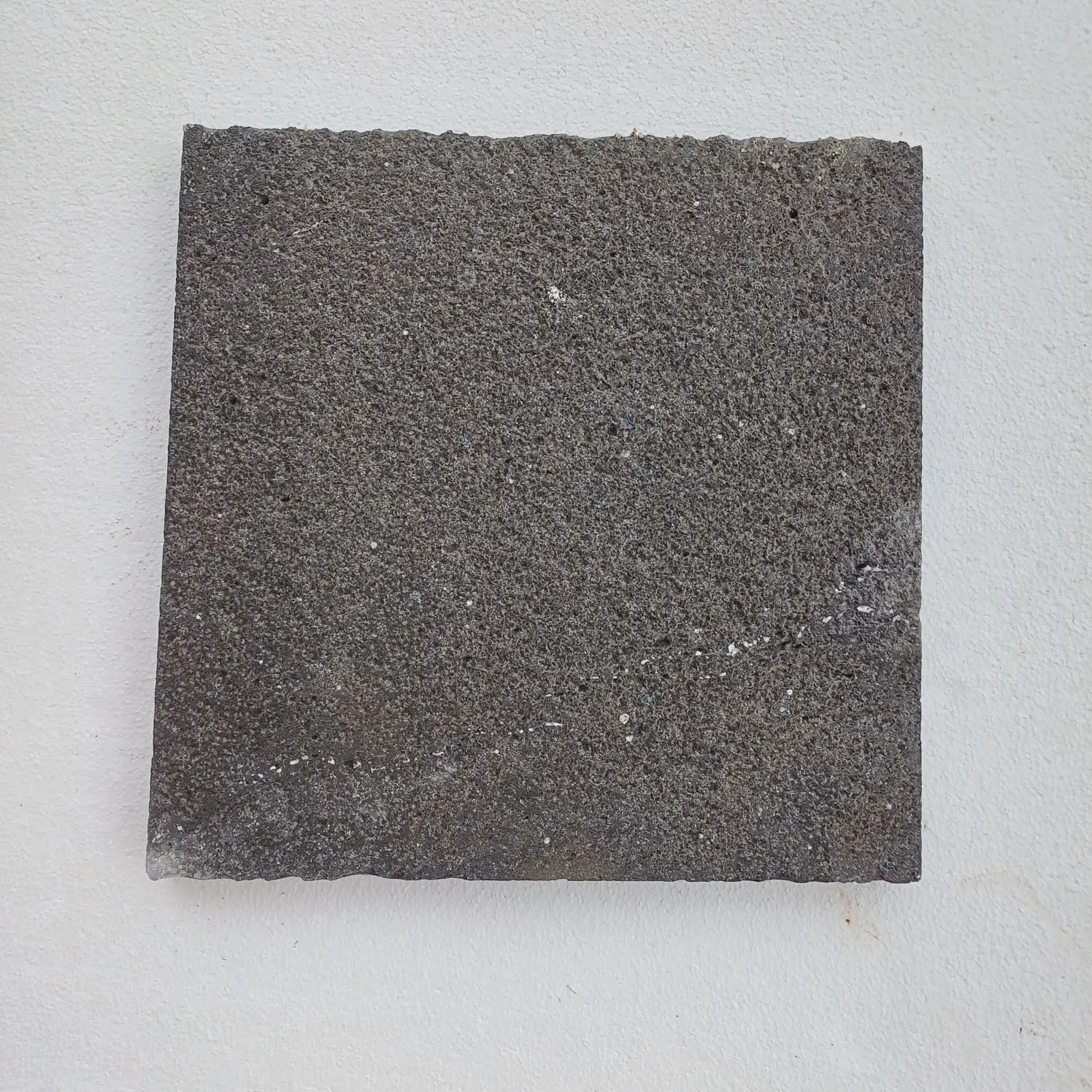
One practical aspect of black limestone projects that does not get enough attention is stock consistency. Black limestone from the same quarry can vary in base tone across extraction batches — what specifiers call lot-to-lot variation — because the depth and distribution of carbon-bearing strata changes as the quarry face advances. Your color-matching strategy at the time of purchase determines whether replacement pavers installed years later match the original installation or create a visible patchwork.
The most reliable approach is to over-order by 10 to 15 percent and store the surplus in a covered location out of direct UV exposure. Warehouse storage conditions matter: material stored outdoors in direct sun before installation can begin showing surface lightening before it is ever laid. Citadel Stone maintains covered warehouse inventory that keeps stock protected from pre-installation UV exposure, which reduces the color variation between stored and freshly delivered material. When planning a phased project — a driveway and a subsequent patio addition, for example — aligning truck deliveries to draw from the same quarry batch is worth the scheduling effort. A two-week lead time from warehouse to site is typically achievable for in-stock material, compared to the six to ten-week window for custom quarry orders.
According to the Britannica overview of limestone characteristics and formation, the sedimentary layering process that creates limestone also creates the natural variability in mineral concentration that produces batch-to-batch color differences — understanding this helps you plan purchasing and storage more realistically.
Key Decisions That Determine Black Limestone Performance
Does black limestone fade? Yes — but the rate, severity, and reversibility of that color change are all within your control as the specifier or owner. Carbon-based pigmentation is more UV-sensitive than the mineral matrix itself, which means finish selection, sealing program, and installation timing have a measurable impact on the color story your stone tells over 10, 15, and 20 years.
Honed finishes require the most disciplined sealing program. Bush-hammered and flamed surfaces hold their visual depth longest due to the light-scattering geometry of the surface texture. Penetrating impregnating sealers — applied before the stone ever sees its first UV cycle and refreshed on a two-year schedule — are the most effective single intervention available. Avoid acidic cleaners, aggressive pressure washing, and reactive maintenance. Plan installation during stable temperature windows to give adhesive and initial sealer applications the cure conditions they need.
If you are weighing black limestone against alternatives for a long-term project, the material’s performance ceiling is genuinely high — this is a stone that outperforms black pearl granite in thermal comfort and surpasses most pavers in design depth, provided you commit to the maintenance protocol it requires. As you think through your full project specification, it is worth exploring how other natural stone materials are shaped and produced — the piece on how natural stone is precision-formed offers an interesting lens on stone manufacturing craft that informs material quality expectations across the board. For projects where long-term color depth matters, Citadel Stone offers black limestone paving chosen for consistent surface composition.