

How Limestone Rock Classification Actually Works
Limestone’s identity as a sedimentary rock runs deeper than a textbook label — it determines how the stone behaves under load, how it responds to moisture cycling, and whether it will hold a honed finish for fifteen years or five. Understanding what type of rock limestone is means understanding the biological and chemical processes that built it, layer by compressed layer, over millions of years. That geological origin is precisely why limestone performs so differently from igneous options like granite in high-traffic applications, and why specifiers who treat them as interchangeable tend to regret it.
At its core, limestone is a carbonate sedimentary rock composed predominantly of calcite, or calcium carbonate (CaCO₃), with occasional dolomite fractions. The mineral composition sits around 90–95% calcite in quality building grades, which gives the stone its characteristic warmth, its workability under fabrication equipment, and — critically — its susceptibility to acidic compounds. Understanding that last point is essential before specifying limestone for any high-contact surface.
Is Limestone a Sedimentary Rock — and Why Does That Matter for Specification?
The answer is straightforwardly yes — limestone is a sedimentary rock, and that classification carries real technical implications for anyone selecting it for a project. Sedimentary formation means the stone accumulated in horizontal beds, which is why you’ll see consistent layering and bedding planes when you examine a freshly cut slab. Those bedding planes affect how limestone performs under directional stress, and they’re the reason you spec limestone differently from a metamorphic material like slate, which has cleavage planes running at different angles.
According to Britannica’s overview of limestone formation and characteristics, limestone forms in shallow, warm marine environments where calcium carbonate precipitates from supersaturated seawater or accumulates from the skeletal remains of marine organisms — corals, mollusks, foraminifera. That biological origin is what gives quality limestone slabs their occasional fossil inclusions, which aren’t defects but rather markers of authentic sedimentary origin. On a technical level, this formation process explains why limestone porosity varies so significantly between quarry sources — beds that formed in higher-energy depositional environments tend to be denser and less porous than those formed in quieter, shallower water.
- Sedimentary classification means layered bedding planes — always spec the stone so load bears perpendicular to these planes, not parallel
- Calcite content directly governs acid sensitivity — coffee, citrus, and even acidic cleaners will etch high-calcite grades over time
- Porosity ranges from under 2% in dense Mediterranean grades to over 12% in some softer quarry outputs — this gap determines sealing frequency
- The interconnected pore structure typical of sedimentary stone means water management and drainage geometry are non-negotiable in outdoor applications
How Limestone Rock Is Formed: The Two Pathways
There are two distinct formation pathways for limestone, and understanding both helps you interpret why stone from different quarry sources behaves so differently on site. The first is biogenic formation — skeletal fragments of marine organisms accumulate on the seafloor, compact under burial pressure, and lithify (cement together) into dense carbonate rock over tens of millions of years. This is the origin of the dense, fine-grained limestones most commonly used in architectural applications. Knowing how is limestone rock formed gives specifiers a direct line from geology to performance expectations.
The second pathway is chemical precipitation. In conditions of high evaporation or CO₂ degassing — think hot springs and cave environments — dissolved calcium carbonate precipitates directly from solution. Travertine is the most familiar product of this process, forming through CO₂-rich groundwater interaction rather than marine sedimentation. Travertine sits in the same broad limestone family but has a distinctly different pore structure: its characteristic voids and banded layering are textbook evidence of chemical rather than biogenic formation. This is why travertine and standard limestone, though compositionally similar, perform differently under the same sealing protocols.
Understanding how limestone rock is formed gives you practical guidance on where it performs best:
- Biogenically formed, dense limestone handles compressive loads above 8,000 PSI — suitable for driveways, heavy-traffic terraces, and commercial paving
- Chemically precipitated varieties like travertine offer natural void structures that benefit drainage but require fill treatments for smooth-finish installations
- Oolitic limestone — formed from concentric calcium carbonate spheres called ooids — falls between these extremes in density and is common in certain quarry regions
- Formation depth and burial history largely determine the stone’s Mohs hardness, which typically runs 3–4 for most building limestone grades
Limestone Mineralogy and Structural Composition
Calcite dominates limestone’s mineral profile, but the supporting cast matters for performance. Dolomite substitution — where magnesium ions replace calcium in the crystal lattice — produces dolostone or dolomitic limestone, which runs harder and more acid-resistant than pure calcite grades. You’ll encounter dolomitic limestone labeled as such from certain quarries, and it’s worth specifying for kitchen countertop applications where pure limestone would show etching within the first year of use.
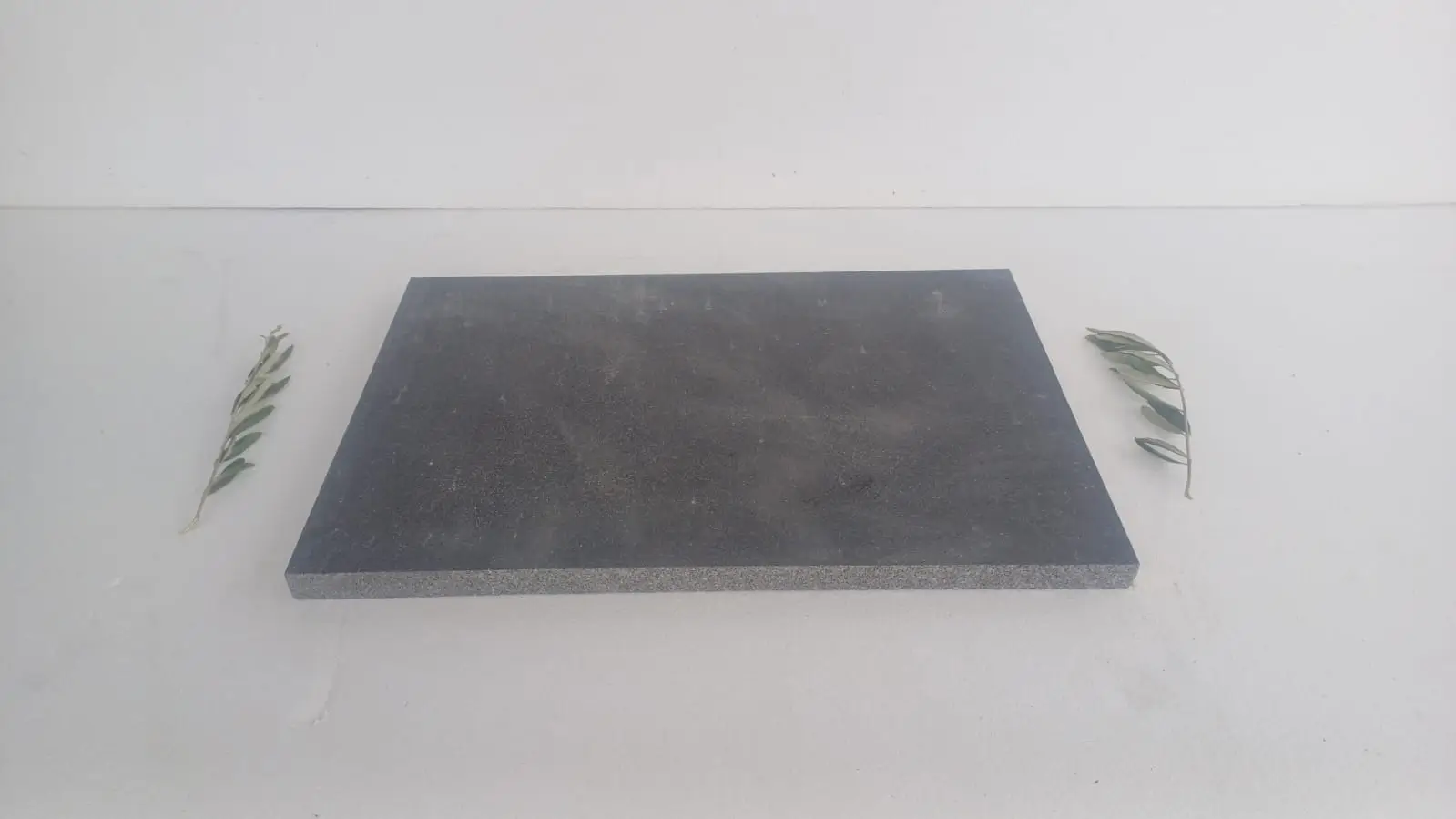
Clay mineral impurities in the sedimentary matrix give limestone its color variations. Iron oxides push the palette toward warm gold and ochre tones. Manganese produces grey and blue-grey tones, which explains the distinctive color of black limestone, where organic carbon and fine clay fractions create the deep, near-black finish that’s become one of the more popular architectural choices in contemporary projects. The Natural Stone Institute limestone specifications provide detailed mineral composition data that correlates directly with the performance characteristics you’ll be evaluating during material selection.
Silica content — present as quartz grains in some formations — also affects fabrication. High-silica limestone grades blunt cutting equipment faster and require diamond tooling with tighter tolerances, which translates to higher fabrication costs and longer lead times. It’s a detail that rarely appears in product data sheets but becomes obvious when your fabricator quotes a job.
Reading Limestone Grades: Density, Absorption, and Field Performance
Limestone gets graded primarily on two criteria: bulk density and water absorption rate. These two numbers, more than any marketing description, tell you how the stone will perform over a ten-to-twenty-year installation cycle. Dense limestone — typically above 155 lbs/ft³ bulk density — absorbs less water, cycles through freeze-thaw more reliably in colder regions, and holds a honed or polished finish longer. Target absorption rates below 3% for outdoor installations in freeze-thaw regions, and below 1% for any application that will see consistent water exposure.
The USGS tracks dimension stone production and quality characteristics across producing regions, and USGS limestone composition and construction applications data confirms that domestic limestone production spans a wide density range — from sub-130 lbs/ft³ quarry outputs to dense European and Middle Eastern grades exceeding 160 lbs/ft³. That density gap has direct performance consequences:
- Below 140 lbs/ft³ bulk density: suitable for interior cladding, feature walls, and low-traffic flooring — not recommended for driveways or heavy outdoor paving
- 140–155 lbs/ft³: appropriate for residential exterior paving, pool surrounds, and moderate-traffic commercial walkways with proper sealing
- Above 155 lbs/ft³: the specification range for commercial terraces, driveway applications, and high-traffic public spaces where limestone pavers need to handle point loads from vehicle and foot traffic simultaneously
- Absorption above 5%: a reliable indicator of a softer, more porous bed that will require annual sealing and should be limited to sheltered interior applications
Crushed Limestone: When the Rock Gets Processed
Crushed limestone operates in a completely different specification domain from dimension stone, but it’s worth understanding both ends of the material spectrum. Crushed limestone — produced by quarry crushing and sizing of limestone aggregate — is one of the most widely used construction materials in North America. It serves as road base, drainage aggregate, concrete aggregate, and soil amendment, drawing on the same carbonate chemistry but in processed rather than dimensional form.
For projects that combine paved limestone surfaces with landscape grading or drainage work, understanding crushed limestone helps you coordinate material sourcing decisions intelligently. The aggregate fraction used as base material under your limestone pavers is often crushed limestone itself — creating a compositionally compatible system that reduces differential movement risk over time. Using incompatible base materials under calcium carbonate paving creates alkalinity mismatches that accelerate certain weathering patterns; keeping the system chemically aligned is a detail that pays dividends over a fifteen-year installation window.
Crushed limestone for base preparation typically specs at:
- CA-6 or Gradation 21-A for compacted sub-base layers, typically 6–8 inches deep under pedestrian paving
- CA-1 or larger aggregate for drainage blanket layers where hydrostatic management is a design priority
- Angular fractured faces — not rounded river aggregate — for mechanical interlock and compaction stability under load
Sourcing Decisions and How They Shape Total Project Cost
One of the most underappreciated aspects of specifying limestone is how dramatically sourcing geography affects total project budget — not just the material line item but the full landed cost including freight, handling, and lead time. Domestic limestone quarries in certain regions produce acceptable material for interior and low-traffic applications, but the density range rarely matches what Mediterranean and Middle Eastern quarries deliver for exterior high-performance paving. The cost gap between domestic and imported grades narrows considerably when you factor in replacement cycles — a denser imported slab that lasts 25 years competes favorably against a cheaper domestic option that requires resurfacing at year 12.
Freight distance is the variable that shifts most dramatically between projects. Delivery cost scales roughly linearly with distance from distribution points, which means projects located far from major stone distribution hubs will see freight add meaningfully to the installed cost per square foot. For larger projects — anything above 2,000 square feet of paving — it’s worth running a full landed-cost analysis that includes warehouse-to-site freight, unloading requirements, and whether your site’s access allows full-size delivery vehicles or requires smaller staged deliveries that add labor cost. At Citadel Stone, we maintain national warehouse stock that reduces lead times to 1–2 weeks for standard grades, which avoids the 6–8 week import cycle that can stall project timelines when material is ordered too late in the construction schedule.
Labor-to-material cost ratios shift depending on the limestone grade selected. Thicker, denser slabs require more robust setting bed preparation and heavier handling equipment, which adds to installation labor. But thinner, lighter slabs in softer grades may require more frequent re-leveling and joint maintenance over time, converting upfront labor savings into recurring maintenance costs. The most cost-efficient specifications tend to land at 1.25–1.5-inch nominal thickness for exterior pedestrian applications — thick enough for structural integrity without the premium handling costs of 2-inch material. Factor these ratios into value engineering conversations early, before material selections get locked into the project budget. Explore our natural limestone products to compare grades and thicknesses that align with your project’s specific performance and budget requirements.
Finish Selection and Its Effect on Performance
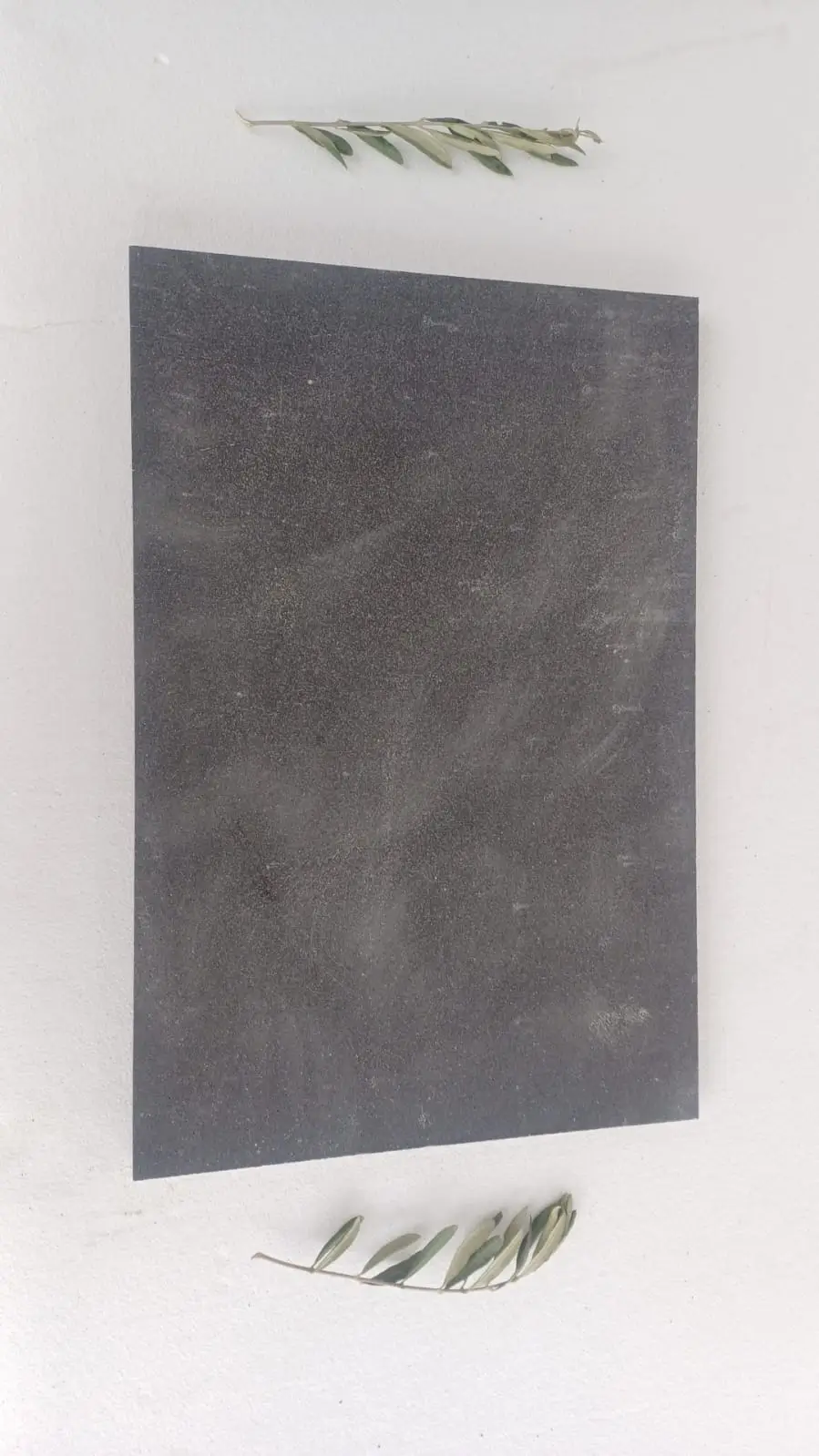
The finish applied to limestone surfaces isn’t just an aesthetic decision — it directly governs slip resistance, maintenance requirements, and long-term durability. Honed finishes, produced by stopping the polishing process at a smooth but non-reflective stage, expose the stone’s mineral structure without creating the micro-peaks of a sawn face or the gloss of a polished surface. Honed limestone reads warmer and more matte than polished granite, which is why it’s the default finish for high-end residential exterior applications. The tradeoff is slightly higher porosity exposure — the surface needs sealing within 90 days of installation and annually thereafter in heavy-use zones.
Tumbled and brushed finishes, produced by mechanical agitation or wire brushing, create textured surfaces with naturally higher slip resistance coefficients. For pool surrounds and outdoor areas where wet-foot traffic is the primary use condition, tumbled limestone leaves an open, textured face — and the ANSI A326.3 minimum wet DCOF of 0.42 is the threshold most safety guidelines recommend for wet outdoor surfaces. A sawn or polished finish on the same limestone grade may drop below 0.50 when wet, which shifts specification decisions considerably for safety-conscious applications.
- Polished: maximum visual depth and reflectivity, SCOF below 0.45 when wet — interior applications only
- Honed: smooth, matte surface, SCOF 0.45–0.55 dry, suitable for covered exterior spaces with controlled water exposure
- Brushed or antiqued: textured surface, suitable for most residential exterior paving
- Tumbled: highest surface texture, the specification choice for pool decks, wet zones, and high-traffic commercial walkways
Maintenance Reality: What Limestone Actually Needs Over Time
Limestone maintenance conversations often get oversimplified to “seal it every year” — which is accurate but incomplete. The sealing protocol depends on the finish, the porosity of the specific grade, the application environment, and the type of sealant used. Penetrating silane-siloxane sealers work differently from topical acrylic coatings, and applying the wrong type to a honed exterior surface creates problems that are expensive to remediate: topical coatings on outdoor limestone trap moisture beneath the film, accelerating spalling in freeze-thaw cycles and creating the delamination failures that make restorations so costly.
For outdoor limestone paving, penetrating sealers are the correct specification. They migrate into the pore structure rather than forming a surface film, allowing moisture vapor transmission while blocking liquid water ingress. A properly sealed, dense limestone (absorption below 3%) in an outdoor application typically needs resealing every 2–3 years, not annually, if the initial sealer was applied correctly to a dry substrate — and “dry” in this context means below 5% moisture content in the slab, which you verify with a pin-type moisture meter before sealing, not by visual inspection. This is a detail that separates professional limestone specifications from DIY applications, and it’s the kind of nuance that determines whether your installation looks excellent at year ten or starts showing absorption staining at year three.
Your maintenance plan should also include joint sand replenishment on any polymeric sand-jointed installation. Joint sand typically settles 10–15% by volume in the first two years as the installation consolidates — particularly in climates with meaningful seasonal soil movement. Catching that settlement early and refilling joints before water infiltrates the base layer is far cheaper than addressing base erosion after the fact.
Specifying What Type of Rock Limestone Is — From Geology to Final Selection
Specifying limestone effectively means working from the geology outward — understanding what type of rock limestone is at a mineralogical level, then translating that knowledge into density requirements, finish selections, sealing protocols, and sourcing decisions that align with your project’s actual performance demands. The stone’s sedimentary origin, its calcite-dominant composition, and its formation environment all show up in how it performs on site, and those geological characteristics don’t change based on how a product is marketed. Your specification should always start with verifiable technical data — bulk density, absorption rate, finish SCOF — before moving to aesthetics and budget. For projects that also include complementary stone elements, it’s worth reviewing how other natural stone materials behave in adjacent applications; our guidance on honed black granite care and specification covers a different material with its own performance profile worth understanding alongside limestone. Natural stone selection is most successful when you treat the geology as the specification anchor and let the aesthetics follow from there. Sourced from quarries across the Mediterranean and Middle East, Citadel Stone selects dense limestone beds for stronger, less porous slabs.
Related reading: black granite countertops · black limestone pavers · How to Lay Midnight Black Limestone Paving.