Specifying the best tile for bathroom floor use comes down to a performance hierarchy most buyers don’t apply — absorption class first, then thermal behavior, then finish, and only then aesthetics. The sequence matters because a tile that fails on moisture management will disappoint regardless of how beautiful it looks in a showroom slab. Natural stone and porcelain each occupy distinct positions in that hierarchy, and understanding where each sits is the only way to make a specification you won’t regret.
What the Comparison Actually Covers
This article puts marble, travertine, and porcelain side by side across the performance variables that govern bathroom floor behavior — absorption, thermal feel, finish options, maintenance cycles, and long-term integrity. The goal is a specification-grade comparison, not a preference guide. You’ll come away knowing which material fits which bathroom type, what each one demands from the installation, and where the real cost differences emerge over a project’s life.
- Marble: polished natural calcium carbonate, moderate absorption, high visual impact, periodic sealing required
- Travertine: open-pore sedimentary stone, higher natural absorption, warmer underfoot, sealing-sensitive
- Porcelain: fired ceramic body, extremely low absorption, highly resistant to staining, finish-dependent surface character
Marble Floor Tiles in the Bathroom: Performance First
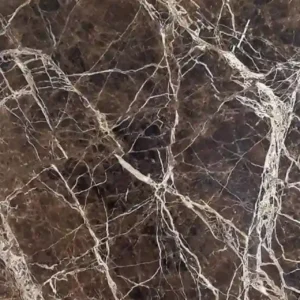
Marble floor tiles bathroom installations have a consistent field pattern — they perform exceptionally well when the sealing regime holds, and they show stress when it doesn’t. The material’s calcium carbonate matrix is reactive to acids, which in a bathroom context means any pH-imbalanced cleaning product accelerates surface etching. Confirm that every cleaning product used on a marble floor is formulated for natural stone before anything else.
Polished marble reads as cooler underfoot than matte finishes because the dense, closed surface reflects heat away rather than moderating it. In heated-floor applications, marble’s thermal conductivity actually becomes an asset — it transfers warmth efficiently from an in-floor system to bare feet. The specification decision worth making early is finish: polished surfaces amplify the stone’s veining and visual depth but show water marks and fine scratches more readily than honed alternatives.
- Honed marble carries a matte, chalky surface texture that reads warmer and less formal than polished
- Polished marble demands careful maintenance and a consistent sealing interval — request the interval from your sealer manufacturer, not a generic rule
- Bookmatched marble layouts require precise templating to align veining across joints — this is a fabrication step, not an installation afterthought
- Marble’s porosity varies significantly by origin; always request the absorption test report before specifying for a wet bathroom
According to Natural Stone Institute marble grades and technical specifications, marble is classified by soundness, color consistency, and surface characteristics — and those grades directly affect how the material performs in high-moisture environments. The grade selection matters as much as the species when specifying the best tile for bathroom floor use in wet applications.
Travertine Tile Bathroom Floor: What the Open Pore Structure Means
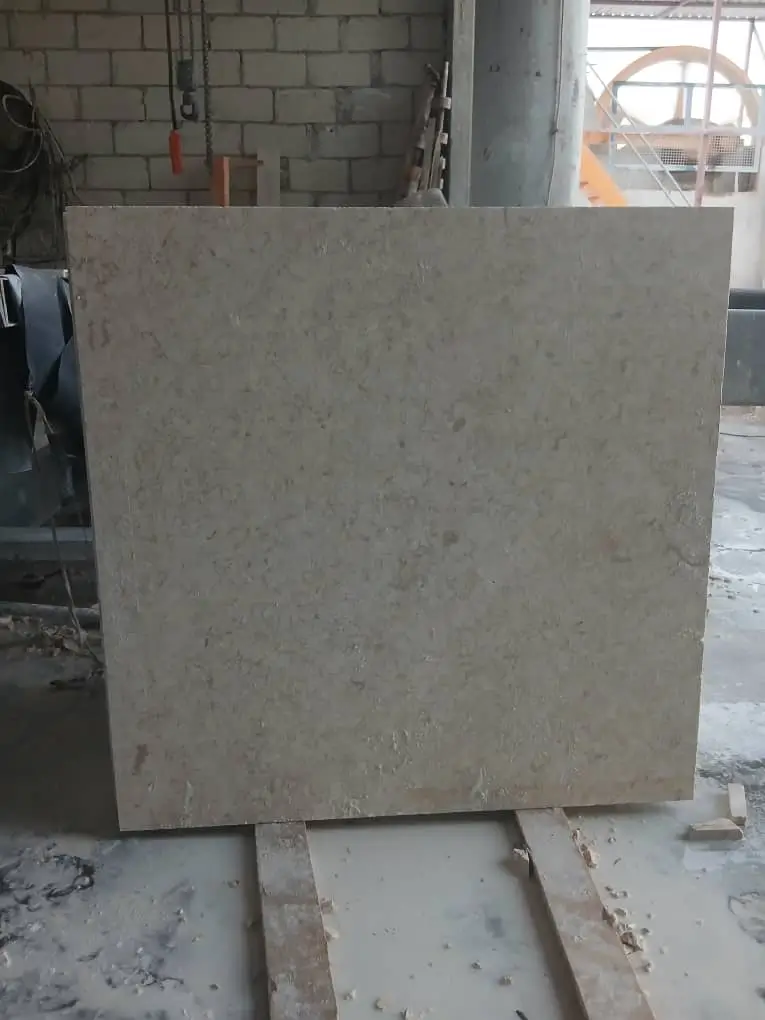
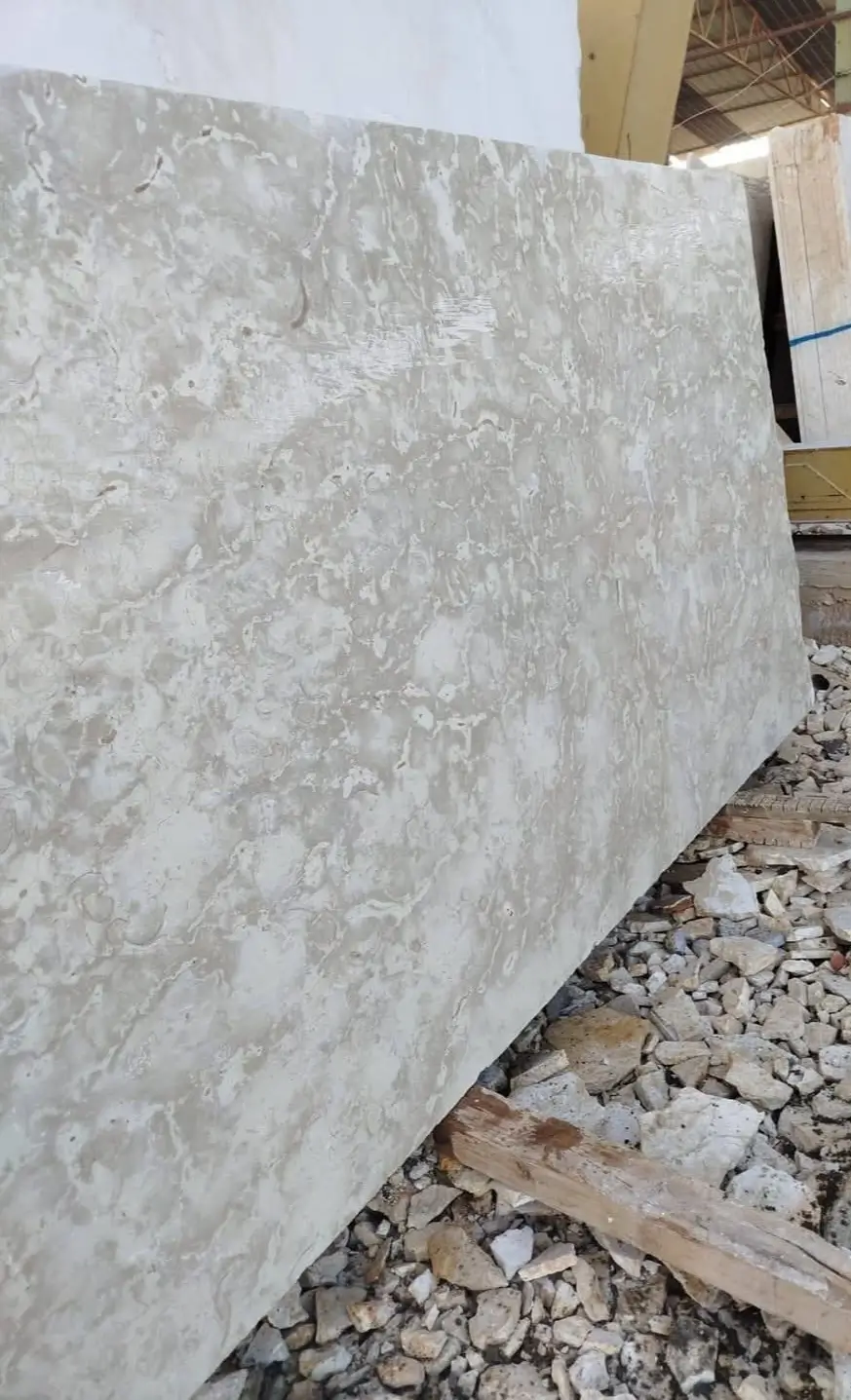
Travertine tile bathroom floor installations require a decision you have to make before anything else arrives on site: filled or unfilled voids. Travertine forms with natural voids — channels left by gas or water during the stone’s creation — and those voids are either pre-filled with grout or epoxy at the factory, or left open as a design feature. Unfilled travertine in a bathroom context collects water, soap, and debris in those channels, which accelerates degradation and makes cleaning impractical. Specify filled-and-honed for any bathroom application where maintenance simplicity matters.
The open-pore structure that makes travertine distinctive also makes it the most sealing-sensitive of the three materials here. A travertine tile bathroom floor without a penetrating sealer applied before grouting will absorb grout haze into the stone body — a problem that is extraordinarily difficult to reverse. Sealing sequence matters: seal the stone, grout, clean, seal again. That two-stage sealing protocol is the field detail most installers skip on a first travertine job.
- Travertine stays notably warm underfoot compared to denser stones — its pore structure moderates surface temperature naturally
- Ivory and walnut travertine tones age toward warmer amber hues as the stone oxidizes — plan your palette with that shift in mind
- Travertine should be specified in a thickness appropriate for bathroom subfloor deflection — consult ASTM C1527 and request the test report from your supplier
- Grout joint width should account for travertine’s dimensional variation, which is typically wider than porcelain’s tolerance range
For a close look at the full range of surface options and format sizes available, our travertine and marble bathroom tile collection covers both filled and unfilled formats across multiple finish types.
Porcelain Side-by-Side With Natural Stone
Porcelain’s core advantage in a bathroom specification is its fired-body density — the manufacturing process drives absorption to a level natural stone cannot reach without chemical treatment. That characteristic makes porcelain inherently resistant to staining and highly resistant to the moisture cycling a bathroom floor endures daily. The trade-off is that the material’s visual character is applied rather than inherent — the surface texture, veining, and color are printed or pressed, not geological.
Large bathroom floor tiles in porcelain require the flattest subfloor preparation of any tile format. Lippage — the edge-height differential between adjacent tiles — becomes visually amplified as tile size increases. A substrate that works acceptably under a smaller-format tile becomes a problem under a 24×48 porcelain panel. Your installation specification needs to include a flatness tolerance matched to the tile format, and that tolerance has to be verified before setting begins.
- Rectified porcelain allows tighter grout joints — as narrow as 1/16 inch — which produces a more seamless visual plane
- Porcelain’s surface hardness resists surface scratching better than polished marble, though dropped objects can crack large-format panels
- Through-body porcelain shows consistent color at cut edges — useful for thresholds and stair nosings where the tile edge is visible
- Matte and textured porcelain finishes behave differently from polished — the finish selection changes both the maintenance requirement and the visual outcome significantly
The TCNA tile installation standards provide the reference framework for subfloor flatness tolerances, movement joint placement, and setting material selection — all of which apply equally to large-format porcelain and natural stone tile installations.
Slip Resistance, Finish, and Surface Texture in Bathroom Floors
Surface finish is the primary variable governing slipperiness in a bathroom floor — not material type. Under ANSI A326.3, the current standard for wet slip testing, all measurements are taken wet, because a dry result tells you nothing useful about a bathroom environment. The wet result is the only specification-relevant number, and it is finish-dependent, not material-dependent. If you need tested wet performance data for any tile in your specification, request the ANSI A326.3 test report from your supplier.
The practical field implication is that a honed travertine and a matte porcelain can share broadly similar surface character in wet conditions, while a polished marble and a glazed ceramic perform very differently — even though the category distinction is stone versus ceramic. Your specification decision should name the finish explicitly, not just the material species.
- A tumbled finish leaves an open, matte texture with softened edges — the texture is inherent to the finish process, not applied afterward
- A brushed finish creates a linear, slightly directional surface texture that differs from both polished and honed in tactile character
- Polished surfaces — whether marble or porcelain — reflect light and read as highly formal, but the finish type affects maintenance frequency more than any other variable
- An anti-slip treatment applied to polished stone changes the surface character visually — confirm the visual outcome before specifying it on a show surface
Large Bathroom Floor Tiles: Format, Layout, and What the Numbers Mean
Large bathroom floor tiles — generally anything 18 inches or wider in either dimension — change the specification requirements at almost every stage. Substrate preparation becomes more critical because large formats bridge minor undulations that smaller tiles would follow, creating voids under the tile body. Those voids become stress points that can cause cracking under point loads. Full-coverage mortar application — no ribbon or dot setting — is mandatory for large-format natural stone and porcelain alike.
Layout planning for large-format tiles in a bathroom requires you to model the finished layout on paper before a single tile is cut. Center the layout from the most visible sightline, not from a wall. Bathrooms rarely have square walls, and a centered layout that starts from a wall will drift visually by the time it reaches the opposite side. The cut tile at each perimeter should be more than half a tile width — anything smaller reads as a planning error, not an intentional detail.
- Diagonal layouts increase the tile count by approximately ten percent — factor that into your material order before submitting quantities
- Large-format stone tiles require a continuous mortar bed to ANSI A108 standards — spot-bonding voids the installation quality benchmark and creates long-term risk
- Heated floor systems under large-format stone require setting materials rated for in-floor heating — not all modified thinsets perform identically under thermal cycling
- Movement joints are non-negotiable in large-format tile fields — space them to your engineer’s specification and fill with an ASTM C920 rated sealant
Cost Factors and Sourcing Decisions Across the US Market
Material cost is only one line item in a bathroom floor budget — and it’s rarely the dominant one once you account for installation labor. The material-to-labor ratio for natural stone bathroom floors typically runs higher on the labor side than most clients expect, because stone installation demands more preparation, precision, and time than basic ceramic work. Understanding that ratio early prevents the common budget squeeze that leads to compromised substrate preparation — which is precisely where bathroom floor failures originate.
Freight distance affects natural stone cost more directly than most buyers anticipate. Stone quarried and cut overseas ships in containers, and the final leg from a domestic distribution point to your project site adds cost that varies significantly by geography. Projects in regions far from major port cities or stone distribution hubs may see meaningful freight premiums on heavy-format stone orders. That variable is worth confirming with your supplier before you finalize the material specification. Site access also affects delivery scheduling — a site with restricted access or a tight delivery window may require phased drops, which your project timeline needs to accommodate.
- Polished marble typically sits at a higher price point than honed travertine for equivalent square footage — but the sealing and maintenance cost difference narrows that gap over a ten-year horizon
- Porcelain is often less expensive per square foot than natural stone at the material level, but large bathroom floor tiles in large-format require equivalent substrate preparation costs — the savings aren’t always what they appear
- Value engineering by reducing tile size reduces both material and layout complexity cost — but changes the visual outcome significantly, which is a design decision, not just a budget decision
- Ordering a consistent overrun percentage accounts for layout cuts, breakage, and future repairs — the cost of under-ordering and sourcing a second lot from a different production run is almost always higher than the overrun itself
Citadel Stone cuts stone orders to specification through our selected quarries, which means the format, thickness, and finish you specify is what gets cut — not a stock size approximation. Lead times are quoted with the order so your project schedule has a confirmed delivery date to work from, and offloading arrangements are confirmed before the delivery arrives on site.
Sealing, Maintenance, and Long-Term Care by Material
The sealing interval for natural stone bathroom floors is set by your sealer manufacturer, not by generic guidance — and the interval varies significantly by product, finish, and traffic level. A penetrating impregnator applied to honed travertine in a high-use family bathroom may need refreshing on a different schedule than the same sealer applied to polished marble in a rarely used guest bath. Test the sealer’s effectiveness annually using a simple water-bead test: if water soaks in rather than beading, reseal. That test costs nothing and prevents the far more expensive consequence of staining into unprotected stone.
Porcelain requires no sealing at the tile body — its fired density eliminates that maintenance step entirely. The grout joints, however, are a separate story. Standard cement grout is porous and requires sealing regardless of the tile type above it. Epoxy grout eliminates that requirement and performs well in wet applications, but it demands more precise installation technique and faster cleanup. Your installer’s experience with epoxy grout is a factor worth confirming before you specify it.
- Marble etches when exposed to acidic cleaners — pH-neutral stone-safe products are the only cleaning agents appropriate for marble bathroom floors
- Travertine with factory-filled voids requires monitoring — filled areas can loosen over time in wet environments, and spot repairs are a normal maintenance item
- Porcelain grout joints in large-format layouts are the most common source of long-term visual degradation — seal and maintain them on the same schedule as natural stone grout
- Efflorescence — the white mineral deposit that migrates through grout joints — can affect any tile type over a poorly waterproofed substrate; the fix is substrate-level, not surface-level
Choosing the Best Tile for Bathroom Floor Use: Material by Application
The decision between marble, travertine, and porcelain is ultimately a function of use intensity, maintenance commitment, and aesthetic priority. Each material serves a specific bathroom profile well — and performs poorly when specified outside that profile. Here’s the practical breakdown based on what field performance actually looks like.
Marble performs best in lower-traffic bathrooms where the maintenance regime will be followed consistently — master bathrooms with adult occupants, guest bathrooms, and formal powder rooms. Its visual impact is distinctive among the three, but it demands respect for its maintenance requirements. A family bathroom with children using it daily is a harder environment for polished marble than most design decisions account for.
- Travertine suits bathrooms where warmth, texture, and a natural aesthetic take priority — it ages gracefully in properly sealed applications and suits both contemporary and classical design languages
- Porcelain suits high-traffic family bathrooms, rental properties, and any application where maintenance simplicity outweighs the premium tactile character of natural stone
- Marble suits master bathrooms, boutique hotel bathrooms, and luxury residential projects where aesthetic precision and consistent maintenance are part of the project brief
- Large-format versions of all three materials suit open-plan bathroom designs where a continuous visual plane is the goal — but all three require equivalent substrate investment at large formats
According to Natural Stone Institute ASTM tile stone specifications and standards, the performance classification of any natural stone tile — including absorption, modulus of rupture, and abrasion resistance — should be confirmed through the relevant ASTM test reports before specification. Request those reports from your supplier, not just a product data sheet.
Specifying the Best Tile for Bathroom Floor: Final Guidance
Your specification for the best tile for bathroom floor use starts with absorption class and finish, not with visual preference — and then works backward through substrate requirements, maintenance commitments, and project budget. Marble, travertine, and porcelain each occupy a defensible position in bathroom design when they’re specified correctly and installed to standard. The failures that surface after installation almost always trace back to a specification shortcut made before installation began — a missed sealing step, an under-prepared substrate, or a finish chosen for aesthetics without accounting for the maintenance it requires.
Your shower walls and floors share many of the same performance demands as your bathroom floor, and the format decisions that apply to one space inform the other. For a deeper look at how material and format decisions play out in the shower environment, large-format tile options for showers covers specification variables specific to that application. Choosing between marble, travertine, and porcelain for a bathroom floor involves weighing surface texture, sealing frequency, and how the stone responds to repeated moisture exposure — all areas where Citadel Stone offers direct material guidance.
Related reading: large floor tiles · marble look porcelain tile.