

Why Stain Resistance Matters
Stains aren’t just a cosmetic issue—they affect safety, upkeep, and the value of your space. Here’s why choosing a stain-resistant paver like basalt makes all the difference.
Aesthetic Impact
A pristine hardscape sets the tone for your property, but one stubborn stain can undo that beauty. Oil splotches or wine marks on your driveway or patio steal attention from the design, potentially lowering curb appeal and resale value.
Safety Concerns
Spills like grease or motor oil create slick spots, especially when rain hits. A slippery walkway or pool deck isn’t just inconvenient—it’s a hazard waiting to trip up you or your guests.
Maintenance Headaches
Stains that sink in mean hours of scrubbing, costly cleaners, or even replacement. A material that resists stains from the start—like basalt—cuts down on maintenance, leaving you more time to enjoy your space.
Key takeaways:
Stains hurt your hardscape’s look and value.
Oily spills increase slip risks in wet conditions.
Stain resistance saves you time and money on upkeep.
Basalt’s Natural Properties
What makes basalt so tough against stains? It’s all in its origins and structure—let’s break it down.
Mineralogy: Nature’s Armor
Basalt forms when lava cools fast, creating a dense, fine-grained rock loaded with minerals like feldspar and pyroxene. These give basalt its dark hue and a natural toughness that shrugs off staining threats.
Porosity: Less Room for Trouble
Porosity is how much liquid a material can soak up through tiny pores. Basalt’s porosity is super low—often below 1%. That means spills like oil or wine don’t sink in; they sit on top, making them easier to wipe away compared to porous options like concrete.
Capillary Action: Blocking the Spread
Even if a liquid tries to creep in, basalt’s tight structure limits capillary action—the way water moves through small gaps. This keeps stains from digging deep, protecting your pavers naturally.
Oil Staining Tests
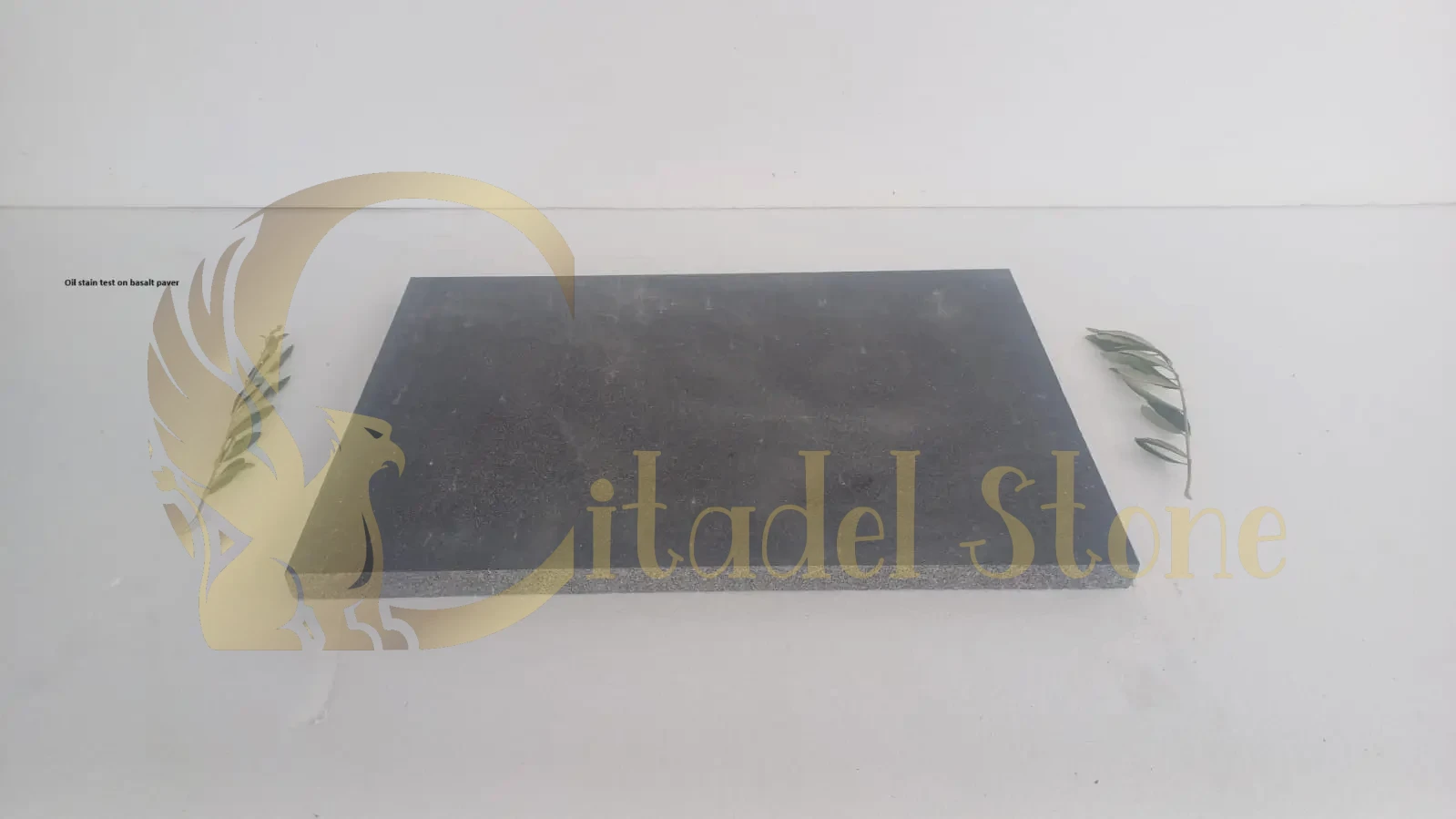
Oil stains are a hardscape’s worst enemy—think barbecue drips or car leaks. We tested basalt to see how it handles them.
ASTM Methods: Testing with Precision
We used ASTM C97, a trusted lab test that measures absorption. Basalt samples were weighed dry, submerged in oil for 48 hours, then weighed again to see how much they soaked up.
Sample Prep and Absorption Rates
Our 2-inch-thick basalt pavers, finished with a honed surface, absorbed just 0.4% of their weight in oil. That’s barely a drop—proof that oil stays on the surface, not in the stone.
Test Results and Interpretation
In practical terms, a greasy spill on basalt won’t seep in fast. You’ve got time to grab a cloth and clean it up. Compare that to concrete, which can soak up 5% or more, and basalt’s edge in oil stain basalt resistance is clear.
Wine & Organic Stain Resistance
Red wine, coffee, or berry juice—organic spills can leave a lasting mark. Here’s how basalt fares.
Simulated Spill Protocols
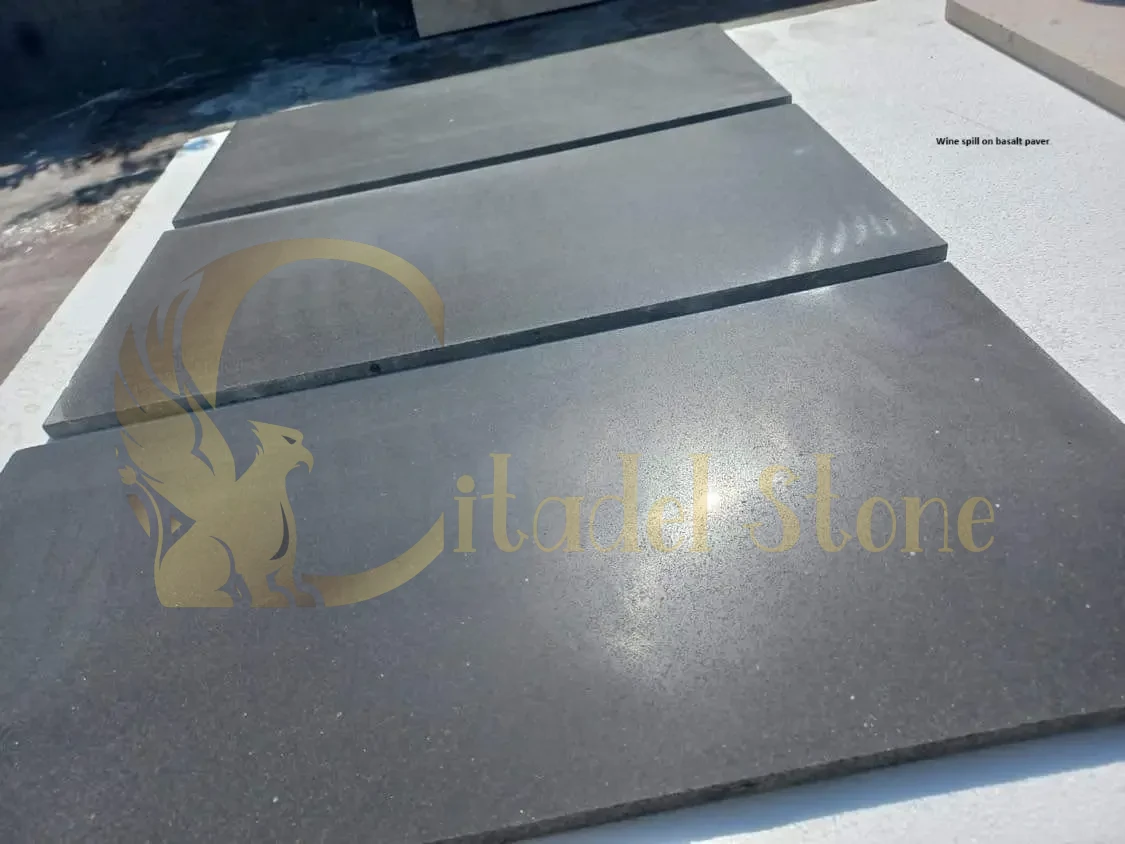
We poured red wine on basalt samples and let it sit for 24 hours—a worst-case scenario. Then, we cleaned it with water and a mild soap to mimic what you’d do at home.
Colorimetric Analysis
A colorimeter checked for color changes. The result? A shift of less than 1%—too small to notice without a microscope. Basalt stayed spotless.
Cleanup Efficacy
The wine rinsed off effortlessly, unlike on unsealed concrete, where stains lingered after scrubbing. Basalt’s low porosity makes it a champ for wine resistance pavers.
Chemical & Solvent Resistance
From pool chemicals to driveway de-icers, harsh substances test any paver’s grit. Basalt didn’t flinch.
Acid, Alkali, and Household Chemical Exposures
We exposed basalt to:
Hydrochloric acid (think pool cleaner)
Sodium hydroxide (like drain cleaner)
Bleach (everyday disinfectant)
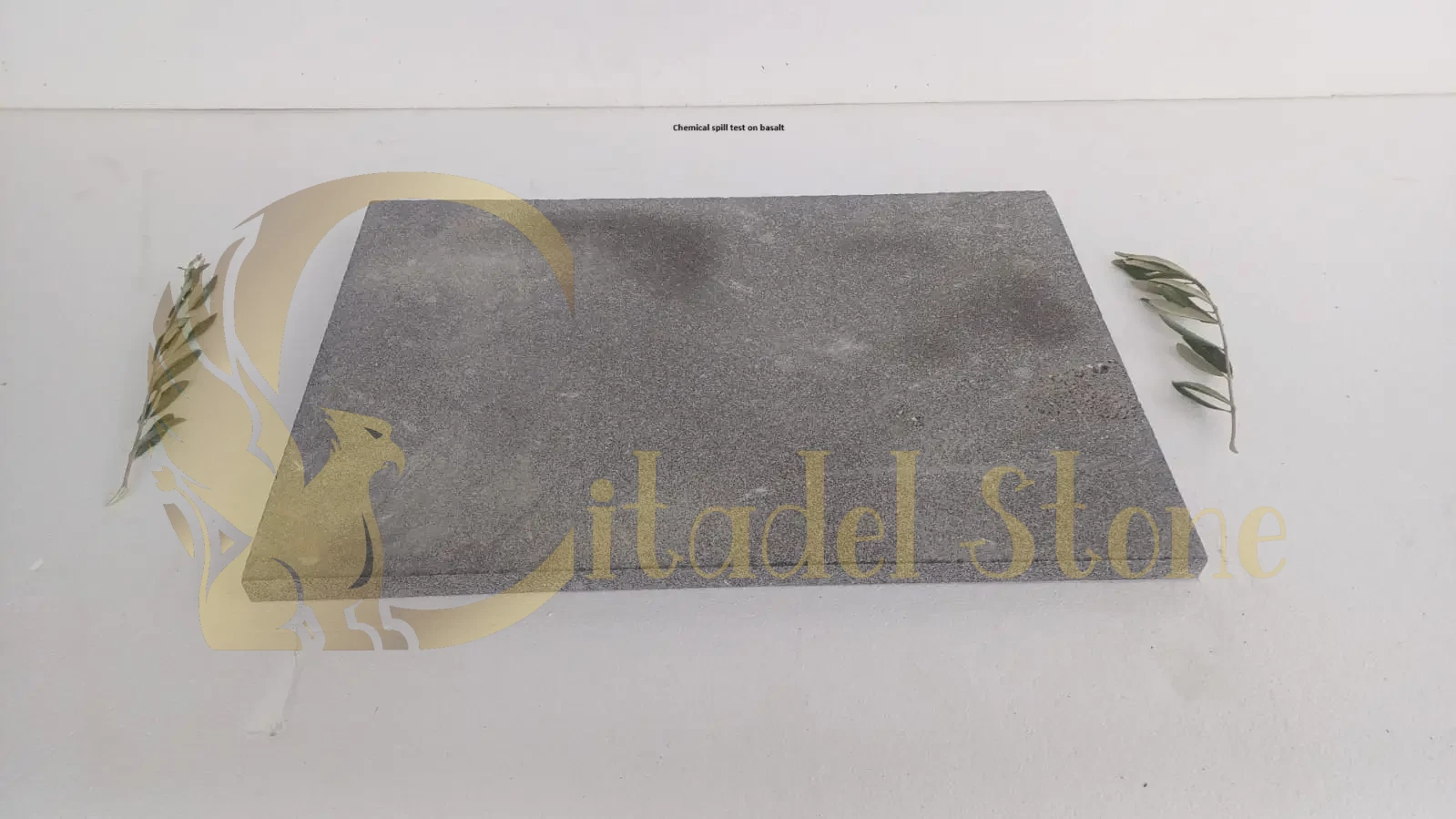
Samples sat in each for 24 hours, then got a rinse.
Surface Degradation and Discoloration Metrics
No etching, fading, or damage showed up. Basalt’s mineral makeup laughs off chemical attacks, making it chemical spill proof paving for tough spots.
Sealing & Surface Treatments
Basalt’s natural resistance is strong, but sealing kicks it up a notch—especially for spill-heavy zones.
Types of Sealers
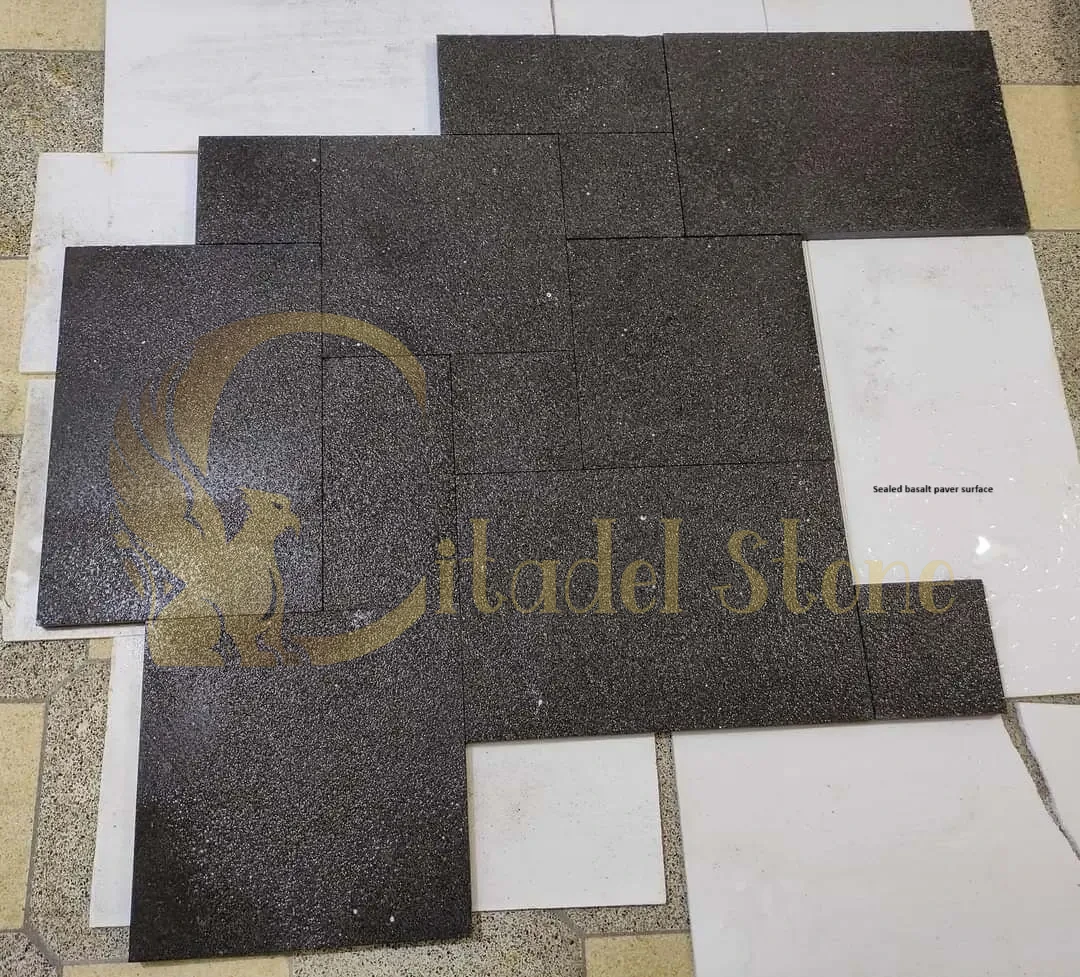
Penetrating Sealers: Slip into the stone, blocking pores without altering its look.
Topical Sealers: Coat the surface, adding shine and extra stain defense.
Application Techniques
Use a roller or sprayer on dry, clean pavers. Apply evenly, wipe off excess, and let it cure for a day.
Re-Sealing Schedules
Re-seal every 2-3 years for most areas. High-risk spots like kitchens might need it yearly. Browse our basalt sealers for the perfect fit.
Maintenance & Cleaning Protocols
A little TLC keeps basalt pristine. Here’s your go-to guide.
Recommended Cleaners
Use pH-neutral soap or diluted dish detergent. Skip the harsh stuff—it’s overkill and can dull the finish.
Stain-Lifting Methods
For oil, blot first, then scrub with soapy water. Wine or coffee? Rinse ASAP and wipe. Stubborn marks? Try a baking soda paste overnight.
Long-Term Care
Sweep monthly and rinse off dirt. Check joints yearly to keep water out and pavers secure.
Key takeaways:
Gentle cleaners work best on basalt.
Quick action stops stains cold.
Routine care keeps it looking fresh.
Interpreting Resistance Ratings
Test numbers can feel like a puzzle. Let’s decode them for you.
Decoding Lab Ratings
Absorption: Under 1% is gold—basalt hits 0.4%.
Color Change (ΔE): Less than 1 means no visible mark.
Chemical Tests: No damage after exposure is a pass.
Industry Benchmarks
Basalt outshines concrete and brick in stain-resistant hardscape tests, thanks to its low porosity and durability.
Warranty Implications
Look for stain protection in warranties. Citadel Stone’s got you covered with top-tier guarantees.
Choosing the Right Basalt for Your Project
Not all basalt is the same. Here’s how to pick the best.
Selecting Density Grades
Higher density (above 2,800 kg/m³) means less absorption. Ask your supplier for specs.
Finish Types
Honed: Smooth, great for patios.
Flamed: Grippy, ideal for wet areas.
Polished: Sleek, perfect for flair.
- Bush-hammered: rough finish, ideal for rainy or snowy weather.
Supplier-Certified Batches
Stick with tested stock. Citadel Stone certifies every batch for stain resistance.
Key takeaways:
Dense basalt beats stains best.
Finishes match your project’s vibe.
Certified pavers ensure quality.
Real Orders, Real Deliveries
We only publish projects we have actually supplied. See our Las Vegas white limestone delivery — two containers, 6,884 sq ft, 32 crates, shipped door to door — and how we supplied Creative Environments in Arizona with 21 containers across a 70,000+ sq ft installation: white limestone pavers and tiles, shellstone and Ocean Reef pavers.
Had Citadel Stone material installed on your project? Send us your photos and we will feature the work here, with your permission.
Conclusion
So, do basalt pavers stain? Hardly ever. With low porosity, tough minerals, and stellar test results against oil, wine, and chemicals, basalt is a hardscape hero. Add a sealer and some simple care, and you’ve got a surface that stays gorgeous for years. Want to seal the deal? Browse our basalt sealers to keep your pavers pristine.
Why Citadel Stone?
At Citadel Stone, we craft basalt pavers that blend beauty with battle-tested durability. Check out our sealant options and testing docs here to make your next project unstoppable.