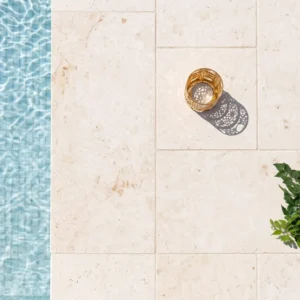
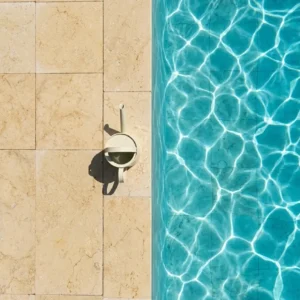
What Actually Drives Travertine Coping Failure
Travertine coping specifications go wrong at a predictable point — not at the material selection stage, but at the joint and substrate interface. The thermal cycling that pool edges endure is far more severe than most buyers anticipate: day-to-night temperature swings of 40°F or more cause the coping bed to expand and contract at a different rate than the stone above it, and without correctly sized movement joints, the travertine coping will telegraph that stress as edge spalling within three to five seasons. This guide walks you through every variable that separates a well-specified travertine coping installation from one that looks tired before its decade mark.
Understanding Small-Format Travertine Coping
Small-format travertine coping — typically pieces in the 6-inch-wide or 12-inch-long range — behaves differently on a pool edge than large-format slabs do. The shorter piece length means more head joints per linear foot, and more head joints means more potential movement accommodation, which is actually an advantage in thermally active environments. You’ll find the format particularly useful on curved pools where large pieces require wet-sawing to follow the radius, adding both cost and waste. That said, more joints also mean more grout surface exposed to pool chemistry, so your joint material selection matters as much as the stone itself.
The calcium carbonate base of travertine gives the material its characteristic warmth underfoot — surface temperatures stay measurably lower than dense igneous alternatives in direct sun, which is a meaningful comfort factor for barefoot pool use. According to Natural Stone Institute travertine properties and outdoor suitability, the open-pore structure and absorption characteristics of travertine actively moderate surface heat in high-UV environments. Factor this into your finish selection before you commit to a pool edge specification.
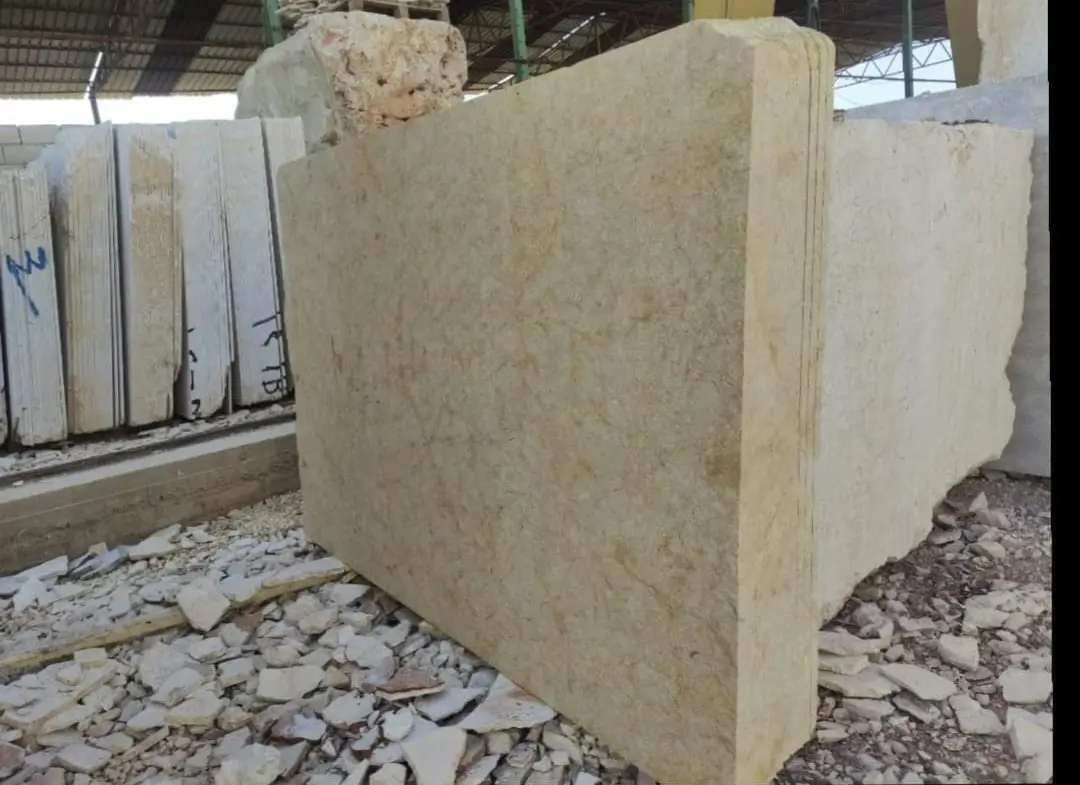
Coping Profiles and Edge Geometry
Your coping profile choice locks in both the aesthetic and the structural performance of the pool edge. The most common profiles you’ll encounter for travertine coping are bullnose, drop-face, and flat with a routed drip groove on the underside.
- Bullnose profiles offer a smooth rounded edge that resists chipping — important for high-traffic family pools where the edge takes regular physical contact
- Drop-face coping (also called cantilevered or waterfall profile) creates a clean shadow line and channels water away from the bond beam more effectively than a flat edge
- Flat coping with a drip groove is the most economical to produce and works well on raised-beam pools where the overhang is minimal
- Tumbled-edge profiles on antique travertine tile give a historically-worn look that tolerates minor chipping without looking damaged — an honest choice for high-use installations
Your profile selection also affects the nominal piece thickness you need. Drop-face coping needs enough cross-sectional mass to support the unsupported overhang — typically 1.25 inches minimum for spans over 1.5 inches. Flat profiles can run at 3/4 inch for residential use, though 1 inch nominal is more forgiving on uneven bond beams.
Travertine Variety Selection for Coping
The variety of travertine you choose shapes everything from the pore structure to the color stability over time. Three varieties deserve detailed attention when specifying pool coping specifically.
Durango travertine is a warm gold-to-walnut stone quarried from Mexican deposits. Its relatively consistent pore pattern makes it a reliable choice for filled-and-honed coping, and the earthy tones age gracefully in outdoor UV exposure without the significant color drift you see in some lighter varieties. Durango travertine holds its sealer well due to its moderately open surface texture, which is relevant for pool environments where resealing cycles matter.
Shellstone travertine occupies a different performance category. The fossilized shell inclusions give it a distinctive surface texture that directly affects how water behaves on the face of the coping — the micro-relief created by the shell fragments increases the surface variability that contributes to safer wet conditions. The trade-off is that shellstone travertine is more variable in color and pattern, so warehouse selection and consistent batch ordering become important. Confirm available stock quantities before you commit shellstone travertine to a large run of pool edge.
Antique travertine tile in small formats brings a different specification logic altogether. The tumbled finish and filled voids give it a softer surface character, and the pre-aged aesthetic tolerates the minor patina that pool chemistry and UV deliver over time. What you need to watch with antique travertine tile is the fill quality — low-grade fills shrink and pop within two to three seasons of pool chemistry exposure, leaving open voids that trap debris and accelerate staining.
Fill and Finish Options — What Changes at the Pool Edge
Filled-and-honed is the default specification for travertine coping, and for good reason. The filled surface eliminates the open voids that would otherwise collect pool water, biofilm, and sunscreen residue in the worst possible locations. Not all fills perform equally at a pool edge, however.
- Portland cement fills are cost-effective but brittle — in freeze-thaw regions, the differential movement between the fill and the surrounding travertine matrix causes micro-cracking within a few seasons
- Epoxy fills resist pool chemistry far better and flex slightly with thermal movement, reducing the spalling risk that cement fills develop
- Unfilled travertine is occasionally specified deliberately for non-pool applications where the open texture is the aesthetic goal — at a pool edge, this is a maintenance liability
- Brushed finishes on filled travertine offer a middle ground: the surface texture is more varied than a smooth hone but less aggressive than a tumbled finish
Honed travertine coping is the most practical finish choice because it reads cleanly against pool water, shows less wear than polished, and doesn’t demand the precision maintenance that a high polish requires outdoors. Polished travertine coping looks striking in showroom photography and becomes a maintenance burden at a pool edge within two seasons.
Thermal Cycling and Movement Joint Specification
Small-format travertine coping has a meaningful engineering advantage that most buyers don’t initially appreciate. The shorter individual piece length — say 12 inches versus 24 inches — means each piece accumulates less total linear expansion across a given temperature range. Travertine’s thermal expansion coefficient runs in the range of 4–5 × 10⁻⁶ per °F. Over a 60°F day-to-night swing (entirely realistic in arid or high-desert regions), a 24-inch piece moves roughly three to four times more in absolute terms than a 12-inch piece does. That expansion has to go somewhere, and if your joints aren’t sized to accommodate it, it goes into the stone edge as stress.
Specify your movement joints at every 10 to 12 linear feet of coping run at a minimum. In climates where seasonal extremes push temperature cycling beyond 80°F, tighten that interval to 8 feet. Your expansion joint material should be a flexible, pool-chemistry-resistant sealant — not grout, which is rigid and will fail under cyclic thermal loading. The ASTM C1527 travertine dimension stone standard provides the dimensional tolerances and physical property benchmarks that inform how much variability your setting bed must absorb beyond the sealant joints alone.
What often gets overlooked is the bond beam itself. Concrete bond beams expand and contract independently of the travertine coping above them, and in outdoor pools that see wide temperature cycling, the interface between the two is a failure plane if the setting mortar is too rigid. A polymer-modified mortar with good flexibility — rather than a standard Portland mix — keeps the system moving as a unit rather than as two competing materials.
Thickness Requirements and Substrate Preparation
Substrate preparation determines more of the long-term outcome than the stone specification does. A perfectly selected travertine coping piece installed on an uneven or contaminated bond beam will crack, tilt, and allow water infiltration behind the pool shell — a far more expensive problem than the coping itself.
- Bond beam surface must be clean, structurally sound, and free of curing compounds before mortar is applied — existing sealers or form-release agents prevent proper adhesion
- The setting bed should be back-buttered on the coping piece as well as applied to the bond beam — full coverage prevents hollow spots that become stress concentration points
- Nominal 1-inch coping thickness suits most residential applications on a well-prepared bond beam; 1.25-inch nominal adds safety margin on bond beams with minor surface irregularities
- For travertine coping used as pool deck transition pieces rather than true overhang coping, the thickness spec follows the field tile protocol, not the coping-specific requirements
Verify your warehouse inventory includes consistent thickness tolerances across the full run. Mixing batches from different production runs can introduce 1/8-inch to 3/16-inch thickness variations that show as lippage at every piece joint — particularly visible on honed finishes where the flat face makes height differences read sharply.
Sealing Protocols Specific to Pool Coping
Travertine coping lives in one of the most chemically aggressive outdoor environments a stone surface encounters — pool water chemistry, sunscreen residue, UV exposure, and thermal cycling all work simultaneously on the surface and the fill material. Your sealing protocol needs to account for all of them, not just water penetration.
For pool coping specifically, a penetrating impregnating sealer is the correct choice. Topical sealers build a surface film that pool chemistry deteriorates and UV degrades, and when that film fails, it fails inconsistently — peeling and flaking across the surface rather than simply wearing away. A penetrating sealer works below the surface and doesn’t create a visible film to maintain. Apply it to dry stone — meaning curing time after installation should be a minimum of 28 days before the first seal — and plan on reapplication every two to three years depending on pool chemistry and sun exposure. You can explore Citadel Stone pool edge stone options to find pieces that arrive pre-filled and ready for sealing without additional surface preparation on site.
One practical detail that gets skipped in most spec documents: seal all six faces of coping pieces, not just the top surface. The underside of coping exposed to pool water chemistry — even indirectly through splash — will stain from the bond beam side if left unsealed. It’s an extra step that takes roughly 15 minutes per linear foot and saves you a difficult remediation job later.
Ordering, Logistics, and Project Planning
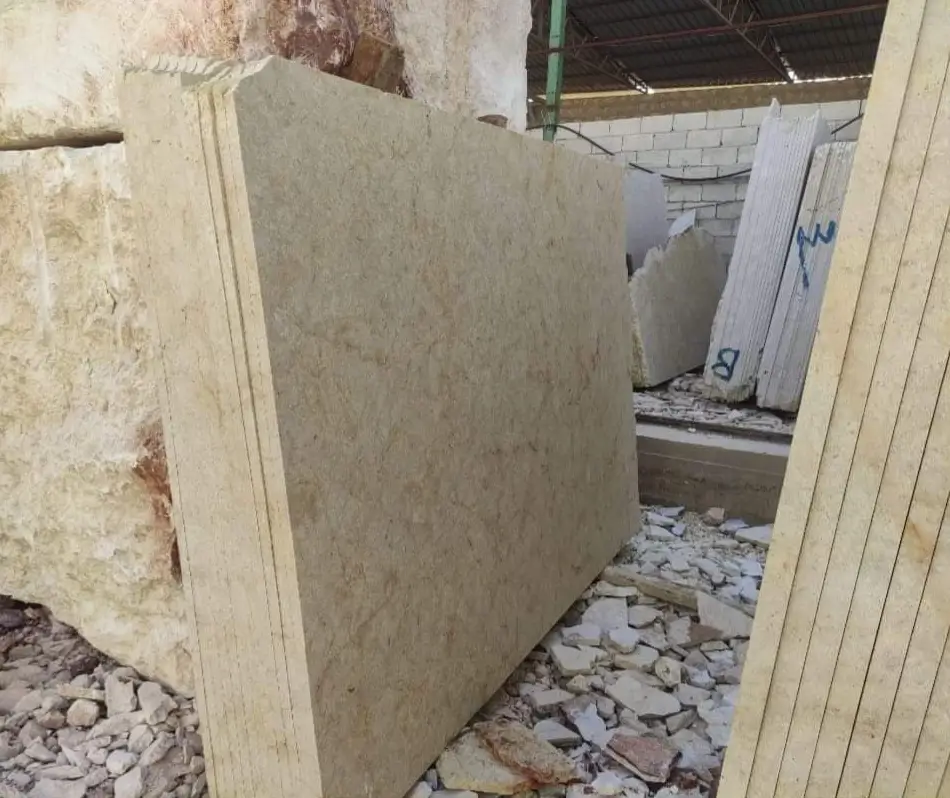
Small-format travertine coping has a supply chain reality that affects your project timeline: consistent batch availability matters more for coping than for field tile because the pieces are highly visible at eye level and color variation between batches reads immediately. Order your full coping quantity from a single lot, add 10–12% for cuts and waste, and confirm the warehouse has that quantity in stock before you finalize your timeline.
Citadel Stone carries travertine coping inventory in the warehouse for direct shipment, which reduces the lead time exposure that custom-quarried orders carry. For most projects, a two-to-three week lead time from order confirmation to truck delivery is realistic when stock is available — considerably shorter than the six-to-eight week cycle that a special-order import requires. Confirm your truck access and site staging area before the delivery date; travertine coping on pallets requires a flat, stable unloading zone, and rescheduled deliveries add cost to both sides of the transaction.
The PHTA ANSI pool deck and coping standards provide useful reference points for professionals specifying coping for commercial pools or projects where code compliance documentation is required. Residential projects benefit from the same performance benchmarks even when formal compliance review isn’t mandatory.
Getting Travertine Coping Specifications Right
Travertine coping rewards the specifier who pays attention to the details that don’t appear in product photography — joint design, fill quality, thermal movement accommodation, and sealing protocol. The stone itself is highly resistant to weathering and delivers decades of service life when the installation underneath it is done correctly. Small-format pieces in particular give you flexibility on curved pools and thermally active environments that larger slabs simply can’t match without engineering compromises. As you build out your full pool surround specification, it’s worth reviewing how compatible stone varieties perform across different format scales — Scabos travertine in small-format layouts shows how a different vein pattern and color register works in the same small-format logic, which can inform your variety decision before you commit. Sourced from quarries across the Mediterranean and Middle East, Citadel Stone travertine coping arrives in consistent thicknesses for clean pool-edge transitions.
Related reading: Grouting Travertine Tile: Color, Width, and Haze · how to polish travertine tile · travertine border tile ideas.