Why the 18×18 Format Changes Everything on a Patio
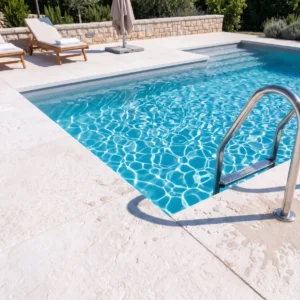
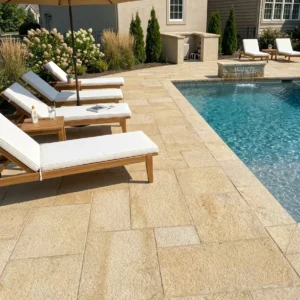
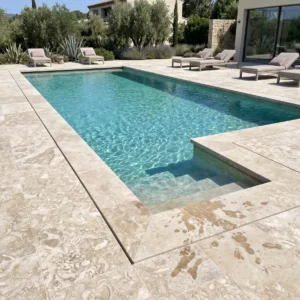
The 18×18 outdoor tile format does something smaller formats struggle to accomplish — it visually expands a space without requiring grout lines every 12 inches. Fewer joints mean cleaner sightlines, and on a pool deck or patio, that translates directly into a more refined aesthetic. Choosing 18×18 outdoor tile also reduces the number of cuts at perimeter edges, which matters when you’re working with curved pool surrounds or irregular patio boundaries.
The format carries a practical trade-off worth understanding upfront. Larger slabs require flatter, more precisely prepared substrates — a 1/8-inch deviation that a 12×12 tile bridges easily becomes a lippage problem with an 18×18 tile. Your base preparation tolerance tightens from roughly 3/16 inch per 10 feet to 1/8 inch per 10 feet when moving to this format, per TCNA installation standards.
Material Options Worth Considering in the 18×18 Format
Your material choice shapes the character of the installation as much as the format itself. Here’s how the most common options compare for outdoor use:
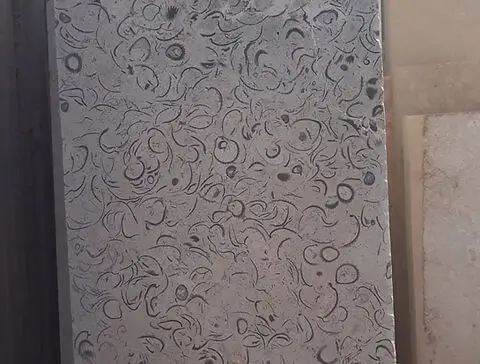
- Natural travertine: warm tonal variation, open-pore texture that reads naturally in garden and pool environments, surface temperatures that stay measurably lower than dense stone alternatives in direct sun
- 18×18 white porcelain tile: highly consistent color and surface, water-resistant and dense enough to handle most outdoor exposure, but surface temperatures run noticeably higher in full-sun conditions than natural stone options
- Limestone: structured grain, excellent slip resistance in honed finishes, highly resistant to surface wear in moderate-traffic areas
- Basalt: tight pore structure, uniform dark coloring, performs well in freeze-thaw regions due to low absorption rates
According to the Natural Stone Institute stone variety guide, natural materials like travertine and limestone offer absorption and thermal characteristics that differ substantially from dense ceramic alternatives — a relevant distinction when you’re specifying for barefoot pool deck use where surface temperature matters.
Patio Design Ideas Using the 18×18 Format
The 18×18 dimension gives you design flexibility that smaller formats simply don’t offer. Consider these approaches when planning your patio layout:
- Straight grid pattern: the most efficient cut-to-waste ratio, strong horizontal lines that make narrow patios feel wider
- Diagonal layout: rotated 45 degrees from the structure’s walls, this creates a dynamic floor plane that draws the eye outward — effective on square patios that feel boxy in a straight grid
- Border-and-field: a contrasting material at the perimeter with the primary 18×18 outdoor tile in the field creates definition without additional structural work
- Mixed-format: pairing 18×18 tiles with an 18×36 plank in alternating rows delivers a contemporary rhythm popular in modern outdoor living spaces
For natural stone patio applications, the ASLA outdoor paving material guidance consistently reinforces that pattern orientation and joint spacing decisions affect long-term drainage performance — something worth factoring into your layout before cutting a single tile.
Pool Deck Applications: What the 18×18 Format Delivers
Pool decks present a specific set of demands that the 18×18 format handles well when you specify the right surface finish. The key variable is coefficient of friction — pool surround surfaces should meet the ANSI A326.3 wet DCOF threshold (0.42). Travertine in a tumbled or brushed finish typically achieves 0.70–0.80 wet, which gives you a comfortable safety margin. Polished finishes on any material, including 18×18 white porcelain tile, drop that number significantly when wet.
You’ll want to think carefully about grout joint width on pool decks. A 3/16-inch joint with a non-sanded polymer grout gives you the flexibility your deck substrate needs without allowing significant water intrusion at joint edges. Wider joints at 1/4 inch perform better in applications with significant thermal cycling — relevant in climates with extreme seasonal temperature swings. The TCNA installation standards for natural stone tile provide detailed joint-width-to-tile-size ratios that are worth reviewing before you finalize your specification.
For natural stone options in this format, you’ll find that Citadel Stone patio stone in travertine delivers the surface texture and thermal performance that pool environments demand, sourced with consistent thickness tolerances that simplify installation.
Driveway Use: What Changes at the 18×18 Scale
Specifying 18×18 outdoor tile for driveway applications is viable — but the structural requirements shift considerably compared to pedestrian-only areas. Your aggregate base needs to run at minimum 6 inches of compacted Class II or equivalent, and you should plan expansion joints every 8–10 feet rather than the 12–15 feet standard in patio applications. Vehicle point loads on the tile corners drive that tighter joint spacing requirement.
Material selection matters more here than anywhere else. Basalt and dense granite in the 18×18 format handle vehicle loads well due to compressive strength exceeding 20,000 PSI. Standard travertine variants — particularly the higher-porosity fills — are better kept to pedestrian zones unless you’re specifying filled and honed product with confirmed density ratings. Your delivery logistics also deserve attention: 18×18 stone tile ships on pallets that require truck access close to the installation area. Verify that your project’s truck clearance accommodates a standard flatbed before scheduling delivery.
Using the 18×18 as a Stepping Stone Format
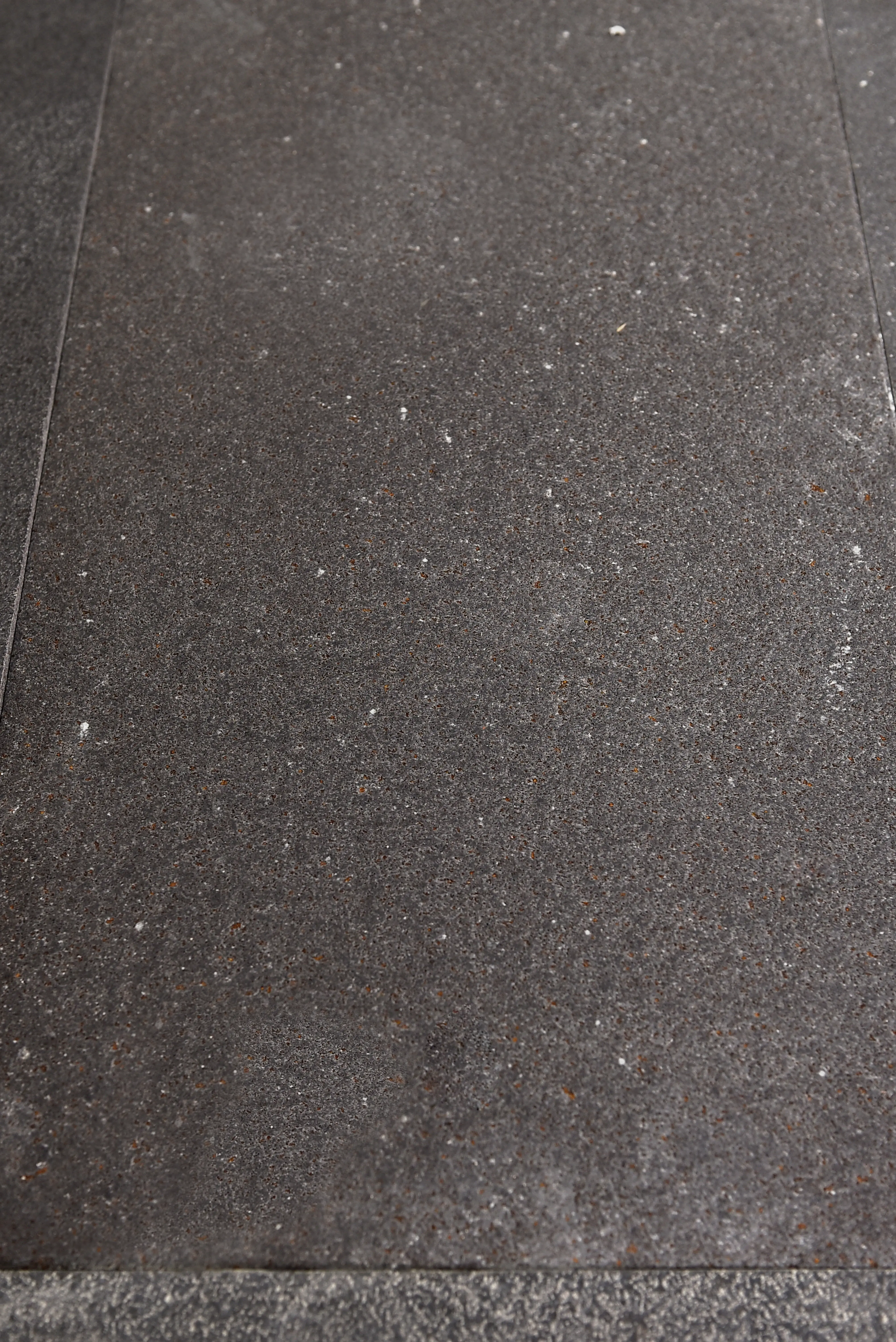
The 18×18 stepping stone application is one of the more underutilized design moves in residential hardscape. Set on a compacted decomposed granite bed at roughly 24-inch center spacing, these tiles create a deliberate, architectural garden path that reads completely differently from irregularly shaped flagstone. The uniformity of the 18×18 format gives walkways a geometric precision that suits contemporary gardens and modern home styles. Specifying 18×18 outdoor tile for stepping stone paths also gives you consistent thickness across the run — a meaningful advantage over natural flagstone when maintaining a level walking surface matters.
- Set stepping stones 1.5–2 inches proud of grade to account for ground settling and to maintain clean visible edges against lawn or ground cover
- Use a polymeric sand infill at the exposed edges rather than standard masonry sand — it resists washout far better in exposed garden settings
- Space stones at approximately 60% of average stride length — roughly 22–24 inches on center — for comfortable natural walking rhythm
- Choose a surface finish with texture: tumbled or brushed finishes outperform honed surfaces in damp garden environments from a slip resistance standpoint
The ADA walkway surface guidelines reinforce that firm, stable, and slip-resistant surfaces are non-negotiable in accessible path design — something worth considering even for residential pathways where guests of varying mobility may use the space. An 18×18 stepping stone laid on a properly compacted base satisfies those stability requirements more reliably than loosely set flagstone.
Scheduling Your Installation: Seasonal Timing Decisions
Seasonal installation timing has a larger effect on 18×18 tile than on smaller formats, and the reason comes down to adhesive open time and substrate thermal behavior. Setting mortars and large-format tile adhesives have specific working windows — and those windows compress significantly when substrate temperatures exceed 90°F or drop below 50°F.
Here’s what that means practically for your project planning:
- In warm months, schedule tile-setting work for early morning sessions — substrate temperatures at 7 a.m. give you 30–40% more open time than the same adhesive at 2 p.m. on a sun-exposed concrete slab
- In cooler months, afternoon installation windows often outperform morning starts because slab temperatures have had time to climb above the minimum curing threshold
- Avoid installation when overnight temperatures will drop below 40°F within 24 hours of tile placement — the adhesive needs a full cure cycle before thermal stress engages
- High-humidity periods can actually extend adhesive open time, but they slow cure times — factor this into your project scheduling if you’re working toward a deadline
At Citadel Stone, we recommend confirming warehouse stock and scheduling your truck delivery 7–10 days ahead of your installation window so material is on-site and acclimated before work begins. Stone that arrives cold from a warehouse in winter months benefits from 24 hours of ambient temperature exposure before setting — particularly for large-format pieces where thermal-related size variation is measurable.
12×12 vs 18×18: Matching Format to Application Scale
The 12×12 tile bathroom floor remains the standard for good reason — smaller spaces benefit from smaller formats because proportional scale feels natural to the room. Carrying an 18×18 tile into a bathroom under 80 square feet creates visual tension: the format overwhelms the space rather than enhancing it. Save the 18×18 for outdoor areas, open-plan indoor extensions, and large primary bathrooms where the format has room to breathe. Conversely, the 12×12 tile bathroom floor specification discipline transfers directly to outdoor 18×18 installations — substrate flatness, waterproofing membranes at transition zones, and proper slope-to-drain geometry are non-negotiable regardless of format.
The outdoor environment simply compounds the consequence of getting those details wrong. That said, the same specification rigor you apply indoors applies outdoors: the larger the format, the less tolerance the installation has for substrate variation or adhesive shortcuts.
Parting Guidance
The decisions that define a successful 18×18 outdoor tile installation happen before a single tile is set — in substrate preparation, material selection, finish specification, and installation timing. Get those variables aligned and the format rewards you with an exceptionally durable, visually compelling surface that serves patios, pool decks, and driveways with equal confidence. Plan your seasonal installation window carefully, confirm your truck delivery timing against your project schedule, and verify warehouse availability well before your start date to avoid costly delays. As you finalize your stone selections, it’s also worth exploring how the 18×18 format transitions into interior applications — choosing 18×18 floor tile for interior use covers the specification crossover points worth knowing. Sourced from select natural stone quarries worldwide, Citadel Stone offers 18×18 outdoor tile for exterior walkways.
Related reading: 18×18 Tile Layout Patterns: 3 Designs That Work · 18×18 Tile Buyer’s Guide: Choosing the Right Fit · 24×24 floor tile.