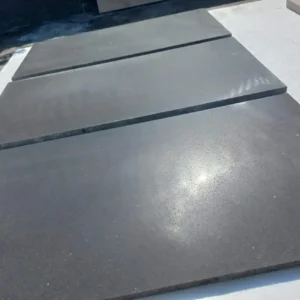
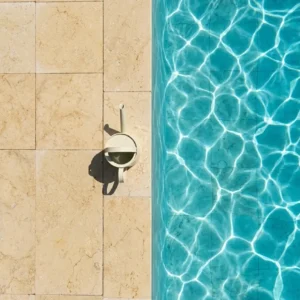
Why Grade Determines Everything in Outdoor Granite
Granite patio slabs for sale vary more in performance than most buyers expect — not because of color or finish, but because of grade. The compressive strength range across commercially available outdoor granite runs from roughly 19,000 PSI to over 30,000 PSI depending on quarry origin, mineral density, and internal void structure. That gap is the difference between a slab that handles freeze-thaw cycling for 30 years and one that begins spalling at the joint edges within a decade. Your specification needs to start here, before finish selection, before sizing, and before pricing conversations.
The thermal expansion coefficient for granite sits at approximately 4.4 × 10⁻⁶ per °F — one of the lowest among common paving stones. That low expansion rate is why granite performs reliably in outdoor settings with wide temperature swings, but it also means joint spacing needs precise calculation. Undersized joints on a large-format installation create point-load stress concentrations that propagate microfractures over time, particularly in slabs exceeding 24 inches in any dimension.
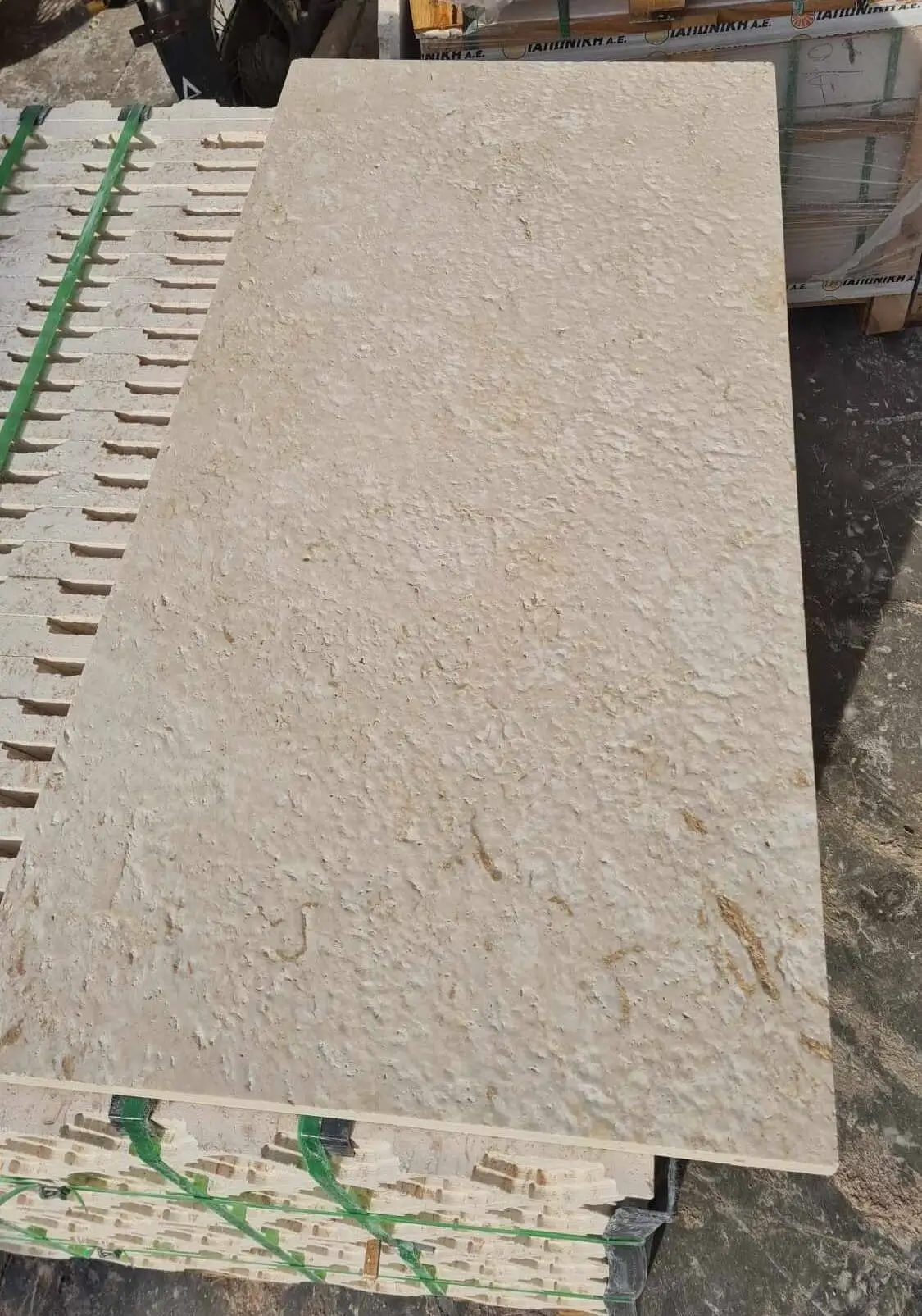
Stone Type Guide: What Igneous Composition Means for Your Patio
Granite’s durability comes directly from its igneous origin — slow-cooling magma produces interlocking crystals of quartz, feldspar, and mica that create an exceptionally dense, low-porosity matrix. According to Natural Stone Institute granite durability and application specifications, outdoor granite typically absorbs less than 0.4% water by weight, which is why it outperforms sedimentary alternatives in wet or frost-prone environments. You’re not just buying a surface material — you’re specifying a geological structure with predictable, engineered performance characteristics.
The mineral ratios in granite vary meaningfully by quarry origin, and those ratios affect everything from color stability to slip resistance. High-feldspar granites tend toward warmer tones — creams, pinks, and tawny golds — while high-quartz varieties lean grey, silver, or near-black. Mica content influences the visual sparkle you see in polished finishes, but in outdoor honed or flamed applications, mica-heavy slabs can present slightly softer surface zones at the microscopic level. For heavy-traffic patio areas, request a composition report, not just a color sample.
Finish Options and Their Outdoor Performance Trade-Offs
Finish choice shapes both aesthetics and safety on any patio surface. Flamed granite — where intense heat causes surface minerals to fracture and lift — produces a heavily textured profile ideal for wet conditions, achieving coefficient of friction values above 0.60 in most testing scenarios. Honed finishes deliver a matte, smooth surface that photographs beautifully and integrates well with modern minimalist design palettes, but they require more consistent maintenance in high-pollen or algae-prone environments. Bush-hammered finishes sit between the two: enough texture for traction, enough smoothness for furniture stability.
- Flamed finish: highest slip resistance, most texture variation, ideal for pool-adjacent or rain-exposed patios
- Honed finish: smooth matte surface, contemporary aesthetic, requires periodic anti-slip treatment in wet zones
- Bush-hammered finish: moderate texture, uniform appearance, strong performer in mixed-use outdoor spaces
- Polished finish: not recommended for exterior patio use — becomes hazardous when wet and shows surface wear rapidly outdoors
Slab Sizing and Thickness: Getting the Numbers Right
Large granite patio slabs for sale in the patio category typically range from 24×24 inches up to 48×24 inches or larger in custom cuts, and thickness options generally run from 1¼ inches (30mm) to 2 inches (50mm) for standard residential applications. The 1¼-inch specification works for pedestrian-only patios with a well-compacted aggregate base, but the moment you’re accommodating vehicle access — even occasional light-vehicle crossings near a garage edge — you should move to a minimum 1½-inch slab. The additional material cost is negligible compared to the cost of replacing cracked large-format pieces.
Span geometry matters more than most project managers acknowledge. A 48-inch slab supported only at its perimeter on a granular base creates a mid-span flexural load that depends entirely on subgrade stiffness. Per ASTM C615 granite dimension stone quality standards, granite’s modulus of rupture should meet minimum thresholds for your specific application load category — verify this with your supplier before placing a warehouse order on large-format pieces. At Citadel Stone, we review application load data with clients before confirming slab thickness, because field replacements on undersized stock are far more expensive than getting the specification right initially.
- 1¼-inch (30mm) thickness: suitable for pedestrian residential patios with compacted gravel base minimum 6 inches deep
- 1½-inch (40mm) thickness: recommended for mixed-use patios, high-traffic entertaining areas, or any near-vehicle application
- 2-inch (50mm) thickness: commercial-grade specification, suitable for rooftop terraces over structural decks or heavily loaded applications
- Large-format slabs (36 inches or longer): always specify 1½-inch minimum regardless of load — the span-to-thickness ratio demands it
Base Preparation and Joint Spacing for Granite Patio Slabs
The most common failure point in granite patio installations isn’t the stone — it’s the base. A 4-inch compacted gravel base is the industry floor, not the standard. For large slabs for sale in the patio category, base depth should scale with slab size: 6 inches of compacted aggregate for slabs up to 24 inches square, and 8 inches minimum for anything larger. Clay-heavy soils require an additional geotextile separation layer to prevent subgrade migration into the aggregate base during freeze-thaw cycles. Skip this step and you’ll see differential settling within two to three seasons.
Joint spacing calculation for granite needs to account for that 4.4 × 10⁻⁶ per °F thermal expansion coefficient across your installation’s maximum temperature differential. For a 40-foot patio run in a climate with a 100°F annual swing, that works out to roughly 0.21 inches of cumulative expansion — which sounds small until a row of 20 slabs forces it to concentrate at the outermost joints. Minimum joint width for large patio slabs should be 3/16 inch for standard conditions and 1/4 inch for installations in high-thermal-swing environments. Polymeric sand rated for natural stone — not standard jointing sand — is the correct fill material here.
Drainage Slope Requirements You Can’t Ignore
Patio drainage slope should be a minimum 1/8 inch per foot, and 1/4 inch per foot is a stronger specification for granite surfaces in high-rainfall environments. Granite’s low porosity means water doesn’t travel through the slab — it travels across it, and where it goes matters for both performance and adjacent landscaping. Standing water at the perimeter of large-format installations accelerates efflorescence at the joint edges and, in freeze-prone regions, creates the exact hydraulic wedging conditions that lift slab corners over successive winters.
Granite Color Families and Landscape Design Integration
Granite’s color range is broad enough to complement almost any landscape design tradition, and this is where aesthetic decisions carry real long-term weight. Warm-toned granites — the honey golds, rustic browns, and pink-flecked varieties — integrate naturally with traditional colonial garden layouts, clay-toned hardscape elements, and planting schemes that lean toward warm-season perennials. Cool-toned granites — the silver-greys, blue-blacks, and pure whites — anchor modern minimalist designs with precision and suit xeriscaping palettes that rely on textural contrast over floral color.
Desert xeriscaping environments particularly favor lighter granite tones because solar reflectance stays high even as the surface ages. Tropical planting schemes, conversely, benefit from darker granite tones that recede visually against dense green foliage — a design principle that creates strong figure-ground contrast in the landscape. Understanding how granite patio slabs interact with the surrounding plant palette, architectural materials, and hardscape boundary elements is as important as any technical specification. Color relationships between the stone and the landscape don’t fade the way paint does — they deepen over years as the granite patinas naturally.
For project teams wanting to review the full outdoor granite range before committing to a color and grade, Citadel Stone outdoor granite covers the available selections with technical detail that simplifies the specification process significantly.
Sourcing and Quality Verification: What to Ask Before You Order
Granite sourced from quarries across Brazil, India, and selected quarries from the Middle East spans a wide quality range within the same commercial grade labels. The terms “commercial grade,” “standard grade,” and “premium grade” aren’t governed by a single universal standard — they’re supplier-defined categories, which means verification is your responsibility before warehouse stock is committed to a project. Ask for absorption rate data (should be below 0.4% for exterior patio applications), flexural strength test results, and finish consistency documentation across the batch. A reputable supplier will have these on file.
Batch consistency matters more on large patios than most buyers anticipate. Granite slabs cut from different quarry blocks, even within the same color family, can show 10–15% variation in background tone. For a 500-square-foot patio, that variation across multiple pallets can create visible banding if slabs aren’t blended during installation. Request that your supplier ships from a single production run where possible, and always specify that slabs be dry-laid and blended before final setting. According to USGS granite production and construction use statistics, dimensional granite remains one of the most consistently produced natural stone categories in the industry, but quarry-to-quarry variation is real and documented.
- Request absorption rate certificates — below 0.4% is the standard for exterior patio use
- Verify flexural strength data matches your application’s load category per ASTM C615
- Confirm batch origin — single production run shipments reduce color banding risk on large installations
- Inspect finish consistency across samples from different positions in the pallet stack, not just the top slab
- Check warehouse lead times against your installation schedule — stock availability varies significantly by color and size
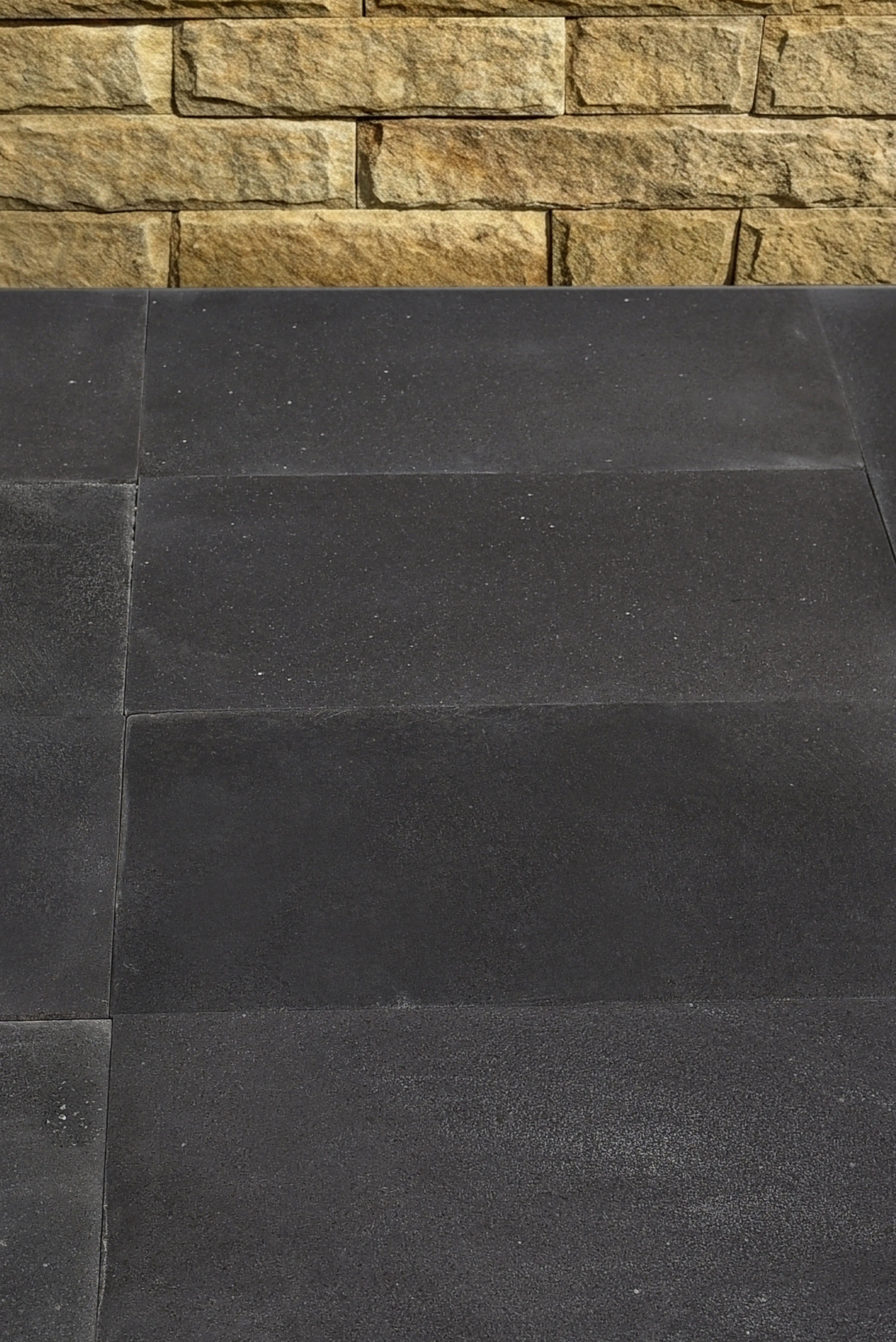
Sealing and Long-Term Maintenance for Granite Patio Slabs
Granite’s low porosity creates a common misconception — that it doesn’t need sealing outdoors. It does, though the sealing interval is longer than for travertine or limestone. A penetrating silane-siloxane sealer applied at installation and renewed every three to four years provides meaningful protection against oil penetration, organic staining from leaf tannins, and the minor surface oxidation that can dull lighter granite tones over time. The ASLA outdoor patio stone guidance referenced through ASLA outdoor patio stone material selection and design guidance emphasizes that proper surface treatment is a component of overall hardscape durability strategy, not an optional add-on.
Cleaning protocol matters as much as sealing frequency. Pressure washing at settings above 1,500 PSI can erode the polymeric sand in your joints over time, effectively dismantling the joint system that stabilizes large-format granite patio slabs. Use a wide fan nozzle, keep standoff distance at 18 inches minimum, and treat joint restoration as a separate maintenance task every five to seven years. Granite patio slabs cleaned and sealed on this cycle will maintain their surface integrity well beyond the 25-year mark in most conditions.
- Apply penetrating sealer at installation — do not skip initial application even on dense granite
- Reseal every three to four years for outdoor patio applications — shorter intervals in coastal or high-humidity environments
- Avoid acidic cleaners — even dilute vinegar solutions etch feldspar minerals over repeated exposure
- Pressure wash at maximum 1,500 PSI with wide-fan nozzle to protect polymeric joint sand integrity
- Inspect joint sand depth annually and top up to 95% fill capacity to prevent lateral movement in large-format slabs
Moving Forward With Your Granite Patio Specification
Selecting granite patio slabs involves a tighter chain of decisions than most buyers realize going in — and the order of those decisions shapes the outcome more than any individual choice. Grade verification and base specification come first. Finish and color selection follow once the structural parameters are confirmed. Sourcing logistics, including warehouse lead times and batch consistency checks, need to be resolved before installation crews are scheduled, because delays on large-format natural stone orders don’t compress easily. Citadel Stone ships nationwide with typical warehouse-to-delivery lead times of one to two weeks on in-stock sizes, which helps project managers build realistic timelines without buffer guesswork.
Your landscape design vision — whether that’s clean minimalist lines around a modern structure or warm traditional garden paving anchored by perennial plantings — is best served by granite that’s been specified correctly from the ground up. As you build out your overall hardscape plan, complementary natural stone elements can further define the design. For a different but related direction in premium stone surfacing, pink marble slab design and pairings explores how warmer marble tones work alongside other hardscape materials. Granite patio slabs from Citadel Stone hold color well in hot, dry climates, resisting fade across long sunny seasons.
Related reading: round marble slabs for sale · remnant granite slabs vs full slabs · how to choose a marble slab.