What Marble Grade Actually Tells You Before You Buy
Choosing a marble slab starts with grade — the classification assigned at the quarry level that tells you far more about long-term performance than any photograph will. Commercial-grade marble typically carries more natural fissures, filled voids, and colour variation than A-grade or premium slabs, and those differences compound once the stone is cut, installed, and living under daily use. Understanding grade before you tour a slab yard changes every conversation you’ll have with a fabricator.
Marble is a metamorphic rock, and that origin matters practically. The recrystallisation process that produces its signature veining also creates directional stress planes in the stone — lines along which flexural strength drops measurably. According to NSI marble grades and specifications, flexural strength across the grain in most commercial marble runs 20–40% lower than along it, which directly affects how you orient slabs over unsupported spans like sink cutouts or cooktop openings. That’s the kind of detail your fabricator should flag, but it’s also something you can ask about when choosing a marble slab for your project.
Reading the Slab Surface: Veining, Pores, and Fill Quality
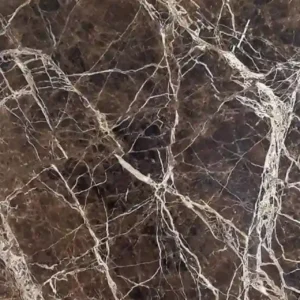
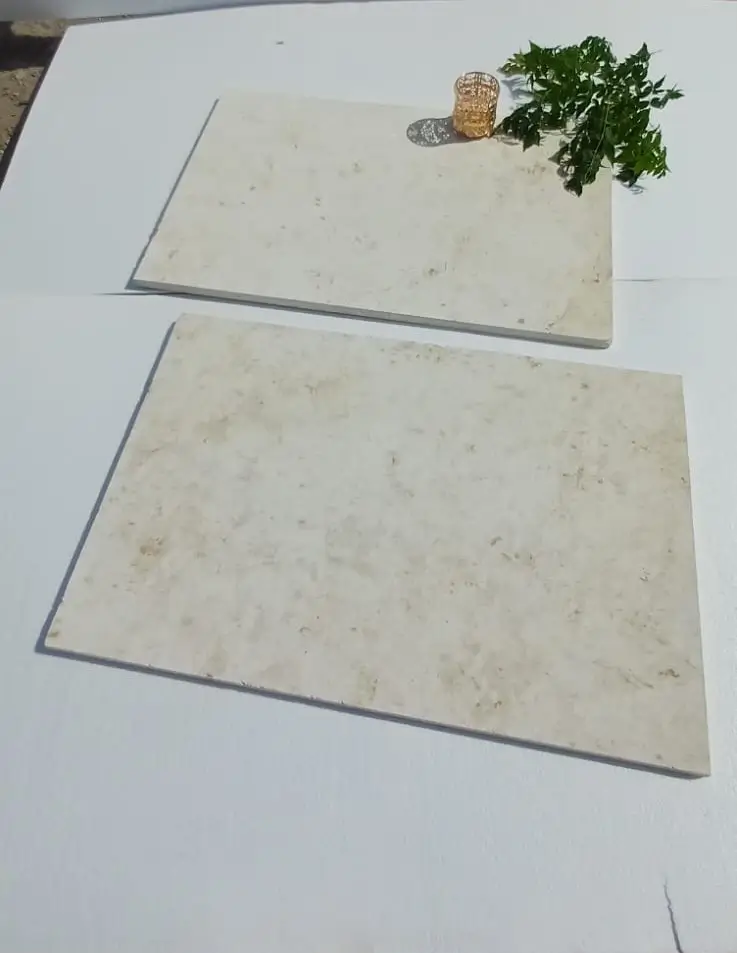
Your eye goes to the veining first — that’s natural. But the detail most people overlook is the fill quality in the voids and fissures that run alongside or beneath the primary veins. Epoxy-filled fissures are standard practice and entirely acceptable; what matters is whether the fill is colour-matched, fully penetrating, and stable. Run your fingernail across the surface lightly. If you feel a ridge or a depression at any filled zone, that fill hasn’t bonded flush, and it will telegraph through a polished finish within six to twelve months of use.
Veining consistency is the other factor that separates a slab that photographs beautifully from one that actually works in a kitchen or bathroom. Assess movement continuity — does the vein travel in a logical path across the full length of the slab, or does it break, shift abruptly, and restart? Broken movement is natural in certain quarry zones and not a structural problem, but it makes bookmatching or flow-matching across seams nearly impossible without significant waste. If your countertop layout has a visible seam, bring your template to the slab yard and physically mark where the seam falls before you commit.
Porosity and Absorption: What the Numbers Mean for Daily Use
Most marble sold for countertop use has an absorption rate between 0.2% and 0.5% by weight — that’s the ASTM C503 test threshold range that separates tight, dense slabs from more porous material that will require aggressive sealing protocols. Calacatta varieties from certain Italian quarries tend toward the lower end of this range, while some Greek and domestic marbles sit higher. Neither is automatically disqualifying, but the higher the absorption, the shorter your sealing interval becomes — typically 12 months versus 24 months for denser material. According to ASTM C503 marble dimension stone specification, absorption at or below 0.20% qualifies a slab for the highest durability classification, which is a useful benchmark when comparing options side by side.
- Tile your fingertip with water on the unfinished back of the slab — if absorption is visible within 90 seconds, the stone is on the porous end of the spectrum
- Ask your supplier for the quarry’s published absorption test data rather than relying on visual assessment alone
- Higher-porosity slabs are not automatically inferior — they can still perform exceptionally with the right sealer applied at the right intervals
- Honed and leathered finishes tend to show absorption more readily than polished surfaces, so factor finish type into your sealing plan
Thickness Options and Structural Implications
The standard residential countertop slab comes in 2 cm (approximately ¾ inch) or 3 cm (approximately 1¼ inch) nominal thickness. The 2 cm option requires a plywood substrate beneath it for most countertop applications — without that backing, you’re relying entirely on the slab’s own flexural strength across unsupported spans, which is a liability over cutouts. The 3 cm format is structurally self-supporting in most standard overhang and cutout configurations, which is why it’s become the default specification for kitchen countertops in mid-to-high-end projects.
There’s a cost consideration here that isn’t always obvious. The 3 cm slab isn’t just a thicker version of the same slab — the quarry produces it from a different cut depth, which means the veining pattern you see on a 3 cm slab may differ noticeably from the same block’s 2 cm output. If you’re specifying both a countertop and a backsplash from matched material, confirm that your supplier can source both thicknesses from the same block run, or plan for intentional contrast rather than a failed match.
Slab Size and Yield Planning
Standard slab dimensions run approximately 55–65 inches wide by 100–130 inches long, though oversized slabs from certain quarries reach 140 inches or more. Yield planning — the percentage of the slab you’ll actually use versus what ends up as cut-off waste — determines whether a single slab covers your project or whether you need two. Most kitchen countertop projects with an island fall into the two-slab category, and matching those two slabs is where your selection strategy needs to get precise.
- Request slabs from the same quarry block when running multiple slabs — same block number means consistent background colour and vein character
- Calculate your net square footage needed, add 15–20% for cuts and waste, then confirm slab dimensions before purchase
- Islands with waterfall edges require a slab long enough to accommodate the horizontal top plus two vertical drops — this can push your requirement into oversized slab territory
- Verify warehouse inventory levels before finalising your template measurements — slab availability fluctuates, and a slab reserved but not purchased can be sold to another buyer
Finish Selection and Performance Trade-offs
Polished marble delivers the mirror-like surface most people picture when they think of a marble countertop, but it also reveals every scratch, etch, and fingerprint with maximum contrast. Etching — the dull mark left when acidic liquids contact the calcium carbonate surface — is most visible on polished finishes because the acid dissolves the micro-smooth polish layer. Honed finishes have a matte or satin surface that diffuses light differently, making etches less visually prominent, though they don’t prevent etching from occurring. A leathered or brushed finish sits between the two and adds a tactile dimension that works particularly well with thicker veining patterns.
The practical decision isn’t about which finish looks better in a showroom — it’s about which finish is honest about the maintenance life you’re actually willing to commit to. Polished marble in a high-traffic kitchen requires quarterly attention to maintain its look. Honed marble in the same setting is more forgiving visually but needs consistent sealing to compensate for its more open surface texture. Neither choice is wrong; the mismatch between client expectations and finish performance is where most countertop regret originates.
Selecting Black Marble: What Darker Slabs Demand
Black marble slabs for sale represent a specific end of the spectrum where the selection criteria shift meaningfully. Dark marble — whether Nero Marquina, Black Portoro, or similar material — shows water spots, fingerprints, and calcium deposits from hard water with far more intensity than lighter material. The contrast between the dark background and any residue is immediate and unforgiving. This isn’t a reason to avoid black marble; it’s a reason to factor in your water hardness, your cleaning habits, and your willingness to maintain the surface at a different frequency than lighter stone would require.
Dark slabs also reveal machining marks, polishing scratches, and sub-surface fissures more clearly under raking light. Always view black marble slabs under a strong angled light source before committing — tilt a work light at a low angle across the face of the slab. You’ll see surface condition details that disappear under overhead showroom lighting. The geological formation characteristics of marble explain why darker varieties often carry more pronounced directional grain — the mineralogy that produces black colouration tends to create tighter, more directional crystal alignment, which concentrates stress planes along predictable axes.
- Request a water test on any black marble slab for sale — pour a tablespoon of water on the surface and note how quickly it absorbs
- Confirm the slab’s back has been mesh-reinforced if it shows significant fissuring — this is standard practice for complex dark marbles but not universal
- Honed finishes on black marble can develop a grey cast in high-traffic areas from microscopic surface abrasion — polished finishes maintain their appearance longer in daily-use applications
- Specify a penetrating impregnator sealer rated for dark stone to avoid the haze some silicone-based sealers leave on black surfaces
Sourcing, Ordering Logistics, and What to Confirm Before Committing
Understanding the full supply chain between the quarry and your fabricator before you place an order matters, because the points where quality can shift are numerous. Slabs that leave a quarry at a given grade can travel through a distribution centre, a warehouse, and a local yard — each handling point is a potential surface damage event if racking systems and A-frame storage aren’t properly maintained. When you visit a slab yard, look at how slabs are stored: they should stand vertically on padded A-frames with consistent spacing, never stacked flat, and never with corners unsupported. Flat-stacked marble develops stress fractures along natural fissure lines faster than almost any other storage mistake.
For projects with defined timelines, confirm warehouse availability before your fabricator commits to a production schedule. At Citadel Stone, we recommend verifying that your chosen slab is physically in stock — not on order — before your template appointment, because a four-to-six week import delay mid-project creates scheduling complications that ripple through every downstream trade. Our team can confirm stock status directly and coordinate delivery timing so your slab arrives at the fabrication shop aligned with your project schedule rather than ahead of or behind it.
The Citadel Stone marble slabs inventory includes material across multiple grades, thicknesses, and finish profiles — with stock confirmable before your template appointment so you’re not selecting a slab that won’t be available when your fabricator is ready.
Seasonal Timing and Installation Scheduling
Marble countertop installation isn’t as weather-sensitive as exterior stone work, but installation timing still matters — particularly for the adhesive and silicone systems that secure undermount sinks, bond seams, and attach backsplash panels. Most two-part epoxy adhesives used for seam bonding have working temperatures between 50°F and 90°F. Below that lower threshold, cure times extend significantly and open time behaviour changes — meaning the adhesive starts behaving differently than the manufacturer’s data sheet predicts, which affects how much working time your fabricator has to align bookmatched seams precisely.
For exterior marble installations — thresholds, sill caps, or outdoor feature walls — the scheduling implications are more significant. Thinset mortars used under natural stone have minimum substrate and ambient temperature requirements, typically 50°F minimum for standard formulations and 40°F for winter-blend products. Installing marble over a substrate that’s below temperature threshold produces a bond that achieves only 60–70% of rated strength even after full cure. The practical consequence is premature debonding, particularly at edge conditions where thermal movement is greatest.
- Schedule interior marble countertop installations with fabricators during morning hours when workshop temperatures are stable — afternoon heat in summer can accelerate epoxy cure faster than expected during transport from shop to site
- For exterior marble applications, plan your installation window to avoid periods where overnight temperatures will drop near freezing within 48 hours of installation — mortar needs full initial cure before its first freeze-thaw cycle
- Silicone caulk used at perimeter joints requires temperatures above 40°F to cure properly — don’t rush joints in cold conditions, as uncured silicone that freezes will develop adhesion failure at the substrate interface
- If your project timeline pushes into cold months, verify that your fabricator is using cold-weather rated adhesive systems, not standard-season products
Care, Maintenance, and Realistic Longevity
Marble countertops can deliver 30-plus years of functional service — but only if the maintenance conversation happens before installation, not after the first etch mark appears. The number one failure mode isn’t physical damage; it’s mismatched expectations. Clients who understand that marble is a living surface that will develop a patina over time are almost universally satisfied. Clients who expect it to perform like engineered quartz are almost universally disappointed within the first six months.
Your sealing protocol should start from day one. Most fabricators apply a first sealer coat at the shop before delivery, but verify this and schedule your first owner-applied sealer within 30 days of installation — before the kitchen is in full daily use. A quality penetrating impregnator sealer doesn’t change the surface appearance; it fills the microscopic pore structure and slows acid absorption enough to give you time to wipe up spills before they etch. It does not make marble acid-proof. Lemon juice, tomato, wine, and vinegar will still etch polished marble if left in contact — the sealer buys you time, not immunity.
- Use a pH-neutral stone cleaner daily — avoid all-purpose cleaners, bleach, ammonia, and anything labelled for grout cleaning
- Reseal annually for polished finishes in active kitchens, every 18–24 months for honed finishes or lower-traffic applications
- Address chips and small cracks with a colour-matched stone repair epoxy rather than DIY fillers — improper fills are visible and difficult to reverse
- Professional restoration — diamond honing followed by polishing — can return a badly etched or scratched slab to near-original condition, so cosmetic damage is not a reason to replace the material
Making a Confident Marble Slab Decision
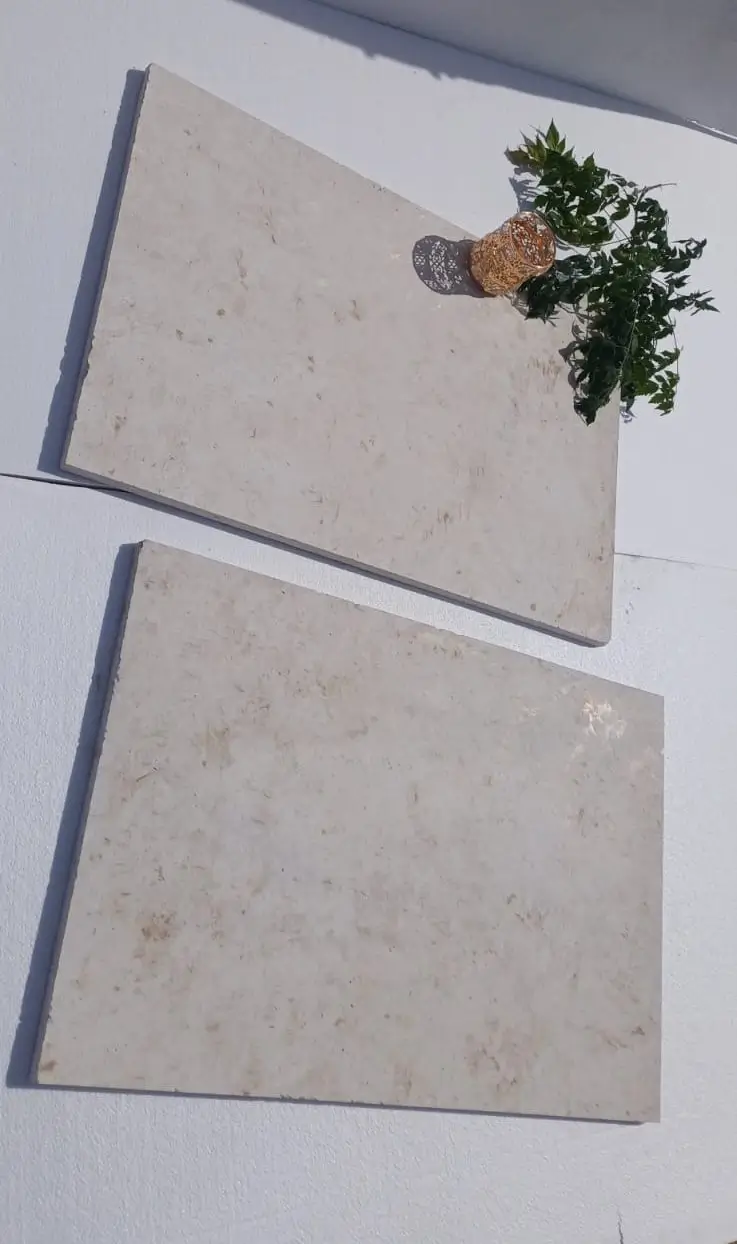
Choosing a marble slab comes down to being systematic at every step: grade assessment, surface inspection under proper lighting, porosity testing, thickness selection matched to your structural requirements, and finish choice aligned with your actual maintenance habits — not your ideal ones. The selection process rewards preparation. Buyers who arrive at a slab yard knowing their template dimensions, their seam locations, and their finish preference make better decisions faster than those making these choices on the fly while standing in a warehouse surrounded by dozens of competing slabs.
Projects that involve both marble countertops and other natural stone elements often benefit from considering how surface materials relate across the space. For a different but related specification decision, remnant versus full granite slab options covers how slab format affects cost, availability, and yield planning — a useful parallel when budgeting across a multi-surface project.
At Citadel Stone, our technical team works through slab selection with clients before the warehouse visit, so the decisions you need to make on-site are already narrowed to the ones that genuinely require eyes on the material. That preparation makes the difference between a confident purchase and an expensive second-guess. When inspecting veining consistency, Citadel Stone recommends viewing slabs vertically under natural light before committing to a purchase.