What Molds for Stepping Stones Actually Produce vs. Quarried Stone
Molds for stepping stones compress your options down to a single variable: the concrete mix you pour into them. That’s a meaningful constraint. Every unit coming off a mold carries the same molecular structure — hydrated cement paste reinforced by aggregate — regardless of how convincingly the mold surface mimics natural texture. Quarried stone slabs, by contrast, arrive with density profiles, crystalline structures, and surface characteristics formed under geological pressure over millions of years. The comparison here isn’t aesthetic preference. It’s a head-to-head evaluation of two fundamentally different material systems competing for the same application.
What Molds for Stepping Stones Actually Deliver
The appeal of moulds for stepping stones is straightforward: low unit cost, instant customization of shape, and the ability to produce pavers on-site without waiting on truck deliveries or warehouse lead times. You pour, you cure, you set. For casual garden paths with light foot traffic, that workflow is genuinely efficient. The problems emerge when you test the output against performance benchmarks that matter in demanding applications.
- Compressive strength of concrete stepping stones typically ranges from 3,000–5,000 PSI depending on mix design — serviceable for pedestrian loads but significantly below dense quarried limestone or granite
- Mold-cast units cure to a uniform depth, which means edge zones carry the same cross-section as the center — there’s no natural variation that improves load distribution
- Surface texture detail from molds degrades after 20–40 uses; later pours show reduced definition and micro-surface variation
- Water absorption in standard cast concrete runs 5–12%, which accelerates freeze-thaw deterioration in climates with repeated cycling below 32°F
- Pigment additives used for color matching fade unevenly over 3–5 years of UV exposure
The mold stepping stones route works within its limits. Where it fails is when specifiers apply it to sites that fall outside those limits — high-traffic crossings, exposed locations subject to severe weather, or settings where aesthetics need to hold for decades rather than years.
Quarried Stone Performance Benchmarks That Molds Can’t Replicate
Natural stone slabs tested under ASTM dimension stone quality and testing standards consistently outperform cast concrete stepping stones across the metrics that determine long-term installation success. Granite stepping stones, for instance, routinely test above 19,000 PSI in compressive strength — nearly four times the upper threshold of standard mold-cast concrete. Limestone stepping stones from dense-formation beds come in at 8,000–15,000 PSI depending on formation type. Those aren’t marketing numbers; they’re the difference between a surface that absorbs point loading and one that transfers it to the sub-base cleanly.
Absorption rate tells an equally important story. Dense limestone runs 0.5–3% absorption, basalt sits below 1%, and well-selected granite is effectively non-absorptive at the surface. Compare that to cast concrete’s 5–12% range and the freeze-thaw performance gap becomes obvious. Each freeze cycle forces absorbed water to expand approximately 9% by volume. Over a single hard winter, a mold-cast unit with 8% absorption accumulates cumulative micro-fracturing that quarried stone simply doesn’t experience at equivalent exposure.
Storm Load and Edge Integrity: Where the Gap Widens
Severe weather stress is where the mold stepping stones format reveals its most significant structural weakness. Wind-driven rain penetrates joint gaps between adjacent units, and the rate at which that moisture migrates under the slab depends directly on the unit’s absorption characteristics. Higher-absorption cast concrete wicks moisture laterally through the body of the stone itself, not just through the joint — creating sub-base saturation zones that compromise bedding sand stability after major storm events.
Edge integrity under mechanical impact is a separate concern. Hail impact on mold-cast stepping stones generates localized stress concentrations at the surface skin — the top 3–5mm of a concrete cast tends to be cement-rich and brittle once fully cured. Quarried stone, particularly granite and dense basalt, absorbs impact through crystalline grain boundaries that distribute stress differently. The ASLA natural stone walkway and stepping stone design guidance consistently recommends hard igneous and dense sedimentary stone for exposed applications where long-term mechanical durability is a priority. The recommendation reflects field performance data, not material bias.
Joint integrity under wind-driven rain also depends on the uniformity of your setting surface. Mold-cast units vary slightly in thickness from pour to pour — sometimes by 3–6mm across a production batch — which creates uneven bedding that allows water to pool at low joints rather than sheet off. Quarried slabs cut to consistent nominal thickness bed more uniformly and channel water more predictably.
Slip Resistance: Surface Finish vs. Natural Texture
Your slip resistance specification should start with the finish, not the material category. According to ADA walkway surface firmness and accessibility standards, outdoor walking surfaces need to maintain stable, firm, and slip-resistant characteristics under wet conditions — a threshold that both mold-cast and quarried options can theoretically meet, but through different mechanisms.
- Mold surfaces create artificial texture through patterned inserts — this texture is consistent immediately after production but smooths progressively with foot traffic and weathering
- Natural stone surfaces carry micro-crystalline variation across the face that persists through decades of use — even a honed finish on granite retains a coefficient of friction above 0.6 wet
- Tumbled limestone and brushed basalt stepping stones typically perform in the 0.65–0.80 COF wet range — well above minimum thresholds for pedestrian safety
- Mold-cast smooth-top stepping stones can drop below 0.5 COF wet once surface aggregate exposure diminishes — a maintenance liability over time
The practical takeaway: quarried stone’s slip resistance is inherent to the material. Mold-cast slip resistance is a function of surface treatment quality and maintenance frequency.
Lead Times, Delivery, and Logistics Reality
Here’s where moulds for stepping stones hold a genuine practical advantage — and it’s worth acknowledging directly. Mold production removes the supply chain entirely. You purchase the form, source bagged concrete mix, and produce units on your timeline. No truck scheduling, no warehouse allocation, no minimum order quantities. For a small residential path of 8–12 stones, that workflow can genuinely make sense.
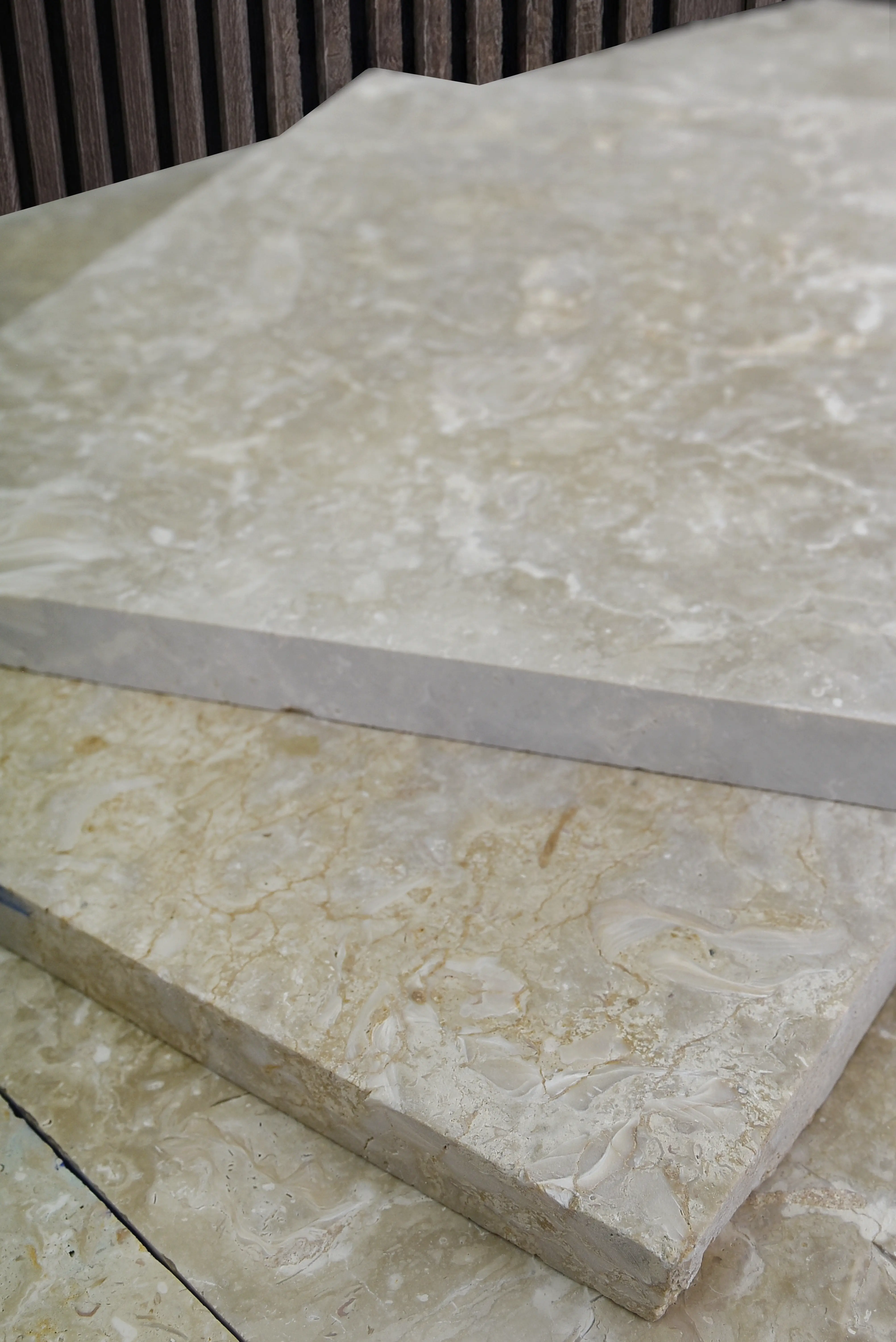
The calculation shifts for medium and large installations. Sourcing 30+ consistent stepping stones from mold production requires maintaining batch consistency across multiple pours — mix ratios, water-cement ratios, curing conditions — all of which vary with ambient temperature and humidity. Small production inconsistencies compound across larger quantities. At Citadel Stone, we maintain warehouse inventory of quarried stepping stone slabs that ships nationally with typical lead times of 1–2 weeks, removing the production management burden while delivering material that exceeds cast concrete on every performance metric that matters for long-term installations.
For larger projects, the Citadel Stone quarried stone slabs inventory covers multiple stone types, nominal thicknesses, and finished sizes — so you’re selecting from production-tested material rather than managing a casting operation on-site.
Full Lifecycle Cost: Unit Price vs. Total Cost of Ownership
Mold-cast stepping stones appear cheaper at the unit level — a concrete mix pour costs a fraction of a quarried slab. That comparison collapses when you extend the timeline to 15–20 years and account for replacement cycles, maintenance inputs, and failure risk.
- Mold-cast stepping stones in freeze-thaw regions typically require first resurfacing or replacement within 8–12 years under moderate traffic
- Quarried limestone and basalt stepping stones routinely perform without structural intervention for 25–40 years when properly bedded on compacted aggregate base
- Sealing costs for cast concrete are higher per cycle because the absorption rate demands more frequent application — every 2–3 years vs. every 4–6 years for sealed natural stone
- Labor cost for stepping stone replacement across a path of 20+ units eliminates any initial material cost savings from the mold approach within a single replacement cycle
- Resale value of natural stone hardscape installations consistently outperforms cast concrete equivalents in property appraisal contexts
The NSI’s natural stone specifications document the durability differentials across stone types that drive these lifecycle cost differences. The data supports quarried stone as the lower total cost option for installations expected to last beyond 15 years.
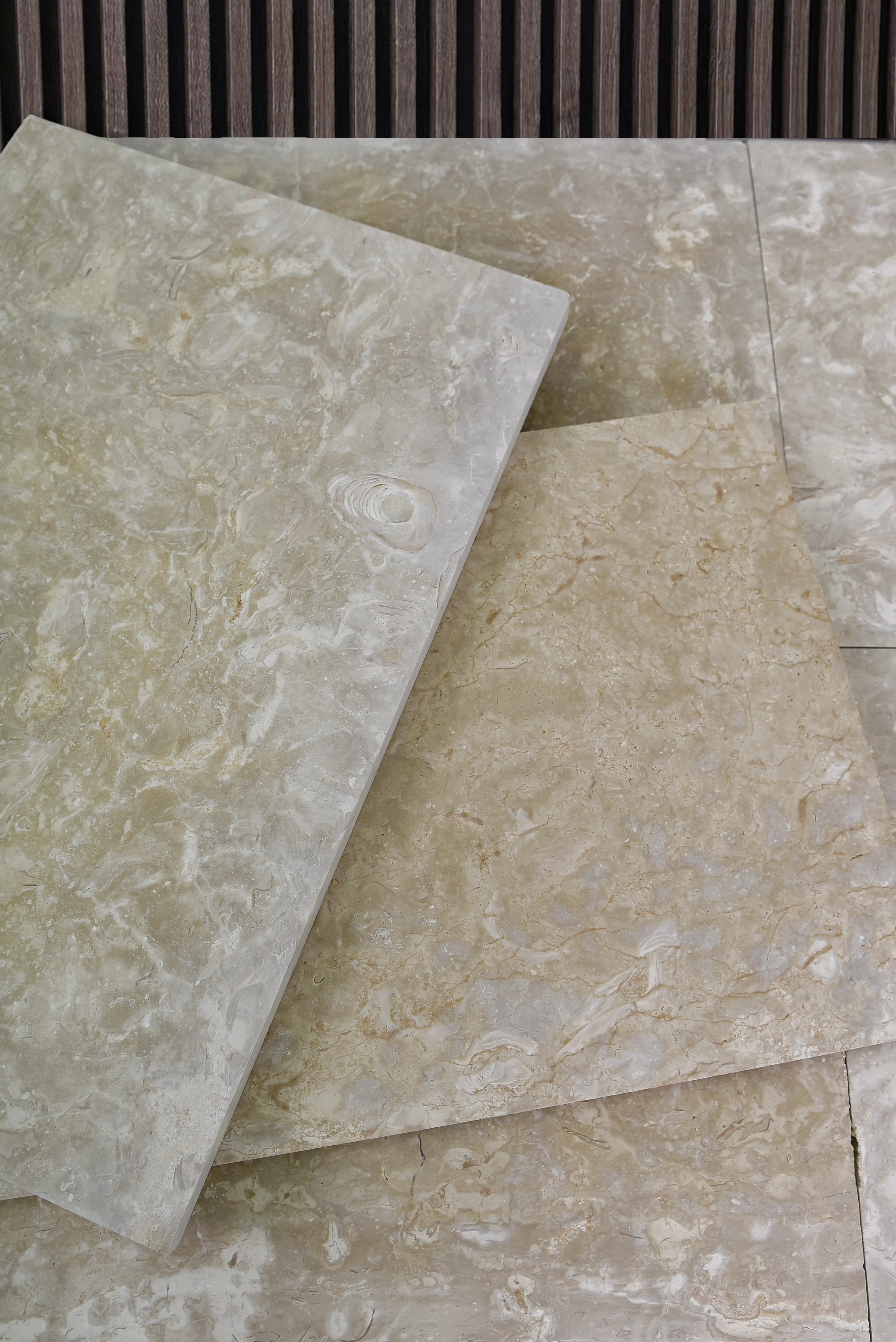
Installation Variables That Change the Outcome
Mold stepping stones require the same base preparation discipline as quarried stone — this is the most common misconception in residential DIY projects. A 4-inch compacted aggregate base with a 1-inch bedding sand layer is the minimum for stable performance regardless of which material you’re setting. The difference is that quarried stone rewards proper installation with decades of performance, while mold-cast units reward proper installation with a shorter window before surface degradation becomes visually apparent.
- Nominal thickness of 1.5–2 inches for quarried stone slabs is sufficient for pedestrian stepping stone applications; mold-cast units should be a minimum of 2 inches to achieve equivalent load distribution
- Spacing between stepping stones should account for stride length — typically 18–22 inches center-to-center — and natural stone’s dimensional consistency makes this layout more precise than mold-cast units of variable thickness
- Setting quarried stepping stones directly in decomposed granite or crushed fines provides a more stable long-term bedding than sand in hot, dry climates, because fines compact and lock rather than migrate
- Ground contact on mold-cast concrete accelerates carbonation and surface degradation — sealing the underside before installation meaningfully extends service life
Your stepping stone path’s maintenance schedule also needs to account for biological growth. Natural stone’s surface variation creates micro-environments where moss and algae colonize at different rates than the flat, uniform face of a mold-cast unit. In shaded, humid conditions, quarried stone drains surface moisture more efficiently through its natural topography — reducing cleaning frequency compared with the smooth face of a cast concrete paver.
Molds for Stepping Stones vs. Quarried Stone: Spec Wrap-Up
The head-to-head evaluation between molds for stepping stones and quarried stone slabs produces a clear verdict for most applications: mold-cast units serve light residential installations with modest budgets and short timelines, while quarried natural stone wins comprehensively on structural performance, weather resistance, long-term aesthetics, and lifecycle cost. Your specification decision should be driven by the installation’s expected traffic load, exposure conditions, and project lifespan — not unit price alone.
Keeping your natural stone path in good condition long-term is equally important to the initial material choice — stepping stone path care and cleaning covers the maintenance protocols that protect your investment across the years. Sourced from our selected premium quarries across multiple continents, Citadel Stone slabs skip the wait that molds for stepping stones require.
Related reading: garden stepping stones guide · how to lay stepping stone walkway · stepping stones sinking fix.