What Blue Stone Care Actually Demands
Most blue stone care failures start not with neglect but with the wrong maintenance schedule applied confidently. The dense, fine-grained structure of quality slate tile blue absorbs far less than limestone or travertine, which leads many specifiers to assume it needs almost nothing — and that assumption is where 10-year installations quietly become 6-year problems. Your stone’s cleavage planes, those thin laminar layers that give slate its distinctive character, are also the pathways through which moisture and cleaning chemistry reach the substrate. Treat them accordingly.
Blue stone’s low absorption rate sits typically between 0.2% and 0.8% — well below the 3% threshold where most natural stones begin showing weathering degradation. That’s an advantage, but it doesn’t mean your surface is inert. Surface contamination, efflorescence migration, and joint deterioration are the three real enemies of a long-performing installation, and none of them announce themselves until the damage is already underway.
Cleaning Frequency and the Right Chemistry
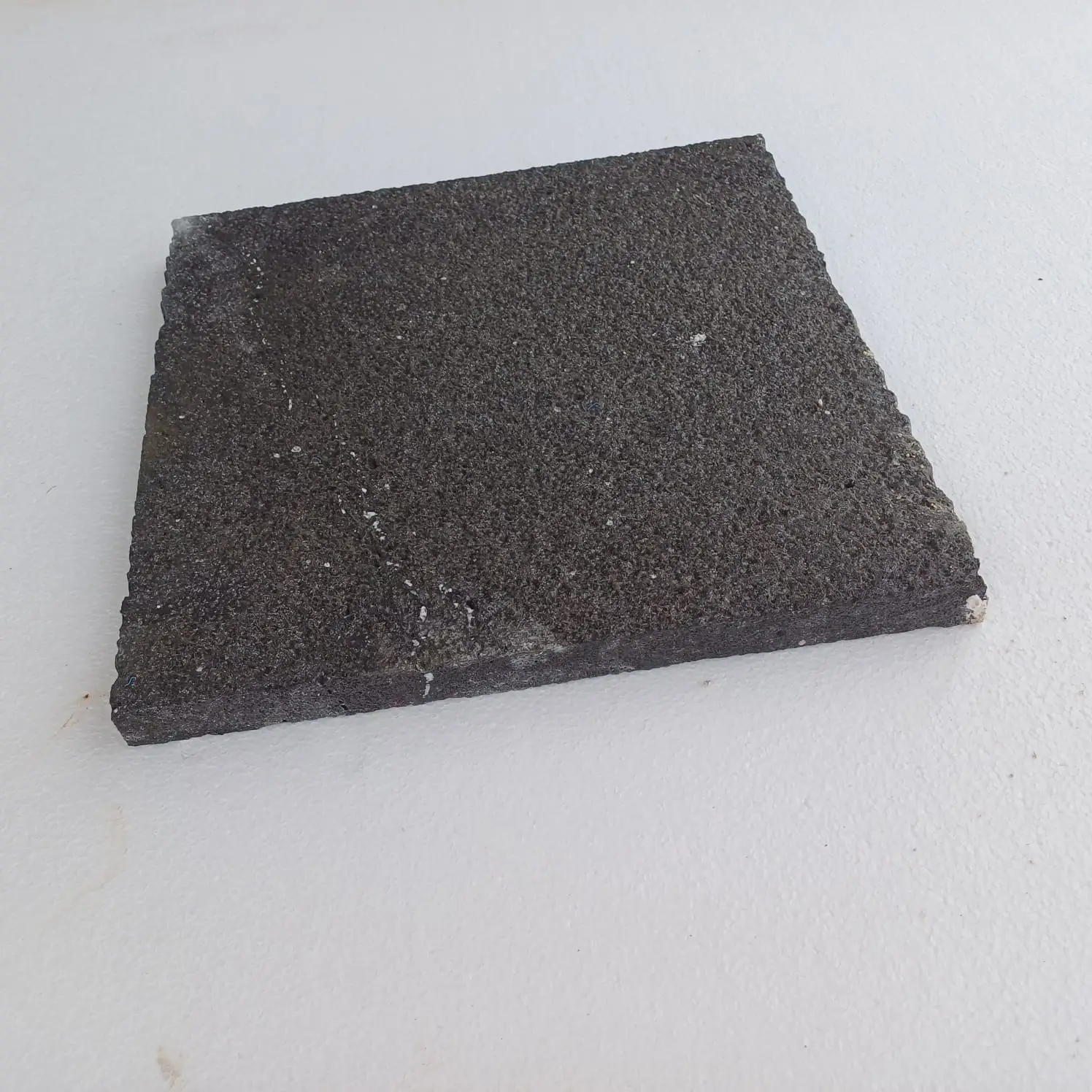
Your blue stone care routine should run on a predictable cycle — not reactive cleaning when staining becomes visible. For exterior installations, a quarterly rinse with a low-pressure wash (under 800 PSI) removes surface particulates before they migrate into the cleavage planes. Annual deep cleaning with a pH-neutral stone cleaner is sufficient for most residential and light commercial applications. Avoid anything with acidic content above a 4.0 pH rating — even diluted vinegar solutions will attack the iron-bearing minerals that give blue stone its characteristic color range.
Interior slate tile blue installations in high-traffic areas benefit from a slightly tighter schedule: monthly dry dust mopping to prevent micro-abrasive grit from embedding in the surface texture, and quarterly damp mopping with a pH-neutral solution. According to ASTM C629 slate dimension stone technical specifications, the surface hardness and absorption properties of slate directly influence appropriate cleaning chemistry — and the standard is worth reviewing before specifying any maintenance product for commercial applications.
- pH-neutral cleaners (6.0–8.0 range) are safe for all blue stone finishes including honed, natural cleft, and brushed surfaces
- Alkaline degreasers rated above pH 10 can cause hazing on honed finishes — use only for isolated oil contamination with immediate neutralization
- Avoid abrasive pads or steel wool; they create micro-scratches that accelerate soiling
- Steam cleaning at temperatures above 180°F risks thermal shock in thin-gauge installations (under 3/4 inch nominal)
- Always test any new cleaning product on an inconspicuous panel and allow 48 hours before full application
Sealing Protocols and Impregnator Selection
The sealing debate around blue stone care is more nuanced than most product datasheets acknowledge. Because slate’s absorption is naturally low, many impregnating sealers struggle to penetrate deeply enough to be effective — and a sealer sitting at the surface rather than within the stone creates a film that traps moisture beneath it. That trapped moisture is what generates the white haze and surface spalling you’ll sometimes see on poorly maintained installations after a few freeze-thaw cycles.
Select a solvent-based impregnating sealer with a documented penetration depth of at least 3mm for exterior blue stone applications. Water-based impregnators are acceptable for interior slate tile blue where moisture exposure is controlled, but they require more frequent reapplication — typically every 18–24 months versus 36–48 months for solvent-based systems. Apply sealer to a completely dry surface (moisture content below 5%) and in ambient temperatures between 50°F and 85°F. At Citadel Stone, we recommend a two-coat application with a 30-minute dwell time between coats, followed by a 72-hour cure before foot traffic.
- Natural cleft finishes absorb sealer faster than honed finishes — apply additional coats until the surface reaches a consistent sheen point
- Always seal grout joints simultaneously with the field tile; unsealed joints are the primary moisture ingress point in exterior installations
- Re-seal after any chemical cleaning episode regardless of scheduled cycle timing
- Document your sealer product and application date — this information is essential when troubleshooting future maintenance issues
Drainage and Terrain Effects on Long-Term Performance
Elevation changes and site grade have a more direct impact on blue stone care requirements than most maintenance guides address. On sloped installations — patios, hillside terraces, pool surrounds on graded sites — water velocity across the surface increases with gradient, which accelerates surface erosion on the exposed cleavage edges of each tile. A 2% grade that drains efficiently is actually protective; grades below 1% pool water at joint intersections, and that standing water is the primary driver of joint failure and efflorescence migration.
Base preparation on any sloped site also affects long-term maintenance needs. A properly compacted aggregate base that maintains its geometry under thermal cycling and load will keep tiles stable and joints tight — which means your cleaning and sealing efforts actually hold. On hillside installations where drainage runs perpendicular to the fall line, French drain integration at the low points of each terrace prevents hydrostatic pressure buildup beneath the setting bed. According to Britannica’s coverage of slate metamorphic rock properties, the mineral composition of slate — particularly its phyllosilicate structure — makes it highly resistant to chemical weathering, but mechanical stress from hydrostatic pressure is a different matter entirely.
Flat, low-lying sites present a different challenge: without natural drainage gradient, you’re entirely dependent on engineered drainage below the slab. On these sites, inspect joint sand levels twice annually rather than once — flat installations lose joint material faster because water sits longer before evaporating, which creates more wash cycles per year.
Addressing Efflorescence and Staining
Efflorescence on blue stone is a mineralogy problem, not a cleaning problem — which is why scrubbing at it with general cleaners produces limited results. Salts migrate through the setting bed and mortar layer carried by water movement, and they precipitate at the surface as that water evaporates. Your first response should always be to identify and address the moisture source driving the migration, not just the visible deposit.
For existing efflorescence, a diluted phosphoric acid solution (4–6% concentration) applied with a nylon brush, allowed to dwell for 3–5 minutes, and immediately neutralized with a sodium bicarbonate solution is the reliable field approach. Test on a small area first — some darker blue stone varieties show temporary color shift after acid exposure that resolves within 48 hours, but you want to confirm this before treating an entire surface. After treatment, re-seal the affected area immediately once dry. Explore our blue stone slate range if you’re specifying material for a new installation and want to discuss sealing requirements before delivery.
- Iron oxide stains from embedded aggregate or subgrade steel require oxalic acid-based poultices — do not use phosphoric acid for these
- Oil-based stains respond well to a mineral spirits poultice drawn through the stone under light absorbent pressure over 24 hours
- Organic staining (leaves, algae) is typically resolved with a hydrogen peroxide solution at 30–40% concentration
- For persistent staining that doesn’t respond to targeted treatment, consult a certified stone restoration specialist — mechanical intervention may be required
Joint Maintenance and Sand Management
The joints in your blue stone installation are not passive — they’re active components of your drainage and structural system, and their condition determines how effective your broader blue stone care program can be. Polymeric joint sand at 92–95% fill depth is the performance target. Below 85% fill, water infiltration accelerates setting bed erosion; above 97%, you lose the slight flexibility that accommodates thermal movement without cracking.
Inspect joint sand levels every spring in installations exposed to seasonal freeze-thaw cycling. Even in moderate climates, rainfall and surface wash-off will gradually reduce joint fill levels. Topping up with fresh polymeric sand and re-activating with light water application is a 20-minute task that extends installation life by years. Blue stone maintenance for exterior joints also means checking for joint displacement at any point where tile edges show slight vertical misalignment — this is an early indicator of base settlement that needs correction before it progresses.
Natural cleft slate tile blue can develop micro-chipping at exposed edges if joint sand levels drop far enough to allow tile edges to bear against each other under load. This is a detail that almost never shows up in written maintenance guides but appears consistently in field inspections on installations that have skipped joint maintenance for two or more years. Citadel Stone’s technical team can advise on joint sand specification for specific installation types when you’re ordering — it’s worth confirming before your project goes to the setting phase.
Surface Restoration and Honing
There’s a point in every blue stone installation’s life where routine cleaning no longer restores the surface to an acceptable standard — typically 10–15 years into an exterior installation’s life depending on traffic and maintenance history. Surface restoration at this stage doesn’t mean replacement; it means mechanical intervention to refresh the surface texture and re-establish the absorption profile for sealing.
Diamond pad honing at 200–400 grit on a natural cleft finish can remove 1–2mm of surface material to expose fresh stone beneath the weathered layer. This is a specialized operation requiring wet-process equipment to manage stone dust and prevent thermal damage to the slab. Post-honing, the surface will be more uniform than the original natural cleft texture — decide whether this aesthetic trade-off is acceptable before proceeding. For honed or brushed blue stone finishes, restoration honing is often a more straightforward process since the original finish was already mechanically processed. According to USGS dimension stone production data, slate and related metamorphic stone products represent a significant segment of dimension stone production, and their field longevity under maintenance programs is well-documented across decades of installation records.
- Always re-seal immediately after any honing or grinding operation — the freshly exposed surface is more porous temporarily
- Restoration honing is not a substitute for addressing underlying drainage or base issues — fix root causes first
- Get multiple quotes for restoration work and ask for references on completed projects with comparable stone types and finishes
Blue Stone Maintenance in Different Installation Contexts
Your blue stone maintenance program needs to be calibrated to the installation context, not applied as a universal schedule. Pool surrounds, interior floors, covered outdoor areas, and exposed driveway surfaces each have distinct loading profiles, moisture exposures, and contamination types that drive different maintenance frequencies and product choices.
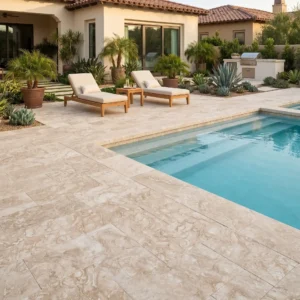
Pool surround blue stone maintenance introduces the chlorine chemistry variable — pool water with 1–3 ppm free chlorine that contacts unsealed stone regularly will gradually bleach iron-bearing minerals and lighten the characteristic blue-grey color. Seal pool surround blue stone every 18 months minimum and rinse with fresh water after any splash exposure. For interior slate tile blue on heated flooring systems, check that your sealer is rated for the operating temperature of your radiant system — most impregnating sealers are rated to 140°F continuous, which is above standard residential radiant system temperatures, but worth confirming on commercial applications where floor temperatures can be higher. Driveway installations of blue stone maintenance require additional attention to de-icing chemical management in freeze-thaw regions; chloride-based products compromise both the stone surface and the joint materials, so sand-based traction alternatives are the preferred field approach.
- Covered outdoor installations typically need sealing every 4–5 years rather than 3 years — reduced UV and moisture exposure extends sealer life
- Interior installations in low-humidity environments may develop static charge that attracts fine particulate — a light antistatic spray treatment between cleanings reduces this
- High-traffic commercial interiors benefit from entrance matting to reduce the grit load on the stone surface — this alone can double cleaning intervals
Final Recommendations
A disciplined blue stone care program isn’t complicated, but it does demand consistency. The installations that perform for 25 years versus the ones that look tired at 12 share almost identical material quality — the difference is entirely in maintenance discipline applied at the right intervals. Your first year with a new installation is the most important: get the sealing right, verify joint sand levels after the first winter, and document everything. That baseline makes every future maintenance decision easier.
Before committing to a maintenance product or restoration contractor, verify warehouse stock availability for any replacement stone you might need for patching — even well-maintained installations occasionally need individual tile replacement, and matching blue stone from different quarry batches is notoriously difficult. Planning ahead by understanding where your original material came from and whether additional warehouse inventory exists can save significant cost and aesthetic headache down the road. If you’re budgeting a larger stone project and need context on material costs, slate pricing and cost factors breaks down the variables worth understanding before you finalize your specification. Citadel Stone supplies blue stone from our established selected quarries across multiple continents, each batch graded for color and surface uniformity.
Related reading: Blue Slate Floor Tile Comparison: Which Option Fits Best? · exterior natural stone veneer guide · what is blue stone.