Blue stone’s compressive strength typically ranges from 12,000 to 19,000 PSI depending on its geological origin, which puts it in a genuinely competitive class among sedimentary paving materials — yet the number most specifiers focus on tells only half the story. What determines long-term field performance is the relationship between that base strength and the stone’s absorption rate, which for dense basalt-type blue stone sits below 1%, while sandstone-origin varieties can reach 3–5%. Understanding which variety you’re actually dealing with before you finalize a specification is where most project decisions go right or wrong.
What Is Blue Stone?
Blue stone is a broad commercial term covering several distinct geological materials that share a characteristic blue-grey coloration. The three primary types you’ll encounter in the North American market are: dense volcanic basalt bluestone, fine-grained sandstone bluestone (the classic Pennsylvania-style variety), and certain metamorphic slate-adjacent stones sold under the blue stone label. Each type carries a fundamentally different performance profile, which is why natural blue stone identification matters before you commit to a specification.
Basalt-origin blue stone is the densest option, formed from cooled volcanic lava flows with a tight crystalline structure. Sandstone bluestone is sedimentary, laid down in horizontal strata over millions of years — this is why it cleaves naturally along bedding planes, producing the characteristic thin, flat slabs common in patio and walkway applications. The metamorphic varieties occupy a middle ground, with directional grain from tectonic compression that influences how the stone splits and where it’s most vulnerable to edge chipping.
- Basalt-type bluestone: absorption below 1%, compressive strength 15,000–19,000 PSI, igneous origin
- Sandstone bluestone: absorption 2–5%, compressive strength 12,000–15,000 PSI, sedimentary origin
- Metamorphic slate-adjacent: absorption 1–3%, directional cleavage, variable surface hardness
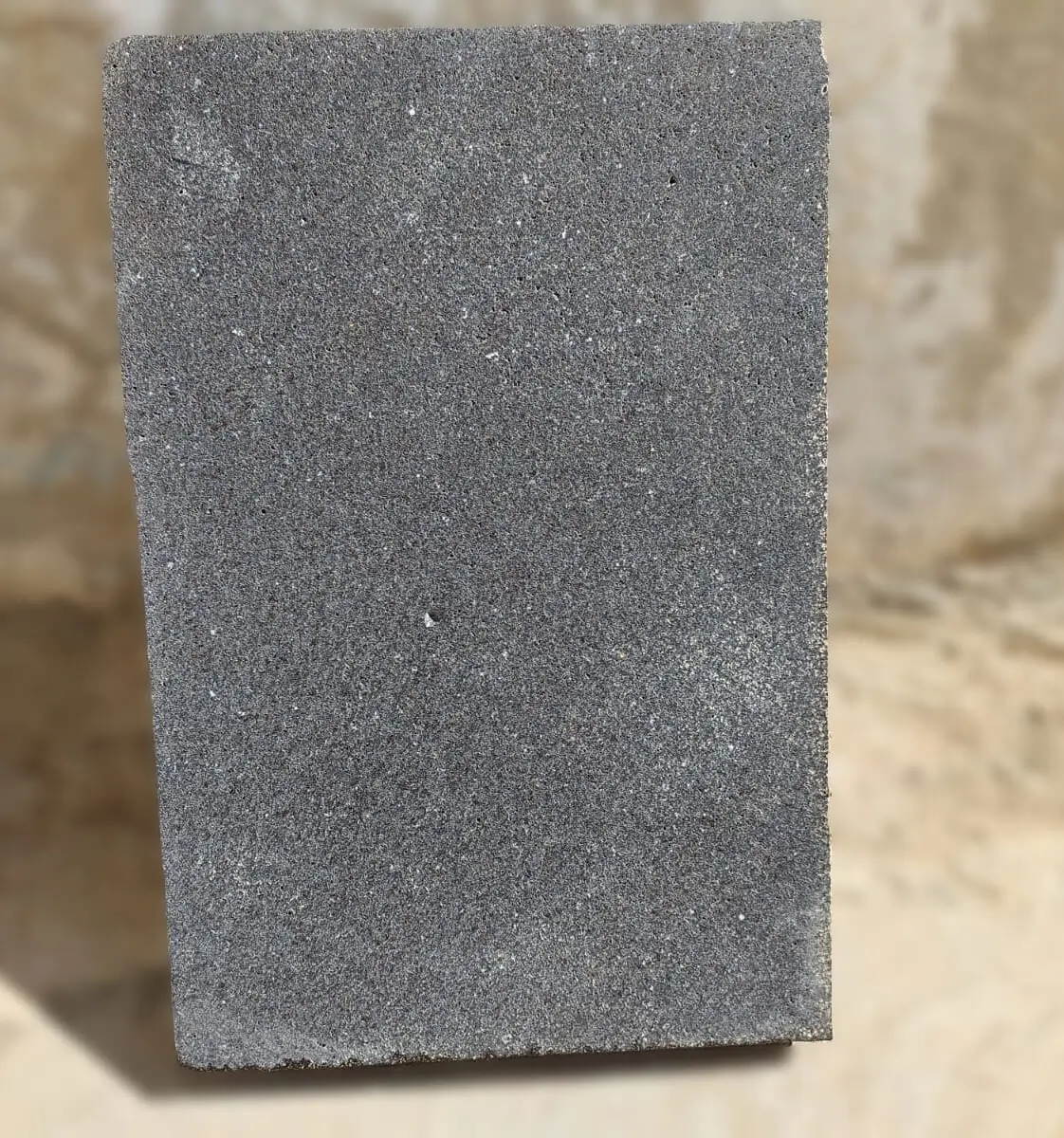
- Color can range from deep charcoal blue through warm blue-grey to greenish-blue depending on mineral content
Geological Origins and Why They Matter for Specification
The geological origin of blue stone isn’t just academic background — it directly controls which applications the material can handle, what finish options are viable, and how it behaves under load. According to bluestone geological classification and properties, the term covers multiple rock types, which is precisely why sourcing documentation matters so much when you’re specifying for structural or load-bearing scenarios.
Sandstone-origin blue stone cleaves along natural bedding planes, which is an asset for producing consistent thin slabs but becomes a liability when the stone is specified for applications with point-load stress — like furniture legs on a patio or vehicle wheels on a driveway. The laminated structure that makes it easy to split also makes it susceptible to delamination if moisture infiltrates the bedding planes in freeze-thaw regions. Basalt blue stone carries none of that risk but doesn’t cleave naturally, meaning cut thicknesses are driven entirely by the saw and labor cost reflects that.
- Sandstone blue stone: excellent for flat paving, walkways, and light-traffic patios — avoid for driveways without 2.5-inch minimum thickness
- Basalt blue stone: suited to heavy-duty applications, pool surrounds, and driveways — higher material cost, lower maintenance risk
- Cleavage direction in sandstone varieties runs parallel to bedding, perpendicular cleavage is structurally weak
- Mineral iron content drives the blue-grey coloration — higher iron oxide content produces warmer grey tones
Here’s what most buyers miss when comparing sourcing documents: quarry origin affects not just performance but also color consistency batch to batch. At Citadel Stone, we perform color and density checks at the warehouse level before material ships, specifically because the same commercial name can arrive from multiple quarry sources with measurably different absorption rates and tonal variation.
Natural Blue Stone Identification: What to Look For
Natural blue stone identification in the field comes down to four observable characteristics: surface texture, edge behavior, absorption response, and color depth. The simplest field test is a water drop on a freshly cleaved face — dense basalt varieties bead water immediately, while sandstone types show visible darkening within 30–60 seconds as moisture enters the pore structure.
Edge behavior under a chisel or saw reveals the geological type almost immediately. Sandstone blue stone produces a grainy, fibrous edge — you can see the individual sand grains at the cut face. Basalt blue stone produces a glassy, conchoidal edge, similar to obsidian, with no visible grain structure. This distinction matters enormously in pool coping and step edge applications where a clean arrised edge is part of the design intent.
- Water absorption test: drop water on a fresh face — rapid beading indicates basalt, darkening indicates sandstone
- Edge character: grainy and fibrous = sandstone origin; smooth and conchoidal = basalt or metamorphic origin
- Surface hardness: scratch test with a steel key — sandstone scratches easily, basalt resists
- Weight comparison: basalt blue stone is measurably heavier per square foot than sandstone equivalents at the same nominal thickness
- Color consistency: basalt tends toward uniform color, sandstone often shows visible banding from sedimentary layering
The USGS dimension stone data confirms what field experience shows — USGS sandstone and bluestone dimension stone classification documents multiple rock types classified commercially under a single regional name, which reinforces why product documentation should always specify geological origin, not just commercial name.
Finish Options and Surface Performance
Your finish choice for blue stone affects slip resistance, maintenance frequency, color expression, and — often underestimated — how the surface interacts with compressive loads over time. The four finishes you’ll work with most frequently are natural cleft, honed, sawn, and thermal (also called flamed).
Natural cleft is the characteristic finish of sandstone-origin blue stone, produced by splitting along bedding planes. The result is a textured, slightly undulating surface with a static coefficient of friction typically above 0.6 dry and 0.5 wet — comfortably above the ASTM slip resistance benchmark for outdoor paving. The trade-off is an irregular surface that can collect debris in recessed grain pockets, requiring periodic pressure washing rather than simple sweeping.
- Natural cleft: highest slip resistance, lowest cost, irregular plane — suits walkways, patios, and informal garden paths
- Honed: smooth, matte finish with consistent flatness — suited to interior floors, pool surrounds, and formal outdoor settings
- Sawn: precision cut with a diamond saw — consistent thickness, smoother than cleft but retains texture — common for driveway and commercial paving
- Thermal/flamed: high-heat surface treatment that opens the pore structure slightly and increases texture — excellent slip resistance for wet zones and pool decks
Honed blue stone on a pool surround is a legitimate option when the stone is basalt-origin, because the low absorption rate limits the moisture-related darkening that honed sandstone blue stone shows over time. Specifying honed finish on sandstone-origin blue stone for a pool deck is a maintenance commitment worth discussing with the client before finalizing — it will require more frequent sealing and will show water marks more visibly.
Thickness, Load-Bearing Ratings, and Code Requirements
Structural specification for blue stone paving isn’t just about choosing a finish and calling a supplier. Building codes, load-bearing requirements, and base depth standards vary across jurisdictions, and the material thickness you specify needs to align with both the structural demand of the application and the relevant local requirements. The IBC and locally adopted codes address base depth, edge restraint standards, and frost line depth requirements that directly affect how you detail a blue stone installation.
For residential patios under foot traffic only, 1.25-inch nominal thickness in sandstone blue stone is generally acceptable when set over a properly compacted aggregate base of 4–6 inches. Bump that to a driveway application and the calculus changes: vehicle wheel loads demand a minimum of 2 inches nominal thickness in sandstone varieties, or 1.5 inches in dense basalt blue stone, set over 6–8 inches of compacted aggregate base. In freeze-thaw regions — generally where frost line depth exceeds 12 inches — base depth needs to extend below the local frost line or incorporate a drainage layer that prevents heave-driven movement at the stone surface.
- Foot traffic only (patio, walkway): 1.25-inch minimum in sandstone, 1-inch viable in basalt
- Light vehicle (driveway, parking): 2-inch minimum in sandstone, 1.5-inch in basalt, 6–8-inch compacted aggregate base
- Freeze-thaw regions: base depth must extend below frost line or include free-draining aggregate layer
- Edge restraint: ICPI standards call for rigid restraint on all four sides of vehicular applications — blue stone’s lack of interlock means lateral restraint is critical
- Seismic zones: mortar-set applications on concrete slabs are preferred over sand-set in high-seismic areas to limit stone displacement
For wall and vertical applications, blue stone panel thickness follows a different set of structural considerations. Thin-set panels below 3/4 inch require a bonding mortar with a tensile bond strength above 300 PSI to satisfy typical wall veneer code requirements. The Masonry Society’s guidelines on natural stone wall construction are the reference point most structural engineers use when evaluating veneer specifications, and your project spec should cross-reference those standards explicitly.
Sealing and Maintenance Protocols
Blue stone’s maintenance requirements split cleanly along geological type. Dense basalt blue stone with absorption below 1% can function unsupported by sealant in many outdoor applications — the stone simply doesn’t have the pore volume to absorb contaminants at a rate that stains or compromises the surface. Sandstone-origin blue stone at 3–5% absorption is a different situation entirely: without a penetrating impregnator sealant, oil and organic staining can penetrate below the surface level where simple cleaning reaches.
The right sealant for blue stone in most outdoor applications is a penetrating silane-siloxane impregnator, not a film-forming surface sealant. Film-forming sealants trap moisture vapor moving upward from the substrate, which in sandstone varieties causes bubbling and spalling at the surface within 2–3 seasons. Penetrating impregnators allow vapor transmission while blocking liquid water and contaminant penetration. Apply at 18–24 month intervals for sandstone varieties in high-traffic or exposed settings, and at 36-month intervals for basalt-origin stone.
- Basalt blue stone: penetrating impregnator recommended as a baseline, not structurally necessary — primarily a color-protection measure
- Sandstone blue stone: penetrating silane-siloxane impregnator required — apply within 30 days of installation and reapply per traffic and exposure schedule
- Never use acid-based cleaners on sandstone blue stone — acid attacks the carbonate cement bonding sand grains and weakens surface structure
- pH-neutral stone cleaner is the correct maintenance product for both geological types
- Joint sand should be maintained at 92–95% fill depth — low joint sand accelerates edge chipping in both stone types
Blue Stone Applications and Selection Guide
Selecting the right blue stone for a specific application means matching geological type, finish, and thickness to the performance demands of the use case. The matrix isn’t complicated once you know the variables, but skipping the type identification step early in the project is the most common source of specification regret.
For our slate and blue stone collection, the available options span both dense basalt varieties and traditional sandstone-origin blue stone, covering the full range of applications from pool coping through driveway paving. When selecting for a specific project, the decision tree typically runs: application type → expected load → finish requirement → geological type → thickness specification.
- Patio and outdoor living: sandstone natural cleft at 1.25–1.5 inches is the classic choice — excellent texture, strong cost-performance ratio
- Pool surrounds and coping: basalt or thermal-finish sandstone blue stone — absorption and slip resistance both favor these options
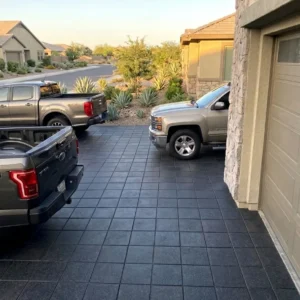
- Driveway paving: sawn basalt at 2 inches minimum with full mortar bed or 2-inch sandstone with rigid aggregate base
- Interior flooring: honed basalt or honed sandstone (sealed) — consistent flatness critical for thin-bed setting
- Wall cladding and feature walls: natural cleft sandstone for rustic character, honed basalt for contemporary applications
- Stepping stones and natural blue stone identification in garden paths: irregular natural cleft slabs in 1.5-inch thickness perform well with sand-set detail
Natural stone identification matters as much for stepping stones as for structural applications — an unlabeled slab marketed as blue stone for a garden path could be sandstone at 4% absorption or basalt at 0.8%, and those two materials need completely different joint and base treatments to perform over a 15–20 year horizon.
Ordering, Logistics, and Project Planning
Blue stone project planning runs into the same logistical realities as any natural stone order: warehouse stock levels, truck delivery constraints, and lead times all interact with your installation schedule. Citadel Stone maintains national warehouse inventory for both basalt and sandstone blue stone varieties, which typically means lead times of 1–2 weeks versus the 6–8 week import cycle you’d face ordering direct from overseas. That timeline difference matters considerably when coordinating with a concrete sub or managing a critical path schedule.
Your site’s truck access constraints affect delivery planning more than most buyers anticipate at the ordering stage. A full pallet of 2-inch basalt blue stone at 15 square feet per pallet runs approximately 800–900 lbs — a standard order for a 500 square foot driveway involves multiple pallets, which require either a forklift-equipped truck or a boom delivery service. Confirm your delivery access before the order is cut, not the day before the truck arrives.
- Calculate square footage requirements adding 10% waste allowance for natural cleft irregular material, 5–7% for dimensioned sawn formats
- Verify warehouse stock confirmation before committing project timeline to your client — stock fluctuates on popular formats
- Truck delivery access: check overhead clearance, turning radius, and surface load capacity for heavy vehicles at your site
- Stone should be stored on-site under cover, off the ground, on full pallet support — never lean slabs unsupported on edge
- Order all material from the same production batch where possible — color variation between batches is a real field issue with natural blue stone
The Natural Stone Institute natural stone paving durability standards provide useful reference benchmarks when evaluating product documentation from a supplier — particularly the absorption and flexural strength data that separates performance-grade material from decorative-grade stock.
The Specification Decisions That Define Blue Stone Performance
Every long-lasting blue stone installation traces back to three decisions made before the first stone is set: geological type verification, base detail appropriate to the load and frost conditions, and sealant selection matched to the stone’s actual absorption rate. Getting all three right isn’t complicated — but skipping the verification step on any one of them is where 10-year installations happen instead of 25-year ones.
Color consistency across the full installation is a detail that separates a polished result from a patchy one. Blue stone’s natural tonal variation is part of its character, but extreme color jumps between pavers — the kind that result from mixed quarry batches — undermine the visual coherence of the finished surface. Requesting batch documentation from your supplier and confirming that warehouse stock is sourced from a consistent quarry run is a practical step worth taking on any project where color is a design priority.
For projects that also incorporate complementary natural stone elements, the range extends well beyond blue stone — how travertine color selections compare is worth reviewing if you’re specifying adjacent stone elements on the same project. Travertine and blue stone work well together tonally when the color families are matched at the selection stage rather than on-site after delivery. Blue stone sourced through Citadel Stone is selected for consistent color layering and structural integrity suited to floor and wall applications.