What Separates One Blue Slate Floor Tile From Another
The blue slate floor tile comparison most specifiers get wrong happens before they ever look at a sample — they evaluate colour and miss the cleft depth variation that determines how the tile behaves under foot traffic, adhesive contact, and moisture cycling. Blue slate is a metamorphic material, and its foliation planes don’t behave uniformly across quarry sources. A tile from Middle East quarries will often exhibit tighter, more consistent cleft than material sourced from certain South American beds, and that difference in surface geometry translates directly into bond strength requirements and grout joint sizing. Understanding which structural and surface variables actually matter for your application is where this comparison has to start.
Thickness and Structural Load Requirements
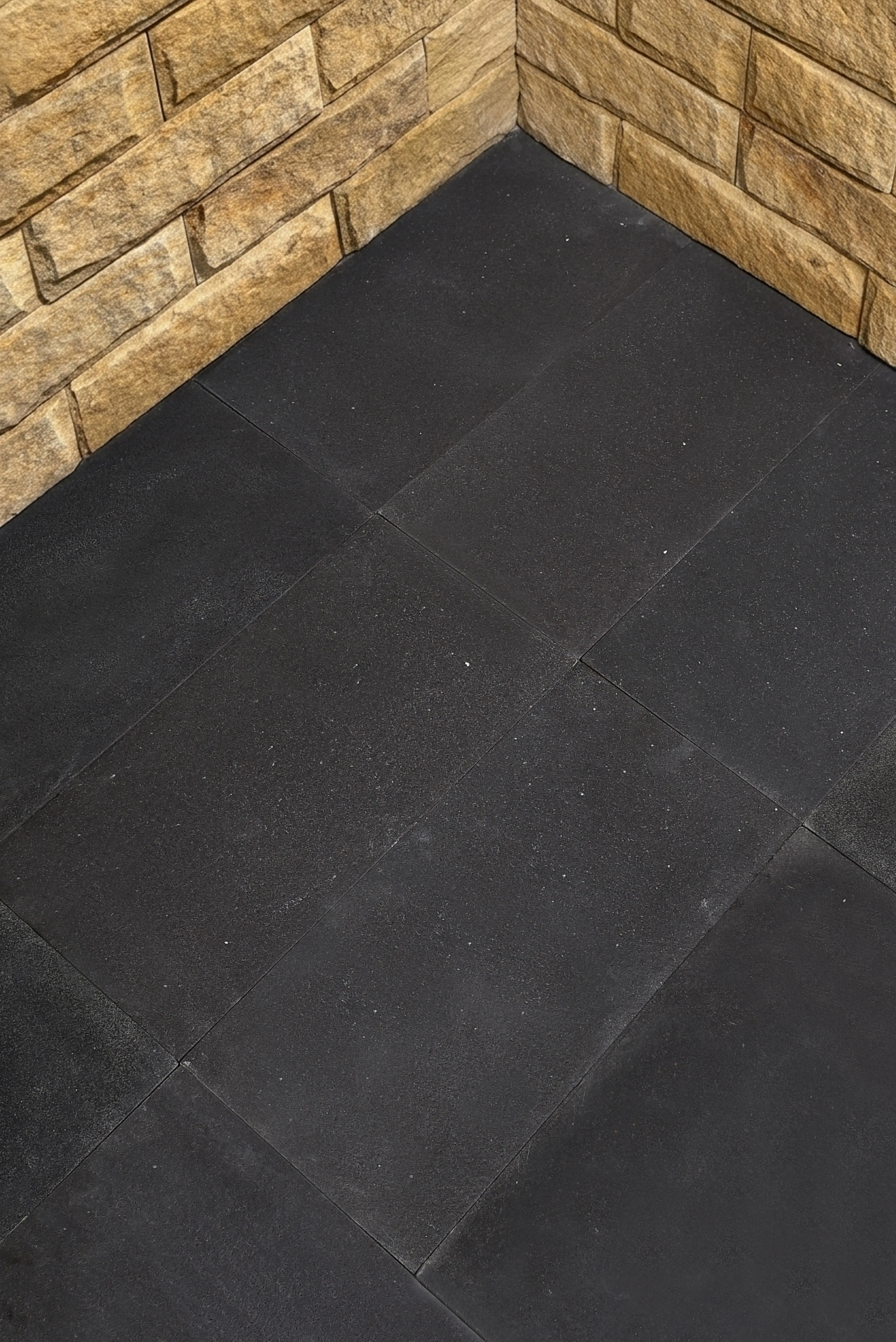
Standard blue slate floor tile in the residential specification range runs 3/8 inch to 1/2 inch nominal, but that nominal figure masks meaningful real-world variation in natural cleft material. Actual thickness across a single pallet can range from 8mm to 14mm on unprocessed cleft stock — a spread that forces you to either use a deep-bed mortar system or specify gauged tile from the outset. For most interior floor applications over a properly deflection-limited subfloor (L/360 minimum per standard framing codes), 3/8-inch gauged slate performs reliably. Step up to 1/2 inch when you’re working over radiant heat systems, where thermal cycling creates cumulative stress at the bond line.
According to ASTM natural stone tile testing standards, dimension stone tiles used in flooring should be evaluated for modulus of rupture alongside absorption — both metrics that vary significantly by quarry source and cleft depth. Blue slate typically exhibits modulus of rupture values in the 1,200–2,000 PSI range, with tighter-cleft material from selected quarries in the Middle East performing toward the upper end. Absorption rates below 0.4% classify it as highly resistant under standard testing, which has direct implications for how aggressively you need to seal it.
Quarry Source and Material Consistency
Not all blue slate floor tile shares the same mineral composition, and that matters more than most product listings suggest. Material from Middle East quarries tends to be a fine-grained phyllosilicate slate with low iron content — which is why the blue-grey colour remains stable over decades without the rust-tone oxidation you see in iron-rich slate from certain domestic sources. South American blue slate is often denser but shows higher colour variability within a single shipment, requiring more careful culling before installation to avoid obvious tonal breaks across a floor run.
At Citadel Stone, we assess material directly at the warehouse stage — checking cleft consistency, colour banding, and corner integrity before any stock goes to order. That hands-on quality review is what separates a reliable supply chain from one that sends you 30% wastage on a tight project. Knowing the quarry provenance of your tile before you commit to a specification protects you from mid-project material substitutions that create colour discontinuities across field tile and border rows.
You can explore the full range through our blue slate tile lineup, which breaks down the available quarry sources, finish options, and thickness profiles in one place.
Colour Variation and Grading for Interior Use
Blue slate floor tile indoors creates a specific visual challenge that outdoor applications don’t face — interior lighting exposes tonal variation far more ruthlessly than diffuse natural light. A tile that reads as a uniform blue-grey on an outdoor terrace can reveal green undertones, silver veining, or rusty patches under warm incandescent or cool LED lighting. Your grading specification needs to account for this before you sign off on a sample.
- V2 variation (slight, per TCNA classification) is appropriate for formal interiors, corridors, and commercial lobbies where visual consistency is prioritised
- V3 variation (moderate) suits residential great rooms and open kitchens where some tonal movement reads as natural character rather than quality inconsistency
- V4 variation (substantial) should be specified only when the design intent actively calls for a handcrafted, artisan aesthetic — mixing V4 material in a contemporary minimalist interior is a common and costly mistake
- Always review a full dry-lay of 15–20 tiles under the project’s actual lighting conditions before final approval — a 3-tile sample under showroom fluorescents tells you almost nothing
The Tile Council of North America installation and grading standards provide a useful reference framework for classifying natural stone tile variation, which you can use to align your specification language with what manufacturers and inspectors will recognise.
Installation Timing and Adhesive Performance
Any blue slate floor tile comparison that focuses only on the tile itself misses a variable that can undermine even the best material selection — installation conditions. Interior floor tile is less exposed to outdoor extremes than terrace paving, but ambient temperature and humidity still govern adhesive behaviour in ways that directly affect bond integrity.
Thin-set mortars for natural stone perform optimally when substrate and air temperatures stay between 50°F and 95°F during application and the initial 24-hour cure window. In practice, this means scheduling your installation to avoid early mornings in unheated spaces during cold months — slab temperatures below 45°F dramatically slow hydration and can result in an undercured bond that fails under foot traffic within weeks. Conversely, afternoon work in a sun-heated space with poor airflow can accelerate skin-over time on your adhesive bed, cutting your open time from 20 minutes to under 10. Morning installations in temperature-controlled environments give you the most consistent working window regardless of season.
Epoxy adhesives, which are sometimes specified for wet areas or radiant heat applications under blue slate, are even more temperature-sensitive than cement-based thin-set. Above 85°F, pot life drops sharply — work in small batches and keep your mix cool. The practical scheduling implication is straightforward: lock in your installation dates around your project’s mechanical system commissioning if HVAC is involved, and plan for at least 72 hours of conditioned air circulation before grouting begins.
Sealing and Maintenance Comparison Across Finish Types
Field performance data on blue slate tile across varied interior environments consistently shows that the sealing specification matters as much as the tile specification itself — and the right sealer differs meaningfully between finish types. Natural cleft surfaces have micro-recesses that trap liquid before it can be wiped away, so they benefit from a penetrating impregnator applied in two coats before grouting, with a third coat after grouting cures. Honed surfaces are more straightforward — one penetrating coat pre-grout is typically sufficient given the reduced surface area available for absorption.
- Penetrating sealers (silane-siloxane chemistry) are the correct choice for blue slate floor tile indoors — they don’t alter sheen or trap moisture at the surface
- Topical sealers create a film that dulls the natural cleft texture and can peel under thermal cycling from underfloor heating, making them inappropriate for this application
- Reapplication intervals for penetrating sealers on interior slate typically run 3–5 years under normal residential use, or 18–24 months in commercial settings with daily mopping
- pH-neutral cleaners are non-negotiable — alkaline or acidic products open the mineral surface of slate and accelerate colour fade, particularly in material with higher phyllosilicate content
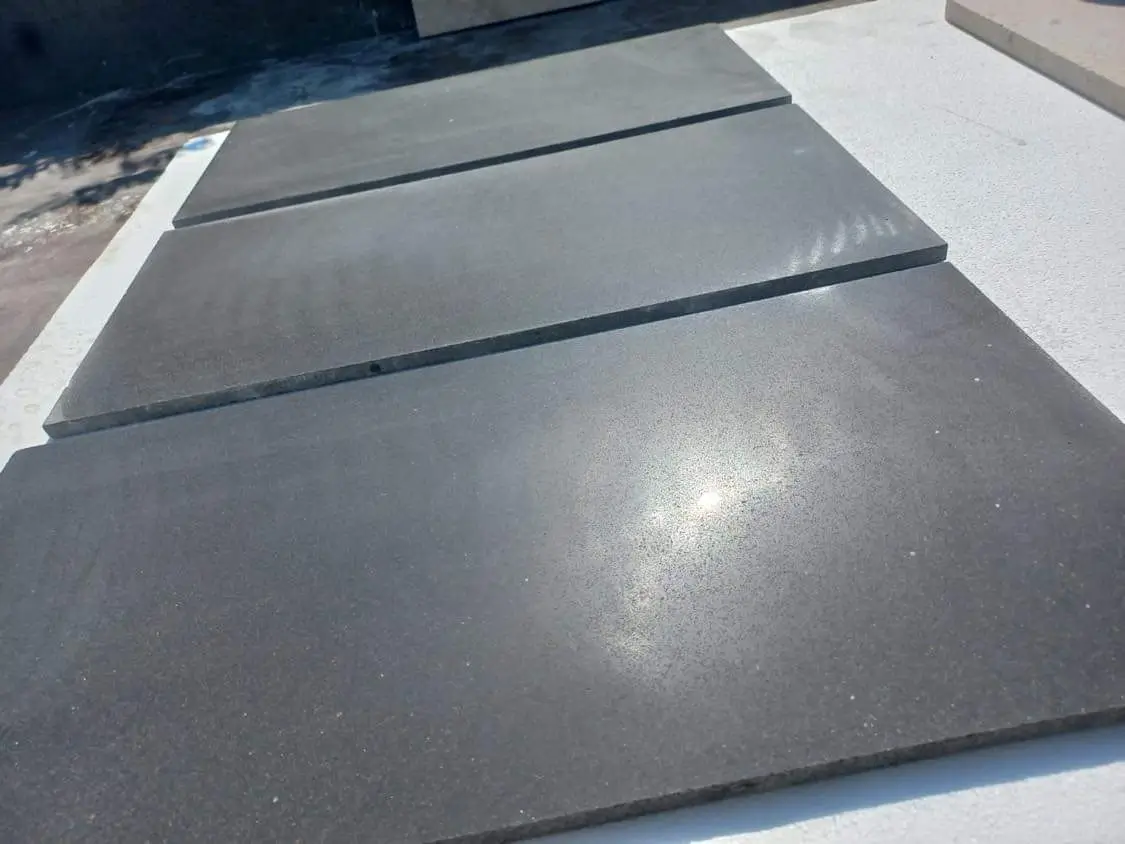
Size Format and Layout Considerations
The format size you specify for blue slate floor tile changes the visual weight of a room and has direct technical implications for subfloor preparation standards. Larger formats — 24×24 inches and above — require flatter substrates (no more than 1/8-inch variation in 10 feet per TCNA F-number requirements) and full-coverage back-buttering to eliminate hollow spots that lead to cracking under point loads. Smaller formats like 12×12 or 16×16 are more forgiving on imperfect subfloors and easier to manage around obstacles like cabinetry, columns, and floor penetrations.
The Natural Stone Institute’s ASTM tile stone specifications and standards outline the dimensional tolerances and flexural strength requirements that should anchor your format decision. For gauged blue slate in large formats, you’re looking for a modulus of rupture that supports the unsupported span between substrate contact points — a specification detail that separates a durable installation from one that develops hairline fractures within the first heating season.
Your layout pattern also affects material waste and truck delivery quantities. Running a 12×24 tile on a 45-degree diagonal typically adds 15–18% to your material order compared to a straight-set pattern, which changes your pallet count and the number of truck loads required. Factor this into your warehouse stock request early — lead times from Citadel Stone’s warehouse to project site typically run one to two weeks for stocked sizes, but large-format gauged slate in specific quarry colourways can require additional lead time for volume orders.
Blue Slate Floor Tile Comparison: Getting the Final Decisions Right
The blue slate floor tile comparison ultimately comes down to three intersecting decisions: finish type for the functional environment, quarry source for colour and structural consistency, and format size for the subfloor condition and design intent. Get all three aligned and you’re specifying a floor that performs for 25 years or more with minimal intervention. Miss one and you’re typically looking at resealing cycles that are too short, bond failures under thermal stress, or visual inconsistencies that owners notice within the first year. For projects that extend beyond interior floors into exterior or transitional zones, slate outdoor tile performance and slip resistance covers the additional specification variables that apply when the same material transitions to exposed conditions. Citadel Stone offers blue slate floor tile in multiple finishes, letting buyers match gloss level and texture to the specific indoor space being tiled.
Related reading: What Is Blue Stone? A Buyer’s Guide to Natural Blue Stone.