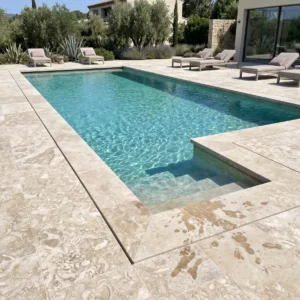
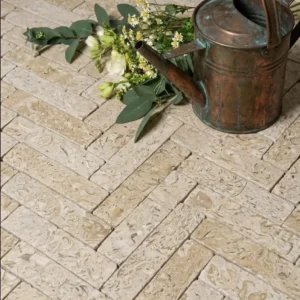
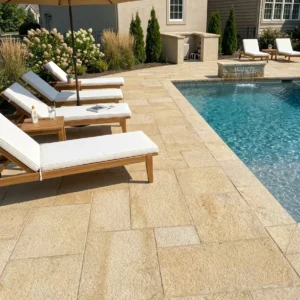
Your natural limestone colors guide doesn’t start with picking a swatch — it starts with understanding how the stone’s mineral composition governs every shade it produces. The spectrum runs from near-white through cream, buff, gold, pink, and deep charcoal, and each position on that range traces back to the iron oxide, clay mineral, or organic carbon content locked into the rock during formation. What most project specifiers discover too late is that two slabs labeled “beige limestone” from different quarries can read as completely different materials once they’re laid side by side in full sunlight.
How Limestone Color Forms in the Rock
Limestone color isn’t applied — it’s grown into the stone over millions of years, and understanding that process makes you a much sharper selector. The base mineral, calcium carbonate, is actually colorless. Every shade you see in a finished slab comes from trace inclusions: iron oxides for the warm buffs and pinks, clay minerals for the greens and greys, bituminous material for darker charcoals, and fossil content for the cream-to-ivory range you see in many natural limestone rock specimens.
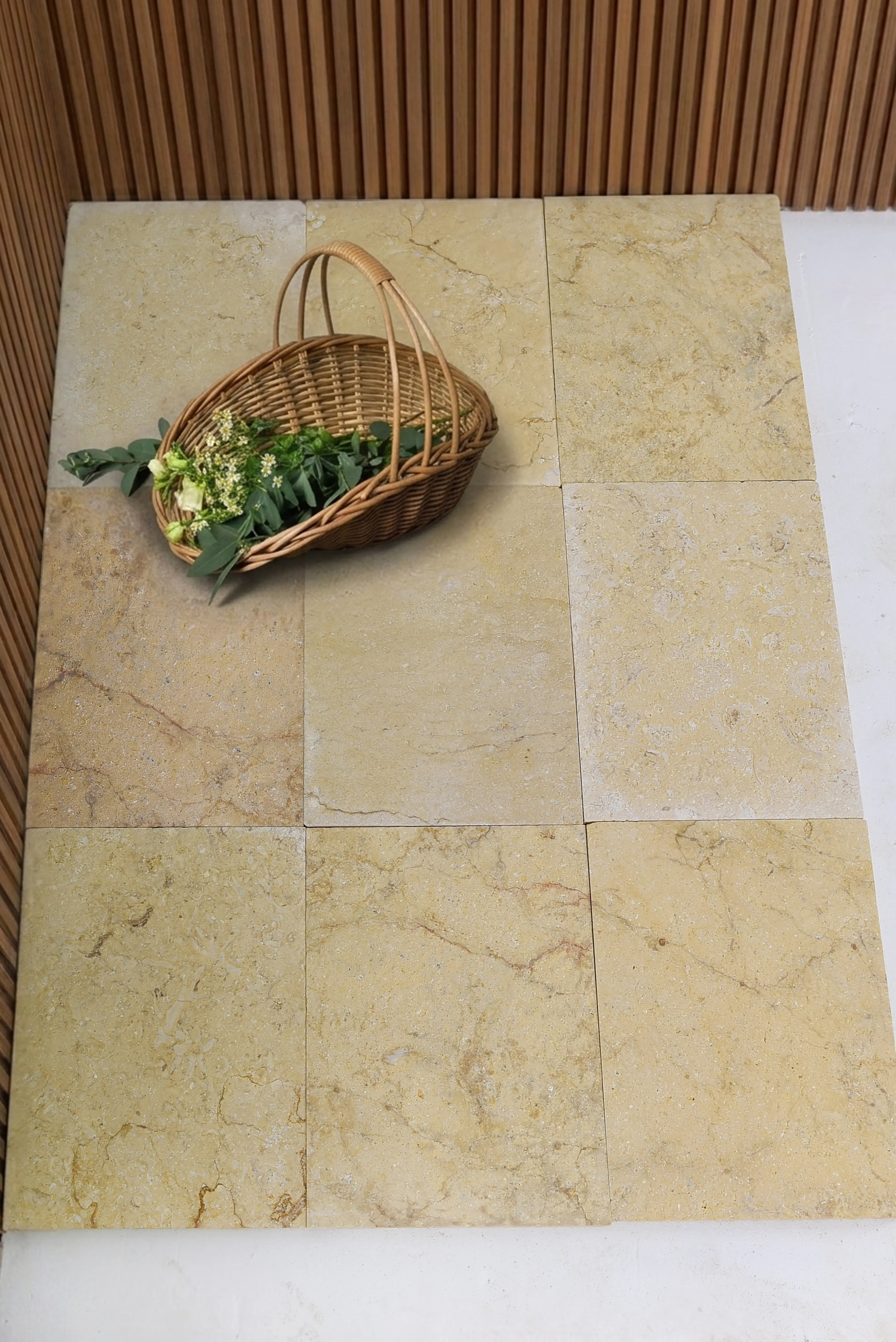
Field performance data shows that iron-rich deposits produce the warmest tones — the golds and ambers — but they also introduce the highest variability within a single quarry run. You’ll notice that a pallet of golden limestone pavers can contain individual pieces ranging from pale straw to deep ochre. That natural range is part of the material’s character, but it means your layout approach needs to account for it. Mixing pieces from different positions in the pallet before laying prevents striping and gives the installation the same blended, natural look you see in the quarry face.
The Main Limestone Color Families: What to Expect
The natural limestone colors guide covers six broadly recognizable color families, each with distinct undertone behavior and performance characteristics worth knowing before you commit to a specification.
White and Ivory Limestone
White and ivory tones come from high-purity calcium carbonate with minimal trace minerals. These are the most light-reflective options — surface reflectance typically measures in the 60–70% range — making them an excellent call for south-facing installations where heat absorption is a concern. The trade-off is that high-purity stone can appear stark in certain lighting, so pairing it with a warm-toned mortar or jointing compound softens the overall read.
Cream and Buff Limestone
Cream and buff tones represent the broadest and most consistently available range in the natural limestone colors guide. These mid-warm shades sit comfortably between white and gold, meaning they harmonize with a wider variety of architectural palettes than either extreme. Your design has more flexibility here — cream limestone works under contemporary minimalism just as naturally as it does under traditional stonework. Most of the material sourced from Middle East quarries falls in this cream-to-buff band, which is why it dominates the market in high-volume exterior projects.
Gold and Amber Limestone
Gold and amber tones carry the highest iron oxide content in the limestone family, which creates warmth but also introduces the most pronounced color shift under different light conditions. Under overcast skies, gold limestone reads as warm tan. Under direct midday sun, the same material can shift visibly toward orange-amber. Field experience confirms this is one of the most common client surprises — they approve a sample under showroom lighting and get a dramatically different result once it’s laid outdoors. Always review gold limestone samples under natural sunlight before finalizing the specification.
Natural Pink Limestone
Natural pink limestone occupies a narrow but distinct niche in the color spectrum. The blush-to-rose tones come from a specific combination of iron oxide and manganese staining in the original sediment, and the saturation varies considerably between quarry sources. You’ll find that natural pink limestone reads most powerfully in large-format applications — smaller pieces can lose the tone in the joint pattern. At Citadel Stone, we recommend reviewing a minimum of three square meters of natural pink limestone in situ before committing, because the color intensity shifts significantly with scale and with the orientation of the grain.
Grey and Blue-Grey Limestone
Grey limestone tones result primarily from clay mineral inclusions and occasional organic matter. The cooler end of the range — the blue-greys — tends to come from marine-formed deposits where the sedimentary chemistry favored magnesium-rich clay. These are the most versatile palette anchors in contemporary exterior design because they read as neutral without being stark. Smooth limestone in a mid-grey finish pairs cleanly with steel, glass, and white rendered surfaces without competing for attention.
Charcoal and Dark Limestone
Charcoal and near-black tones in limestone typically result from bituminous organic matter distributed through the calcium carbonate matrix during formation. These are structurally dense stones with lower porosity than their lighter counterparts, which translates to superior resistance to moisture ingress. They are also the most dramatically affected by UV exposure over time, which is discussed in more detail in the sun exposure section below.
How Finish Selection Shifts the Perceived Color
The finish you specify has as much influence on perceived color as the stone’s base tone. Honing opens the surface structure and intensifies the undertone — a honed cream limestone reads warmer and richer than the same material in its sawn state. Polishing amplifies the color further but introduces reflective glare that can make pale stones appear washed out in high-light conditions. Tumbling rounds the edges and softens the color slightly, producing a more faded, antiqued reading that suits rustic or Mediterranean design directions.
For outdoor applications in sun-exposed positions, a textured bush-hammered or flamed finish serves two purposes simultaneously: it improves slip resistance and it diffuses light across the surface in a way that stabilizes the perceived color across different lighting conditions. Flat, polished finishes show the highest color variation between morning, midday, and evening light — worth factoring in when your client expects consistency across the viewing day. According to NSI limestone specifications, finish selection also affects absorption rates, which directly influences how sealing compounds interact with the surface — a critical consideration for long-term color retention.
UV Exposure and Long-Term Color Stability
This is where the natural limestone colors guide moves from showroom theory into field reality. UV radiation is the primary driver of surface color shift in outdoor limestone installations, and the effect is not uniform across the color spectrum. Darker tones — charcoals and deep greys — experience the most visible change: iron-bearing minerals at the surface oxidize gradually under sustained UV exposure, causing the stone to lighten and develop a grey-silver cast over three to five years. Lighter tones show less dramatic shifting, but they accumulate biological staining — algae and lichen — faster because the contrast against the pale ground is more visible.
Sealing is your primary tool for managing UV-driven color change, but the type of sealer matters considerably. Penetrating impregnator sealers protect without altering the surface color or sheen, which is the correct choice for most outdoor applications. Topical sealers can deepen the color and add a wet-look finish, but they are more vulnerable to UV degradation themselves — typically requiring recoating every 18–24 months in sun-exposed positions, compared to the 3–4 year schedule for quality penetrating products. For high-UV installations on south-facing terraces or pool surrounds, a sealer with UV-stabilizing additives is worth specifying from the outset. You’ll find this detail is rarely on the standard maintenance schedule for natural stone, but it measurably extends the color retention window.
Surface oxidation on iron-rich tones — particularly the gold and amber family — can develop a subtle bronze or russet patina that many clients actually find more attractive than the original sawn color. Setting that expectation during specification review prevents unnecessary sealer applications that interrupt a natural aging process the client would have preferred. The distinction between managed patina and uncontrolled staining is almost entirely in the sealing schedule and cleaning protocol you establish at handover.
Matching Limestone Colors to Project Context
Color selection in practice is rarely about the stone alone — it’s about how the stone reads in relationship to the existing built and planted environment. Warm buff and gold tones advance visually, making outdoor spaces feel enclosed and intimate. Cool greys and blue-greys recede, making the same space feel more open and expansive. That’s not subjective opinion — it’s a predictable optical effect you can use deliberately in your design.
- Buff and cream limestone harmonizes naturally with brick, timber, and terracotta — it picks up the warm undertones in those materials without competing
- Grey and blue-grey limestone works best alongside white render, dark steel, and contemporary plantings — it reads as a sophisticated neutral in those contexts
- Gold and amber tones suit Mediterranean and Tuscan architectural vocabularies — they reinforce the warm palette without needing accent color
- Natural pink limestone reads most successfully in small-scale accent applications — pool coping, garden steps, or border edging — rather than as a primary field material
- Charcoal limestone is strongest in contemporary minimalist settings where the dark ground lets lighter architectural elements read clearly
- White and ivory limestone suits coastal and Hamptons-style exteriors where high reflectance and brightness are design assets
For projects that involve Natural Limestone Paving, the surrounding hardscape materials — concrete edging, decking boards, rendered walls — should be tested against full-size stone samples in natural light before the order is confirmed. A sample board that looks cohesive indoors can read as a clash once all the materials are together outside.
Grading and Color Consistency: What the Grades Mean
Stone grading directly governs how much color variation you’ll receive in a supply run. Grade A or first-quality limestone is selected for close color matching within the batch — you’ll get narrower variation between pieces but at a higher per-unit cost. Grade B and commercial grades include a wider color range within the same quarry run, which can actually be an advantage in large informal installations where a varied palette looks more natural.
The grading system matters most in feature applications — pool copings, entrance stairs, and formal terraces — where visual consistency carries real design weight. For background field paving, a commercial grade mixed blend often produces a more natural result than a tightly color-matched Grade A selection that can look almost manufactured in its uniformity. According to limestone formation and characteristics, the mineral variability that drives color differences within a quarry run is an intrinsic property of sedimentary stone formation — understanding that helps set realistic client expectations about natural variation before the stone arrives on site.
- Grade A: tightest color matching, best for formal and feature applications
- Grade B or commercial: wider natural variation, suitable for field paving and informal settings
- Tumbled and reclaimed grades: highest variation, intentional for rustic and antique aesthetics
- Factory-sorted batches: pieces pulled from a larger run to match a specific tone range — available from specialist suppliers at a premium
Sourcing and Availability Across the Color Range
Not every color family is equally available in every format and thickness. Cream and buff tones are the most consistently available because they represent the dominant output of the highest-volume quarries — selected quarries from the Middle East, as well as producers in Turkey, Portugal, and Spain, all supply in this range with reliable lead times. Natural pink limestone is a specialty product with a more limited quarry base, and supply runs can be inconsistent — if you’re specifying it for a large project, securing your full quantity in a single warehouse batch is the safest approach. Mixing supply runs on pink stone almost always produces detectable tone shifts between batches.
Charcoal and dark grey limestone is predominantly sourced from European quarries with high density and low absorption characteristics. The darker tones require careful inspection on arrival — warehouse quality checks should confirm that the color is distributed through the stone body, not just a surface wash that will expose lighter material at cut edges. At Citadel Stone, our warehouse team checks cut edges on every dark limestone delivery specifically for this issue before the order ships, because edge color consistency is the first thing a skilled installer notices when the stone comes off the truck.
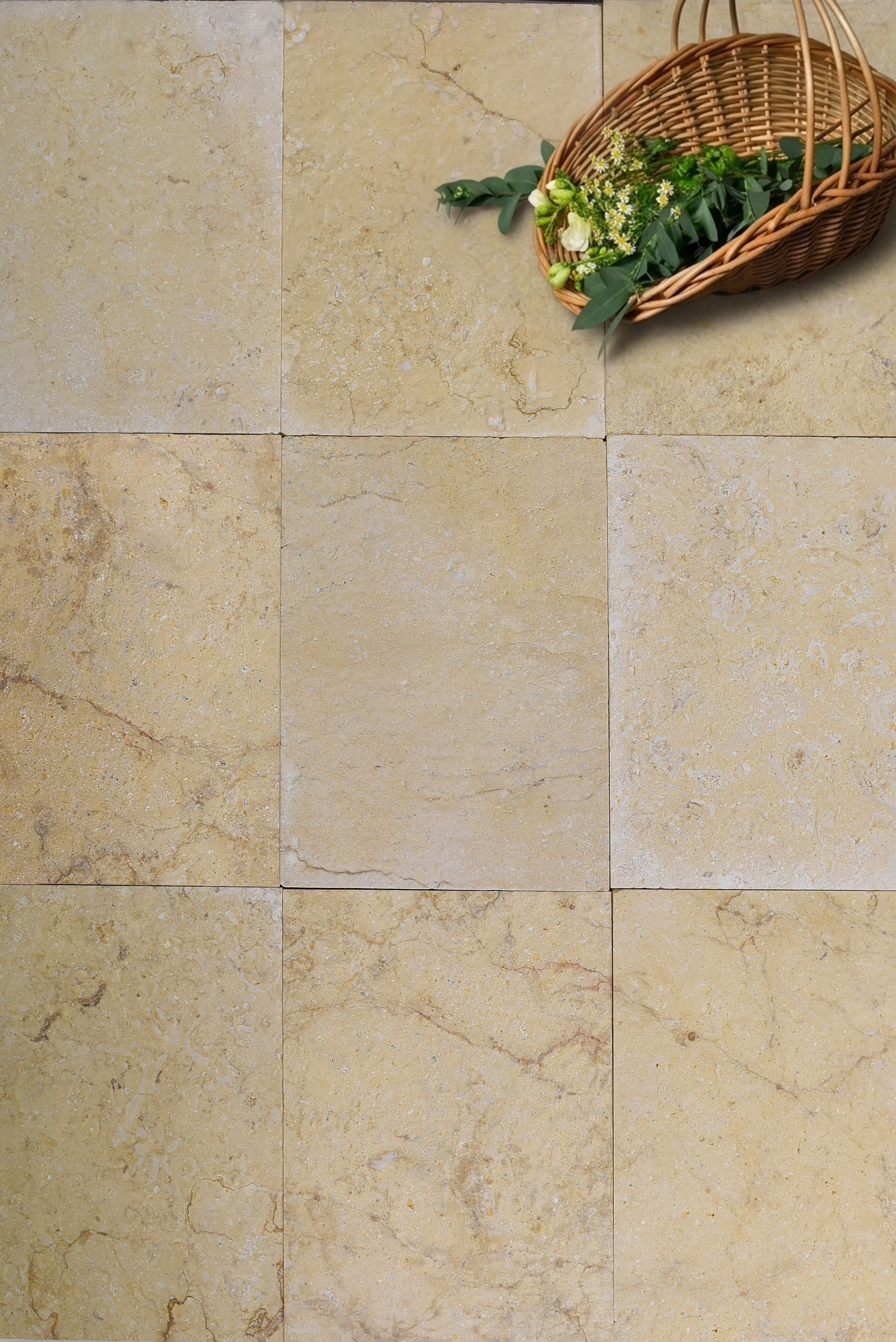
Smooth Limestone and Surface Finish for Color Accuracy
Smooth limestone in a honed or sawn finish gives you the most accurate reading of the stone’s true color, which is why it’s the standard for sample approval. A textured or flamed finish breaks up the surface plane and scatters light, which effectively softens and slightly greys the perceived tone regardless of the base color. That means the sample you approve in smooth honed finish will read differently once a flamed finish is applied to the production run — a detail that catches plenty of specifiers off guard.
- Honed finish: intensified undertone, accurate base color, slightly increased absorption vs. polished
- Sawn finish: truest raw color, slightly matte, good reference point for all finish comparisons
- Flamed or bush-hammered: greyed and diffused appearance, most resistant to UV-driven color shift
- Tumbled finish: softened, antiqued tone, highest variation piece-to-piece within a batch
- Polished finish: deepest apparent color, highest reflectance, most dramatic light variation through the day
The specification should always reference both the color grade and the finish — “cream limestone, honed” and “cream limestone, flamed” are genuinely different materials from an appearance standpoint, even when they start from the same quarry block. The USGS data on limestone composition confirms that surface mineralogy — the uppermost layer of crystal structure — determines how light interacts with the stone, which is why finish processing changes the color perception so substantially.
Ordering Logistics and Color Batch Management
Color-critical projects require batch management from the moment the order is placed. Every natural limestone quarry produces slightly different material from different extraction faces, and a gap of even six weeks between supply runs can produce a visible tone shift. The practical rule is to order your full project quantity — including a 10–12% overage for cuts and future repairs — from a single production batch. This is non-negotiable on any project where the stone will be highly visible or where feature areas and field areas need to read as a unified palette.
Citadel Stone maintains warehouse inventory across the primary limestone color families with documented batch records, which significantly reduces the risk of tone mismatch on phased projects. Lead times from our warehouse on standard cream and buff tones typically run 1–2 weeks for domestic delivery — considerably shorter than the 8–10 week import cycle you’ll face ordering directly from overseas quarries on a project-specific basis. For specialty colors including natural pink and dark charcoal, confirming availability before the design is locked in saves significant schedule risk downstream. Truck access and site delivery requirements should be confirmed at order placement, particularly for projects with restricted access or staged delivery requirements.
What Matters Most When Specifying Limestone Color
The natural limestone colors guide ultimately comes down to three decisions that determine whether your color specification survives contact with reality: the color family, the grade, and the finish. Get all three specified together and you have a complete material description that a supplier can match accurately. Leave any one of them ambiguous and you’re exposing the project to misaligned expectations at delivery.
Color review should happen under daylight, at the scale of the actual installation, and alongside the primary adjacent materials — not under showroom fluorescents with a single 10cm sample. UV performance planning should be part of every exterior specification: confirm the sealing schedule, the sealer type, and who is responsible for the first recoat before the project closes out. As you complete your limestone specification, understanding the geological foundation behind the material’s color and density characteristics is worth your time — the geology behind limestone as a natural stone covers the mineral science that makes each color family perform the way it does in outdoor conditions.
The most consistent result comes from treating color selection as a technical decision — mineral composition, grade, finish, UV exposure, and sealing schedule — rather than an aesthetic one made from a brochure. Buyers working with Citadel Stone often find that undertone — whether cool grey or warm cream — shapes how a paved area reads against planting and timber.