Dominica speaks creole in wood and stone: the ti kai — the small traditional house of timber frame, steep gable and brilliant paint that answers the island’s weather with wisdom older than any code — and the Roseau townhouse tradition of stone ground floors under jalousied timber uppers, verandahs shading narrow pavements, fretwork trimming the eaves. The creole register is the island’s architectural voice — French-inflected, African-rooted, weather-taught — and keeping it is a craft chapter of its own. Here is the creole guide.
The ti kai’s wisdom
The small house carries big intelligence: elevated floors on stone or block piers letting flood and air pass, steep gables shedding rainforest volumes, shuttered openings balancing breeze and storm, and a footprint sized to its family and its slope. The vernacular-intelligence principle runs at rainforest pitch — the ti kai predates the resilience standard and anticipates half of it — and stone’s role is the quiet foundation chapter: pier and plinth honesty, mass-below logic at cottage scale, and yard ground on the gathering-court tradition where creole life actually happens.
The townhouse ensemble
Roseau’s streets keep the urban register: stone ground floors trading behind heritage frontages, timber uppers leaning conversationally over the pavement, and the capital’s streetscape discipline holding the ensemble — conservation on the ensemble-first manners, repairs matched to the coursing, and the hurricane-Georgian parallel the mass-below tradition shares: the stone floor survives the storm and carries the rebuilt timber, generation after generation. The register’s survival is the proof of its method.
- Keep the stone ground floor and timber upper relationship intact.
- Repair the plinth rather than replacing it wherever it is sound.
- Use lime-compatible mortars against historic masonry.
- Keep shopfront alterations reversible, since the frontage is the protected part.
Paint, fretwork and the disciplined ground
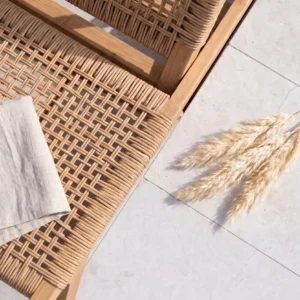
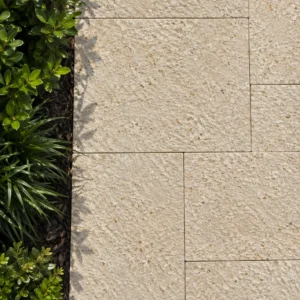
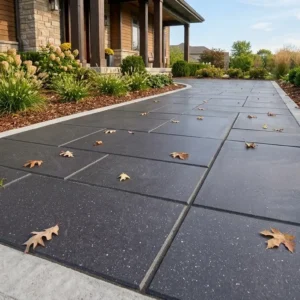
Creole architecture performs in color — facades in saturated pinks, greens and blues, fretwork picked out white, the street reading as festival — and the ground answers with the vase-discipline restraint in creole key: warm neutral pavements and courts under the painted timber, thresholds honest to two centuries of feet, and the warm-evening register for the streets’ gentlest hours. The color is the melody; the stone keeps the rhythm.
Weather, repair and the living tradition
The register survives by its repair culture: timber renewed as the sacrificial layer the tradition always intended, stone floors and piers conserved as the permanent one, storm damage answered on the curriculum principle — each rebuild slightly wiser — and craft skills — fretwork joinery, shutter making, lime-and-stone work — kept alive by use. The Territory’s older line and the creole tradition together hold the island’s building memory; both survive the same way: by communities that keep building in them.
- Match new stone to the original coursing rather than to a modern module.
- Source a format local trades already know how to cut and lay.
- Hold a small matched reserve so a repair never waits for a shipment.
- Record what was done, because that record is what the next repair needs.
New work in the creole key
Contemporary projects borrow the register fluently: villas and lodges on ti kai logic — piers, gables, verandah life — at modern scale, the nature-lodge genre finding its local voice in creole lines, public buildings quoting the tradition without costume on the legible-modern principle, and the returning-family builds choosing the register as homecoming statement. The test is always the same: does the weather wisdom come with the look? The creole key works because it worked; new work in it must too.
Serving the register
Creole-register work runs on modest, matched supply: pier and plinth stone at cottage scale, pavement grades for the townhouse streets, yard ground for the gathering courts, and conservation matching where the ensembles rule — landed on the island supply line and served by the island supply guide in the tradition’s own manner: humble materials, honest work, color left to the timber. The ti kai taught the island how to live with its weather; the stone beneath it is the lesson’s first line.
Choosing the colors: a palette that lasts the weather
The creole register’s color is a commitment renewed every few years, and choosing a palette that survives — aesthetically and practically — is part of the tradition’s craft. The practical layer first: the island’s light is strong and its rain constant, so saturated hues weather fastest on the sun-struck elevations and forgivingly on the shaded ones; quality exterior systems on well-prepared timber outlast bargain coats by years that pay for the difference; and the maintenance cycle — the sacrificial-timber philosophy applied to its finish — schedules repainting as renewal rather than rescue. The aesthetic layer follows the ensemble’s rules: streetscapes read best where neighbors vary hue but share intensity — the festival effect is collective — heritage precincts consult the district’s established range, and the trim tradition — fretwork and shutters picked out against the body color — carries the type’s signature more than any single shade.
The stone relationship completes the palette: the ground’s warm neutrals and the piers’ gray-buff honesty are the register’s bass line, unpainted and permanent, against which the timber’s color plays — and the discipline of leaving stone unpainted is worth stating, because painted masonry joins the maintenance cycle forever and forfeits the material’s aging grace. Thresholds, plinths and yard walls in honest stone give the repainting years their fixed datum: the house’s colors change by generation and mood; its ground holds steady, and the composition depends on exactly that contrast.
The choosing itself is best done as the tradition does everything — socially: test patches judged at morning and evening light, the neighbors’ opinions collected over the fence, the village’s memory consulted on what the house wore before. The palette that lasts is the one the street recognizes as right; the paint fades on schedule; the stone waits underneath, patient as ever, for the next generation’s color.
What the law protects and how
Creole fabric here has statutory cover. The Physical Planning Act 2002 allows the Authority to compile lists of buildings of special architectural or historic interest, requires 60 days notice before demolition, alteration or extension that would seriously affect character, and permits Building Preservation Orders restricting work on buildings or groups important for landscape, architectural, cultural or historical heritage. Development permission is separately required, with 120 days for determination.
- Establish whether the building is listed before any design work starts.
- Allow the 60 day notice period as well as the 120 day determination.
- Expect a preservation order to be possible on a group of buildings.
- Record existing fabric thoroughly, since that record cannot be recovered.
- Keep interventions reversible where original material survives.
Specifying a plinth that will outlast the timber above it
In this tradition the stone does the hard work at ground level while the timber does everything above. The Natural Stone Institute testing program supplies the criteria for the base: ASTM C97 for absorption and bulk density, C170 for compressive strength, C880 for flexural strength, C1353 for abrasion resistance and ANSI A326.3 for slip resistance as dynamic coefficient of friction.
- Read absorption first, since a plinth sits in constant ground moisture.
- Check compressive strength, because this element carries the whole building.
- Meet the slip benchmark on any threshold or step onto the street.
- Choose material that will not wick moisture up into the timber above.
Repairing a tradition that expects to be repaired
The Creole house survives because it was always designed to be mended. Timber elements are replaceable, the stone base is durable, and generations of owners have swapped parts without changing the whole. A restoration that tries to make the building permanent misunderstands what it is.
- Replace like with like rather than upgrading to something maintenance free.
- Keep the details simple enough for a local carpenter and mason to repeat.
- Avoid sealing the base, since it needs to breathe to protect the timber.
- Accept that some elements are consumable and plan their replacement.
Creole heritage stone and the ti kai rules that still hold
The Creole tradition puts durable stone at the ground and replaceable timber above, and the statutory register now protects that relationship. Confirm the listing, allow the notice periods, specify a base that breathes and repair in a way the next owner can continue. Our Dominica stone supply guide sets out the formats, finishes and lead times that suit this island. These houses have lasted because they were built to be mended, and the best restoration keeps that possible.