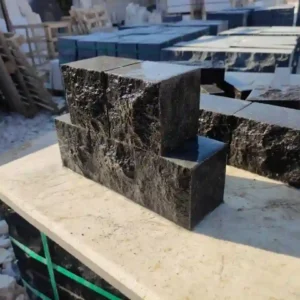
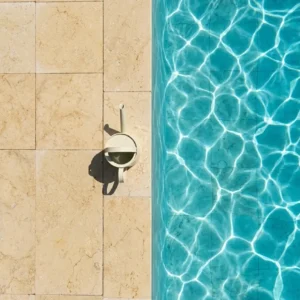
What Drives Granite Patio Paver Cost
Granite patio paver cost varies more than most buyers expect — not because suppliers price arbitrarily, but because granite itself is one of the most specification-sensitive natural stones on the market. The spread between entry-level granite pavers and premium-grade slabs can exceed 300%, and that gap is driven by measurable material variables, not marketing tiers. Understanding what’s actually moving the price needle lets you build an accurate budget before you commit to a layout or square footage.
The four primary cost drivers are stone origin, finish type, format size, and thickness. Each one compounds against the others. A flamed-finish, oversized slab cut from Brazilian black granite will cost substantially more than a standard sawn-cut, mid-grey paver in a 12×12 format — even if both carry similar compressive strength ratings. Your budget needs to account for that interaction, not just a per-square-foot average pulled from a generic pricing guide.
Granite Grades and Their Price Ranges
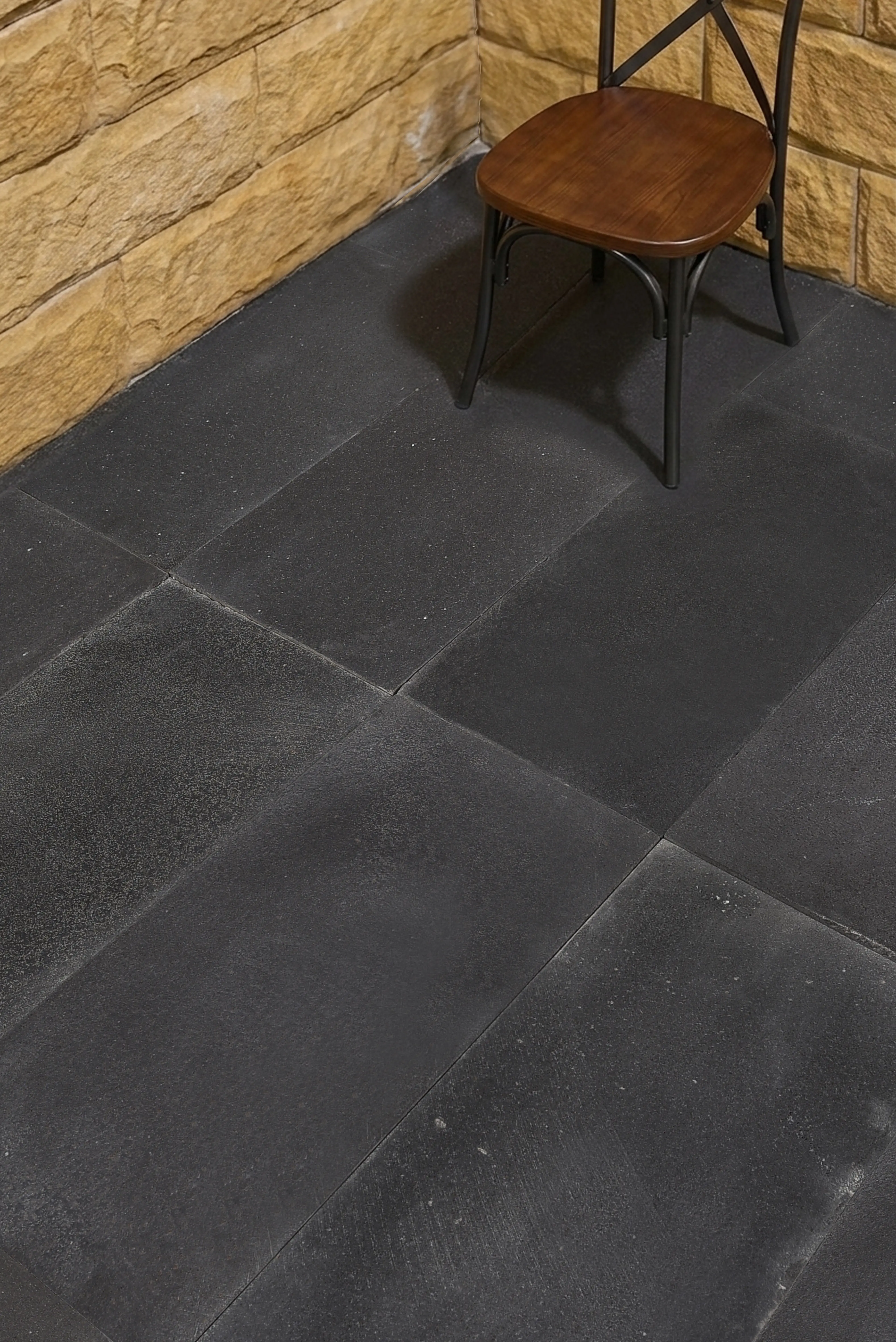
Granite is classified into commercial, standard, and premium grades — and those labels carry real pricing consequences. Commercial-grade granite pavers typically run $4–$8 per square foot for the material alone. Standard-grade pavers fall in the $8–$15 range, while premium and specialty stones — quartzitic granites, rare color veins, or extra-large formats — can push $20–$35 per square foot before installation costs enter the picture.
What separates these grades isn’t always visual. Porosity, density, and mineral consistency are the differentiators that matter for outdoor patio applications. Higher-grade granite pavers for patios exhibit tighter mineral grain structure, which directly affects absorption rate and long-term stain resistance. According to Natural Stone Institute granite durability specifications, granite’s water absorption rate typically falls below 0.4% — but lower-tier commercial cuts can test closer to 0.8%, which matters in freeze-thaw regions.
- Commercial grade: $4–$8 per sq ft — acceptable for utility applications with moderate foot traffic
- Standard grade: $8–$15 per sq ft — suitable for residential patios with consistent quality and colorfastness
- Premium grade: $15–$35 per sq ft — quartzitic granite, rare colorways, bookmatched slabs, or custom formats
- Reclaimed or antique granite: $12–$22 per sq ft — higher material cost offset by character and uniqueness
Your project’s expected traffic load and exposure conditions should dictate which grade you specify. Choosing commercial grade to save $4 per square foot on a high-use entertaining patio often results in accelerated surface wear that triggers resurfacing costs within 8–10 years — well before the 25–30 year lifespan that proper-grade granite pavers reliably deliver.
Finish Type and Its Effect on Price
The finish applied to granite pavers for patios adds processing cost that flows directly into the final price per square foot. Sawn-cut or rough-split finishes are the least expensive because they require minimal post-quarry processing. Honed and flamed finishes cost more because they involve additional machining or thermal treatment steps.
Flamed granite — achieved by exposing the surface to high-temperature torches that cause mineral grains to spall and create a textured profile — typically adds $2–$4 per square foot over sawn-cut pricing. That texture also improves slip resistance, which is relevant if your patio connects to a pool area or experiences consistent moisture exposure. Honed finishes, which produce a smooth matte surface, add $1.50–$3 per square foot and are popular for contemporary outdoor aesthetics. Polished granite pavers are generally not recommended for exterior patio use — the surface becomes genuinely hazardous when wet, regardless of how refined it looks in a showroom.
- Sawn cut: base price tier — minimal processing, slight surface texture from the blade
- Honed: adds $1.50–$3 per sq ft — smooth matte surface, good for design-forward patios
- Flamed: adds $2–$4 per sq ft — roughened texture, superior wet-surface traction
- Sandblasted: adds $1–$2.50 per sq ft — uniform fine texture, intermediate slip resistance
- Brushed or aged: adds $2–$5 per sq ft — deliberate weathered character, popular in traditional settings
The finish decision also affects your sealing schedule. Honed granite pavers for patios have slightly higher surface porosity than flamed finishes, which means they require more frequent sealer application — typically every 18–24 months versus 24–36 months for flamed surfaces. Factor that into your total cost of ownership, not just the upfront material price.
Format Size, Thickness, and Cost Per Square Foot
Larger format granite pavers carry a higher per-square-foot cost because cutting, handling, and quality control become more demanding as slab dimensions increase. A standard 12×12 granite paver in 1.25-inch thickness is one of the most cost-efficient formats available — the quarrying and processing workflow is well-optimized at that size. Move to 24×24 or 24×36, and you’re looking at a 20–40% price premium per square foot, plus increased installation labor because larger pieces require more precise base leveling to avoid rocking or cracking.
Thickness is equally important for structural performance and cost. The ASTM C615 granite dimension stone standard establishes minimum thickness requirements that vary by application load. For residential patio use, 1.25 inches is the accepted minimum for pedestrian traffic. If your patio design includes vehicle overlap — even occasional service or delivery access — you’ll want 2-inch nominal thickness, which adds $3–$6 per square foot in material cost alone.
- 1.25-inch thickness: standard residential patio spec — pedestrian traffic only
- 1.5-inch thickness: added margin for heavier furniture, outdoor kitchens, or frequent entertaining loads
- 2-inch thickness: required for mixed vehicle and pedestrian access zones
- Oversized formats (24×36 and larger): 20–40% cost premium over standard 12×12 or 16×16
- Custom-cut formats: add fabrication surcharge of $5–$12 per square foot depending on complexity
Installation Cost: What to Budget Beyond Material
Material cost covers roughly 40–60% of total granite patio paver cost on a typical residential project. The remaining portion is labor, base preparation, and auxiliary materials. Understanding the full cost breakdown prevents the budget surprises that derail projects mid-construction.
Labor rates for granite paver installation range from $8–$18 per square foot depending on complexity, regional labor markets, and base conditions. Projects requiring significant grading, deep aggregate bases, or complex patterns — herringbone, fan patterns, custom borders — sit at the high end. Straight-stack or running-bond patterns on a well-prepared flat site stay closer to the $8–$12 range. Base preparation adds another $3–$7 per square foot for compacted aggregate, edge restraints, and bedding sand or mortar. Don’t let contractors skip the base spec to save money — that’s the single most common reason granite patio installations fail prematurely.
- Labor (installation): $8–$18 per sq ft depending on pattern complexity and site conditions
- Base preparation: $3–$7 per sq ft for aggregate, compaction, and bedding layer
- Edge restraints: $2–$4 per linear foot installed
- Joint sand or mortar: $0.50–$2 per sq ft depending on joint width and product type
- Initial sealer application: $0.75–$1.50 per sq ft — worth including in the initial project budget
For a 400 square foot patio using standard-grade granite pavers at $10 per square foot material cost, a realistic total installed budget lands between $7,200 and $11,200 — a range that reflects real project variability, not padding. Projects with difficult access, significant grade change, or decorative border work will track toward the upper end.
Seasonal Installation Timing and Your Budget
Scheduling your granite patio installation within the right temperature window isn’t just a performance consideration — it directly affects your final cost. Contractors working in optimal conditions — mornings in moderate ambient temperatures, away from peak summer ground heat — produce cleaner work with fewer callbacks. That means fewer cost surprises after the project closes.
Bedding mortars and polymeric joint sands both have temperature sensitivity windows. Most polymeric sands activate properly between 32°F and 100°F ambient, but performance is best between 50°F and 85°F. Installations performed outside this range risk incomplete activation, which results in joint washout within the first season. Correcting joint failure after the fact typically costs $1.50–$3 per square foot in remediation — an entirely avoidable expense. Morning installation start times are genuinely preferable in warm seasons because granite’s thermal mass means the stone surface temperature can run 20–30°F above ambient air temperature by mid-afternoon, which accelerates mortar dry time and reduces working windows for adjustments.
- Optimal installation window: 50°F–85°F ambient temperature, stable conditions for 48 hours post-install
- Morning scheduling advantage: lower stone surface temperatures reduce mortar flash-setting risk
- Freeze risk: mortar and polymeric sand installations require protection from freezing for a minimum of 72 hours post-placement
- Off-season scheduling: late autumn and early spring installs often carry 10–15% lower labor rates due to reduced contractor demand
- Rain delay costs: budget a 5–10% contingency for weather-related scheduling gaps in wetter seasonal periods
Scheduling your project in the shoulder seasons — late spring or early autumn — often delivers the best combination of favorable installation conditions and contractor availability. That scheduling discipline can also work in your favor on pricing: contractors running below full capacity in those windows are more likely to negotiate on labor cost. For current material pricing and availability across formats, review our granite paver pricing before locking in your project schedule.
Origin and Supply Chain Impact on Cost
Where your granite comes from affects granite patio paver cost more than most buyers realize. Domestic granite — quarried in various parts of the country — carries lower freight cost but is available in a narrower color range, typically grey, pink, and buff tones. Imported granite from Brazil, India, China, and select European quarries offers a far wider color and mineral variety, but import cycles add 6–8 weeks to lead times and introduce freight cost variability tied to shipping rates.
The USGS dimension stone production data confirms that granite remains the dominant natural stone by volume in US construction — which keeps domestic supply relatively stable but doesn’t insulate buyers from import-dependent specialty colors. If your design requires a specific color that isn’t quarried domestically, build a 4–6 week scheduling buffer and a freight cost allowance of $0.75–$2.50 per square foot into your budget. Citadel Stone maintains warehouse inventory of the most in-demand granite formats nationally, which compresses that lead time significantly for standard specification projects — typically to 1–2 weeks from confirmed order.
Long-Term Cost of Ownership vs. Upfront Price
Granite patio paver cost doesn’t end at installation. Your 10-year total cost of ownership includes sealing, joint sand replenishment, and any spot repairs — and those ongoing costs vary significantly based on the initial material and finish choices you make.
Well-specified granite pavers for patios require sealing every 2–3 years with a quality penetrating sealer. Budget $0.50–$1.25 per square foot per sealing event, depending on whether you DIY or hire it out. Joint sand typically needs replenishment every 3–5 years depending on rainfall intensity and traffic level. Compare this to concrete pavers, which require similar sealing intervals but carry higher crack and spall risk, or to porcelain tiles, which don’t need sealing but are vulnerable to substrate movement in freeze-thaw regions. Granite’s compressive strength — routinely above 19,000 PSI — means the stone itself is unlikely to be your maintenance problem. It’s almost always the joints and sealer that need attention.
- Sealer cost: $0.50–$1.25 per sq ft every 2–3 years
- Joint sand replenishment: $0.30–$0.75 per sq ft every 3–5 years
- Spot repair (cracked or settled pavers): $25–$75 per paver installed, rare with proper base prep
- Pressure washing: $0.15–$0.35 per sq ft annually — highly recommended for surface longevity
- Expected lifespan with proper maintenance: 30–50 years for the stone; base may require releveling at 15–20 years
Comparing Granite to Alternative Patio Materials
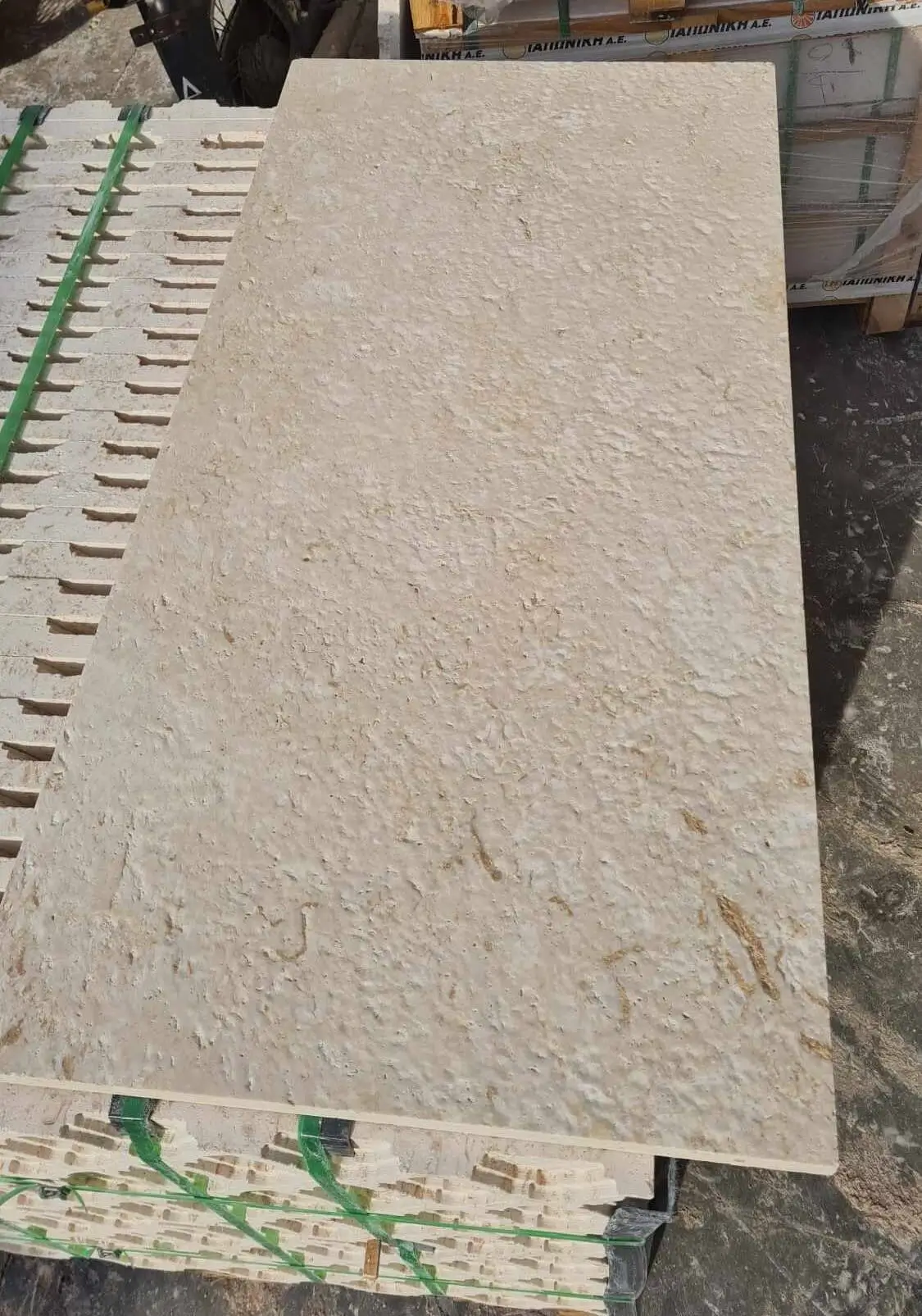
The granite patio paver cost decision becomes clearer when you benchmark it against competing materials across the same total-cost framework. Concrete pavers typically run $3–$7 per square foot in material cost — lower upfront, but with higher long-term maintenance burden from cracking, fading, and efflorescence. Travertine pavers fall in a similar range to granite at $8–$18 per square foot but carry higher porosity and require more aggressive sealing schedules in heavily used outdoor settings.
Bluestone and flagstone are genuinely competitive alternatives in the $7–$15 per square foot material range, with slightly lower compressive strength but a pronounced texture in their natural-cleft form. Porcelain patio tiles enter the conversation at $4–$14 per square foot in material cost and require no sealing, but installation tolerances are tighter and movement joint requirements are non-negotiable — missed movement joints in porcelain installations are a leading cause of tile failure. Granite’s advantage is the combination of density, abrasion resistance, and thermal stability that no manufactured product consistently replicates over a multi-decade lifespan.
- Concrete pavers: $3–$7 per sq ft material — lowest upfront, higher maintenance and earlier replacement cycle
- Travertine: $8–$18 per sq ft — comparable to granite, higher porosity requires more sealing attention
- Bluestone/flagstone: $7–$15 per sq ft — natural-cleft surface texture, slightly lower compressive strength
- Porcelain tile: $4–$14 per sq ft — no sealing required, but installation tolerances and movement joints are critical
- Granite pavers: $4–$35 per sq ft — widest range, best long-term abrasion resistance and thermal stability
Getting Granite Patio Paver Specifications Right
Accurate granite patio paver cost planning comes down to specifying the right grade, finish, and format for your actual project conditions — not averaging against a generic price range. The buyers who end up over budget are almost always those who locked in a layout and square footage before confirming material specifications, then discovered mid-project that their preferred finish or format carried a significant premium. Start with your performance requirements — traffic load, drainage pattern, aesthetic finish — and work backward to the material spec. That sequence produces an accurate budget on the first pass.
Installation timing also feeds into the total cost equation in ways that don’t show up in material pricing alone. Scheduling around optimal temperature windows, planning for morning installation starts during warm periods, and building a realistic weather contingency into your timeline all reduce the probability of costly remediation work after the project closes. As you finalize your hardscape planning, it’s worth noting that the same base preparation and drainage principles that govern patio installations apply directly to driveway applications — granite driveway installation fundamentals covers those shared technical details if your project scope extends beyond the patio itself. Budget planning for granite patio projects is more straightforward when material specs are confirmed early — Citadel Stone provides format and finish options across a wide price range.
Related reading: stone dust vs decomposed granite · black granite stone outdoor use · granite for landscaping.