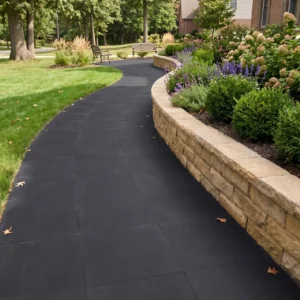
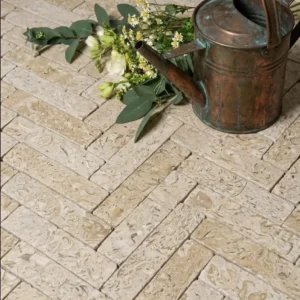
The difference between slab vs precast stone steps often comes down to a single overlooked variable: how the unit was formed and what that means for long-term structural performance at the tread edge. Slab steps are cut directly from quarried stone — the tread face is a natural cleavage or sawn surface with no engineered binders involved. Precast steps are manufactured from a concrete or aggregate mix poured into a mold, sometimes with a stone veneer or aggregate finish applied on top. That distinction shapes everything from load-bearing behavior to how each option weathers over decades of foot traffic.
What Each Option Actually Is
You’ll find slab stone steps fabricated from a range of quarried materials — bluestone, limestone, granite, and sandstone are the most common. The slab is cut to a specified rise and run dimension, dressed on the tread face, and installed as a monolithic unit. There’s no secondary manufacturing stage; what comes out of the quarry is essentially what goes into the ground.
Precast steps use a cast concrete body — sometimes reinforced with rebar or wire mesh — with a surface finish that may range from exposed aggregate to a thin-bonded stone veneer. The manufacturing process allows tight dimensional consistency, which is why precast tends to dominate commercial stair applications where code compliance requires exact riser heights across a full flight. That consistency, however, comes with a trade-off that becomes visible after the first decade of exposure.
Structural Performance Under Load
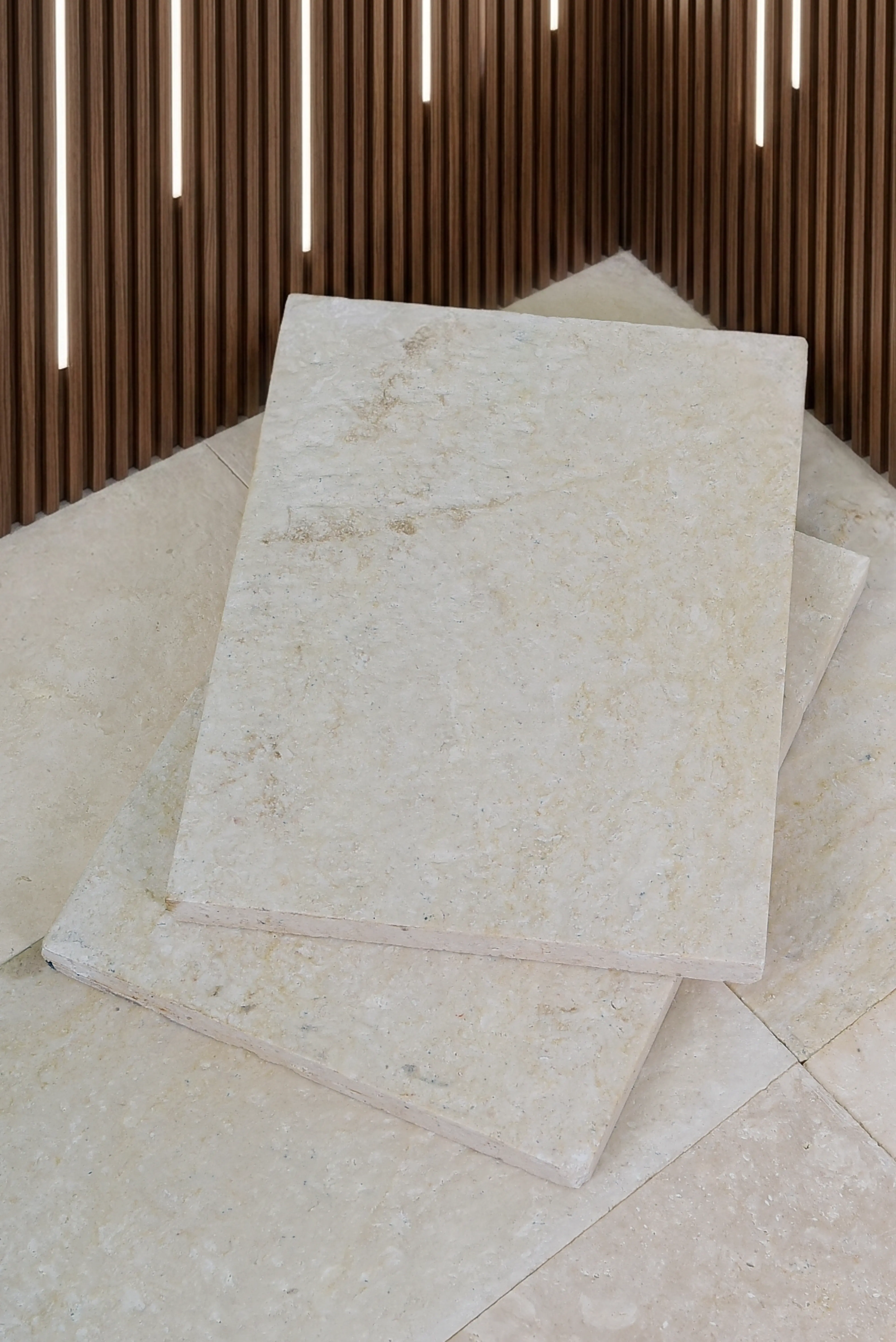
Slab stone steps cut from dense igneous or sedimentary material carry compressive strengths ranging from 8,000 PSI for softer limestones up to 25,000 PSI or higher for granite. That raw compressive strength matters less in residential use than flexural strength does — the ability to span between two bearing points without cracking under a point load mid-tread. A 14-inch-deep granite tread at 2-inch nominal thickness handles foot traffic and occasional furniture loading without structural concern, but the same dimension in a softer sandstone may deflect over time if the bearing substrate isn’t continuous.
Precast concrete steps typically achieve 4,000–6,000 PSI compressive strength, which is sufficient for most residential and light commercial applications. The reinforcement inside the precast body does meaningful work here — it resists the tension forces that develop when a step unit spans a gap or bears unevenly on a settling base. What precast can’t do is match the density or abrasion resistance of natural stone at the tread surface, and that’s where the performance gap in slab vs precast stone steps becomes apparent over a 15-to-20-year window.
- Dense quarried stone resists surface abrasion at a rate measured in thousandths of an inch per decade of normal use
- Precast aggregate surfaces wear faster at exposed aggregate faces, particularly where deicing salts contact the matrix
- Reinforced precast handles uneven bearing better than unreinforced slab stone in the short term
- Slab stone shows no delamination risk — the tread IS the structure, not a bonded surface layer
Freeze-Thaw Behavior and Long-Term Durability
Here’s what most specifiers miss when comparing these two options in freeze-thaw regions: the failure mechanism is completely different. For precast steps, freeze-thaw degradation typically starts at the surface matrix — the cement paste between aggregate particles expands and contracts at a different rate than the aggregate itself, creating micro-fractures that allow moisture ingress. Over time, that spalling progresses inward and can expose reinforcement to corrosive conditions.
Natural slab stone treads from low-absorption materials — granite below 0.4% absorption, dense bluestone in the 1–3% range — resist freeze-thaw cycling far more effectively because there’s simply less pore space available for water to occupy and freeze. According to Natural Stone Institute stone steps and design specifications, dimension stone selected for outdoor stair applications should meet ASTM absorption and freeze-thaw cycling criteria appropriate to the exposure class of the installation. Specifying to those thresholds is the single most important decision you’ll make when comparing these two formats in climates where hard freezes occur.
For step applications in freeze-thaw regions, the selection criteria that matter most include:
- Water absorption below 3% for any stone tread in a cold climate exposure
- Freeze-thaw cycling test results per ASTM C666 or equivalent for the specific stone type
- Surface finish that doesn’t retain standing water — avoid highly polished finishes on exterior treads
- Precast steps in freeze-thaw zones require air-entrained concrete mixes to resist surface spalling
Dimensional Tolerances and Installation Precision
Precast steps offer tighter dimensional tolerances than most natural slab stone products — a manufactured unit might run ±⅛ inch on riser height, while quarried slab stone can vary ±¼ inch or more depending on the material and fabrication method. For a flight of eight or more steps, that variation accumulates, and your mason needs to compensate with setting bed thickness rather than relying on consistent unit dimensions.
That variability isn’t a defect — it’s a consequence of working with a natural material. Experienced installers account for it by dry-laying the full flight before setting, sequencing units to minimize cumulative variation, and using a mortar bed depth that absorbs dimensional differences without creating visual inconsistency at the tread surface. The ADA accessibility and slip resistance requirements for stone steps reinforce why consistent riser height matters beyond aesthetics — uniform risers reduce trip hazard risk, which is a code consideration on accessible routes regardless of the material you specify.
Your installation crew’s experience level is genuinely relevant here. A mason who has set 200 flights of precast steps and 10 flights of slab stone steps will move faster and make fewer errors on precast. The reverse is equally true. Factor this into your contractor selection, not just your material selection.
Stone Treads for Outdoor Steps: Finish and Slip Resistance
The finish on your tread surface determines wet-condition slip resistance more than the stone species does. A honed granite tread can deliver a static coefficient of friction (COF) between 0.5 and 0.6 — borderline for exterior wet use. A thermal-finished or bush-hammered granite tread of the same material carries far more surface texture, which is what exterior pedestrian surfaces need; verify against the ANSI A326.3 wet DCOF threshold (0.42).
For stone treads for outdoor steps in residential and light commercial applications, thermal or sandblast finishes give you reliable wet-condition traction without the rough texture that makes sweeping difficult. A cleft-face flagstone tread provides excellent grip but tends to hold debris in its surface texture, which requires more maintenance attention. Precast steps with exposed aggregate finishes generally perform well on slip resistance but can become polished over time in high-traffic applications as the aggregate surface wears smooth.
- Thermal finish: pronounced texture, good for exterior use in all conditions
- Honed finish: noticeably smoother, acceptable for covered or low-exposure steps only
- Bush-hammered finish: deep texture, excellent traction but more aggressive texture
- Cleft face (natural): texture varies by stone species, generally good grip
- Exposed aggregate precast: good texture when new, monitor for polishing over time
Aesthetic Integration with Landscape Design
Your stone step choice carries real weight in the overall landscape composition, and this is where slab stone steps tend to outperform precast in design-forward projects. Natural slab stone brings variation in color, veining, and surface texture that integrates organically with planted beds, dry-stack walls, and ground-level paving. A bluestone slab stair leading through a naturalistic planting scheme looks like it grew from the site. A precast stair in the same setting looks installed — because it was manufactured, not formed from the earth.
For traditional colonial or craftsman-style landscapes, thick slab stone steps in a warm buff limestone or aged bluestone complement the architectural vocabulary without competing with it. Modern minimalist designs benefit from the clean, consistent faces achievable in sawn granite or honed basalt slabs — the monolithic quality of a single quarried tread reads as intentional rather than assembled. Precast steps work well in contemporary settings where the goal is precise geometry and uniform color, particularly when the landscape palette is restrained and the steps are a functional element rather than a focal feature.
Dry garden designs often favor rough-textured quartzite or sandstone slab treads that read as native material even when they’re sourced regionally. The warm ochres and rusts in those stones tie the stairway to the surrounding hardscape without visual interruption. Lush tropical planting schemes benefit from darker, denser stone — black basalt slab steps against bold green foliage create a contrast that precast aggregate finishes struggle to match.
Steps with Stone: Ordering, Logistics, and Lead Times
The practical reality of ordering steps with stone is that thickness and tread depth drive the weight per unit substantially higher than precast. A 6-inch-thick granite slab step at 16 inches deep and 48 inches wide weighs roughly 300–350 pounds. Your truck access and lifting equipment plan needs to account for that before your order arrives. Precast steps in similar dimensions typically run 200–250 pounds, which changes the install crew requirements meaningfully.
Browse our slab stone step inventory to review available dimensions, materials, and lead times before committing to a project schedule. Citadel Stone warehouses natural stone steps in standard tread dimensions, which typically reduces wait times to 1–2 weeks compared to the 4–6 week custom fabrication window you’d face with specialty quarried dimensions. Precast steps from regional manufacturers often offer faster turnaround on standard sizes, but custom dimensions can push lead times out to 3–4 weeks depending on the manufacturer’s production schedule.
- Verify warehouse stock on specific dimensions before finalizing your project timeline
- Factor truck access constraints at the delivery site — heavy slabs require clear approach paths
- Order 5–10% overage on slab stone to account for field breakage during handling
- Precast steps ship as complete units; slab stone may require field cutting at the site for returns and end conditions
Cost and Value Over Time
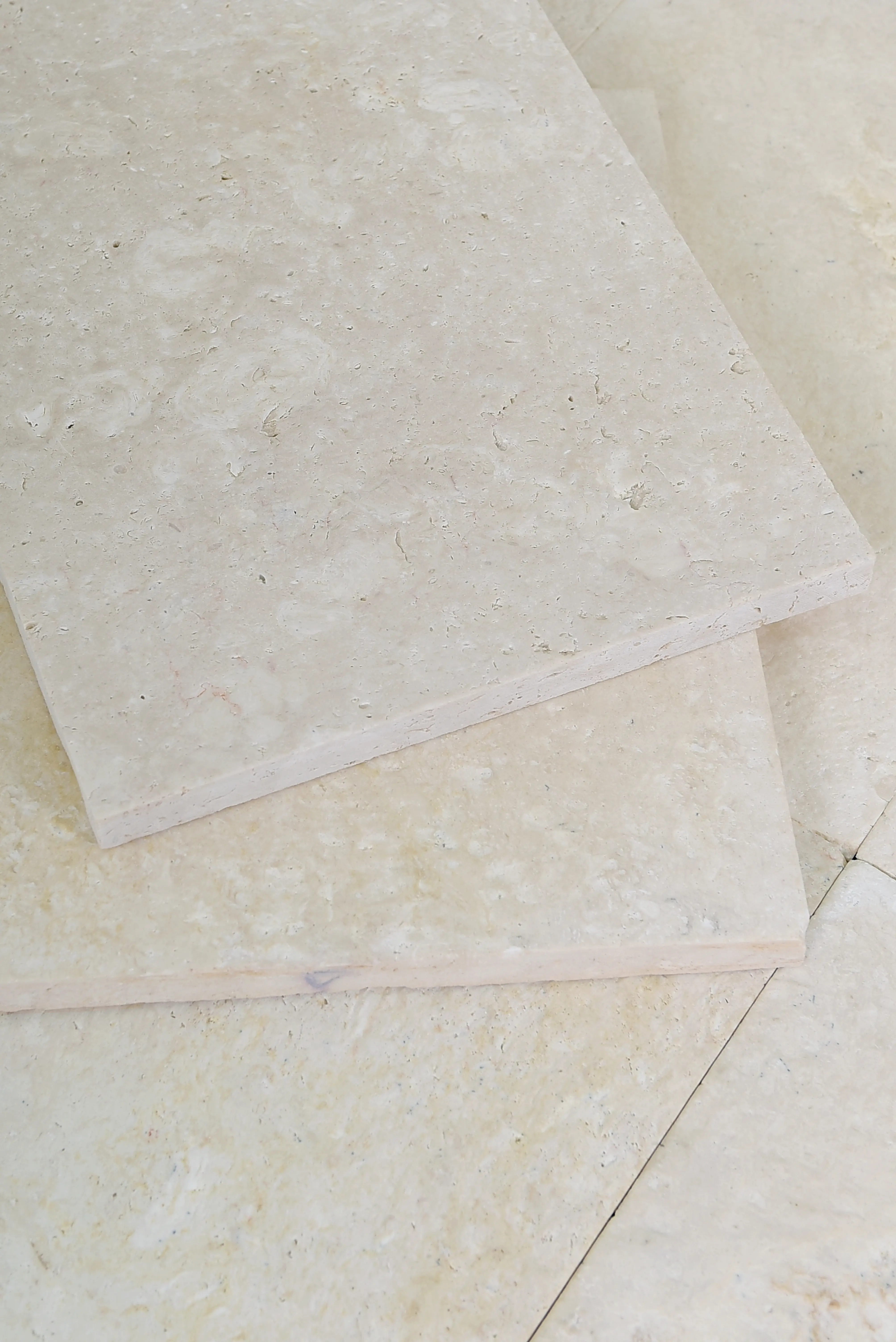
Precast steps cost less per unit at purchase — typically 30–50% less than comparable natural slab stone steps depending on the species and finish. That upfront cost difference is real, and it matters in budget-constrained projects. What the comparison often omits is the replacement or restoration cost timeline. Precast steps in freeze-thaw climates or heavy-use applications commonly show surface deterioration within 10–15 years that either requires resurfacing or full replacement. Natural slab stone in the same application, properly specified and installed, can realistically perform for 30–50 years with no structural intervention beyond periodic joint repointing.
The ASTM compressive strength and flexural standards for stone steps provide the testing framework for evaluating whether a given stone meets the load and durability requirements for your specific application. Running through those specifications before finalizing your material selection protects you from under-specifying a high-use installation. The cost-per-year calculation over a 30-year horizon often favors natural slab stone, particularly when you account for the labor cost of a replacement cycle that precast steps typically require.
Making the Right Call for Slab vs Precast Stone Steps
The slab vs precast stone steps decision ultimately depends on three factors working together: your budget horizon, your site’s exposure conditions, and the aesthetic weight the steps need to carry in the overall landscape. Precast wins on upfront cost and dimensional consistency — it’s the right call for applications where budget is constrained, the steps are a utilitarian element, and replacement in 15 years is an acceptable outcome. Natural slab stone wins on long-term durability, aesthetic depth, and edge retention — it’s the right specification for projects where the steps are a permanent landscape feature and the site has meaningful freeze-thaw or heavy-use exposure.
At Citadel Stone, we work through these trade-offs with specifiers and homeowners regularly, and the conversation almost always comes back to the same point: the steps you see on 80-year-old properties are natural stone, not precast. That’s not coincidence — it reflects a durability gap that accumulates slowly and becomes unmistakable over time. For a fuller picture of what these materials cost across different project scales, natural stone steps cost breakdown walks through pricing variables worth reviewing before you finalize your specification. Solid slabs sourced through Citadel Stone typically show better long-term edge retention than precast alternatives exposed to repeated freeze-thaw stress.
Related reading: stone steps on slope · bluestone vs granite steps · how to build stone steps.