What Actually Drives Natural Stone Steps Cost
Natural stone steps cost more than most homeowners expect — not because stone is overpriced, but because the variables that determine final spend are rarely explained upfront. Thickness alone can swing a project by 40% before you’ve accounted for species, finish, or installation complexity. Understanding where that money goes is the difference between a budget that holds and one that blows out mid-project.
The primary cost levers are stone species, slab dimensions, tread thickness, finish type, and the number of risers your design requires. Secondary factors — freight weight, lead times, site accessibility for delivery, and whether your design calls for precision-cut treads or natural-edge pieces — layer on top of those fundamentals. You’ll get a far more accurate number once you understand how each variable behaves independently.
Stone Species and Cost Per Tread
The species you select sets the price floor for your entire project. Broadly, stone steps materials fall into three pricing tiers: sedimentary stones like bluestone and limestone, metamorphic options like slate, and igneous materials like granite. Each tier has a dramatically different price band — and each has legitimate performance reasons behind that pricing.
- Bluestone treads: typically $25–$60 per linear foot in standard thicknesses, depending on finish and cut precision
- Limestone treads: $20–$55 per linear foot — wider variation based on density grade and surface treatment
- Granite treads: $35–$80 per linear foot — harder material, more abrasion-resistant, costlier to cut and finish
- Slate treads: $18–$45 per linear foot — lower entry cost but requires careful thickness selection for structural load
- Travertine treads: $22–$50 per linear foot — beautiful aesthetic, but vein-fill quality significantly affects long-term performance
These are material-only ranges. They exclude installation, base preparation, and freight — each of which adds real dollars to your project. According to Natural Stone Institute stone steps and tread design specifications, different stone types carry distinct structural requirements for step applications, and those requirements directly influence which thicknesses and cuts are acceptable for code-compliant installations.
Precast stone steps occupy a separate pricing category. You’ll pay less per unit upfront — typically $150–$400 per precast tread section — but precast offers far less design flexibility and often uses a compressed concrete-aggregate composite rather than solid natural stone. The aesthetic gap is immediately apparent in person, especially in design-forward projects where stone selection coordinates with broader landscape palettes.
Tread Thickness: The Biggest Variable Most People Miss
Thickness is the single most misunderstood cost driver in natural stone steps cost calculations. Specifiers often ask for a per-square-foot price and compare quotes without confirming thickness — then wonder why one contractor’s number is 30% lower than another’s. They’re frequently not quoting the same product.
Standard tread thicknesses for residential exterior steps run from 1.5 inches up to 4 inches nominal. Here’s how that shakes out in practical terms:
- 1.5-inch treads: appropriate for supported applications over concrete substrates — the thinnest option, lowest material weight, most economical
- 2-inch treads: the workhorse residential specification — handles moderate cantilever, good flexural strength, mid-range cost
- 3-inch treads: recommended for spans over 48 inches, heavy-use commercial entries, or any design with a significant overhang at the nose
- 4-inch treads: premium specification for monumental entries, broad landings, or situations where a structural engineer requires it — material cost roughly 2.5× a 1.5-inch equivalent
Flexural strength is the governing property here, not compressive strength. A 2-inch granite tread spanning 60 inches can crack under point load if the supporting structure beneath it has settled unevenly — something thicker stone would survive. The ASTM natural stone compressive strength and flexural standards for steps provide the testing methodology specifiers use to validate thickness decisions against anticipated loads, but the real-world judgment call comes from understanding your substrate and span configuration before you order.
For most residential exterior applications, 2-inch nominal thickness is the correct starting point. Move to 3 inches when your span exceeds 48 inches or your design includes a nose overhang greater than 2 inches. Reserve 4-inch specifications for monumental or commercial-grade entries where visual mass and structural certainty justify the premium.
Finish Type and Its Effect on Price and Performance
The finish your treads receive affects both the purchase price and the long-term performance envelope of your installation. This is one area where cost-cutting can create real safety problems, so it deserves careful attention.
- Sawn cut (thermal finish on granite): machine-textured surface with consistent grip — moderate cost premium, excellent slip resistance, appropriate for high-traffic entries
- Natural cleft (slate, bluestone): the stone splits along natural planes — low processing cost, naturally textured surface, irregular thickness tolerances that require more care during installation
- Honed: ground to a smooth, low-sheen surface — moderate finish cost, lower slip resistance than thermal or cleft, better suited to covered entries and interior applications
- Polished: highest finish cost, lowest friction coefficient — inappropriate for outdoor steps where wet conditions are possible
- Sandblasted or bush-hammered: adds texture to otherwise smooth stone — increases material cost by $3–$8 per square foot over base pricing, excellent for safety-critical applications
The ADA accessibility surface and slip resistance requirements for stone steps specify minimum static coefficient of friction values for accessible walking surfaces. For exterior steps that must comply with accessibility requirements, you’ll want a coefficient of at least 0.60 on wet surfaces — honed finishes typically fall below this threshold without additional surface treatment. Thermal or natural cleft finishes on most stone species clear this bar without modification.
At Citadel Stone, we evaluate finish performance across multiple stone species before recommending a combination for a given application. The interaction between stone porosity and finish type affects both grip and maintenance requirements — a bush-hammered limestone behaves very differently in wet conditions than a bush-hammered granite, even though both carry the same finish label.
Stone Slab Steps: Design, Landscape Integration, and Cost Implications
Stone slab steps are where cost decisions intersect most visibly with landscape design intent. The slab format — large, monolithic treads rather than assembled units — costs more per piece but delivers a visual statement that precast or concrete alternatives simply can’t match. Understanding which design contexts justify that premium helps you allocate budget more deliberately.
Landscape design style has a meaningful influence on which stone species and formats make sense. A contemporary minimalist exterior — crisp edges, restrained planting, monochromatic palette — typically calls for large-format slabs with a honed or sawn finish and tight dimensional tolerances. That specification drives you toward granite or dense bluestone, both of which carry higher material costs but reward the design with exact, clean lines. A more naturalistic or cottage-style landscape can accommodate irregular-edge limestone or cleft slate treads at a meaningfully lower per-tread cost, because the design language embraces organic variation rather than fighting it.
Hot, dry environments often specify warm-toned travertine or tan limestone treads that visually blend with gravel mulch and ornamental grasses — this isn’t just aesthetic preference, it’s a practical specification that reduces thermal shock contrast between hardscape and surrounding material. Traditional colonial-style entries lean toward bluestone or grey granite with precise nosing profiles, coordinating with the formal symmetry of the architecture. Tropical planting schemes tolerate warmer stone tones and rougher textures that complement lush foliage without competing with it visually.
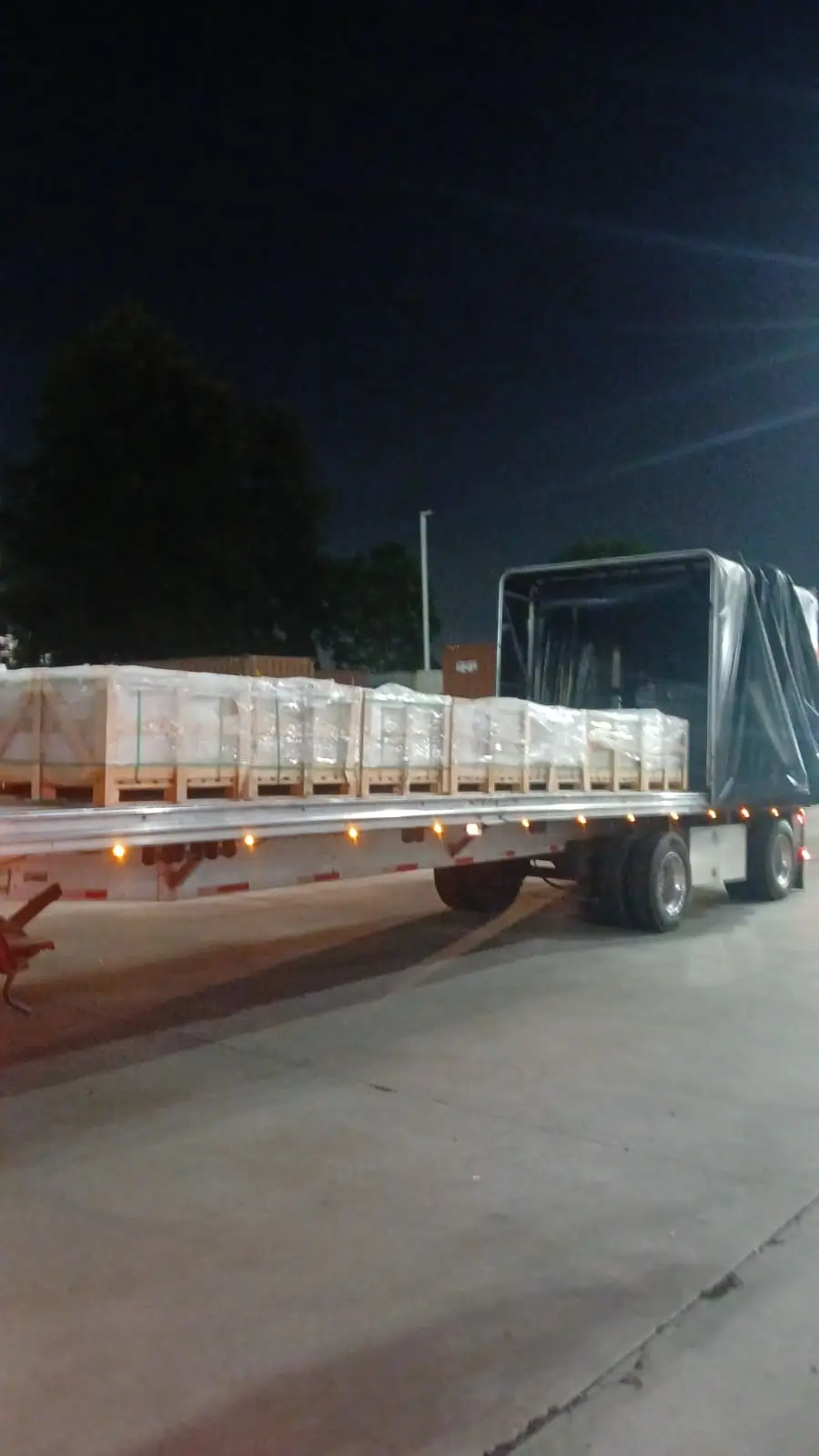
For stone slab steps in large-format dimensions — treads exceeding 60 inches in length — you’re also entering a freight category that affects natural stone steps cost. Pieces in this size range require specialized truck delivery, blanket-wrapped and sometimes crated, which adds $150–$400 to the delivery cost depending on quantity and site access. Your installer needs truck clearance and typically a boom lift or at minimum two-person rigging to place pieces safely. Factor that into your total project budget alongside material cost.
You can explore a wide range of tread formats, thicknesses, and stone species through stone slab steps from Citadel Stone — the selection covers both standard residential dimensions and custom-cut formats for demanding design briefs.
Precast Stone Steps vs. Natural Stone Treads: A Realistic Cost Comparison
The precast-versus-natural-stone question comes up constantly in project budgeting, and the answer isn’t as simple as comparing a per-unit price. You need to account for longevity, maintenance trajectory, aesthetic durability, and the total cost of ownership over a 20–30 year horizon.
- Precast stone steps: $150–$400 per unit installed, relatively fast installation, limited profile options, surface wears visibly within 8–12 years in high-traffic applications
- Natural stone treads (cut to size): $60–$180 per tread installed in standard residential dimensions — higher upfront, but surface wear is minimal over decades with proper maintenance
- Natural stone treads (large format): $120–$350 per tread installed — premium sizing with visual impact that doesn’t degrade over time
- Precast maintenance: repainting or recoating every 5–7 years adds ongoing cost; structural cracking at 10–15 years is common in freeze-thaw regions
- Natural stone maintenance: sealing every 3–5 years for porous species; no structural degradation in properly specified applications for 25+ years
The decision point is usually around a 15-year payback window. Projects where the owner plans to stay long-term consistently favor natural stone on total cost grounds. Projects where short-term resale is the priority sometimes rationalize precast stone steps on upfront cost — though real estate professionals often note that natural stone entries command a visible premium in buyer perception.
Stone Paver Steps: Quantity Calculation and Ordering
Getting your quantity right before you order is one of the areas where field experience pays the most dividends. Under-ordering causes project delays; over-ordering wastes budget. Here’s how to approach stone paver steps quantity calculations systematically.
Start with your riser count and tread dimensions. A standard exterior step runs 12–14 inches deep (front to back) and varies in width based on the stair width your design requires. For stone paver steps assembled from smaller units rather than monolithic slabs, you’ll need to calculate the face area of each tread and convert to square footage, then add a 10–15% waste factor for cuts at the nosing and any irregular field cuts your pattern requires.
- Tread depth (front to back): 12 inches minimum residential, 14–16 inches preferred for comfort — deeper treads require more material per step
- Nosing projection: standard 1–1.5 inch overhang over the riser face — requires precise cutting, increases waste factor slightly
- Width: multiply tread depth by stair width to get face area per tread; sum across all treads for total square footage
- Waste factor: 10% for rectangular cuts in a straightforward pattern, 15% for angled cuts or irregular boundaries
- Riser material: if you’re cladding the riser faces with matching stone, add those face areas separately — this is a common oversight that leaves projects short
Citadel Stone’s steps and treads are supplied nationally, cut to order, with lead times quoted at the time of order. For custom-cut dimensions or less common species, confirm material availability and the quoted lead time before locking in your installation schedule — custom cutting and freight scheduling both add time.
Installation Costs, Site Conditions, and Base Preparation
Material cost is only part of the equation. Installation for natural stone steps runs $40–$120 per tread in most markets, and that range is wide because site conditions vary enormously. Here’s what drives installation cost up or down.
Base preparation is the highest-leverage variable in long-term performance. A compacted aggregate base at the right depth — typically 6–8 inches for residential steps in stable soil, 10–12 inches in expansive clay or high-frost regions — is what separates a 25-year installation from one that starts rocking and cracking within 5 years. Skimping on base preparation to save $300–$500 at installation is the most expensive decision a project makes in the long run.
- Concrete substrate installation: lower base preparation cost, faster setting time, higher precision for level installation — adds $8–$15 per square foot to substrate cost
- Compacted gravel base installation: appropriate for drained applications, requires precise compaction and screeded sand setting bed
- Mortar-set installation: adds $5–$10 per tread for mortar material and extended labor time — required for cantilevered treads or any tread where unsupported span exceeds 36 inches
- Site accessibility: truck access constraints directly affect delivery cost and installation labor — confined sites with no direct truck access can add $200–$500 in crane or rigging cost for large format pieces
- Demolition of existing steps: add $15–$40 per step for saw-cutting, removal, and disposal of existing concrete or masonry
Expansion joint placement is one of the most commonly skipped details in residential stone step installations, and it’s a costly omission. Joints at the intersection of steps with adjacent walls, at material transitions, and at the base landing prevent differential movement from cracking your treads or popping them off the substrate. Standard practice calls for a 1/4-inch joint filled with flexible sealant at these transition points — a minor cost addition that prevents major repair bills.
Sealing, Maintenance, and Long-Term Cost of Ownership
The maintenance cost of natural stone steps is predictable and manageable when you build it into your project planning from the start. Treating sealing as an afterthought typically means it doesn’t happen on schedule — and that’s when staining, water infiltration, and efflorescence problems develop.
- Porous sedimentary species (limestone, travertine): seal at installation, reseal every 2–3 years for exterior step applications — penetrating impregnating sealers outperform topical coatings for slip resistance and breathability
- Dense igneous species (granite): seal at installation, reseal every 4–5 years — very low absorption rate means sealer longevity is significantly better
- Slate and bluestone: intermediate porosity, reseal every 3–4 years — natural cleft surfaces hold sealer well but require thorough cleaning before reapplication to avoid trapping debris in the texture
- Sealer cost: professional-grade penetrating sealer runs $0.50–$1.50 per square foot in material cost; professional application adds $1–$3 per square foot in labor
- Cleaning: annual washing with pH-neutral stone cleaner removes biological growth and road salt residue before it migrates into the stone matrix
Efflorescence — the white mineral deposit that migrates to the surface through capillary action — is a common complaint on mortar-set installations in their first two years. It’s largely cosmetic and diminishes over time as the substrate cures and the soluble salt supply exhausts itself. You can accelerate removal with an appropriate efflorescence cleaner, but avoid acid-based products on calcium carbonate stones like limestone and travertine — they’ll etch the surface and create a much larger problem than the staining you started with.
Budgeting Your Project: Total Natural Stone Steps Cost by Scope
Pulling all variables together, here’s how total project budgets typically stack up for natural stone steps cost across common residential scopes. These are fully installed ranges including material, base preparation, mortar or setting bed, and standard delivery.
- 3–5 step entry stair in limestone or bluestone, 48-inch width, 2-inch treads: $1,800–$4,500 installed
- 3–5 step entry stair in granite, 48-inch width, 2-inch treads: $2,500–$6,000 installed
- 6–10 step stair in limestone or bluestone, 60-inch width, 2-inch treads: $4,000–$9,000 installed
- Large-format monolithic slab steps, 72-inch width, 3-inch granite treads, 6–8 steps: $8,000–$18,000 installed — primarily driven by freight weight, crane requirements, and precision cutting
- Precast stone steps, 3–5 step entry: $900–$2,500 installed — meaningfully lower upfront, but performance and aesthetic comparison over 15+ years favors natural stone
Labor markets create variation within these ranges — dense-market installations trend toward the upper end, while projects with good truck access and lower overhead trend lower. The material cost component is relatively consistent nationally since natural stone steps cost is governed by quarry pricing and freight, not local labor rates.
Your design choices — width, thickness, species, and finish — are the primary levers you control. Once those are fixed, the installation and freight costs follow somewhat predictably. Getting material specifications nailed down early gives you the most accurate budget picture before you commit to a contractor.
Making Confident Natural Stone Steps Decisions
The full picture of natural stone steps cost only comes into focus when you account for all the variables simultaneously — not just the per-square-foot material price that vendors quote upfront. Your tread thickness, stone species, finish selection, delivery logistics, and base preparation approach each contribute meaningfully to both the upfront spend and the long-term cost of ownership. The projects that hit budget and perform well over decades are invariably the ones where those decisions were made deliberately and early, not retrofitted after a pricing surprise.
Stone paver steps assembled from smaller units and large-format stone slab steps each have their place depending on design intent and site constraints — understanding the distinction before you price a project prevents misaligned quotes and mid-project specification changes. If you’re comparing different stone types for your entry or garden stairs, bluestone versus granite for steps and entries offers a detailed material comparison that can help you sharpen your species selection before you commit to a quantity order. Material thickness is one of the largest cost drivers in stone step projects — Citadel Stone offers treads in multiple thickness options to fit different budgets.
Related reading: How to Build Stone Steps: A Complete Guide · Stone Steps on a Slope: Stability & Drainage Guide.