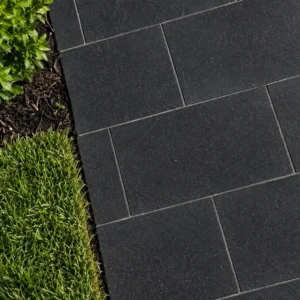
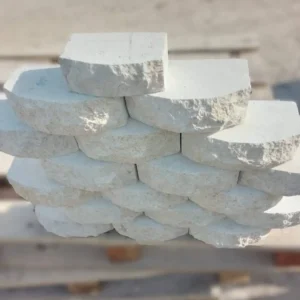
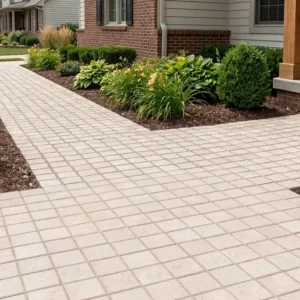
Pattern geometry has a measurable effect on how long a patio stays level, and that’s the real starting point for any herringbone vs circular paver patio decision. Herringbone interlocks individual units at 45° or 90° angles, distributing load across multiple contact points — a mechanical advantage that matters far more than aesthetics when the subgrade beneath starts to shift. Circular layouts, by contrast, concentrate radial stress at the focal center, which places precise engineering demands on both the base and the cut geometry. Getting clear on those structural differences before you finalize your pattern choice will save you from a costly reset in year three.
What Each Pattern Actually Does for Your Patio
The herringbone pavers patio arrangement earns its reputation through one specific mechanical property: interlock. Units laid in alternating diagonal offsets resist lateral displacement without relying on joint mortar or edge restraint alone. That’s why herringbone has been the default choice for high-traffic commercial plazas and driveways for decades — the pattern itself does structural work. For residential patios, that translates to a surface that holds tight even when foot traffic patterns are uneven or furniture loading is concentrated in one zone.
Circular paver patio layouts work on a completely different logic. The pattern radiates from a center point outward, typically using fan-cut or wedge-shaped units that tighten as they approach the focal ring. The visual result is striking — a circular feature reads as intentional and finished in a way that a field-laid grid rarely does. The trade-off is complexity: every ring requires precise radius calculation, and the cut geometry at the perimeter demands accurate templating before a single unit is set.
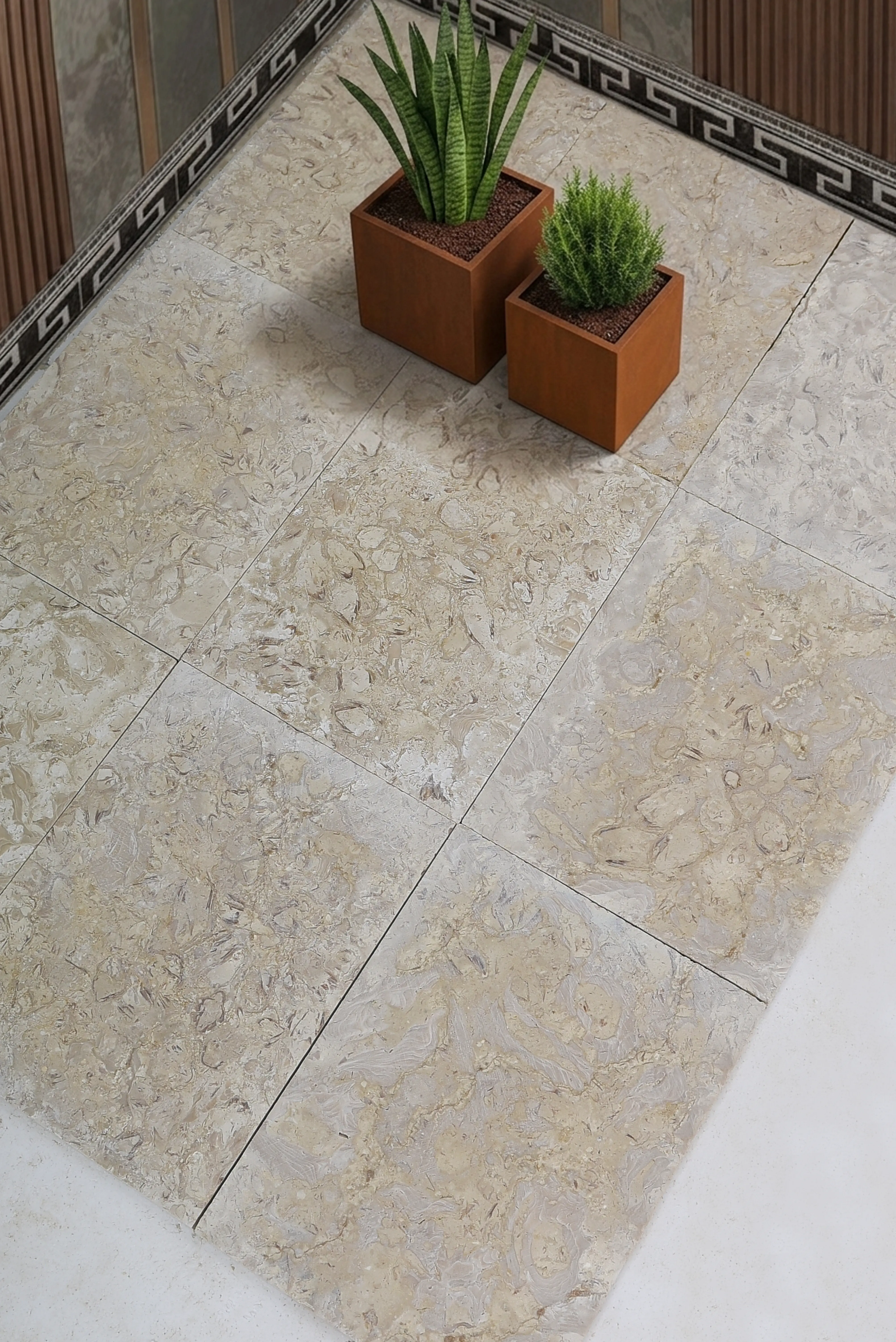
Structural Performance Compared
Field performance data on natural stone paver patterns shows that herringbone consistently outperforms other layouts under point loading and lateral shear. The 45° herringbone variant, often called running herringbone, distributes stress diagonally across the longest axis of each unit — reducing the risk of individual paver rocking under dynamic loads like rolling chairs or delivery carts. For patios that double as entertainment surfaces, that resilience is a genuine functional benefit, not a specification footnote.
Circular patterns perform well under static loading — dining sets, planters, fire pit rings — because the radial joint structure spreads compressive force outward from the center. Where they underperform is under unidirectional dynamic loading, such as a heavy cart traveling across the patio on a consistent path. In those conditions, the radial joints offer less resistance to lateral creep than a true interlocking herringbone field.
- Herringbone delivers superior lateral interlock across the full patio field
- Circular patterns excel at static load distribution from a central focal point
- 45° herringbone is stronger than 90° herringbone under diagonal shear loading
- Circular layouts require tighter joint tolerance to maintain structural integrity at the center ring
- Combined layouts — circular focal insert within a herringbone field — capture both advantages
How Subgrade and Soil Conditions Affect Your Choice
Your subgrade is the variable that most specifiers underestimate, and it affects pattern selection more directly than most guides acknowledge. Expansive clay soils — common in many parts of the country — cycle through volume changes with seasonal moisture shifts. Over a three-to-five year period, those cycles can introduce differential settlement of 10–25mm across a standard patio footprint. Herringbone handles that differential movement better than circular layouts because the interlocking geometry resists isolated unit displacement. A single settled unit in a herringbone field doesn’t cascade; in a circular layout, a depressed section in one ring can disrupt the visual geometry of the entire pattern.
Sandy or gravelly soils present the opposite challenge. Drainage is usually excellent, but the lack of cohesion means your compacted aggregate base needs to be at least 150mm deep — 200mm if you’re in a zone with significant frost penetration. According to ASLA outdoor patio stone selection guidance, proper base preparation is consistently the most critical factor in long-term paving performance. In sandy subgrade conditions, both herringbone and circular paver patio layouts perform well once the base is correctly built — the real risk is underbuild.
Caliche layers and rocky subgrade introduce a different constraint: irregular bearing. Pockets of hard material surrounded by softer infill create localized stress points that show up as rocking pavers within the first season. For circular patio installations on irregular rocky subgrade, you’ll need to hand-trim the compacted base layer to achieve a consistent bearing plane before any bedding sand goes down. Herringbone tolerates minor base irregularity better because the diagonal interlock compensates for small variations in bearing.
- Expansive clay subgrade: prefer herringbone for its differential settlement tolerance
- Sandy or loose soils: build base to 150–200mm depth regardless of pattern choice
- Caliche or rocky irregular subgrade: level bearing plane is non-negotiable before circular layout
- High water table zones: add perforated drainage layer beneath compacted aggregate base
Material Selection for Each Pattern Type
Pattern geometry dictates which natural stone formats work best — and that constraint is tighter than most homeowners expect. Herringbone demands consistent rectangular units, typically 200×100mm or 240×120mm in a 2:1 ratio. That ratio is what enables the diagonal interlock to function correctly; units that deviate more than 2mm from nominal dimension create cumulative joint variance that shows as a wavy pattern line across the patio. Natural stone cut to this standard is available, but you’ll want to verify dimensional consistency before truck delivery — inspect a sample from each pallet for squareness, not just surface finish.
For your circular paver patio, the unit geometry is more varied but equally precise. Fan-cut wedge units are purpose-cut for specific radii — a unit cut for a 1.2m radius ring will not seat correctly in a 1.8m ring. Pre-fabricated circular kits simplify this, but custom radius designs require accurate dimensioning before you place a material order. At Citadel Stone, we recommend confirming your center point location, your intended outer ring radius, and the number of rings before any warehouse stock is allocated to your project.
For herringbone field installations, natural stone pavers in the 50–60mm thickness range provide the right balance of structural depth and manageable unit weight. Thinner formats (30–40mm) are viable for pedestrian-only patios on stable, well-compacted bases, but they’re unforgiving if base prep is marginal. The Natural Stone Institute stone variety selection guide outlines absorption and compressive strength benchmarks that help narrow your stone type selection for the specific demands of each pattern.
Installation Complexity and Labor Requirements
Herringbone installation moves quickly once the starter course is established correctly. The critical step is your baseline — a perfectly straight, square starting line determines whether the diagonal pattern holds alignment across the full patio width. Drift on a herringbone field is cumulative: a 2mm error in the first five courses becomes a 20mm error by course fifty. Professional installers snap chalk lines every ten courses to catch and correct drift before it compounds.
Circular patio layouts are slower to install by a significant margin. The center ring is set first, then each successive ring is built outward, with units checked for consistent joint width using a radius template or string line anchored at the center pin. Perimeter cuts are unavoidable — even with pre-cut fan units, the outer edge where the circular pattern meets the patio border requires field-cutting to fit. Budget approximately 30–40% more installation time for a circular focal feature compared to a herringbone field of equivalent area.
- Herringbone starter course alignment determines the entire pattern’s accuracy
- Circular installations require a fixed center pin and radius template throughout laying
- Perimeter cuts on circular patterns typically run 15–25% of total unit count
- Joint sand compaction is critical for herringbone — under-compacted joints allow lateral movement
- Circular center rings require extra bedding sand precision to avoid unit rocking
- Combined layouts (circular insert in herringbone field) require careful transition ring detailing
Design Applications and Visual Impact
Herringbone suits rectangular or irregularly shaped patio footprints because the pattern scales cleanly in both directions. It reads as structured and intentional without demanding a specific geometry from the surrounding hardscape. For stepping stones patio designs that transition from a main patio surface into a garden path, herringbone at the patio field with random coursed stepping stones along the path edge creates a natural visual hierarchy — formal at the entertainment zone, relaxed at the garden connection.
Circular focal inserts work best on patios with a defined center — a fire pit location, a dining table anchor point, or an open lawn-facing edge. The pattern draws the eye inward and creates a sense of place within a larger patio. You’ll get the most visual return on a circular feature when the outer diameter is at least 2.4m; smaller circles look pinched and lose the radial drama that justifies the additional installation complexity.
For projects where both pattern types are under consideration, the combined approach — a circular focal feature surrounded by a herringbone field — is genuinely the best of both options. The circular center delivers visual impact; the herringbone field provides structural interlock across the wider patio surface. Explore our patio paver pattern selection to see how different stone types complement each layout before you finalize your specification.
Joint Design and Long-Term Maintenance
Joint performance is where herringbone and circular patterns diverge most sharply in long-term maintenance requirements. Herringbone joints run in two consistent diagonal directions across the full patio, which makes polymeric joint sand re-application straightforward — you’re working with predictable, parallel joint channels. Annual or biennial joint sand top-up keeps the interlock tight and prevents weed ingress without requiring any special tooling.
Circular patio joints radiate outward from the center, which means joint width varies slightly from the inner rings (narrower) to the outer rings (wider). That variation affects how joint sand settles over time — the wider outer joints typically require more frequent attention. For circular paver patio installations using natural stone, USGS data on stone porosity and composition — applicable across volcanic and sedimentary stone types — reinforces that stone absorption characteristics should inform your sealing schedule, since denser stones in circular layouts hold joint sand more effectively than higher-absorption materials.
- Herringbone joints: parallel channels, straightforward polymeric sand maintenance
- Circular joints: radial pattern creates variable joint widths requiring more frequent monitoring
- Re-seal natural stone patio surfaces every 2–3 years to protect joint sand and stone face
- Check joint sand level after the first winter season — initial compaction settlement is normal
- Edge restraint integrity affects both patterns equally — inspect annually for movement
Planning and Ordering Logistics
Accurate material quantities are harder to calculate for circular patio layouts than for herringbone fields. A herringbone field on a rectangular patio follows a straightforward area calculation with a 5–8% waste allowance for perimeter cuts. Circular patterns require ring-by-ring unit counts based on your specific radius dimensions, plus a separate perimeter cut allowance that typically runs 15–20%. Ordering short on a circular project is a real risk — you’ll rarely find a perfect batch match from warehouse stock weeks after the initial delivery if you need to reorder.
For herringbone projects, Citadel Stone maintains consistent batch inventory across standard 200×100mm and 240×120mm formats, which means replacement units for future repairs are reliably available. Your project’s truck delivery schedule should account for palletized stone — standard truck drops are most efficient when you can accept full pallet loads rather than split deliveries. Confirm your site access dimensions before scheduling the truck, particularly for backyard patio locations where gate widths or overhead clearances may limit equipment.
Lead times from warehouse to site typically run 5–10 business days for standard herringbone paver formats. Custom-cut circular fan units carry longer lead times — allow 3–4 weeks minimum from confirmed dimensions to warehouse dispatch, and build that buffer into your project timeline before ground preparation begins.
Before You Specify a Herringbone or Circular Paver Patio
The herringbone vs circular paver patio decision comes down to three converging factors: your subgrade conditions, your patio geometry, and your tolerance for installation complexity. Herringbone is the reliable workhorse — structurally sound, dimensionally forgiving, and efficient to install across almost any patio footprint. Circular patterns are a deliberate design investment that pays off when the site geometry supports a focal feature and the base is built to the precision the pattern demands. Neither choice is inherently superior; the right answer depends on what your specific site and project actually need.
For projects where the patio connects to other hardscape features — garden paths, border plantings, or entry walkways — the transition detailing matters as much as the pattern itself. Reviewing how complementary stone surfaces integrate with your patio edge conditions will sharpen your overall specification. For additional design context that extends beyond the patio field, flagstone border and step design ideas covers how stone features at patio perimeters, steps, and joints interact with your primary paving pattern. Circular focal patterns using Citadel Stone fan-cut units add visual interest to open patio centers but require precise radius planning before material ordering.
Related reading: choosing limestone for gardens · crushed limestone landscaping problems · limestone tumbled pavers.