The performance gap between man made stone suppliers and natural stone sources widens considerably once you get past aesthetics and start evaluating structural load behavior, moisture absorption, and long-term maintenance cycles. Most buyers focus on surface finish and price per square foot — but those two metrics tell you almost nothing about how a material will behave five years into an installation. Understanding what separates manufactured and quarried stone at a technical level is what separates a specification that holds up from one that generates costly call-backs.
What Manufactured Stone Actually Is
Man made stone suppliers produce materials through a controlled casting process — typically Portland cement, lightweight aggregate, and iron oxide pigments pressed into molds to replicate the visual texture of natural quarried material. The resulting product is dimensionally consistent in a way that genuine quarried stone simply isn’t. Every piece comes off the line at the same thickness, the same weight per square foot, and the same absorption rate — which matters enormously for high-volume commercial projects where installation labor costs are heavily tied to how predictable the material is.
That consistency, though, comes with a trade-off. Manufactured stone achieves compressive strengths in the range of 3,000 to 5,000 PSI — adequate for many veneer and cladding applications but well below the 8,000 to 20,000 PSI range you’ll find in quarried granite or dense limestone. For structural or high-load environments, that gap matters significantly. The pigmentation process also means color is surface-deep in many products, which shows when edges chip or cut faces are exposed.
- Dimensional consistency lowers installation labor costs on large-format wall cladding projects
- Compressive strength typically ranges 3,000–5,000 PSI versus 8,000–20,000 PSI for natural stone
- Color is externally applied and may not penetrate the full depth of the unit
- Absorption rates are manufacturer-controlled but often higher than dense natural stone alternatives
- Surface texture replicates but doesn’t replicate the crystalline microstructure of quarried material
Natural Stone Performance Benchmarks
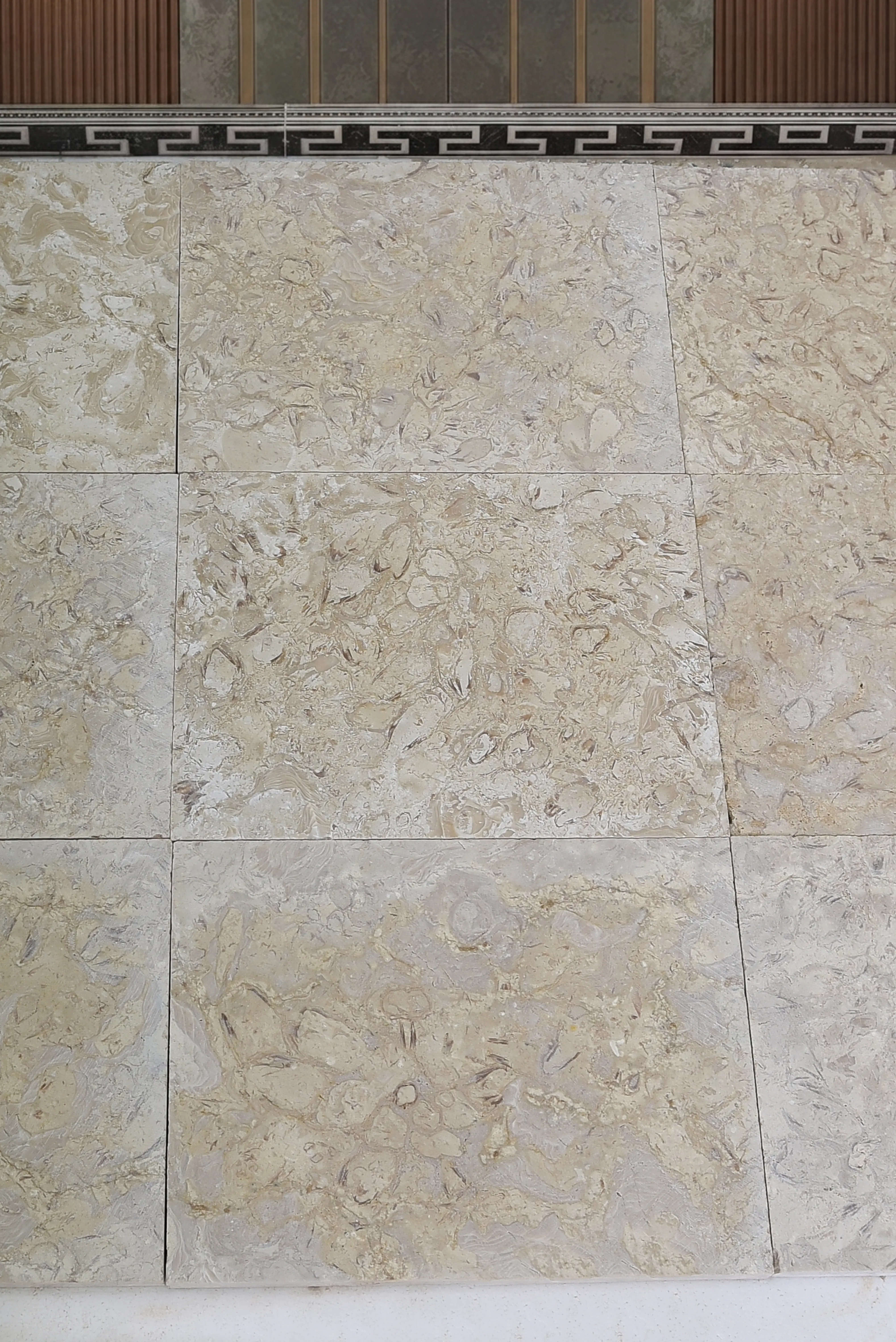
Quarried natural stone brings a geological track record that no manufactured product can replicate. Dense limestone, granite, and basalt have been performing under structural and environmental load for decades in demanding installations — and the performance data reflects that. According to NSI stone variety specifications, natural stone varieties exhibit a broad range of absorption, flexural strength, and abrasion resistance characteristics that make material selection both nuanced and critical. Choosing the wrong stone type for the application is far more consequential than choosing between natural and manufactured at the category level.
Natural stone’s heterogeneous crystalline structure is both its strength and its specification challenge. Veining, porosity variation, and color movement across a batch are natural outcomes of geological formation — not defects. Your specification needs to account for this variation by requiring matched lots from a single quarry run, and your installer needs to understand dry-layout sequencing to manage visual blending across the installation face.
- Granite compressive strength: 15,000–25,000 PSI, suitable for high-traffic and vehicular load applications
- Dense limestone: 8,000–12,000 PSI with freeze-thaw durability when absorption is below 3%
- Basalt: among the hardest natural options at 18,000–28,000 PSI with near-zero absorption in honed finishes
- Natural travertine: lower compressive strength but excellent thermal mass performance in moderate climates
- Porosity variation across a single lot requires testing at receiving — not just manufacturer certification
Drainage and Water Management Implications
Your material selection decision has significant consequences for drainage design — and this is where man made stone suppliers and natural stone sources diverge in ways that aren’t always obvious from a spec sheet. Manufactured stone veneer panels are typically installed over a moisture-barrier system with a drainage plane behind the cladding. That assembly works well in moderate precipitation environments but requires careful detailing at penetrations, sills, and terminations in regions that see heavy rain seasons, seasonal flooding risk, or extended wet cycles.
Natural stone paving and cladding behaves differently under water exposure depending on its inherent porosity. A dense granite or basalt with absorption below 0.5% effectively sheds surface water and is appropriate for installations where sheet drainage across the surface is the design intent. Higher-porosity limestone and travertine, by contrast, absorb moisture and benefit from a permeable base system that allows water to move down through the joint structure rather than pond on the surface. According to USGS dimension stone production data, drainage performance in natural stone paving is directly tied to absorption characteristics — a spec detail that becomes critical during heavy rain seasons or in installations with inadequate fall grades.
For projects in high-precipitation zones or those at flood-fringe risk, specifying a man made stone comparison against natural alternatives should include base assembly drainage capacity — not just the stone surface itself. A well-designed permeable base under natural limestone pavers can outperform an impermeable manufactured panel system in intense rainfall events simply because the drainage pathway is integrated into the assembly rather than reliant on a thin cavity.
- Manufactured stone veneer requires engineered drainage planes behind the panel system
- Natural dense stone (granite, basalt) suits surface-drainage designs with adequate fall grades
- Porous natural stone benefits from permeable base systems in high-precipitation applications
- Joint detailing at sills and terminations is the highest failure-risk point in wet climates for both material types
- Monsoon or hurricane-season installations require drainage pathway capacity assessment before material selection
Where Manufactured Stone Outperforms
Manufactured stone has genuine technical advantages in specific applications — and dismissing it as an inferior product misses where it actually excels. Weight is the clearest one. Standard natural stone cladding runs 12 to 18 pounds per square foot depending on thickness and material. Lightweight manufactured alternatives come in at 6 to 10 pounds per square foot, which changes the structural loading requirement on wall framing, lintels, and substrate systems significantly. For renovation and retrofit projects where existing framing wasn’t designed for natural stone weight, manufactured options aren’t a compromise — they’re the correct technical answer.
Consistency in thickness is the other area where man made stone suppliers have a clear advantage. Natural stone requires sizing, gauging, or honing to hit a consistent thickness tolerance, and even gauged product typically runs ±1/8 inch across a lot. Manufactured stone hits ±1/16 inch routinely, which simplifies mortar bed adjustment and speeds installation. On large commercial wall cladding projects, that tolerance difference translates directly to lower installation cost and a cleaner finished plane.
- Weight advantage: 6–10 lb/sq ft versus 12–18 lb/sq ft for natural stone cladding
- Thickness tolerance: ±1/16 inch manufactured versus ±1/8 inch for gauged natural stone
- Consistent colorway across production runs — eliminates lot matching requirements
- Retrofit and renovation applications where structural load capacity is limited
- Applications requiring complex curved or shaped profiles that natural stone can’t achieve cost-effectively
Where Natural Stone Holds Its Ground
For exterior paving, high-traffic flooring, pool decks, and any application where the material is subject to point loads, abrasion, UV exposure, or long-term structural stress — natural stone consistently outperforms manufactured alternatives over a 20-to-30-year performance window. The compressive strength advantage is significant, but the more important factor is surface hardness. Natural granite and basalt resist abrasion at a level that manufactured stone can’t match without surface treatments that wear off over time.
Thermal performance is another dimension where natural stone holds a genuine advantage. Stone’s thermal mass — its ability to absorb and slowly release heat — is a function of its mineral density and crystalline structure, not something a manufacturing process can replicate in lightweight aggregate products. For pool deck applications in hot, dry climates, dense limestone or travertine keeps surface temperatures measurably lower than manufactured alternatives, which tend to transfer heat more rapidly to the surface. That’s a performance characteristic that matters in barefoot applications and is measurable on the day of installation.
These same durability principles extend to demanding infrastructure environments. Stone used on railway tracks and heavy-load commercial plazas must meet compressive strength and abrasion resistance thresholds that manufactured alternatives cannot reliably achieve over long service cycles. Stone on railway tracks and similar high-cycle infrastructure applications represent some of the most exacting specifications in the industry — natural granite and basalt are the materials of record in those contexts precisely because their structural properties are geological rather than manufactured. You can explore our engineered stone range for applications where the demands of structural load and environmental exposure require materials tested beyond standard residential specification.
Specification Criteria Side by Side
A man made stone comparison against natural stone is most useful when you structure it around the criteria that actually determine performance in your specific application. The table below covers the key technical dimensions — use it as a starting framework and adjust weightings based on your project’s load requirements, drainage design, and maintenance expectations.
- Compressive strength: Manufactured 3,000–5,000 PSI | Natural stone 8,000–28,000 PSI depending on type
- Weight per square foot: Manufactured 6–10 lb | Natural 12–18 lb for standard cladding thickness
- Dimensional consistency: Manufactured ±1/16 inch | Natural ±1/8 inch on gauged product
- Color consistency across lots: Manufactured high | Natural requires lot matching
- Long-term abrasion resistance: Manufactured moderate | Natural granite and basalt excellent
- Freeze-thaw performance: Manufactured variable | Natural dense stone excellent below 3% absorption
- Thermal mass: Manufactured low | Natural stone moderate to high depending on density
- Maintenance cycle: Manufactured repainting or recoating required | Natural stone resealing every 3–5 years
What Buyers Miss When Evaluating Suppliers
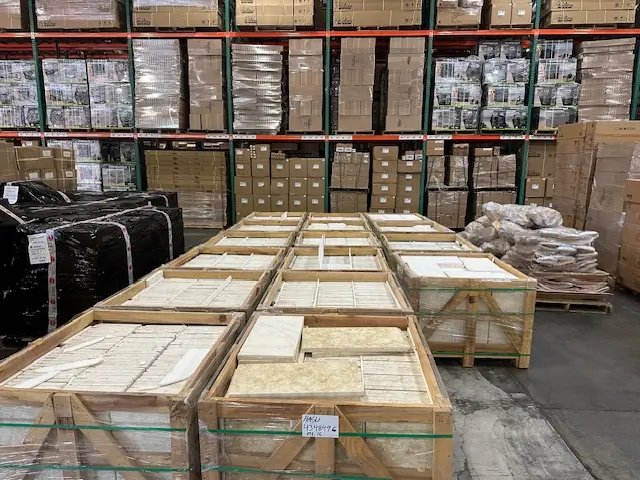
The difference between man made stone suppliers and natural stone suppliers isn’t just what they sell — it’s how they manage quality control at the warehouse level. With manufactured stone, quality control happens at the factory, and you’re buying a product that’s been tested to a manufacturing standard. With natural stone, quality control happens at the quarry, at the processing facility, at the warehouse receiving dock, and again on your project site. Each of those handoff points is a place where a substandard lot can slip through if the supplier’s inspection process isn’t rigorous.
At Citadel Stone, we conduct absorption and visual consistency checks at the warehouse before any lot is released for delivery, because field rejection of a stone delivery after a truck has traveled hundreds of miles is expensive for everyone involved. Suppliers who skip this step create downstream problems that show up during installation — not during the order process when they’re easy to resolve. Ask your supplier directly what their receiving inspection protocol covers and whether they provide per-lot test certificates, not just species-level certification. According to ASTM dimension stone quality and testing standards, lot-level testing is the correct approach for verifying that delivered material meets specified performance thresholds — manufacturer certification alone is insufficient for high-specification projects.
- Request per-lot test certificates, not species-level manufacturer data sheets
- Ask about warehouse receiving inspection protocols before placing a large order
- Verify that the supplier stocks sufficient quantity in a single lot to complete your project — mid-project lot changes create visible color variation
- Confirm truck delivery scheduling flexibility, particularly for phased construction timelines
- Clarify return and replacement policy for damaged or out-of-spec material before it arrives on site
Lead Times and Logistics Considerations
Your project timeline should account for meaningful differences in lead time between manufactured and natural stone sources. Man made stone suppliers typically operate from domestic production facilities with warehouse inventory that supports 2-to-4-week lead times on standard product lines. Natural stone — particularly imported varieties from European or Southeast Asian quarries — can run 8-to-14-week lead times when warehouse stock is depleted and a fresh quarry order is required.
Citadel Stone maintains national warehouse inventory across both natural and manufactured product lines, which typically brings natural stone lead times down to 1-to-3 weeks on stocked varieties — a significant project-planning advantage when construction schedules compress. Confirm stock levels before finalizing your timeline, and factor in truck delivery scheduling at your site. Large format stone orders often require flatbed or specialized truck delivery, which adds coordination time that standard pallet delivery doesn’t. Build at least a 5-day delivery scheduling buffer into your project plan for any stone order above 500 square feet.
Professional Summary
The decision between man made stone suppliers and natural stone sources is almost never a simple better-or-worse comparison — it’s a technical match between material properties and project requirements. Manufactured stone wins on weight, dimensional consistency, and installation speed for wall cladding and retrofit applications. Natural stone wins on compressive strength, long-term abrasion resistance, thermal mass performance, and drainage behavior in demanding exterior environments. Your specification should be driven by the performance criteria your project actually demands — not by aesthetic preference or price per square foot alone.
As you finalize your material selection, reviewing how different stone types perform across a range of structural and environmental applications helps sharpen the decision. For a broader look at how supplier quality and procurement process affect project outcomes, what stone buyers should verify covers the due-diligence steps that protect your specification from supply-chain risk. Stone for nationwide projects at Citadel Stone spans both natural and manufactured surfaces suited to varied climate conditions.
Related reading: why stone on railway tracks · stone road construction guide · how ballast stone is specified.