

Specifying white travertine marble against white Carrara marble is one of those decisions that looks straightforward until you factor in the full performance envelope — porosity differentials, surface finish behavior under UV load, and the very real structural differences that show up after years in service. White travertine marble and white Carrara marble share a similar tonal palette, but their mineralogical backgrounds produce fundamentally different performance profiles that affect everything from your setting bed choice to your long-term sealing schedule. Understanding those differences at a technical level is what separates a specification that holds up for 25 years from one that starts showing stress at year eight.
Material Origins and What They Mean for Performance
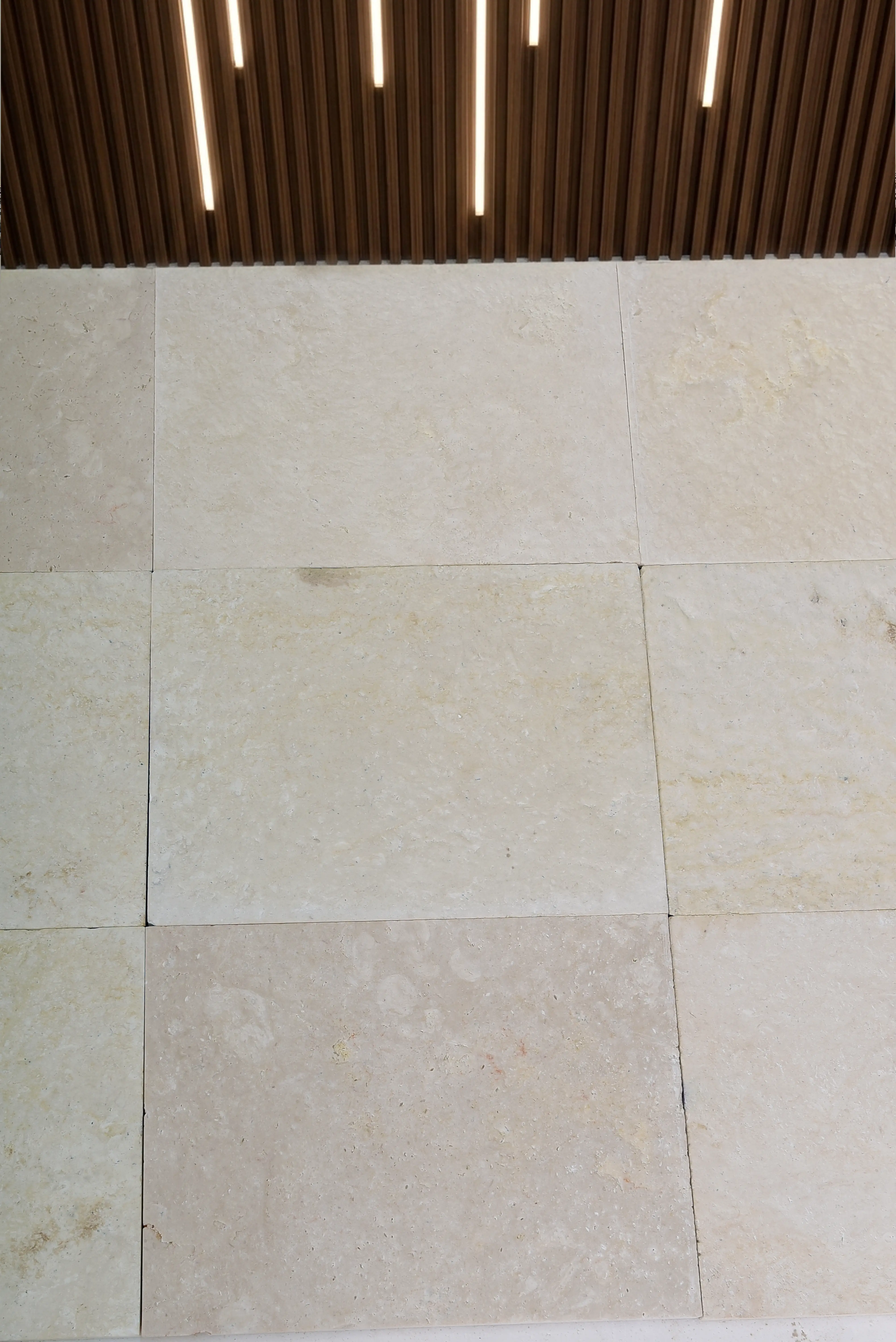
Travertine is a sedimentary calcium carbonate stone, formed through the rapid precipitation of calcium carbonate from geothermal spring water. That origin story matters because it produces a stone with a characteristic vascular pore network — channels that run through the material and create either open or filled surface conditions depending on how the stone is processed. White Carrara marble, on the other hand, is a metamorphic rock — limestone that has been subjected to intense heat and pressure until it recrystallizes into interlocking calcite crystals. The result is a denser, more uniform stone with much lower intrinsic porosity than travertine.
For your specification decisions, this fundamental difference in formation translates directly into absorption rates, thermal sensitivity, and finish durability. Travertine typically absorbs water at rates between 0.5% and 1.5% by weight depending on fill treatment and finish, while Carrara marble sits closer to 0.2–0.4% for a comparable thickness and finish. That gap drives sealing frequency, grout joint design, and the material’s suitability for wet or exterior applications.
Surface Finish Options and Their Trade-Offs
Both materials accept a wide range of surface finishes, but the structural makeup of each stone creates meaningful differences in how those finishes perform and how they age. Your finish selection here is not aesthetic-only — it directly affects slip resistance, UV behavior, and maintenance cycles.
- Polished white travertine marble delivers a high-gloss surface, but the pore network beneath can trap polish residue and requires filled-and-polished processing to prevent localized dull spots over time
- Honed travertine marble tile provides a matte surface that conceals minor etching better than a polished finish — a practical advantage in kitchen and bath environments where acidic contact is likely
- Polished white Carrara marble achieves an exceptionally consistent mirror surface due to its crystalline uniformity, but that same density makes surface scratches more visible at a glance
- Brushed or tumbled Carrara is less common but delivers a textured profile suited to lower-traffic decorative applications
- Unfilled travertine — where the natural voids are left open — creates a deliberately rustic texture appropriate for certain architectural styles but requires specific grout and sealing protocols
The porosity distinction between these two materials becomes especially important when selecting a finish for sun-exposed installations. Under prolonged UV exposure, polished surfaces on porous stones tend to show differential weathering — areas over larger voids lose their polish faster than the surrounding matrix. Honed finishes on white travertine marble hold more consistently in high-UV outdoor settings because the matte surface has less visible contrast to lose.
UV Exposure, Color Stability, and Weathering
Color stability under UV load is a genuine specification variable for both materials — not a marketing footnote. White travertine marble contains trace iron oxide deposits within its calcium carbonate matrix, and these can oxidize over time when exposed to sustained UV radiation, producing warm golden or amber toning that deepens the character of the stone but moves it away from a pure white appearance. This is not a defect — it’s a natural mineralogical response — but it affects long-term design intent.
Carrara marble’s tighter crystalline structure makes it somewhat more color-stable under UV exposure. The characteristic grey veining remains consistent, and the white ground color holds closer to its original tone over years of outdoor use. If maintaining a strict neutral-white palette in a permanently sun-exposed installation is non-negotiable, Carrara’s denser structure gives you a modest advantage. According to Natural Stone Institute travertine properties and outdoor suitability, travertine’s open-pore calcium carbonate structure makes sealing essential for all outdoor applications where UV and moisture exposure are ongoing factors.
Your sealing schedule matters enormously here. A penetrating fluoropolymer sealer applied every 18–24 months on exterior white travertine marble significantly slows the UV-driven oxidation process by limiting the moisture cycling that accelerates surface-mineral movement. Skipping even one sealing cycle in a high-UV environment can allow differential surface oxidation to become visually apparent within a single season.
Porosity, Sealing, and Maintenance Cycles
Your maintenance commitment is one of the clearest differentiators between these two materials at the specification stage. Travertine marble tile — particularly in unfilled or partially filled formats — requires a more rigorous sealing program because its vascular pore structure creates both absorption pathways and surface irregularities that hold cleaning residue.
- Penetrating sealers for travertine should be applied before initial use and reapplied every 18–24 months for exterior installations, or every 2–3 years for interior applications with moderate traffic
- White Carrara marble benefits from sealing but is less demanding — a quality penetrating sealer applied every 3 years typically maintains adequate protection for interior floors
- Both materials are susceptible to acid etching from citrus, vinegar, and cleaning products with pH below 6.0 — this is a chemical reaction, not a surface failure, and affects polished Carrara more visibly than honed travertine
- Filled travertine — where the voids are factory-filled with grout or epoxy — reduces maintenance complexity significantly and is the appropriate specification for high-traffic floor applications
- Always test sealer absorption on a spare tile before full application — travertine and Carrara marble absorb sealers at different rates, and over-application on Carrara can leave a surface haze
At Citadel Stone, we recommend specifying filled-and-honed white travertine marble for kitchen floors and wet bath applications precisely because the filled surface minimizes the grout joint complexity and maintenance burden that open-vein travertine creates in high-use environments.
Structural Properties and Thickness Requirements
The compressive strength difference between these two materials is real but often overstated in basic comparisons. Dense Carrara marble typically achieves compressive strengths in the 15,000–19,000 PSI range, while quality travertine runs 8,000–13,000 PSI depending on the block’s density and the proportion of voids in the cross-section. For most residential floor and wall applications, both materials comfortably exceed structural requirements — but the gap becomes relevant in specific scenarios.
Stair treads, countertops with cantilevered sections, and large-format exterior paving are the situations where Carrara’s higher density earns its specification. For a white travertine slab used as a countertop edge with an overhang exceeding 10 inches, you need a minimum 3 cm thickness and ideally a mesh-backed format to distribute point load stress across the void network. Carrara at 2 cm handles the same overhang geometry with less structural concern. According to ASTM C1527 travertine dimension stone specifications, travertine used in floor and countertop applications must meet minimum flexural strength criteria that vary by format and thickness — confirm your specific product’s test data before specifying for structural applications.
Kitchen and Bath Specification Guidance
Both materials appear frequently in kitchen and bath applications, but each has a clearer performance profile for specific scenarios within those spaces.
For kitchen countertops, white Carrara marble is the more forgiving specification where clients are prepared to accept the patina that comes with use — etching from food acids and light surface abrasion build a lived-in character that many designers value. White travertine marble is less conventional for countertops because its porosity creates more aggressive staining risk, but a filled-and-polished white travertine slab with an impregnating sealer performs adequately in low-acidity kitchens. The Tile Council of North America installation standards provide guidance on setting material selection and grout joint sizing for both stone types in wet kitchen environments — specifications that directly affect long-term performance in splash zones and around sink areas.
- For bathroom floors, honed travertine marble tile in the 12×24 inch format with a filled surface and tight grout joints performs very well — the honed finish provides adequate slip resistance in wet conditions, and the warm tone complements most bath palettes
- Shower walls in white Carrara marble require full waterproofing membrane installation behind the setting bed, as even Carrara’s lower porosity does not make it inherently moisture-resistant at the substrate level
- White travertine slab used as a shower niche surround should always be filled — open-void travertine in a perpetually wet environment traps soap residue in the voids and becomes difficult to clean within months
- Both materials develop a natural micro-sheen over time in heavily used bath floors — this is normal surface polishing from foot traffic and is not a defect
Ordering, Logistics, and Lead Times
Your project timeline depends heavily on material availability, and the supply dynamics for these two stones differ in ways that affect scheduling. White Carrara marble sourced directly from Carrara region quarries carries longer lead times when ordered to specification — custom sizing, specific vein direction, or matched slab runs can push lead times to 8–12 weeks from quarry to site when importation is involved. Domestic warehouse inventory of standard travertine marble tile formats typically ships within one to two weeks, making it the more schedule-friendly option for projects with firm completion dates.
For projects specifying Citadel Stone marble and travertine, warehouse inventory of white travertine formats in the most common tile and paver dimensions significantly reduces the lead time risk that affects projects relying on direct-import Carrara. Truck delivery logistics for large slab orders — particularly white travertine slab in 20mm or 30mm thickness — require advance coordination for offloading access, as slab crates typically arrive on flatbed trucks that need clear site access and mechanical offloading equipment.
Always confirm warehouse stock levels before finalizing your project’s procurement schedule. Batch matching for large installations is critical for both materials — travertine’s natural tonal variation between quarry runs is manageable when working from a single warehouse pull, but becomes a visible problem when topping up an order from a second batch weeks later.
Installation Variables That Affect Outcome
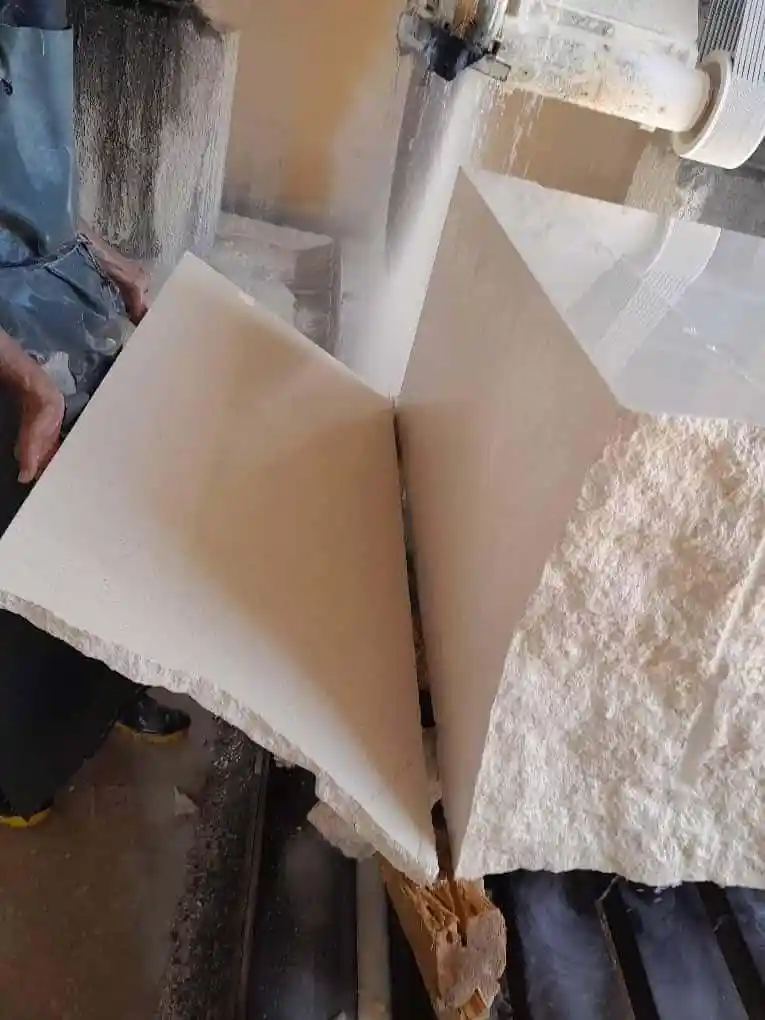
Setting bed selection and joint design decisions for these materials deserve specific attention. White travertine marble installed over a modified thinset bed performs well for most interior floor applications in the standard 10–12 mm thickness, but exterior paving in freeze-thaw regions requires either a full mortar bed or a mechanically fixed system to handle freeze-thaw cycling — the pore network in travertine is particularly vulnerable to freeze expansion when moisture has been allowed to saturate the stone before a temperature drop.
- Grout joint width for filled travertine marble tile should not go below 1/16 inch — the filled surface still has micro-relief that requires a joint to accommodate minor lippage
- White Carrara marble in large-format tiles (18×18 and above) requires back-buttering of every tile to ensure full coverage — voids beneath large-format marble create hollow spots that crack under point load
- Expansion joints at a maximum 15-foot spacing in interior travertine floors are non-negotiable — thermal movement in natural stone accumulates across large areas and will crack both the stone and the grout without relief joints
- Use a white or grey unsanded grout for white travertine marble joints — dark grout reads through the porous edges of travertine tiles and creates a grid pattern that competes with the stone’s natural character
- Both materials should acclimate to the installation environment for 24–48 hours before setting, particularly where the delivery truck interior temperature differs significantly from the installation space
White Travertine Marble vs. Carrara: Final Recommendations
The choice between white travertine marble and white Carrara marble ultimately comes down to your project’s specific performance demands, aesthetic intent, and maintenance reality. Travertine offers warmth, natural character, and genuine versatility across exterior and interior applications when properly sealed and maintained — it’s the stronger specification for outdoor paving, pool surrounds, and applications where a living, evolving surface is valued. Carrara delivers a more refined, consistent aesthetic with better density and color stability under UV exposure, making it the preferred specification for high-end interior countertops, feature walls, and applications where maintaining a crisp neutral-white tone over the long term is the design priority.
Your sealing discipline matters more than the material you choose — both stones underperform when sealing schedules slip, and both deliver exceptional long-term results when the protection layer is maintained consistently. For outdoor installations under sustained UV load, budget the sealing schedule into your client’s maintenance agreement upfront rather than leaving it as an afterthought. As you finalize your natural stone specification, understanding ongoing care requirements is as important as the initial material selection — our guidance on white travertine floor care and sealing covers the specific maintenance protocols that protect your installation year after year. Product from Citadel Stone lets designers compare white travertine marble slabs against denser marble for kitchen and bath use.
Related reading: Light Travertine Floor Design Ideas for Bright Interiors · White Pool Tile Options for a Modern, Bright Pool · Pumice vs Porcelain Pool Tile: Scale & Cleaning Compared.